How Much Does It Cost to Paint a 3,500 Sq Ft House?
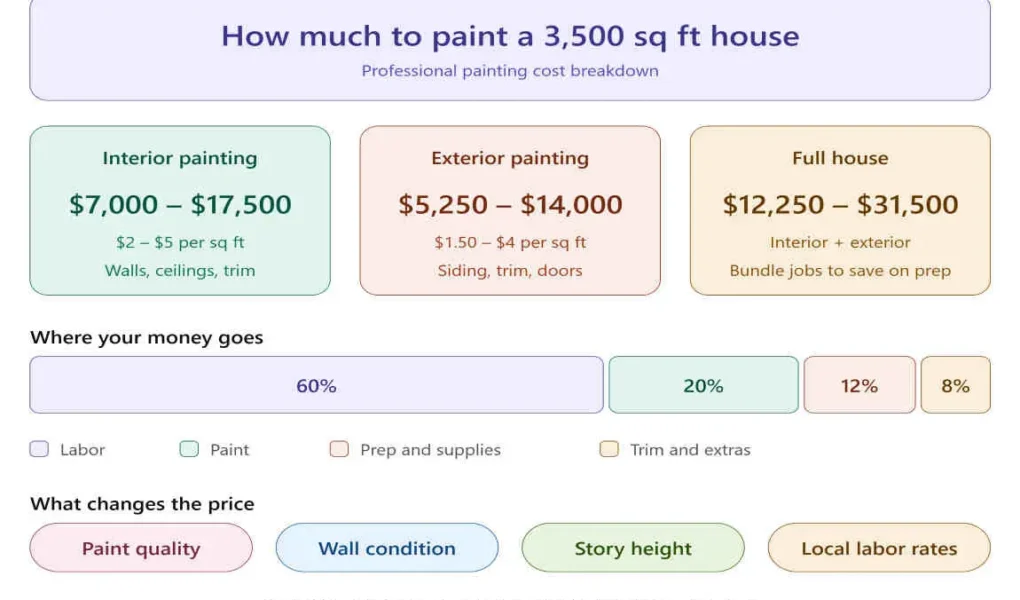
Most painters price by the square foot. According to 2026 contractor data from Angi, reported by NerdWallet, interior painting averages about $2 to $6 per square foot, while exterior painting runs about $1.50 to $4 per square foot.
Apply those rates to a 3,500 sq ft home and you get this:
| Project | Rate used | Estimated cost for 3,500 sq ft |
|---|---|---|
| Interior only | $2–$6 per sq ft | $7,000–$21,000 |
| Exterior only | $1.50–$4 per sq ft | $5,250–$14,000 |
| Interior + exterior | Combined | $12,250–$35,000 |
The top end of that table is a worst-case scenario: ceilings, trim, doors, multiple colors, heavy prep, and a premium paint line. Real-world quotes tend to land lower. For example, Mr. Handyman puts a 3,500 sq ft interior at $7,000 to $17,500, and Fixr estimates $10,500 to $14,000 for painting the walls in a single coat of one color, using about 8 to 9 gallons.
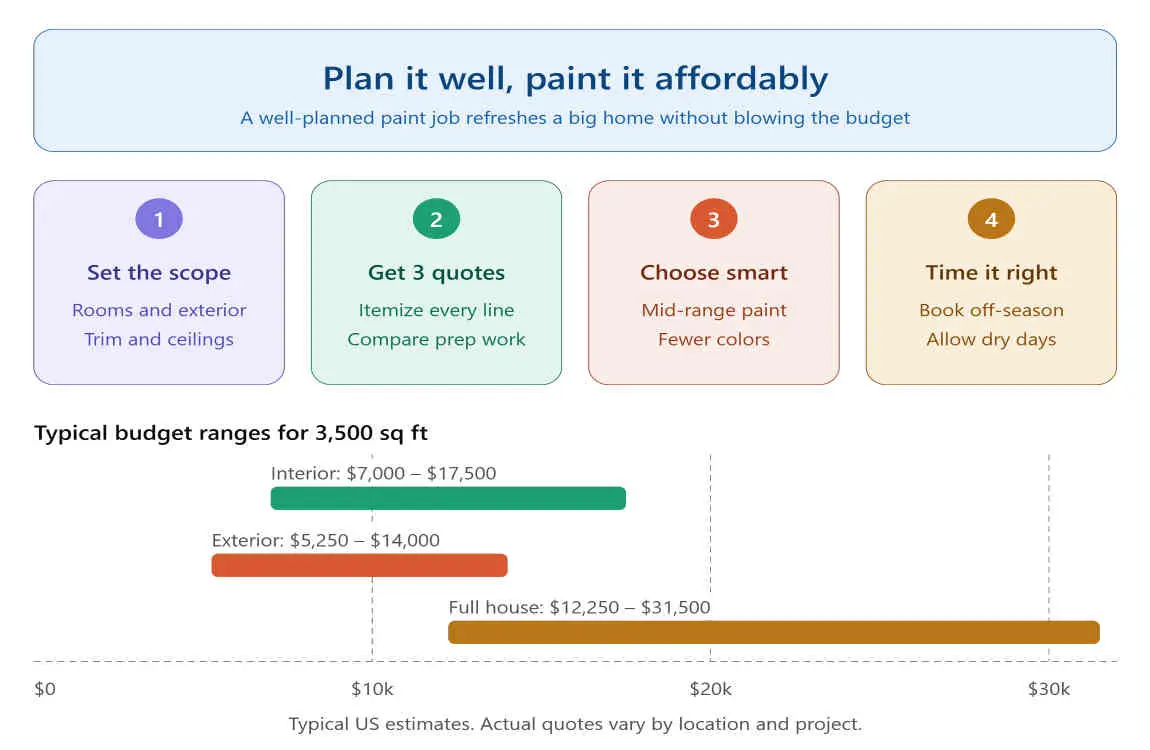
Putting it together: for a typical interior repaint, plan on about $7,000 to $17,500. For a typical exterior repaint, about $5,250 to $14,000. Doing both in the same year usually means budgeting $12,000 to $31,000 or more, depending on condition and finishes.
Interior vs. Exterior: Why the Prices Differ
Interior painting
Interior jobs involve walls, and often ceilings, trim, doors and closets. Furniture has to be moved or covered, and cutting in clean lines around trim takes time. Angi’s data, cited by NerdWallet, shows that labor can make up 75% to 95% of a professional interior paint job. In other words, you’re mostly paying for time and skill, not paint.
Exterior painting
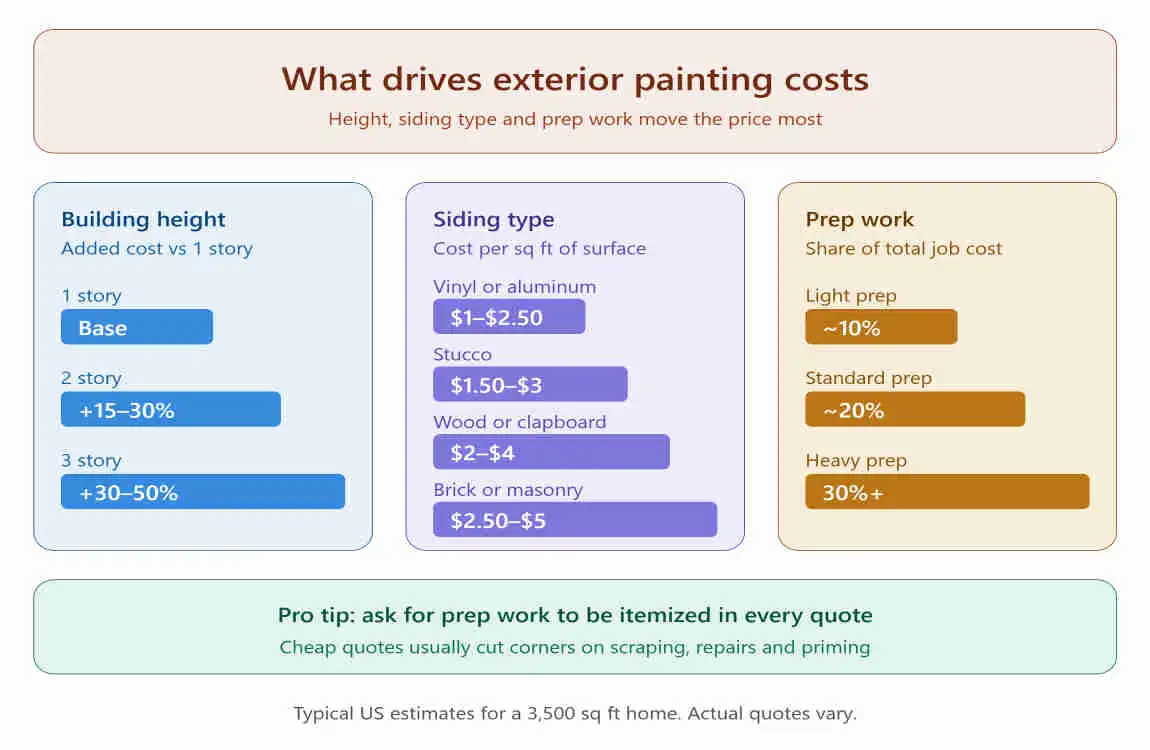
Exterior work is weather-dependent and physically harder. It typically requires pressure washing, scraping, caulking, priming bare spots, and working at height. The number of stories matters a lot. A widely cited Angi chart (reproduced by SoFi) shows single-story homes of 1,000–1,500 sq ft at $1,500–$3,500, while two-story homes of 1,500–2,500 sq ft run $3,000–$6,200. Scale that up to 3,500 sq ft and the extra height adds up fast.
One thing many homeowners miss: exterior painters price by paintable wall surface, not by your home’s floor area. A home with a complicated roofline, lots of gables, or textured siding will cost more than a plain rectangular box with the same square footage.
8 Factors That Change Your Final Price
- Number of stories. More height means ladders, lifts or scaffolding, plus more time.
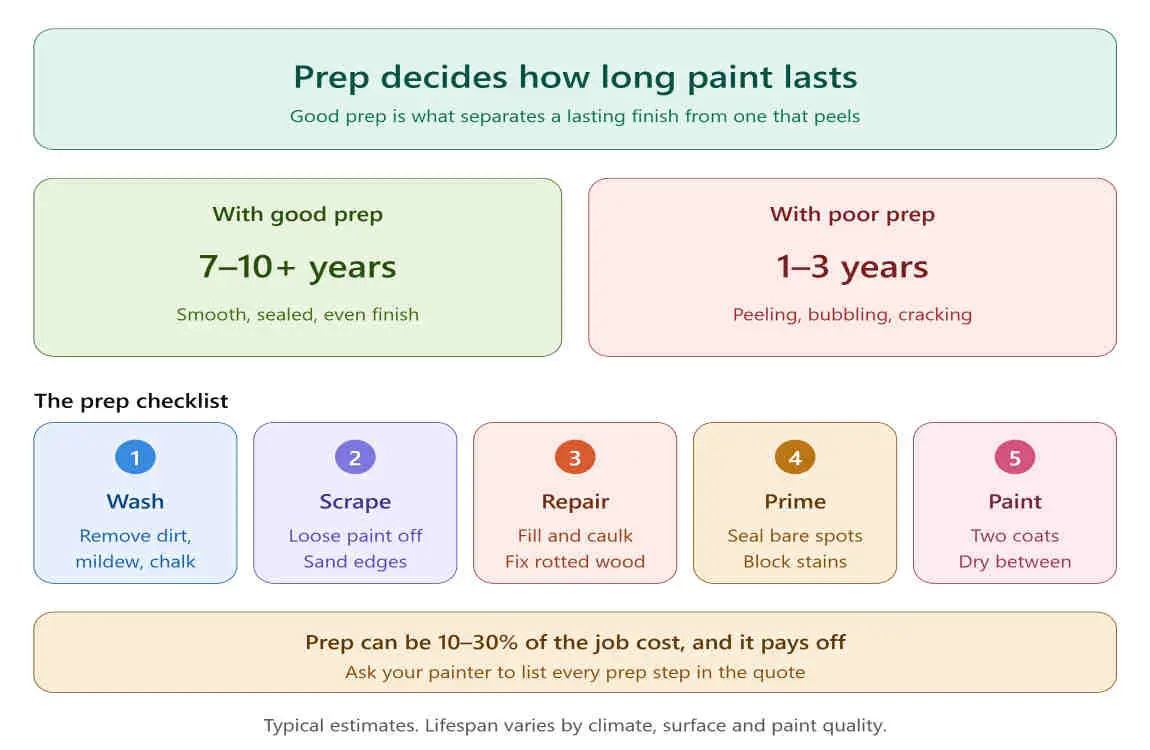
- Surface condition. Peeling paint, cracked caulk, water damage and rotted wood all add repair and prep hours before a single coat goes on.
- Siding material. Smooth siding is quicker and cheaper to cover. Stucco, brick, rough wood and masonry soak up more paint and take longer.
- Scope of work. Walls only is the cheapest option. Adding ceilings, trim, baseboards, doors, cabinets and built-ins pushes the price up. Angi notes that accents, trim and ceilings might cost extra on top of a basic wall quote.
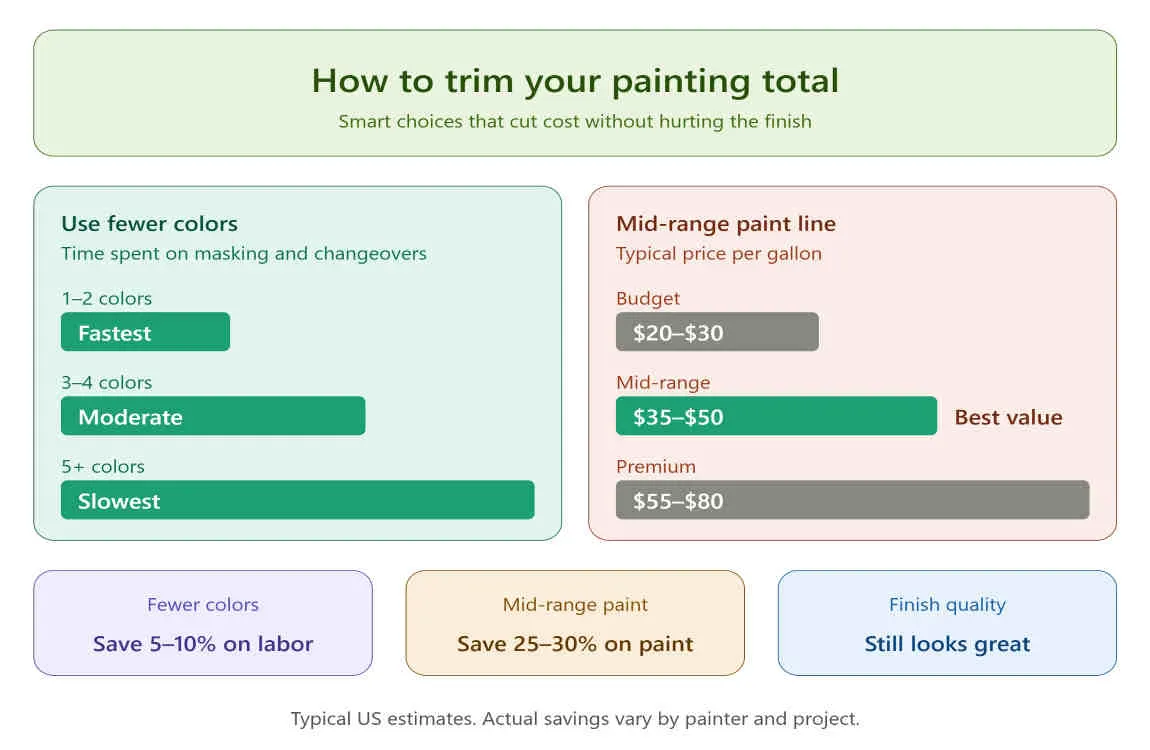
- Paint quality. Budget latex can be cheap per gallon, while premium lines cost noticeably more. Better paint often covers and lasts better, but it’s still a smaller slice of the bill than labor.
- Color changes. Going from dark to light usually means primer and an extra coat.
- Local labor rates. Painters in high-cost metros charge more than those in smaller markets. Hourly rates vary widely across the country.
- Age of the home. If your house was built before 1978, lead-safe rules may apply (more on that below).
How Much Paint Do You Need for 3,500 Sq Ft?
Paint coverage is the same no matter how big the house is. Sherwin-Williams says a gallon typically covers about 350 to 400 square feet. Rough or textured surfaces cover less, and on a smooth, previously painted surface you get closer to the top of that range.
The formula is simple: wall area ÷ coverage per gallon × number of coats. Remember that wall area is not the same as floor area. Bob Vila’s paint guide walks through the math by measuring each wall, subtracting doors and windows, and rounding up so you don’t run short.
For a 3,500 sq ft interior, Fixr’s estimate of 8–9 gallons per coat is a reasonable starting point for walls alone. Add a second coat, ceilings, primer and trim, and the total climbs quickly. Ask your painter to measure and give you a gallon count in writing so you can sanity-check the quote.
Should You DIY or Hire a Pro?
DIY can save a lot, because labor is the biggest slice of the bill. But a 3,500 sq ft home is not a weekend project. Between prep, taping, cutting in, two coats and cleanup, you’re looking at many days or even weeks of work, and exterior painting adds ladder safety and weather risk.
DIY makes sense if: you’re painting a few rooms, the walls are in good shape, and you have the time and tools.
Hire a pro if: you want the whole house done quickly, the exterior is two stories or more, you’re dealing with peeling paint or repairs, or the home was built before 1978.
Painting a Pre-1978 Home? Lead-Safe Rules Matter
If your house is older, this can affect both cost and safety. The U.S. EPA says that approximately three-quarters of homes built before 1978 still contain some lead-based paint. Under the EPA’s Renovation, Repair and Painting (RRP) Rule, anyone paid to disturb painted surfaces in a pre-1978 home must be certified and use lead-safe work practices. The rule generally doesn’t apply to homeowners working on their own homes, but the EPA still encourages safe practices.
Practical takeaway: if your home is older, ask any painter whether they are EPA lead-safe certified. Certified crews may charge more for containment and cleanup, and that’s money well spent.
8 Smart Ways to Lower the Cost
- Get at least three written quotes. Compare scope, not just the bottom-line number.
- Be flexible on timing. Painters are often less booked outside the busiest season, and you may get a better rate.
- Limit the scope. Paint walls only and skip ceilings that are still in good shape.
- Keep colors consistent. Repainting a similar shade usually avoids extra primer and coats.
- Do the prep yourself. Moving furniture, removing outlet covers and patching small holes can reduce billable hours.
- Choose a solid mid-range paint. You don’t need the most expensive line, but avoid the cheapest if you want good coverage.
- Split the project. Do the exterior this year and the interior next year if cash flow is tight.
- Handle some work DIY. Painting a few bedrooms yourself and hiring pros for the high-visibility areas can balance cost and quality.
What to Look for in a Painting Quote
A good quote for a house this size should spell out:
- Exactly which surfaces are included (walls, ceilings, trim, doors, garage)
- Prep work and repairs, such as scraping, sanding, caulking and patching
- Paint brand, product line and sheen, plus the number of coats
- Estimated gallons and who buys the paint
- Start date, timeline, clean home, and warranty terms
- Proof of insurance and, for older homes, lead-safe certification
Frequently Asked Questions
How much does it cost to paint the inside of a 3,500 sq ft house?
Most homeowners should expect about $7,000 to $17,500, with high-end jobs reaching $21,000 at the top of the $2–$6 per sq ft range.
How much does it cost to paint the outside of a 3,500 sq ft house?
Roughly $5,250 to $14,000 at $1.50–$4 per square foot. Two-story homes, heavy prep and textured siding push toward the higher end.
How many gallons of paint do I need for a 3,500 sq ft house?
One gallon typically covers 350–400 sq ft, and Fixr estimates 8–9 gallons per interior coat for walls only. Two coats, ceilings, trim and primer will increase that, so get a measured estimate.
Is it cheaper to paint the interior or exterior?
Per square foot, exterior rates are often a bit lower, but exterior jobs involve prep, height and weather. Total costs for each are in a similar range for a house this size.
How long does it take to paint a 3,500 sq ft house?
It depends on crew size and scope. A professional crew can often finish an interior in a matter of days to a couple of weeks, while a DIY effort can take far longer. Ask your contractor for a written timeline.
Final Thoughts
Painting a 3,500 sq ft house is a serious investment, but it’s also one of the most cost-effective ways to boost curb appeal and protect your home. Budget around $7,000–$17,500 for the interior and $5,250–$14,000 for the exterior, then adjust for your home’s condition, height and finishes. Get multiple detailed quotes, ask about lead-safe practices if the house is older, and don’t choose on price alone.