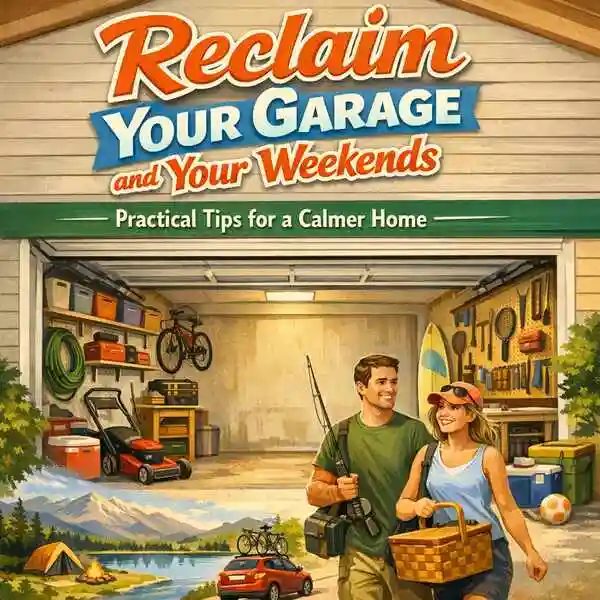
There is a certain kind of stress that comes from opening the garage door and immediately wanting to close it again.
You know the feeling. A bike is leaning against a stack of half-empty boxes. Holiday decorations are mixed in with old paint cans. Tools are scattered across a shelf that somehow became the home for batteries, extension cords, gardening gloves, and that one mystery charger nobody wants to throw away. Maybe there is technically room to walk through the space, but only if you turn sideways and step carefully.
And if you have been telling yourself, “I’ll deal with it next weekend,” you are definitely not alone.
Garages have a way of becoming the place where everything lands when we do not know where else to put it. At first, it feels temporary. A box goes there just for now. A broken chair waits there until trash day. The kids’ sports gear gets tossed in after practice. Before long, the garage is no longer working for you. It is quietly taking up your time, your patience, and sometimes your whole Saturday.
The good news is that reclaiming your garage does not mean turning it into a picture-perfect showroom. You do not need matching bins, a full wall system, or a weekend filled with complicated projects. You just need a practical plan, a little honesty about what you use, and a setup that fits your real life.
Let’s make the space easier to use, easier to maintain, and a lot less stressful.
Why the Garage Becomes the Catchall Space
Most garages do not become cluttered overnight. It usually happens slowly.
Life gets busy. Seasons change. Hobbies come and go. Kids grow out of things. Home projects start before the last one is fully cleaned up. The garage becomes the holding zone for all of it because it feels separate from the rest of the house. You can shut the door and move on.
Until you cannot.
At some point, the clutter starts getting in the way. You cannot find the screwdriver you need. You buy another bag of potting soil because you forgot there was already one buried in the corner. You spend twenty minutes looking for the cooler before a family outing. The garage may not be part of your living room, but it still affects how your home feels.
That is why organizing it matters. Not because everything has to look perfect, but because your space should not make everyday tasks harder than they need to be.
Start With What You Want the Garage to Do
Before you start moving boxes around, pause for a minute and ask yourself what you actually want from the space.
Do you want to park a car inside again? Do you need a better place for tools? Are you trying to create a small workshop, a sports gear zone, a gardening corner, or just a clear path from the house to the driveway?
This step matters because without a goal, organizing can turn into shuffling. You move one pile to another spot, clear a corner, stack a few bins, and somehow the garage still feels crowded. When you know what the space is supposed to do, your decisions get easier.
For example, if your main goal is to park a car inside, floor space becomes the priority. If your goal is to find tools quickly, shelving and wall storage matter more. If your family is constantly grabbing bikes, helmets, and lake gear, you will want those items near the door, not buried behind old furniture.
Think about your real routines. Where do you enter the garage? What do you reach for most often? What always seems to be in the way?
A calm garage starts with a clear purpose.
Sort Everything Into Simple Groups
Once you know what you want from the space, it is time to sort. This is the part people often dread, but it does not have to be dramatic.
Start with simple categories. Keep. Donate. Toss. Relocate. Decide later.
That last category is helpful, but it can also be dangerous. The “decide later” pile should not become a second garage inside your garage. Use it for items you truly need more time to think about, not everything you feel guilty touching.
If the garage is packed, do not try to empty the entire thing at once. Work in sections. One wall. One shelf. One corner. One set of boxes. Progress counts, even when it is small.
As you sort, be honest but not harsh. You are not judging yourself for what collected over time. You are simply deciding what deserves space in your home now.
Some things will be easy. Broken items you will never fix. Empty packaging. Dried-out paint. Rusted tools. Old sports equipment nobody uses. Let those go.
Other things will be harder. That is normal.
Make the Hard Decisions Easier
Garages often hold more than stuff. They hold memories, past plans, and good intentions.
Maybe there is camping gear from a season when your family spent more time outdoors. Maybe there are boxes from a move that never fully got unpacked. Maybe there is furniture from a loved one, kids’ toys you are not ready to part with, or supplies from a hobby you thought you would pick back up.
So what do you do with items that still feel important, even if they are not part of your daily life?
Start by separating meaning from quantity. You do not need to keep every item to honor a memory. A few meaningful pieces can often carry the same emotional weight as five boxes. You can also take photos of items before letting them go, especially if the memory matters more than the object itself.
For expensive purchases, try not to let guilt make the decision. We have all kept something because we spent money on it. But if it is not useful, not loved, and not likely to come back into your life, it may be costing you more in space and stress than it is worth.
Ask yourself, would I buy this again today?
That one question can make a lot of decisions clearer.
Create Zones That Match Your Life
Once you know what is staying, give everything a general home.
The easiest way to do this is by creating zones. Not fancy zones. Just practical ones that make sense for your household.
You might have a tool zone, a yard care zone, a sports gear zone, a cleaning supply zone, a holiday decor zone, and a section for outdoor or lake gear. The exact setup depends on how you use the space.
The key is to keep similar items together. When everything has a basic area, you are much less likely to lose things or buy duplicates. You also make cleanup easier because you are not asking yourself where every single item should go. You already know.
Keep the zones broad enough that they are easy to maintain. A garage that requires perfect behavior will not stay organized for long. People need to be able to put things away quickly, even when they are tired, busy, or coming home after a long day.
That means open bins may work better than stacked boxes for kids’ gear. Hooks may work better than shelves for bikes or tools. Clear containers may be better for seasonal items so you can see what is inside without digging.
Make the system fit the people who live in the house, not the other way around.
Use the Walls Before You Use the Floor
The floor is valuable space. Once it is covered, the whole garage starts to feel tighter.
That is why vertical storage makes such a big difference. Shelves, hooks, pegboards, wall-mounted racks, and overhead storage can quickly open up the room without requiring a full remodel.
Use hooks for bikes, folding chairs, ladders, and yard tools. Add sturdy shelves for bins, paint supplies, car care items, or bulk household goods. A pegboard can help keep hand tools visible and easy to grab. Ceiling racks can be useful for things you only need a few times a year, like holiday decorations or camping gear.
Just be careful not to move clutter from the floor to the walls without sorting it first. Storage tools help most when they hold things you actually use or value.
Once the floor starts to clear, you will feel the shift. Suddenly the garage is not just a storage area. It is a usable part of the home again.
And honestly, that feeling is motivating.
Keep Everyday Items Easy to Reach
A garage should not make you work too hard.
The items you use all the time should be the easiest to access. That might include shoes, sports gear, dog supplies, cleaning products, garden tools, reusable grocery bags, or whatever your family grabs on a regular basis.
Put those things at eye level or near the entrance. If your kids use certain items, place them where they can reach them safely. If something is used once a year, it can go higher up or farther back.
This sounds obvious, but it is where a lot of garages go wrong. People often put things wherever there is space, instead of placing them based on use. Then the items they need most are blocked by things they barely touch.
Think of your garage like a small store. The popular items go where they are easy to grab. The seasonal items go in the back. The heavy items stay low. The fragile items stay protected.
Simple rules make the space easier to live with.
Know When Something Belongs Somewhere Else
In Eatonton, garage space often has to do more than hold cars. Between lake gear, fishing equipment, outdoor furniture, tools, business supplies, holiday decorations, moving boxes, and items saved for family, it is easy for a garage to become the catchall for everything that does not have a clear home.
Not every item taking up room in your garage is junk. Some things are useful, valuable, or seasonal, but they simply do not need to sit in the middle of your everyday space. That is especially true in the Lake Oconee area, where many households have boating supplies, recreational equipment, patio items, or second-home belongings that are only needed during certain times of the year.
Maybe you have extra furniture you are saving for a family member. Maybe you have business inventory, lake gear, holiday decorations, or boxes from a recent move. Maybe your garage is holding items you still need, just not every week.
In that case, the answer may not be to throw everything away. It may be to move certain items somewhere more appropriate.
If you have belongings you want to keep but do not need at home every day, looking into storage units near Eatonton, GA can be a practical way to free up room while keeping those items accessible when you need them. Local storage options in and around Eatonton commonly serve the Lake Oconee area and may include features such as climate-controlled units, drive-up access, and boat, RV, or vehicle parking, depending on the facility.
The point is not to move clutter from one place to another. The point is to be thoughtful about what belongs in your daily space and what can live somewhere else for now.
Your garage should support your life in Eatonton, not store every unresolved decision.
Build a Weekend Reset Routine
Once the garage is organized, the next challenge is keeping it that way.
The best way to do that is with a simple weekend reset. Nothing intense. Just ten or fifteen minutes to put things back where they belong, break down boxes, toss obvious trash, and return stray items to their zones.
This small habit can save you from another major cleanup later.
You might do it Sunday evening before trash day. Or Saturday morning before errands. Pick a time that already fits your rhythm. The goal is to make it feel normal, not like a big project.
It also helps to get the whole household involved. If everyone uses the garage, everyone can help maintain it. Kids can put sports gear back in bins. Adults can return tools to hooks. Someone can sweep the floor or gather recycling.
It does not have to be perfect. It just has to be consistent.
A few minutes each week can protect hours of your future time.
Make Room for What You Actually Want to Do
A calmer garage is not really about the garage.
It is about everything the garage makes easier. Getting out the door faster. Finding what you need without frustration. Parking safely. Starting a project without clearing a workspace first. Spending your weekend doing something you enjoy instead of digging through piles.
When your garage works, your routines feel lighter.
You can grab the cooler and head to the lake. You can find the drill when a quick repair comes up. You can pull out holiday decorations without climbing over three unrelated boxes. You can walk through the space without feeling that little wave of stress.
That matters.
Homes are not just about how they look. They are about how they feel to live in. And when one space is constantly chaotic, it can affect your mood more than you realize.
So give yourself permission to make the garage simpler. Not perfect. Not magazine-ready. Just easier.
Start Small and Keep Going
If your garage feels overwhelming right now, do not start by imagining the whole project. That will wear you out before you begin.
Start with one shelf. One box. One corner. Set a timer for twenty minutes and see what you can do. Throw away the obvious trash. Pull out the donations. Group similar things together. Create one clear path.
Small progress creates momentum.
And once you see even a little open space, the next step feels easier.
You may not reclaim the entire garage in one afternoon, and that is fine. Real homes take time. Real people get interrupted. Life does not pause just because you decided to organize a garage.
But every decision helps. Every cleared surface helps. Every item placed where it belongs makes the space feel a little less heavy.
Before long, the garage starts to feel different. You open the door and do not immediately feel behind. You know where things are. You have room to move. You have a system that makes sense.
That is the real win.
A Calmer Garage Means a Calmer Home
Reclaiming your garage is not about becoming a different kind of person. It is not about suddenly loving organization or spending every weekend labeling bins.
It is about making your home work better for the life you already have.
A garage can be practical, busy, and still calm. It can hold tools, bikes, seasonal items, outdoor gear, and family memories without becoming a place you avoid. The difference is intention. What stays? What goes? What needs to be easier to reach? What belongs somewhere else?
When you answer those questions honestly, the space begins to change.
And your weekends can change with it.
Instead of losing half a day to clutter, you get time back. Instead of feeling frustrated every time you need something, you feel prepared. Instead of treating the garage like a dumping ground, you turn it into a useful, flexible part of your home.
That is worth the effort.
Start small. Keep it simple. Build a garage that gives you more breathing room, not more stress.