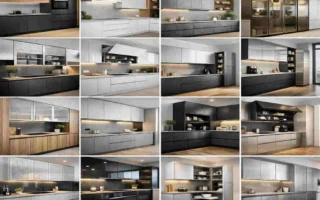
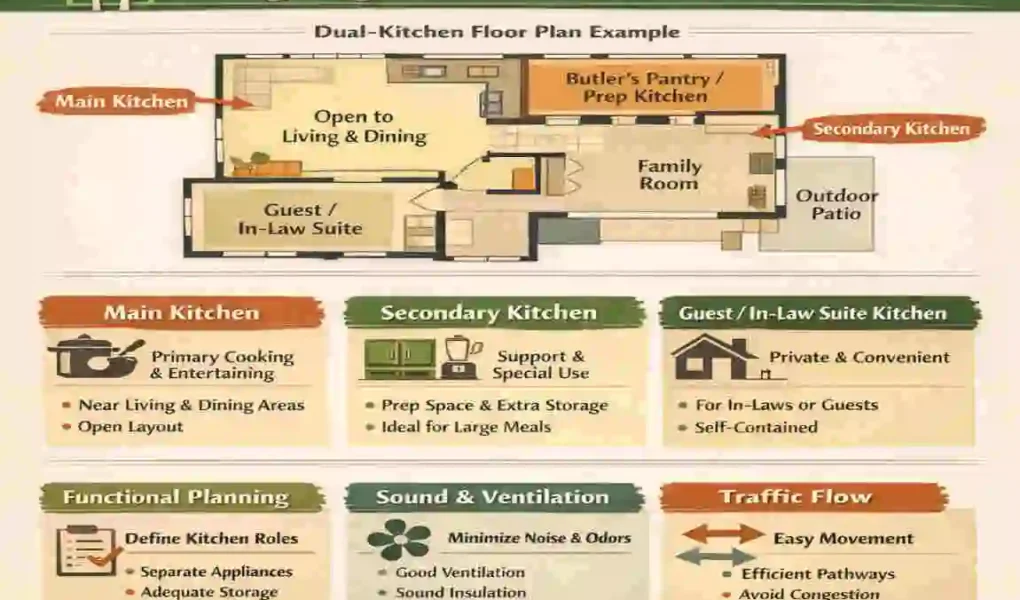
Yes, you can have 2 kitchens in one house, and in many homes, it’s a very smart choice. If you cook often, host guests, or live with extended family, two kitchens can make daily life easier and more organized. A home like this can work beautifully when the layout is planned with purpose.
The key is not just adding a second cooking space. The real goal is to make both kitchens useful, practical, and easy to move through. You want each one to have a clear job, adequate storage, and the right plumbing, ventilation, and appliance setup.
Yes, in many cases, you can. A house can include a main kitchen and a second kitchen or prep kitchen. Some homes even have two full kitchens with separate functions.
Why Two Kitchens Can Be a Great Idea
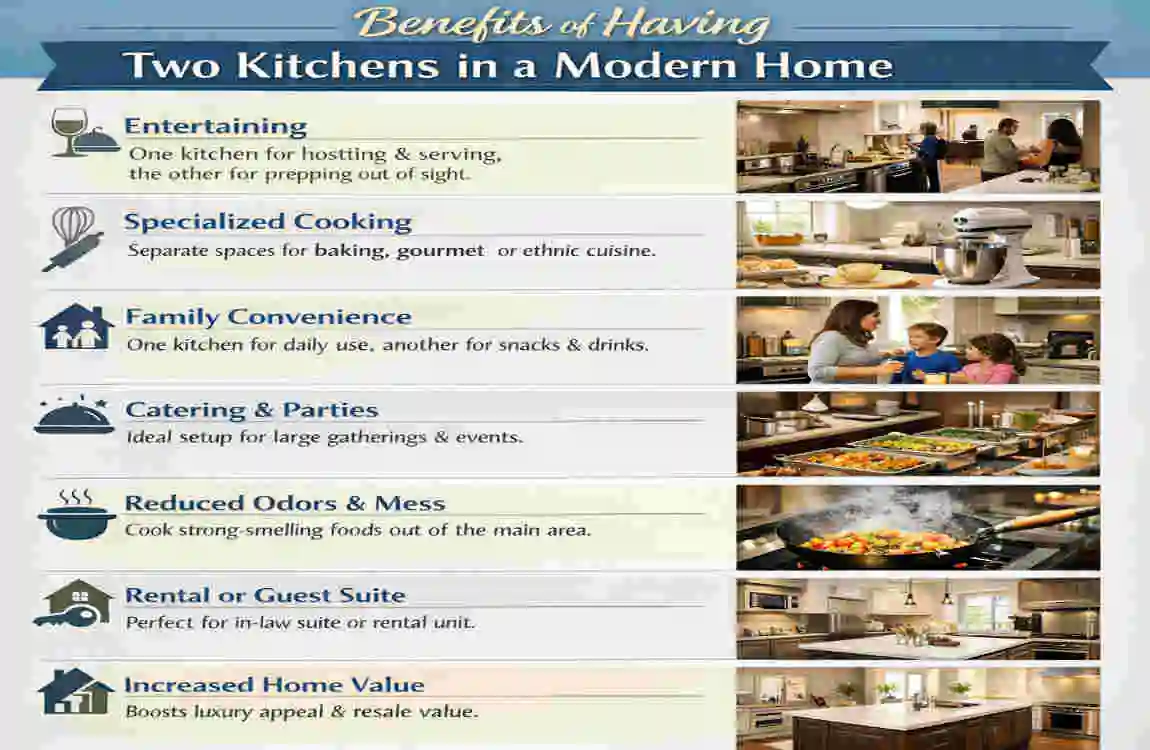
Two kitchens are not just a luxury. For many families, they solve real problems.
Main benefits of a dual kitchen layout
A house with two kitchens can help you:
- Keep one kitchen clean for guests
- Use the other kitchen for heavy cooking
- Separate baking, prep, and cleanup
- Make family meals faster and easier
- Support multigenerational living
- Reduce clutter during busy times
This setup is especially helpful if more than one person cooks at the same time. It also works well for people who entertain often or prepare large meals.
Choose the Right Kitchen Layout
The best layout depends on how you want to use the space. There is no single perfect answer. Instead, think about what best fits your home.
Common two-kitchen layout options
Layout Type: Best For Main Advantage
Main kitchen + prep kitchen: Home cooks and entertainers. Keep. messy work hidden.
Two full kitchens: Large families or multigenerational homes give each kitchen a full purpose.
Kitchen + kitchenette: Smaller homes or light extra use . Saves space and costs.
A main kitchen and a prep kitchen are among the most popular ideas. The main kitchen can stay polished and inviting, while the prep kitchen handles the messy work. This is a simple way to keep the home looking neat without losing function.
Plan the Space Carefully
Good planning makes all the difference. Two kitchens need enough room to feel comfortable, not crowded.
Think about traffic flow.
You want people to move easily between cooking, serving, and cleaning areas. If the rooms are too tight, the space can feel busy and stressful.
Make room for work zones.
Each kitchen should have:
- Counter space
- Storage
- Appliance clearance
- Sink access
- Easy movement around work areas
If both kitchens are used often, planning becomes even more important. You do not want one kitchen to block the other or make the house feel cramped.
Decide What Each Kitchen Will Do
One of the smartest things you can do is give each kitchen a clear purpose. This keeps the design from feeling repetitive.
Good ways to divide the space
You might use one kitchen for:
- Everyday family cooking
- Serving guests
- Baking and meal prep
- Heavy cooking or strong-smelling foods
- Independent use for another family member
This is where many homeowners get the most value. Instead of building two kitchens that do the same thing, make each one serve a different role.
Storage and Appliance Strategy
Storage is just as important as the layout. A second kitchen should not become a second place for clutter.
Smart storage ideas
Try to separate:
- Dishes
- Cookware
- Pantry items
- Small appliances
- Cleaning tools
This keeps each kitchen organized and easy to use. You may also want one kitchen to have stylish, high-end appliances. In contrast, the second kitchen uses simple, tough, easy-to-clean equipment.
That way, one kitchen can feel polished while the other stays practical.
Plumbing, Ventilation, and Electrical Needs
Two kitchens mean more systems behind the scenes. This part is easy to forget, but it is very important.
What needs extra attention
You may need to plan for:
- More plumbing
- Better ventilation
- Stronger electrical support
- Space for ovens, sinks, and dishwashers
If one kitchen will be used for strong cooking smells, frying, or high heat, a good vent system matters even more. Always ensure the design complies with local code before construction begins.
Design Style and Visual Flow
Even with two kitchens, the home should still feel connected. The spaces do not need to look identical, but they should feel intentional.
Ways to keep the style balanced
You can use:
- Matching cabinet finishes
- Similar countertop materials
- Coordinated colors
- Shared design details
Some homeowners like both kitchens to feel coordinated. Others prefer one to look elegant and the other to feel more functional. Both choices can work well.
Common Mistakes to Avoid
A second kitchen can add value, but only if it is planned well.
Watch out for these mistakes.
- Building without checking permits
- Forgetting about plumbing and ventilation
- Copying the same layout twice without a reason
- Using too much space for too little benefit
- Ignoring resale value and home classification
If the second kitchen does not improve daily life, it may not be worth the cost. Make sure the space has a real purpose.
When Two Kitchens Make the Most Sense
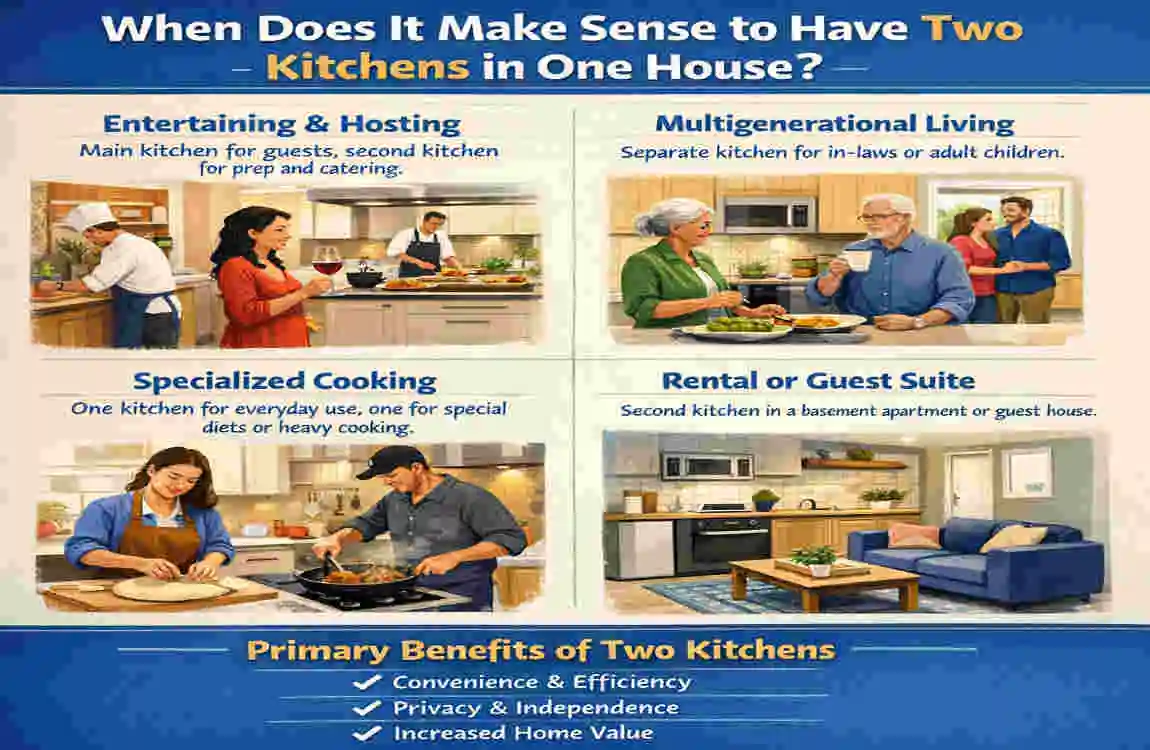
Two kitchens work best in homes that need flexibility.
Ideal situations
This setup is especially useful for:
- Large families
- Frequent entertainers
- People who cook often
- Homes with live-in relatives
- Guest suites or basement living areas
- Custom or luxury homes
If your home has different living areas or multiple generations under one roof, two kitchens can make life much smoother.
Can I Have 2 Kitchens in One House? – FAQ (Short)
Is it legal to have two kitchens in one house?
Yes, in most places it’s allowed, but it depends on local building codes and zoning laws. Some areas may have restrictions.
Why would a house have two kitchens?
Common reasons include large families, rental units, guest suites, or separate cooking needs (like keeping strong food smells contained).
Do I need permission to add a second kitchen?
Often, yes. You may need permits and inspections to ensure plumbing, electrical, and safety standards are met.
Can two kitchens increase property value?
It can, especially if the second kitchen is part of a legal rental suite or in-law unit, but it depends on your market.
Where is a second kitchen usually located?
It’s commonly placed in a basement, guest house, or separate floor for privacy and convenience.
Are there extra utility costs with two kitchens?
Yes, expect higher water, electricity, and gas bills due to additional appliances and usage.