Power outages can be a major inconvenience, especially when they last for hours or even days. With the increasing frequency of storms and natural disasters, having a backup generator has become a necessity rather than a luxury. But the big question is: Can you wire a generator to your house yourself? The short answer is yes, but only under certain conditions and with the right tools, knowledge, and safety precautions. Let’s dive into the details to help you make an informed decision.
Why Power Backup Matters
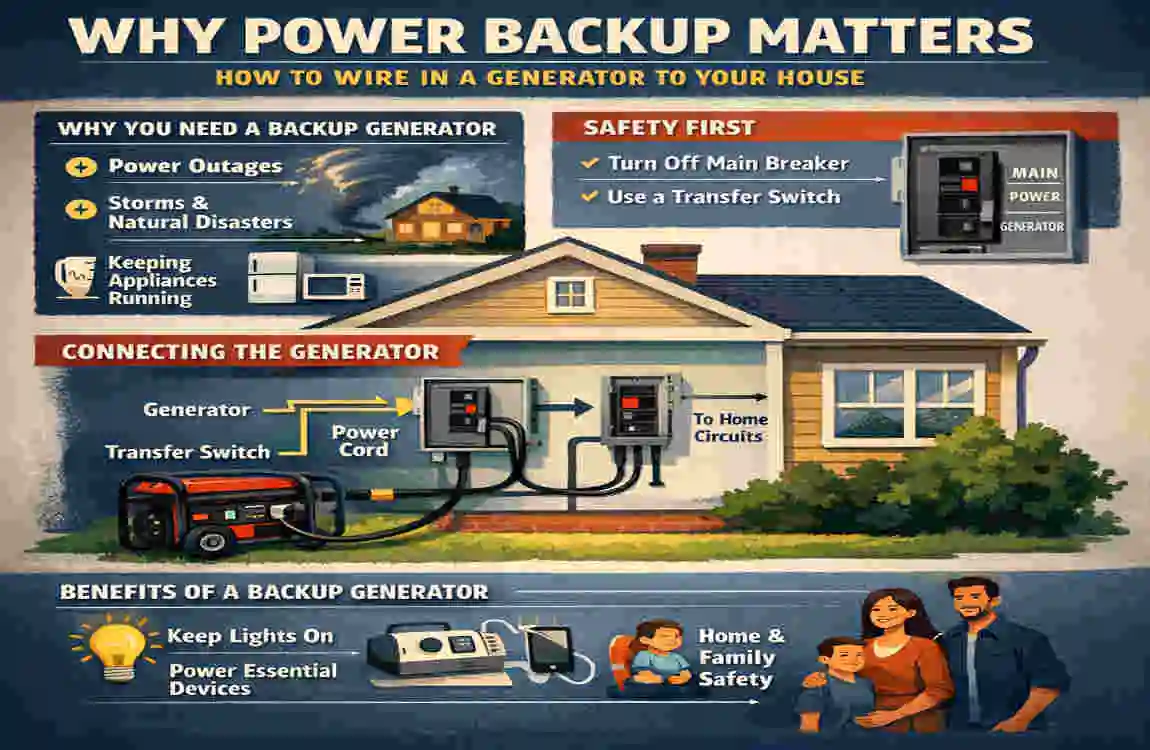
The Growing Need for Backup Power
Did you know that the average U.S. household experiences 7-10 power outages per year? These outages can last anywhere from a few minutes to several days, depending on the severity of the issue. Losing power can disrupt your daily life, from spoiling food in your refrigerator to leaving you without heating, cooling, or essential medical devices.
The Cost of Being Unprepared
A prolonged power outage can cost a household between $500 and $2,000 per week. This includes expenses like spoiled groceries, eating out, hotel stays, and lost productivity. Investing in a generator can save you from these unexpected costs and provide peace of mind during emergencies.
Portable vs Standby Generators
When it comes to generators, you have two main options: portable and standby. Here’s a quick comparison:
Generator Type Cost Wattage Ease of Wiring
Portable $500-$2,000 5,000-15,000W DIY possible with interlock or transfer switch
Standby $4,000+ 10,000-20,000W Requires professional installation
Portable generators are more affordable and versatile, but they require manual setup. Standby generators, on the other hand, are permanently installed and kick in automatically during an outage. Still, they come with a higher price tag and require professional wiring.
The Dangers of Improper Wiring
What is Backfeeding?
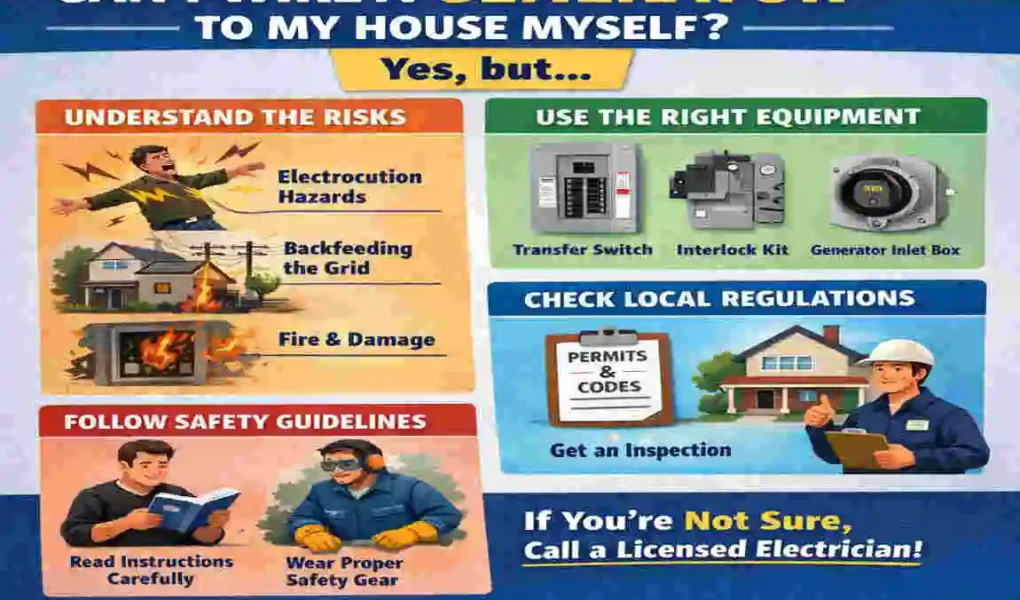
Backfeeding occurs when electricity flows from your generator back into the power grid. This is extremely dangerous because it can energise power lines that utility workers assume are de-energised, putting their lives at risk. It’s also a violation of the National Electrical Code (NEC) and can result in hefty fines.
Real-Life Consequences
Improper wiring can lead to:
- Electrical fires: Faulty connections can overheat and ignite.
- Injuries or fatalities: Backfeeding can harm utility workers or anyone who comes into contact with energised lines.
- Insurance issues: Many insurance companies won’t cover damages caused by improperly installed generators.
Avoiding “Suicide Cords”
Never use a “suicide cord” (a double-male plug) to connect your generator to your home. This method is not only illegal but also highly dangerous. Always use a transfer switch or an interlock kit to ensure safe, compliant wiring.
Safe Methods: Transfer Switch vs Interlock
When it comes to safely wiring a generator to your house, you have a few options:
Manual Transfer Switch
A manual transfer switch is a subpanel that connects to your main electrical panel. It allows you to switch between utility power and generator power for specific circuits. This method is safer for beginners and ensures compliance with NEC codes.
Interlock Kit
An interlock kit is installed on your main electrical panel. It prevents the main breaker and generator breaker from being on at the same time. This method is more affordable and allows you to power your entire house. Still, it requires a higher level of DIY expertise.
Inlet Box and Extension Cords
For a simpler setup, you can use an inlet box and heavy-duty extension cords to connect your generator to essential appliances. While this method doesn’t require modifications to your electrical panel, it’s less convenient. It limits the number of devices you can power.
Here’s a comparison of these methods:
Method DIY Level Cost Circuits Powered
Interlock Kit Advanced $50-$200 Whole house
Transfer Switch Intermediate $300-$800 Selected circuits
Extension Cords Beginner $0 (extra cords) Limited
Tools and Materials Needed
Before you start, gather the following tools and materials:
- 30A inlet box
- 4-wire generator cord
- Circuit breakers
- Wire strippers
- Voltage tester
- Safety gear: Gloves and goggles
The total cost for a DIY setup typically ranges from $200 to $600, depending on the method you choose.
Step-by-Step: How to Wire a Generator to Your House
Preparation
- Shut off the main breaker: This prevents electricity from entering your home while you work.
- Obtain necessary permits: Check local regulations to ensure compliance.
- Calculate your power needs: Use a wattage table to determine the total load your generator must handle.
Installation Steps
- Mount the inlet box: Drill a hole in an exterior wall and secure it in place. Seal the edges to prevent water intrusion.
- Install the interlock kit or transfer switch: Follow the manufacturer’s instructions to attach the kit or switch to your main panel.
- Run the wiring: Connect the 4-wire cable (L1, L2, Neutral, Ground) from the inlet box to the transfer switch or interlock kit.
- Wire the panel: Match the hot wires to the generator breaker and connect the neutral and ground wires to their respective buses.
- Ground the generator: Drive a grounding rod into the earth and connect it to your generator.
- Test the system: Start the generator and test each circuit to ensure everything is working correctly.
Generator Sizing Guide
To determine the right generator size for your home, calculate the total wattage of the appliances you want to power. Here’s a quick reference:
Appliance Running Watts Starting Watts
Refrigerator 800W 1,200W
Air Conditioner 3,000W 4,500W
Lights (10 bulbs) 600W 600W
For most homes, a generator with a capacity of 7,000 watts or more is sufficient.
Costs and Pro vs DIY
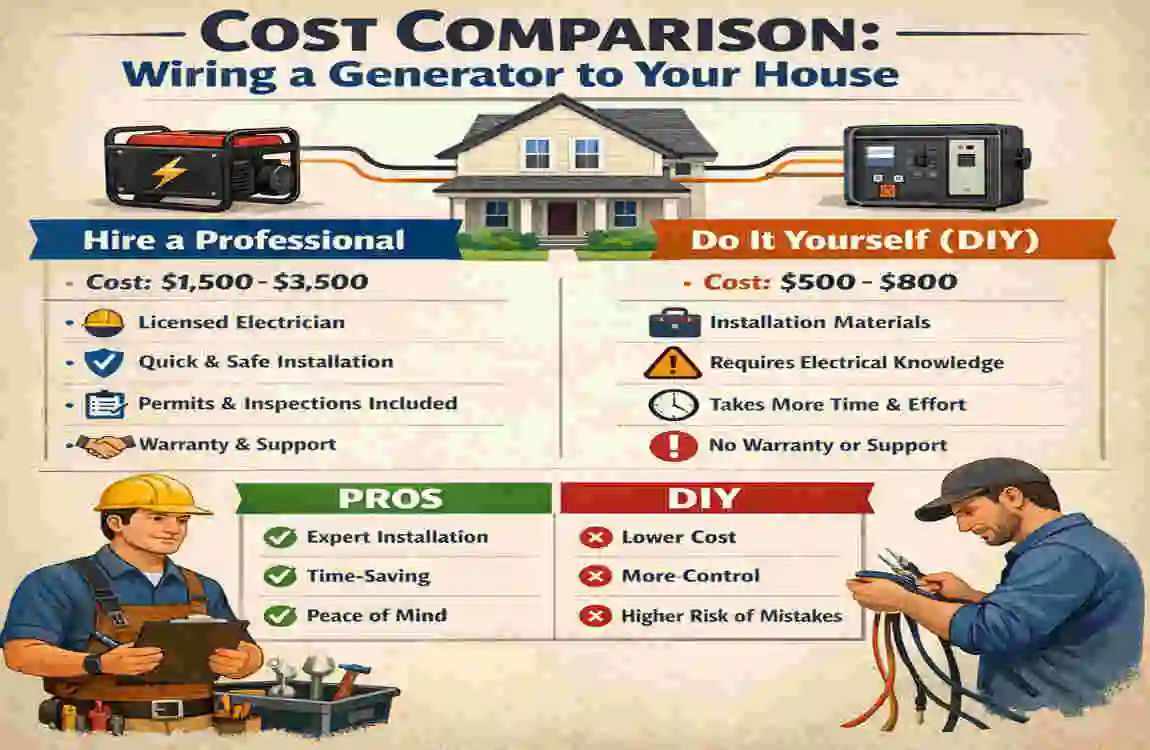
DIY Installation
- Cost: $300-$1,000
- Time: 4-8 hours
- Best for: Experienced DIYers with basic electrical knowledge.
Professional Installation
- Cost: $1,000-$3,000
- Time: 1-2 days
- Best for: Whole-home setups or those without electrical experience.
FAQs
Can I wire a generator to my house myself?
Yes, but only if you use a transfer switch or interlock kit and follow all safety guidelines.
How much does it cost to wire a generator?
DIY costs range from $300 to $1,000, while professional installation can cost $1,000 to $3,000.
Do I need a permit?
In most cases, yes. Check with your local building department for specific requirements.
| Skill Level | Feasibility | Key Risks | Recommendation |
|---|---|---|---|
| Beginner | No | Electrocution, fire, backfeeding grid | Use extension cords only |
| Intermediate | Limited (inlet box only) | Code violations, improper grounding | Add interlock kit ($50-200); get permit |
| Advanced/Electrician | Yes | Overload, surge damage | Full transfer switch install |