
Have you ever stood in your front yard, looked up at your home, and wondered about the sheer physical mass of the building you live in? It is an unusual thought, but it can quickly capture your imagination.
Here is a surprising fact to kick things off: a typical 2,000-square-foot house can weigh as much as 20 adult elephants. Yes, you read that right. When you combine the wood, concrete, glass, and shingles, you are looking at an astonishing amount of mass resting right above your head.
But why should you care about this heavy topic? Understanding the mass of a home matters greatly to a wide range of people. Movers who specialise in lifting and relocating entire structures need to know exact weights to choose the right cranes. Builders and engineers must calculate weight to ensure the structural integrity of a new build. Even everyday homeowners should understand their home’s weight if they are curious about its structural strength or planning major renovations.
Defining the “Typical House”
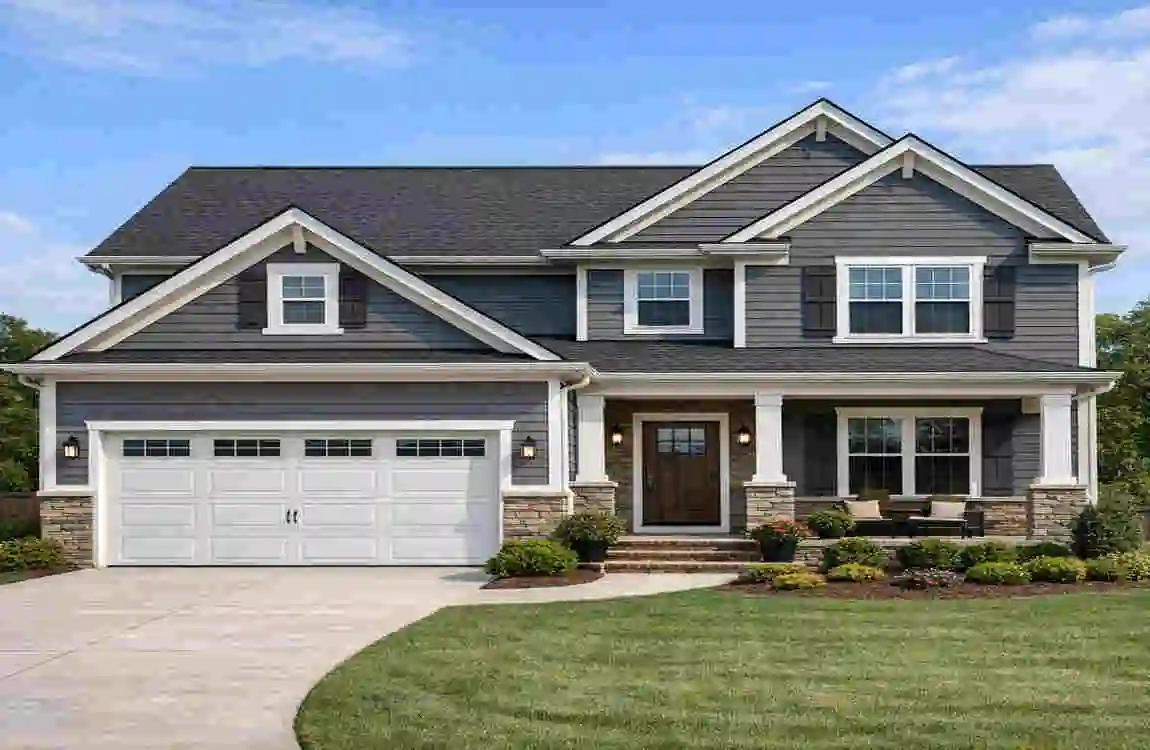
Before we can accurately answer how much a house weighs, we first need to define what we mean by “typical.” Because a house in suburban America looks very different from one in rural Europe.
The American Standard
For the sake of this guide, when we talk about a typical home, we are focusing on U.S. averages. This generally means a single- or two-story wood-frame home spanning 2,000 to 2,500 square feet. This is the classic suburban home you see in neighbourhoods from California to the Carolinas.
We also make a few baseline assumptions to keep our math consistent. For example, our “typical” house does not have a massive underground concrete basement, and it features standard asphalt roofing rather than heavy clay tiles.
Global Variations and Regional Shifts
Of course, definitions shift dramatically depending on the region or the era in which the home was built. If you travel across the globe, the concept of a “standard” home changes completely.
In Europe, for example, you will find many homes built primarily from brick and stone. While these materials offer incredible durability and insulation, they are significantly heavier than American wood frames. On the other hand, in modern housing developments in parts of Asia, heavily poured concrete is the material of choice to withstand severe weather events such as typhoons.
Even within the United States, definitions change. A typical home built in the 1950s was much smaller and lighter than the sprawling, multi-story homes constructed in the 2020s. Understanding these baselines helps us make sense of the math as we move forward.
Key Factors Influencing House Weight
You cannot just look at a house and guess its weight based on its shadow. A home is a complex puzzle made of thousands of different pieces. Let’s break down the primary contributors to the pounds.
Foundation and Framing
At the very bottom of your home, and in its skeleton, a massive chunk of the weight resides. Concrete slab foundations are incredibly heavy. A standard concrete slab for a medium-sized home can easily weigh 50,000 pounds or more. Concrete is dense, durable, and composed of heavy aggregates such as crushed stone and sand.
When it comes to framing, the materials you choose make a huge difference. A traditional wood frame is relatively light and flexible. If a builder were to use a steel frame or concrete block walls instead, the weight of the framing alone could skyrocket by 30% or more.
Roofing and Exterior Siding
Look up at your roof. It might not look overwhelmingly heavy, but those materials add up fast across a large surface area. Standard asphalt shingles typically add about 10 to 20 pounds of weight per square foot of roof space. If you upgrade to slate or clay tiles, you are adding thousands of extra pounds to your home’s total mass.
Your exterior siding works the same way. Vinyl siding is incredibly light and breezy. However, if you wrap your home in a beautiful brick exterior, you can almost double the total weight of your walls. Masonry is gorgeous, but it is undeniably heavy.
Interior Elements and Finishing Touches
We often forget about the things inside the walls. Drywall (also known as sheetrock) lines almost every interior room in a typical house. When you add up all those large gypsum panels, they contribute heavily to the overall mass.
Then you have your flooring. Hardwood, thick carpets, and ceramic bathroom tiles all add up. Finally, consider your heavy fixtures—such as cast-iron bathtubs, large kitchen islands, and bulky HVAC units. These interior elements typically contribute about 20% to 30% of your home’s total mass.
Stories and Overall Size
It goes without saying that bigger homes weigh more. However, how you stack that size matters. Multi-story homes concentrate an enormous amount of weight into a smaller footprint.
When you build up instead of out, you have to add heavy floor joists, staircases, and additional load-bearing beams to support the upper levels safely. As a general rule of thumb, each additional floor you add to a house can pack on an extra 40,000 pounds of weight.
Average Weights by House Size
To make these numbers easier to digest, let’s look at some estimated ranges. Keep in mind that these numbers represent the structure itself—the floors, walls, and roof—but usually do not include the foundation or the furniture inside.
Here is a helpful table for clarity:
House Size (sq ft)Estimated Weight (lbs)Example House Type
1,000 80,000 – 120,000 Small bungalow or cosy cottage
2,000 160,000 – 250,000 Typical suburban family home
3,000+ 300,000 – 500,000 Large, multi-story family home
5,000+ 1,000,000+ Luxury mansion or custom estate
How We Calculate These Averages
You might be wondering where these massive numbers come from. Builders and structural engineers often use a basic rule of thumb for estimating. They typically multiply the home’s total square footage by 80 to 125 to arrive at the weight.
If you have a 2,000-square-foot home on the lighter side (mostly wood, vinyl siding, and an asphalt roof), multiply 2,000 by 80 to get 160,000 pounds. If that same home uses heavier materials, multiply by 125 to get 250,000 pounds.
Imagine seeing these numbers in a colourful infographic! Visualising a small bungalow weighing as much as a commercial aeroplane really puts the sheer scale of home construction into a totally new perspective.
Material Breakdown and Weights
The numbers we just discussed are great averages. Still, the exact materials your builder used will ultimately dictate the final number on the scale. Let’s look closely at how different materials tip the scales.
Wood-Frame Homes
As we mentioned earlier, wood framing is the absolute standard in the United States. In fact, nearly 90% of U.S. houses are built using wood frames. Wood is popular because it is relatively affordable, easy to work with, and incredibly flexible.
Because wood is porous and naturally lighter than stone, a wood-frame home generally sits at the lower end of the weight spectrum. You can estimate that these homes weigh about 100 pounds per square foot.
Brick and Stone Masonry
If you love the classic, historical look of a brick or stone house, you need a foundation that can handle some serious weight. Masonry is incredibly dense. Every individual brick and glob of mortar adds a tiny bit of weight that quickly turns into a massive load.
Homes built primarily with brick or stone generally weigh between 150 and 200 pounds per square foot. This is why you rarely see heavy stone homes being lifted and moved on the back of transport trucks!
Concrete and Steel Structures
When durability is the primary goal, builders turn to concrete and steel. These materials are widely used in commercial building construction but are becoming more popular in residential construction, especially in areas prone to hurricanes or earthquakes.
These materials are the undisputed heavyweights of the construction world. A home built with reinforced concrete walls and steel support beams will easily exceed 200+ pounds per square foot.
Modular and Prefabricated Homes
Now, let’s look at the complete opposite end of the spectrum. Modular homes (often called prefab homes) are built in factories and transported to the building site in large sections. Because they have to be driven down the highway on trucks, they are specifically engineered to be as light as possible while still being safe.
Prefab homes are often 20% to 40% lighter than a traditional stick-built home. A typical 1,500-square-foot modular unit might weigh just 50,000 pounds.
Pros and Cons: Light vs Heavy Materials
Why would you choose a heavy material over a light one, or vice versa? Here is a quick breakdown to help you understand the engineering choices:
Lightweight Materials (Wood, Prefab Panels):
- Pro: Much easier and cheaper to transport and assemble.
- Pro: Wood is flexible, which is actually a massive benefit in seismic zones (earthquake areas) where a house needs to sway slightly without snapping.
- Con: Less resistant to high winds and severe impacts compared to solid concrete.
Heavy Materials (Concrete, Stone):
- Pro: Incredible thermal mass, meaning they hold heat in the winter and stay cool in the summer, making them highly energy efficient.
- Pro: Extremely resistant to hurricanes, tornadoes, and fire.
- Con: Very expensive to install and requires a massively reinforced foundation to prevent the house from sinking into the ground.
Calculating Your House’s Weight
Are you feeling curious about your own living space? You don’t need a giant scale to figure out your home’s mass. You can actually calculate a very solid estimate on your own.
Here is a step-by-step guide to calculating the weight of your house:
- Measure your total square footage. You need to include every finished level of your home. If you have a two-story home with 1,000 square feet on the first floor and 1,000 on the second floor, your total is 2,000 square feet. Do not include your driveway or an unattached garage.
- Estimate the pounds per square foot based on your materials. Look at your house. Is it mostly wood and vinyl siding? Use 80 to 100 lbs. Is it wrapped entirely in brick? Use 150 lbs. (Tip: You can find specialised online calculators that help you narrow down this specific number).
- Do the math. Multiply your total square footage (Step 1) by your estimated material weight (Step 2).
- Add a buffer for your belongings. The structure itself is called the “dead load,” but your furniture, appliances, and even the people inside make up the “live load.” Add an extra 10% to 20% to your final number to account for your heavy refrigerators, couches, and overflowing closets!
- Use organisational tools. If you want to get really specific, use a spreadsheet. Create columns for flooring, walls, and roofing, and estimate the weight for each room.
A Quick Warning: While this DIY math is fun and gives you a great ballpark figure, it is just an estimate. If you are actually planning to move your house or knock down major walls, do not rely on a spreadsheet. You must hire a professional structural engineer or an appraiser to give you a certified, accurate weight calculation to ensure safety.
Real-World Examples and Case Studies
Numbers on a screen can feel abstract. To really grasp how much a typical house weighs, it helps to look at some real-world examples and historical case studies. Let’s see how these weights play out in real life.
The Suburban Split-Level
Imagine a classic suburban split-level home built in the 1980s. It features 2,200 square feet of living space, wood framing, a brick facade on the lower half, and a shingled roof.
When a family recently decided to move this exact type of home to a new plot of land across town, the movers had to calculate the exact weight. The home weighed in at 220,000 pounds. The moving company had to coordinate multiple heavy-duty transport trucks and carefully map out a route that avoided bridges with strict weight limits. The sheer logistics of moving a 220,000-pound object down a public street are mind-boggling!
The Heavy Historical Homes
Let’s step back in time. Historical homes, particularly those from the Victorian era, were built with entirely different philosophies. They often featured thick plaster walls, heavy solid wood doors, and multi-layered brick exteriors.
A large Victorian brick house sitting at around 3,000 square feet can easily tip the scales at 400,000 pounds. Movers and renovators have to treat these homes with extreme caution. Because the weight is so massive, any structural shifting during a renovation can cause the antique brickwork to crack instantly.
Celebrity Mansions and Mega-Estates
When we look at the end of luxury living, the numbers become almost comical. Think about sprawling celebrity mega-mansions that span 20,000 square feet or more.
These estates often feature imported marble floors, massive indoor swimming pools, multi-level concrete parking garages, and steel framing. A luxury estate of this calibre can easily weigh 10 million pounds or more. These are not just homes; they are essentially commercial fortresses designed for a hyper-luxurious lifestyle, and they require foundations that rival modern skyscrapers.
Disaster Insights: Hurricane Relocations
Sometimes, knowing the weight of a house is a matter of Survival. In coastal areas prone to hurricanes, homeowners often choose to elevate their homes on heavy timber pilings to avoid flooding.
Lifting a house requires precise weight calculations. If a 150,000-pound coastal cottage is lifted unevenly, the entire structure can snap in half. Engineers use massive hydraulic jacks to slowly raise the home, continuously calculating weight distribution to keep the fragile structure perfectly balanced in the air.
Why House Weight Matters
You might still be wondering why any of this matters to the average person. Unless you are moving your home down the highway, why should you care about the pounds per square foot? There are actually several very important reasons.
Moving and Relocation Constraints
As we touched on earlier, moving a home is an engineering marvel. Large transport trucks and hydraulic lifting cranes have strict, unbreakable capacity limits. A standard heavy-duty lifting crane might max out at 80,000 pounds. If your house weighs 160,000 pounds, the moving crew needs to know instantly so they can bring a second crane or cut the house into two separate modules for the move.
Engineering and Insurance Requirements
Your local government and your insurance company care deeply about your home’s weight. In earthquake-prone areas like California, structural engineers must calculate exactly how a 200,000-pound mass will behave when the ground shakes violently.
Similarly, in flood zones, a home must be heavy enough to resist the lifting force of rushing water, but light enough to be supported by raised pilings. These weight calculations directly impact your building permits and your insurance premiums.
Safe Renovations
Are you thinking about knocking down a wall to create a trendy open-concept kitchen? You need to understand weight!
Your home’s weight pushes down from the roof, through the walls, and into the foundation. This is called a load-bearing path. If you remove a wall that supports 15,000 pounds of the second floor, that weight has to go somewhere. If you do not install a proper support beam to carry that mass, your roof could literally collapse into your kitchen.
Environmental Sustainability
Finally, home mass plays a huge role in the green building movement. Heavy materials like concrete and steel require substantial energy to manufacture and transport. Lighter homes generally have a much smaller carbon footprint during construction. By understanding home weight, modern architects are finding ways to build lighter, eco-friendly homes that are kinder to our planet.
Myths and Misconceptions
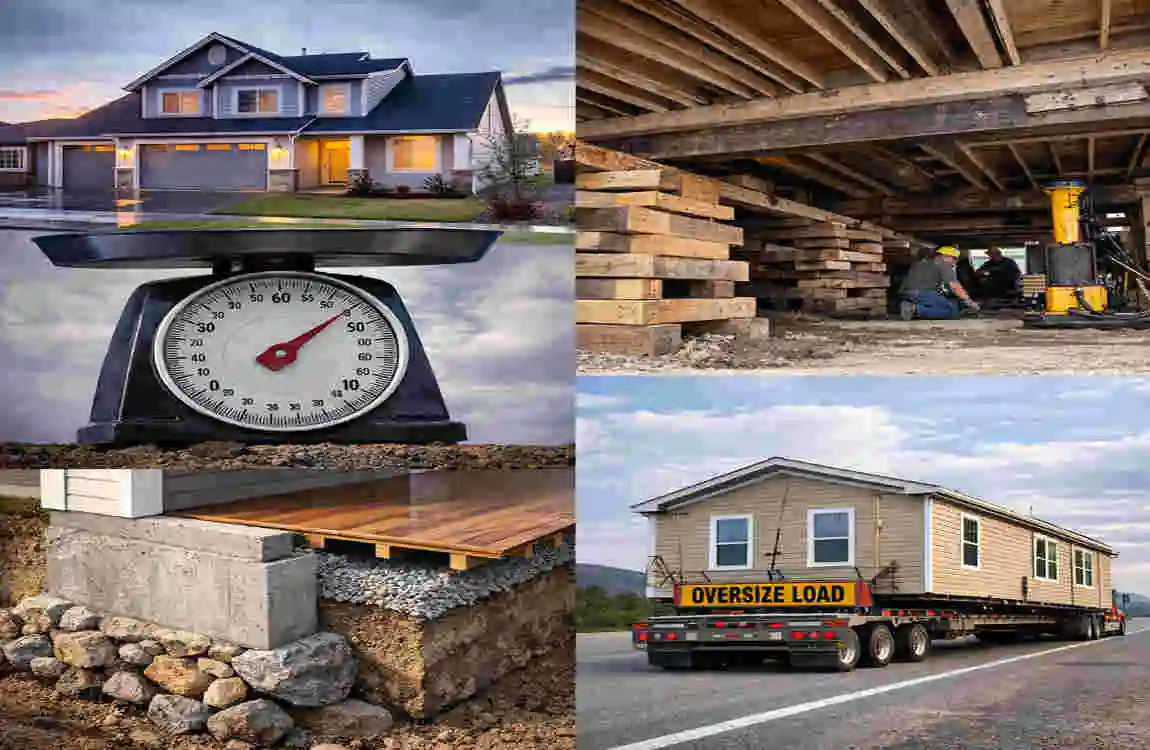
Whenever a topic is complicated, myths tend to pop up. Let’s take a moment to debunk some of the most common misunderstandings about home weight.
All Houses Weigh the Same
This is completely false. As we have seen, two houses sitting side by side on the same street can have wildly different weights. If your neighbour has a wood-frame house and you have a solid brick house of the same size, your house will be significantly heavier. There is no one-size-fits-all number.
Size Alone Determines Weight
While square footage is a major factor, it is not the only rule. A compact, 1,500-square-foot concrete bunker will easily outweigh a sprawling, 3,000-square-foot lightweight modular home. Material density will always trump square footage at the final weigh-in.
Prefab Homes are Flimsy Because They are Light
This is an unfair myth that plagues the modular home industry. People assume that because prefab homes are 30% lighter, they must be weak. In reality, modern prefab homes are engineered brilliantly. They use advanced, lightweight materials, such as structural insulated panels (SIPs), which are incredibly strong and highly energy-efficient. They are lighter but not at all flimsy.
Future Trends in Home Mass
The way we build homes is evolving rapidly. As technology improves, the typical home’s weight is shifting. Here is a glimpse into the future of home construction and what it means for the scale.
Printed Homes
One of the most exciting innovations in construction is 3D printing. Large robotic printers can now extrude layers of specialised concrete composites to build walls in a matter of hours.
Interestingly, these 3D-printed homes use a honeycomb-like interior structure within the walls. This creates incredible strength while using far less material. As a result, a 3D-printed home can be 30% to 50% lighter than a traditional solid concrete home, completely changing the game for builders.
Net-Zero Builds and Insulation
The push for energy independence has given rise to Net-Zero homes—buildings that produce as much energy as they consume. To achieve this, builders use massive amounts of insulation.
Instead of heavy wood or brick, many Net-Zero homes use thick foam-insulated wall panels. These panels provide incredible thermal protection while significantly reducing the overall weight of the walls.
The Space-Efficient Tiny Home Movement
We cannot talk about the future without mentioning the tiny home craze. As housing prices soar, thousands of people are downsizing to hyper-efficient tiny houses on wheels.
These homes are specifically designed for mobility. Builders use the lightest possible materials, from metal roofing to thin wood panelling. A fully finished tiny home typically weighs well under 50,000 pounds, making it easy to hitch to a heavy-duty pickup truck and tow to a new state. They represent the ultimate combination of housing and mobility.
How Much Does a Typical House Weigh? – FAQ
What is the average weight of a typical house?
A typical single-family house usually weighs between 80 and 160 tons (160,000–320,000 pounds) depending on its size, materials, and structure.
What factors affect the weight of a house?
The weight mainly depends on the construction materials, number of floors, roof type, foundation, and overall size of the home.
Do brick houses weigh more than wooden houses?
Yes. Brick or concrete houses are much heavier than wooden frame houses because masonry materials are denser and thicker.
Does furniture count in the weight of a house?
Usually, when estimating a house’s weight, furniture and personal belongings are not included. Only the structural parts like walls, roof, and foundation are considered.
Why is knowing a house’s weight important?
Knowing the weight helps engineers and builders design strong foundations, transport modular homes, and ensure structural safety.