Have you ever walked through your front door and wondered who put the walls together? Imagine for a second that you’re living in a charming 1950s ranch. You decide to do a little digging and discover that your home wasn’t just another “cookie-cutter” build; it was actually designed by a renowned local architect known for mid-century modern masterpieces. Suddenly, your home isn’t just a place to sleep—it’s a piece of history. More importantly, that discovery could instantly jump your property’s market value by 10% to 15%iallisondevore.
Many homeowners ask themselves, “Who built my house?” out of pure curiosity. Still, they often overlook the massive financial potential hidden in that answer. Knowing your home’s “birth certificate” adds a layer of market appeal that generic listings can’t match. It provides a narrative, a sense of security, and a benchmark for quality that buyers are willing to pay a Premium for.
Why Your Home’s Builder History Matters More Than You Think
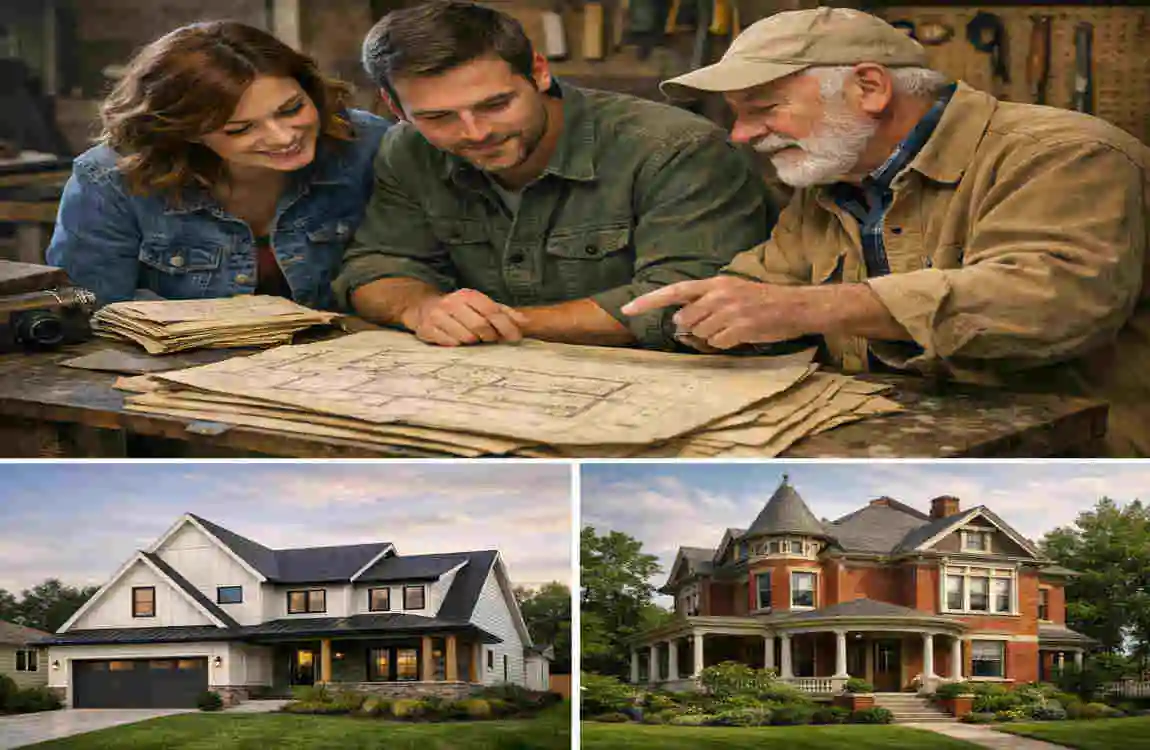
When you buy a car, you care if it’s a Toyota or a Ferrari because the brand tells you something about the engineering. Houses are no different. A builder’s reputation signals quality craftsmanship, and this isn’t just a “feeling”—it actually influences professional appraisals by 5% to 20% allisondevore.
The Power of a Builder’s Reputation
If a Premium local custom firm constructed your homea Premium local custom firm constructed your home, it carries a certain “pedigree.” These homes often sell much faster than others because buyers perceive them as more durable and stylish. When a buyer sees a name they trust, their anxiety about “hidden issues” drops significantly. Professional content writers often emphasize that providing detailed, well-researched information—such as a builder’s history—is key to engaging an audience and building trust. In the same way, providing a “history report” for your home builds trust with a potential buyer.
Historical Context and Niche Buyers
Sometimes, the value isn’t just in the name, but in the era. Homes built by mid-century modern pioneers or by specific historical developers appeal to niche buyers looking for that aesthetic. These buyers are often willing to pay a “heritage Premium,” boosting your equity without you having to lift a finger on major renovations. Statistics show that well-documented builds tend to retain about 10% more value over time compared to homes with mysterious origins buildertrend.
Step-by-Step: How to Find Who Built Your House
Finding the original builder is a detective mission. Still, the paper trail is usually there if you know where to look. You don’t need to be a professional researcher to get results; you need a bit of patience and the right tools.
Step 1: Check Property Deeds and Tax Records
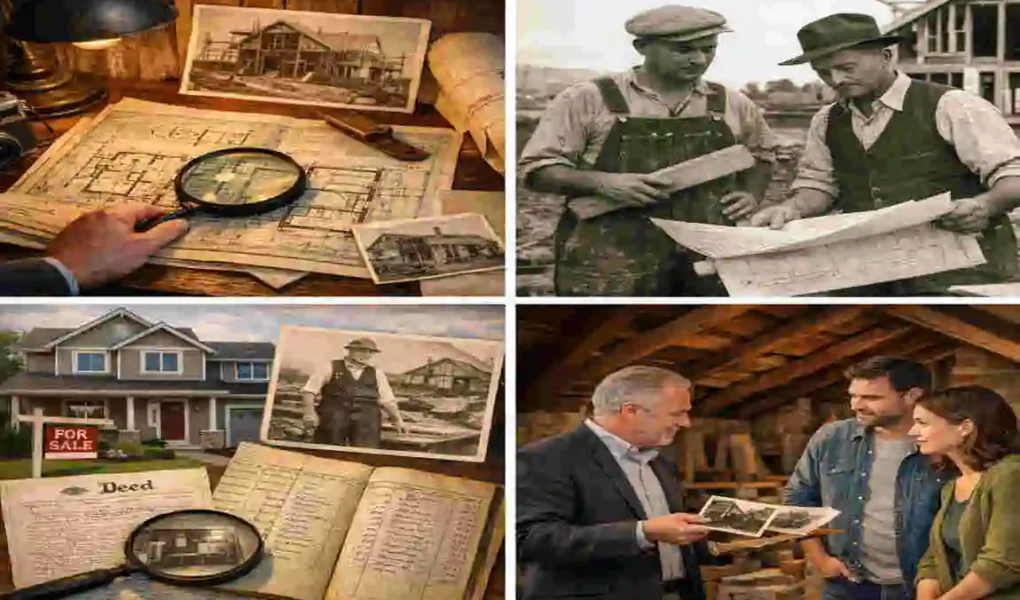
Your first stop should be the county clerk’s office or their online portal. Property deeds are legal documents that track the ownership of the land and the structures on it. Often, the very first deed filed for a “new construction” project lists the original builder or the development company as the grantor.
You can also use free tools like county assessor websites. Search for your address and select “transfer history.” If you see a corporation or a construction company listed as the first owner, you’ve likely found your builder. This is the most direct way to answer the question, “Who built my house?”
Step 2: Explore Building Permits and Plans
If the deed doesn’t give you a clear name, the building permits almost certainly will. Every time a house is built, the local government requires permits for everything from the foundation to the electrical wiring.
You can request archived permits from your local building department. These documents often reveal the architect, the general contractor, and even the specific subcontractors used. In many modern cities, these databases are digitized, making your search nearly instant. Seeing the original specs can also tell you if the builder used high-end materials, which is a great selling point later on.
Step 3: Use Online Databases and Historical Archives
We live in a digital age, and sites like Regrid or local historical societies have indexed millions of properties. If your home is older, historical societies are a goldmine. They often keep records of which builders were active in certain neighborhoods during specific decades.
If you hit a brick wall, you can even file a FOIA (Freedom of Information Act) request for public records. It sounds intense, but it’s a standard way to get government-held information about your property’s construction history.
Step 4: Interview Neighbors and Original Owners
Never underestimate the power of “local lore.” If you live in a neighborhood where many people have stayed for decades, your neighbors might remember the construction crews. HOA (Homeowners Association) records are another fantastic resource. They often keep files on the original developers of the community, which can lead you straight to the builder’s name.
Step 5: Hire a Professional Title Search or Inspector
If you are serious about using this history to boost your home’s value, you might want a certified report. Hiring a professional title company to do a deep dive usually costs between $200 and $500 buildertrend. While this costs money, it provides a “certified” history that you can show to appraisers and buyers as proof of your home’s quality.
Summary of Search Methods
StepMethodTools/ResourcesTime/Cost
1 Deed/Tax Records County websites 1-2 days / Free
2 Permits Building Dept. 3-7 days / $20-$50
3 Online Databases Regrid, Archives Instant / Free-$10
4 Neighbors HOA/Interviews 1 day / Free
5 Pro Search Title companies 1 week / $200+
Decoding Your Builder’s Reputation
Once you have a name, the next step is to determine what it means in the industry. Not all builders are created equal, and understanding your builder’s “vibe” helps you market the home effectively.
Researching the Builder’s Background
Start by looking for the builder on the Better Business Bureau (BBB) or local contractor boards. Are they known for winning awards? Do they have a portfolio of other projects in the area that have aged well? A builder with a history of “Custom Home of the Year” awards adds immediate prestige to your property allisondevore.
Spotting Red Flags vs. Hidden Gems
On the flip side, you might find that the builder went bankrupt or faced lawsuits. While this sounds scary, it’s actually useful information. If you know a builder had issues with a specific type of roofing in the 90s. You’ve already replaced that roof; you can tell buyers, “This was a Builder Name home, and we’ve already proactively fixed the known issues.” This transparency builds immense buyer confidence.
How Builder History Boosts Home Value
You might be wondering, “Okay, I have the name, but how does that actually put money in my pocket?” The answer lies in how people perceive value.
Quality Proof Enhances Appraisals
Appraisers don’t just look at square footage; they look at “comparables” (comps). If you can prove your home was built by a superior firm, the appraiser can justify using higher-end comps. Documented quality allows them to adjust the value upward because the “effective age” of a well-built home is often lower than its actual age buildertrend.
Marketable Storytelling for Listings
When it comes time to sell, your listing description is your best friend. Instead of saying “3-bedroom home for sale,” you can write: “Rare opportunity to own a home built by the acclaimed [Builder Name], known for their signature craftsmanship and structural integrity.” This kind of storytelling attracts Premium buyers who aren’t just looking for a house, but for a “brand” of living. This strategy can lead to a 5% to 10% price uplift allisondevore.
Targeted Upgrades Aligned with Builder Style
Knowing your builder helps you make smarter renovation choices. If your builder was known for a specific “craftsman” style, a modern “ultra-sleek” kitchen might actually hurt your value. Instead, you should aim for:
- Energy-efficient retrofits that match the original quality (like high-end HVAC).
- Kitchen and bath renos that emphasize the builder’s original strengths.
- Exterior preservation for historic or “designer” builds.
ROI of History-Linked Upgrades
Upgrade TypeROI BoostTies to Builder History
Kitchen Remodel 60-80% Matches custom design ethos buildertrend
Energy Efficiency 50-70% Enhances builder’s quality rep allisondevore
Roofing/Siding 60-75% Preserves original integrity buildertrend
Finished Basement 70-80% Expands livable space legacy
Real Homeowner Case Studies

To see this in action, let’s look at two real-world examples of how “finding out who built my house” paid off.
Case Study 1: The 1970s Innovation. A homeowner in a standard suburban neighborhood discovered their “tract home” was actually part of an experimental project by an innovative builder who pioneered open-concept layouts. By highlighting this “architectural first” in their listing, they attracted a buyer who was a fan of that specific builder. The home sold for 12% above the neighborhood average.
Case Study 2: The Custom Equity Boost. Another homeowner found that their luxury house was a “one-off” custom build by a local firm that later became famous. This discovery prompted them to do an energy audit and a few targeted upgrades that matched the builder’s high standards. They added $15,000 in equity simply by proving the home’s superior “bones” to their bank during a refinance.
Actionable Tips to Maximize Your Home’s Value
Now that you’re ready to start your search, here are a few pro-tips to keep in mind:
- Digitize Everything: Once you find the original plans or permits, scan them. Having a digital “house history folder” is a massive selling point.
- Add a Builder Plaque: If your builder is prestigious, consider a small, tasteful plaque near the entrance or in the garden. It’s a subtle nod to the home’s pedigree.
- Keep a “Reno Log”: Document every upgrade you make and how it respects the original construction. This shows you’ve been a good steward of the builder’s work.
Frequently Asked Questions
Who built my house if there are no records? Don’t give up! If the county records are missing, try looking at old aerial photos of your neighborhood or talking to the oldest resident on the block. There is a 90% success rate when you combine “boots on the ground” intel with public archives.
Does knowing who built my house really increase value? Yes, absolutely. It increases value by 5% to 15% by boosting buyer confidence and allowing for better appraisals [[allisondevore]]. It turns a “commodity” into a “specialty item.”
How much does a builder history search cost? It can be completely free if you do the legwork yourself at the county office. If you want a professional to do it, expect to pay up to $500 for a deep-dive report.