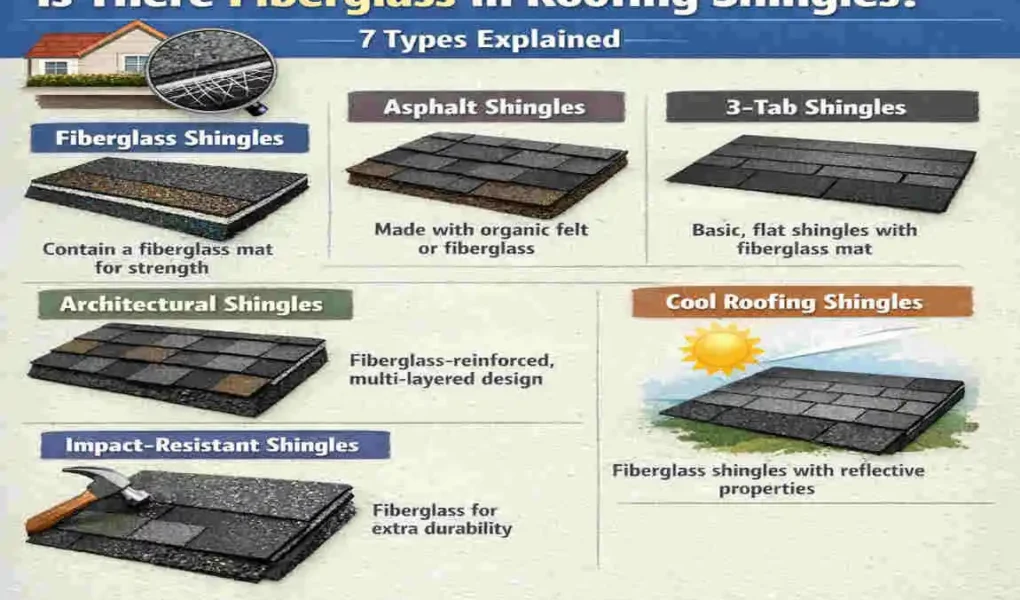
The short and direct answer is yes. If you have a modern asphalt roof, it is almost certain that fiberglass is inside those shingles. In fact, since the late 1970s, the roofing industry has undergone a massive shift, moving away from paper-based materials to fiberglass reinforcement. Today, industry statistics suggest that over 90% of the asphalt shingles installed on homes in the United States rely on a fiberglass mat for their strength and durability.
What Are Roofing Shingles? A Quick Overview
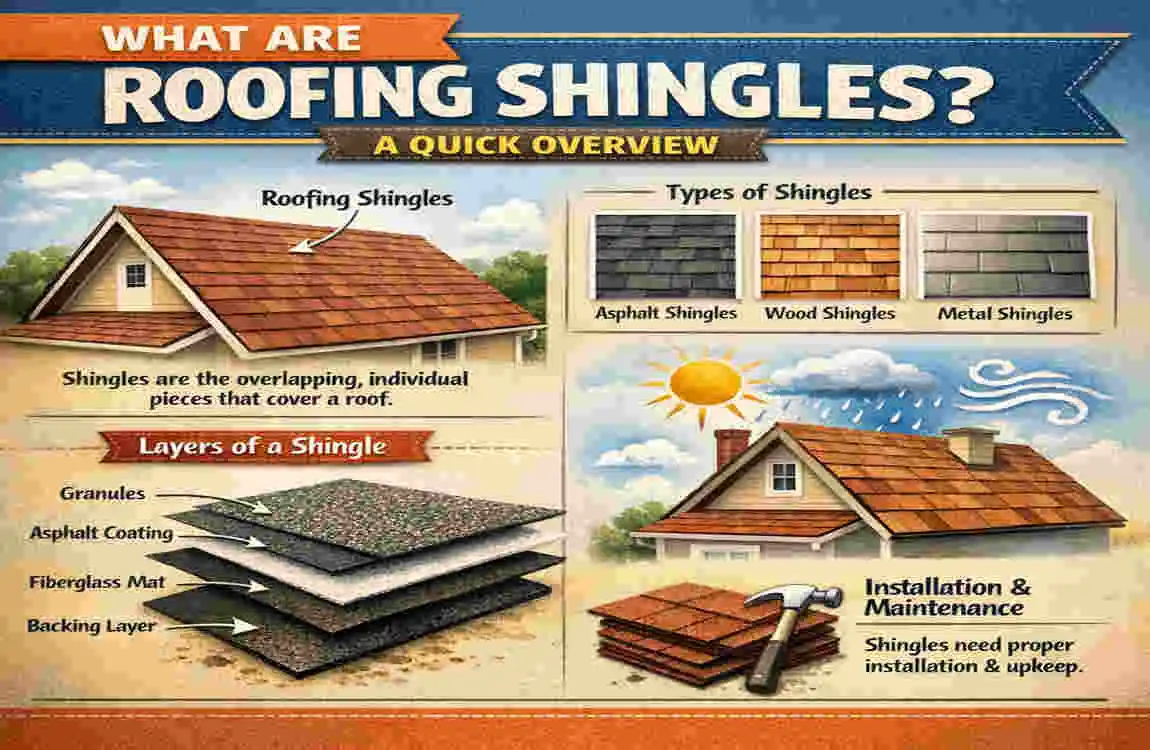
Before we dissect the ingredients, it is helpful to understand what a shingle actually is. When you look at a roof, you see a textured, colored surface. However, a shingle is actually a piece of engineering similar to a layer cake or a sandwich. It is made of composite materials designed to work together to shed water and resist the sun.
The Evolution of the Shingle
For a long time, the “backbone” of a shingle wasn’t fiberglass at all. It was organic material. We are talking about recycled rags, wood pulp, cardboard, and paper. This material, known as “felt,” was saturated in asphalt to make it waterproof. These were called Organic Shingles.
While they worked well for decades, they had a weakness. Organic materials like paper and wood want to absorb moisture. Over time, or in very humid climates, these shingles would swell, curl, and eventually rot.
Enter the fiberglass revolution. Manufacturers realized that by replacing the paper mat with a non-woven fiberglass mat, they could create a shingle that was thinner, lighter, and completely immune to rot. This shift changed the roofing industry forever.
The Anatomy of a Modern Shingle
To answer “Is there fiberglass in roofing shingles?” fully, you have to look at the cross-section of the material. Here is a simple breakdown of the layers:
- The Top Layer: These are ceramic-coated mineral granules. They give the roof its color and, more importantly, protect the asphalt from UV rays.
- The Asphalt Coating: This is the waterproofing agent. It covers the mat and holds the granules in place.
- The Core (The Mat): This is where the fiberglass lives. It is the reinforcement layer that holds everything together.
- The Sealant Strip: A line of adhesive that melts in the sun to seal the shingles to each other.
Is There Fiberglass in Roofing Shingles? The Straight Answer
Let’s get straight to the point. Yes, fiberglass is the standard reinforcement material in approximately 95% of asphalt and composition shingles manufactured today.
If you buy a pack of shingles from a major brand like GAF, Owens Corning, or CertainTeed, you are buying a product built around a fiberglass mat.
Why Do Manufacturers Use Fiberglass?
You might be wondering why the industry decided to switch almost entirely to glass fibers. It wasn’t just about saving money; it was about saving homes.
Fire Resistance This is the biggest benefit. Paper burns; glass does not. Organic felt shingles usually carried a Class B or Class C fire rating. Because the core of a modern shingle is glass fiber, these shingles typically achieve a Class A fire rating, which is the highest rating available. This means they are effective against severe exposure to external fires and are not readily flammable.
Tensile Strength Fiberglass mats are incredibly strong despite being thin. They prevent the shingles from tearing. When properly installed, many fiberglass-reinforced shingles can withstand wind speeds of 110 to 150 mph. The fiberglass acts as a skeleton, keeping the asphalt from ripping apart during a storm.
Moisture Resistance As we touched on earlier, fiberglass is inorganic. It does not drink water. Even if the asphalt coating cracks slightly over 20 years, the fiberglass mat underneath will not rot, swell, or change shape due to humidity. This is vital for maintaining the structural integrity of the roof profile.
The Manufacturing Process
The way these shingles are made is fascinating. It starts with a huge roll of fiberglass mat that looks a bit like thin white fabric. This mat is fed into a machine that coats it on both sides with hot, liquid asphalt. Because fiberglass is porous, the asphalt penetrates it, creating a solid, waterproof bond. Finally, the granules are dropped onto the hot asphalt, and the whole sheet is cooled and cut into the shingle shapes you see on your roof.
The 7 Types of Roofing Shingles: Fiberglass Breakdown
Now that we have established that fiberglass is the industry standard, we need to look at the variety available. Not all shingles are created equal. Depending on your budget and your home’s architectural style, you might encounter different roofing “species.”
Here are the 7 types of shingles and how fiberglass plays a role in each.
Fiberglass Asphalt Shingles (3-Tab)
When people ask, “Is there fiberglass in roofing shingles?” they usually mean this specific type. The 3-Tab shingle is the most basic, economical, and traditional roofing material found on older homes and budget-friendly new builds.
The Role of Fiberglass: In a 3-tab shingle, a single layer of fiberglass mat is coated with asphalt. The shingle is cut with two notches (tabs) along the bottom edge, giving it the appearance of three separate pieces when installed.
Pros:
- Affordability: This is the cheapest roofing option on the market.
- Lightweight: Because they use less asphalt and a thinner fiberglass mat, they put less stress on your roof framing.
- Water Shedding: Their flat design is excellent for letting water slide right off.
Cons:
- Durability: They are thinner than other types. They generally only last 15 to 20 years.
- Wind Resistance: They are more prone to blowing off in high winds compared to laminated options.
- Aesthetics: They have a very flat, two-dimensional look that some homeowners find dated.
Architectural (Laminated) Fiberglass Shingles
If you drive through a modern suburban neighborhood, this is likely what you’ll see. Architectural shingles, also known as laminated or dimensional shingles, have become the new standard for residential roofing.
The Role of Fiberglass: These shingles take the fiberglass concept to the next level. Instead of a single layer, manufacturers bond (laminate) two or more layers of fiberglass shingle material together. One layer is usually cut into a “dragon’s tooth” pattern and laminated to a solid base sheet.
Pros:
- Depth and Texture: Because of the multiple layers, they have a thick, three-dimensional appearance that mimics wood shake or slate.
- High Durability: They are heavier and stronger. Most come with warranties ranging from 30 to 50 years.
- Impact Resistance: The double layer of fiberglass and asphalt offers better protection against hail.
Cons:
- Weight: They are significantly heavier than 3-Tab shingles, though most modern roof structures handle this fine.
- Cost: They cost about 20% to 30% more than 3-Tab shingles, though the longer lifespan usually offers better value.
Luxury Fiberglass Shingles
For homeowners who want the absolute best without switching to real slate or cedar, Luxury Shingles are the answer. These are the heavyweights of the asphalt world.
The Role of Fiberglass: These shingles utilize a much heavier, thicker fiberglass mat, reinforcing a significantly larger amount of asphalt. They are designed to replicate the look of quarried slate or hand-split shakes perfectly.
Pros:
- Incredible Aesthetics: They create stunning shadow lines and add massive curb appeal.
- Longevity: It is not uncommon for luxury shingles to last 50 years or more.
- Extreme Durability: They offer the highest impact and wind ratings in the industry.
Cons:
- Price: They are expensive—often double the cost of standard architectural shingles.
- Installation: They are very heavy and harder to cut, which may increase installation labor costs.
Fiberglass Composite Shingles
This is where the lines start to blur between “asphalt” and “synthetic.” Composite shingles are engineered products that mix various materials to create a superior roofing product.
The Role of Fiberglass: In many composite shingles, fiberglass serves as a binding agent, mixed with recycled plastics, rubber, or polymers. In other cases, a fiberglass mat is used as the core substrate, coated with a polymer blend rather than standard asphalt.
Pros:
- Eco-Friendly: Many are made from recycled materials.
- Flexibility: They are less likely to crack in freezing temperatures compared to standard asphalt.
- Fade Resistance: They hold their color longer than granule-covered shingles.
Cons:
- Cost: They represent a premium price point.
- Newer Technology: They haven’t been around as long as asphalt, so the 50-year track record is theoretical, based on lab testing.
Metal Shingles with Fiberglass Backing
Wait, metal? Yes. While metal roofing is usually sold in large sheets (standing seam), you can also buy metal shingles designed to look like tile or slate.
The Role of Fiberglass: You might not expect to find fiberglass here, but it plays a crucial hidden role. Many high-end metal shingles feature a fiberglass-reinforced underlayment or backing. This fiberglass layer provides insulation, adds rigidity to the metal so it doesn’t dent as easily, and most importantly, it dampens the sound of rain.
Pros:
- Longevity: Metal roofs can last 40 to 70 years.
- Energy Efficiency: They reflect heat, keeping the attic cooler.
- Quiet: The fiberglass backing solves the “noisy metal roof” problem.
Cons:
- High Upfront Cost: Metal is a significant investment.
- Repair Difficulty: Replacing a single damaged metal shingle is difficult.
Synthetic Shingles (Fiberglass-Reinforced Polymer)
Synthetic shingles are the chameleons of the roofing world. They are molded from high-tech polymers to look exactly like slate, wood, or clay tile.
The Role of Fiberglass: Fiberglass is often chopped and mixed into the polymer liquid before molding. This creates a “fiber-reinforced polymer.” The glass fibers give the plastic structural integrity, preventing it from warping in the sun or shattering in the cold.
Pros:
- Lightweight: They look like slate without requiring a reinforced roof deck to support their weight.
- Toughness: You can walk on them without breaking them (unlike real slate or clay).
- Class A Fire Rating: Thanks to the fiberglass and fire retardants in the mix.
Cons:
- Plastic Look: Cheap versions can look shiny or fake.
- Price: They are priced similarly to Luxury asphalt or real wood shakes.
Organic Shingles (The “No Fiberglass” Alternative)
We must include this category for context, even though it is largely obsolete. If your home was built before 1980 and hasn’t had the roof replaced, you might still have these.
The Role of Fiberglass: None. There is zero fiberglass in these shingles. They use a mat made of cellulose (recycled paper/wood).
Pros:
- Cold Weather Flexibility: They were easier to install in freezing weather because they were softer.
- Tear Strength: They were hard to tear by hand (though they rotted easily).
Cons:
- Moisture Absorbent: They rot, warp, and curl.
- Fire Hazard: They burn much more easily than fiberglass.
- Obsolete: You cannot buy these new today.
Comparison Table: Fiberglass Shingle Types
Shingle Type Fiberglass Content Est. Lifespan Cost Profile Best Feature
3-Tab Single Mat Layer 15-20 Years Low Affordability
Architectural Multi-Layer Mat 30-50 Years Medium Value & Looks
Luxury Heavy-Duty Mat 50+ Years High Curb Appeal
Composite Polymer Blend 40-50 Years High Eco-Friendly
Metal Shingle Backing Layer 40-70 Years Very High Longevity
Synthetic Reinforced Mix 50+ Years High Impact Strength
Organic None 15-20 Years N/A (Obsolete) None today
Pros and Cons of Fiberglass in Roofing Shingles
So, are roofing shingles made of fiberglass? Yes. Is that a good thing? Almost universally, the answer is yes. However, like any building material, it has its strengths and weaknesses.
The Advantages (Pros)
- Superior Fire Protection: This cannot be overstated. Fiberglass acts as a fire barrier. In areas prone to wildfires, having a Class A fire-rated roof can literally save your home.
- Lighter Weight: Because fiberglass is stronger per square inch than felt paper, the shingles can be thinner and lighter. This makes them easier to haul up a ladder and puts less strain on your house’s structure.
- Cost-Effectiveness: Fiberglass shingles are relatively cheap to manufacture compared to slate, tile, or metal. This keeps roofing costs down for the average homeowner.
- Environmental Stability: Fiberglass doesn’t react to the environment. It won’t biodegrade, rot, or change size when the humidity spikes.
The Disadvantages (Cons)
- Brittleness in Cold: This is the main complaint from roofers. In extremely cold weather, fiberglass-reinforced asphalt becomes hard and brittle. If a roofer tries to install them in freezing temperatures, the shingles can crack or break.
- Fiberglass Dust: If you cut these shingles (which is necessary during installation), they release fiberglass dust. This can be very itchy and irritating to the skin, eyes, and lungs if proper safety gear isn’t worn.
- Less “Heavy” Appearance: Some purists prefer the thick, chunky look of old organic shingles or wood shakes. Standard 3-tab fiberglass shingles can look very flat and thin by comparison.
Fiberglass Shingles vs. Alternatives: Which to Choose?
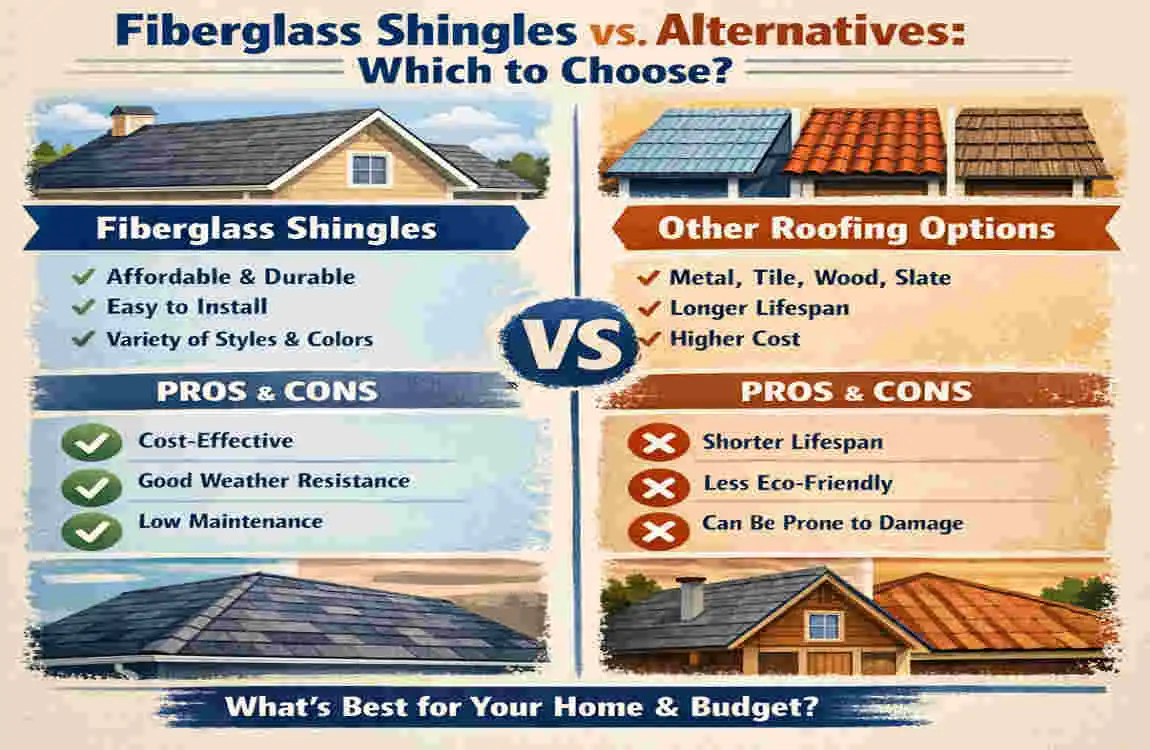
When you are deciding on a new roof, you are essentially choosing between fiberglass-based asphalt shingles and “everything else.”
If you live in a climate with intense heat, like the summers in the southern US, fiberglass is a clear winner over organic or wood options because it won’t dry out and crumble as fast.
Choose Fiberglass Asphalt If:
- You want the best balance of cost and performance.
- You need a Class A fire rating.
- You want a wide variety of color and style options.
- You want a roof with a manufacturer’s warranty that is easy to process.
Choose Alternatives (Metal, Tile, Slate) If:
- You have a significantly higher budget.
- You want a roof that will last 70+ years (basically a “forever roof”).
- You have a specific architectural style (like a Spanish Villa needing clay tile) that asphalt can’t replicate perfectly.
Installation, Maintenance, and Safety Tips
Since we have confirmed that there is fiberglass in the roofing shingles, we need to discuss how to handle them. If you are a DIY enthusiast planning to repair a few shingles yourself, or if you are supervising a crew, keep these tips in mind.
Handling Safety
Fiberglass is an irritant. It is essentially microscopic glass shards.
- Wear Gloves: Never handle cut shingles with bare hands.
- Long Sleeves: Protect your arms from the “fiberglass itch.”
- Respirator/Mask: If you are cutting shingles with a circular saw or utility knife, wear a dust mask. You do not want to inhale glass fibers or asphalt dust.
Maintenance
The fiberglass mat makes the shingle durable, but the asphalt coating still needs to be cared for.
- Check for Granule Loss: Over time, the granules wear off. If you see the shiny, fibrous mat showing through the asphalt, your shingle is nearing the end of its life. The UV rays will quickly eat away the exposed fiberglass.
- Moss and Algae: While the fiberglass won’t rot, moss can grow on the damp granules. Clean this off to prevent moisture from getting trapped against the adhesive seals.
FAQs: Answering Common Questions on Fiberglass in Shingles
Is there fiberglass in all roofing shingles? Not literally all, but close to it. About 95% of modern asphalt shingles contain fiberglass. The only ones that don’t are niche organic shingles (rarely found now), true wood shakes, slate, clay, or metal (though some metal has a fiberglass backing).
Is the fiberglass in shingles dangerous? For the homeowner living under the roof? No. It is sealed inside asphalt and granules. It poses no health risk once installed. For the installer cutting the material, it can be an irritant, which is why protective gear is required.
How can I tell if my shingles have fiberglass? If your roof was installed after 1990, it is almost certainly fiberglass. You can also look at a damaged piece; if you see a white, mesh-like web where the asphalt has worn away, that is the fiberglass mat.
Do fiberglass shingles insulate my house? Slightly, but not much. Their primary job is waterproofing, not insulation. However, because they are thin, they don’t hold heat as long as heavy tiles, which can be a benefit in summer evenings.
Are fiberglass shingles recyclable? Yes! This is a great benefit. Old asphalt shingles can be recycled and used in road paving. The fiberglass adds strength to the pavement mix.