What Uses Gas in a House
APPLIANCES

What Uses Gas in a House? 12 Common Appliances Draining Your Home Energy Bill

Have you ever walked out to your mailbox, pulled out your monthly utility statement, and felt your jaw drop? You check the numbers, hoping it’s a mistake, but the total is staring you right in the face. If you’ve noticed rising energy bills despite thinking you aren’t using that much power, you are definitely not alone. It is a frustrating scenario that plays out in kitchens and living rooms across the country every month.

If you are wondering “what uses gas in a house,” you have come to the right place to find answers. Unlike electricity, where you can see a light left on or hear a television hum, natural gas often does its work silently in the background. It fuels the appliances that keep us comfortable, clean, and fed, but because it burns out of sight, it is easy to lose track of how much we are actually consuming.

Natural gas is a staple in many homes because it is generally efficient and powerful. According to the U.S. Energy Information Administration (EIA), millions of households rely on gas, with average costs ranging from $100 to $200 per month depending on the season and home size. While gas is often touted as being 30-50% cheaper than electricity for tasks like heating, those savings only apply if your system is running efficiently.

Why Understanding Gas Usage Matters for Your Wallet and Planet

What Uses Gas in a House

Before we start pointing fingers at specific appliances, it is crucial to understand how your gas bill actually works. Most of us pay the total at the bottom, but the breakdown tells a deeper story. Your bill is usually split into fixed costs (service fees just for being connected to the grid) and variable costs (the actual amount of gas you burn).

Variable costs are where you have the power to make changes. This consumption is measured in “Therms” or “CCFs.” Understanding this is vital because gas usage is heavily seasonal. In many homes, winter heating accounts for nearly 50%  of total annual gas usage. However, if your bill stays high in the summer, you may have a “vampire” appliance draining energy when it shouldn’t.

There is also a significant environmental reason to ask about gas use in a house. Natural gas is a fossil fuel. While it burns cleaner than coal, inefficient appliances can leak methane or burn more fuel than necessary, contributing to your home’s carbon footprint. By tightening up your usage, you aren’t just saving money; you are reducing emissions.

Experts suggest that a home energy audit can reveal savings of up to $500 per year for heavy users. That is money that could be going toward a vacation, savings, or home improvements rather than vanishing up a flue pipe. Knowing exactly where your gas goes lets you target your fixes effectively, rather than guessing and hoping for the best.

The 12 Common Appliances That Use Gas in a House

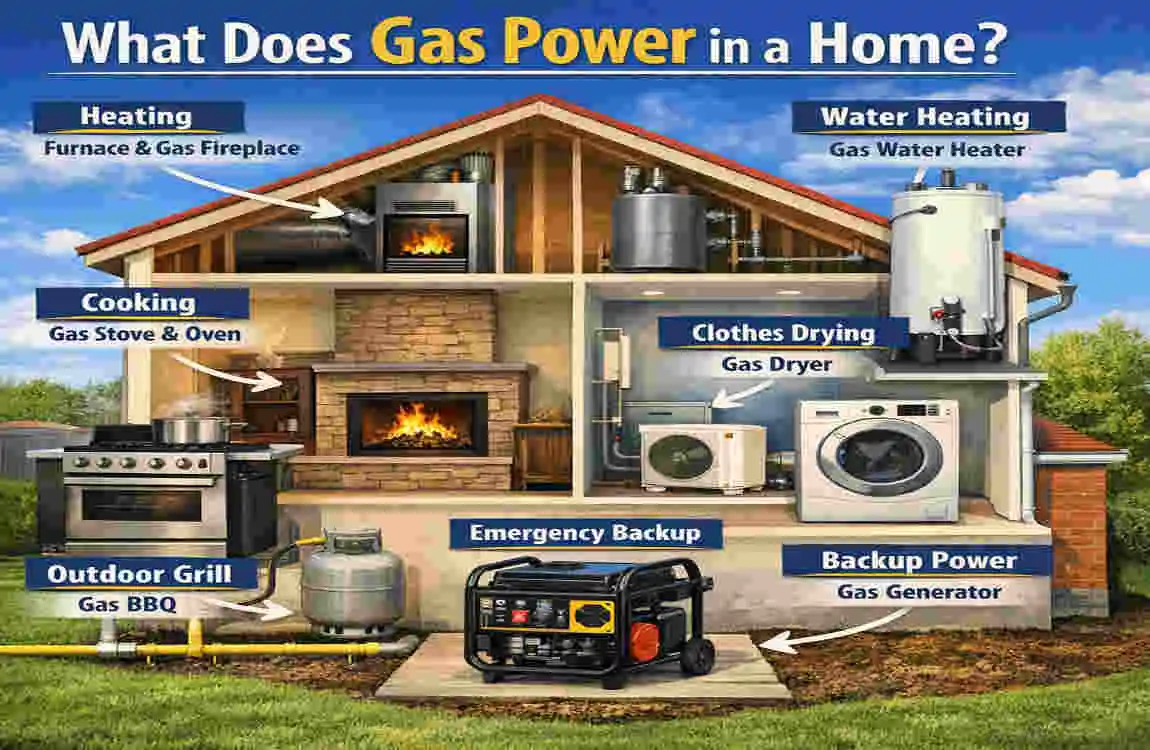
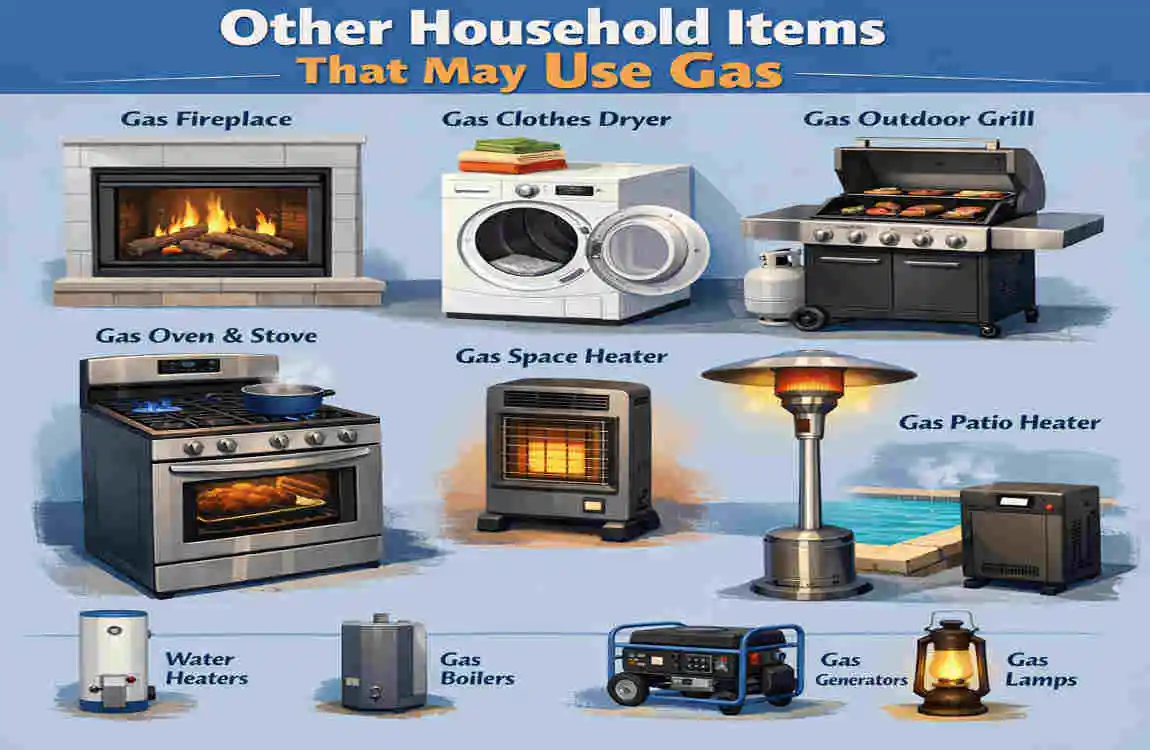
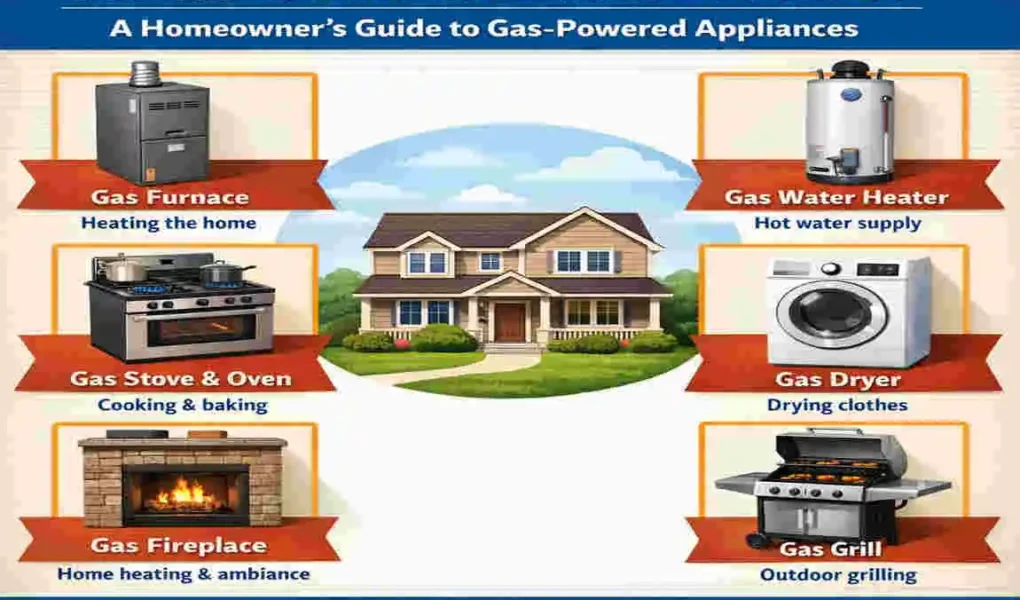
Here is the core of the issue. These are the 12 most common items that rely on natural gas. Some are obvious, while others might surprise you. We will break down how they work, how much they cost to run, and give you professional tips to increase efficiency.

Gas Furnace Forced Air Heating

If you live in a climate with cold winters, your gas furnace is almost certainly the heavyweight champion of energy consumption. It is the single largest user of natural gas in most homes.

How it Works: A central furnace works by blowing air over a heat exchanger—a metal component warmed by burning gas. A blower fan then pushes this warm air through a system of ducts to the vents in your various rooms. It is a powerful system designed to heat a whole house quickly.

Why it Drains Money: The efficiency of a furnace is measured by its AFUE rating (Annual Fuel Utilization Efficiency). Older units might only be 60% or 70% efficient, meaning 30-40 cents of every dollar you spend on heating is simply escaping up the chimney. Even high-efficiency models can drain your wallet if your ductwork is leaky or your filters are clogged.

  • Pros: Fast heating, works well in very cold climates, relatively affordable fuel.
  • Cons: High consumption, requires duct maintenance, dries out indoor air.
  • Estimated Cost Formula: Cost = (Therms used per hour) × (Hours run) × $1.50.
  • Avg. Annual Cost: $600-$1,200, depending on climate.

Water Heater Tank Style

The second biggest answer to “what uses gas in a house” is usually the water heater. Unlike your furnace, which gets a break in the summer, your water heater runs 365 days a year to keep your showers hot and your dishes clean.

How it Works: A traditional tank-style heater keeps 40 to 50 gallons of water hot 24/7. A gas burner at the bottom of the tank kicks on whenever the internal thermometer senses that the water temperature has dropped.

Why it Drains Money: The main issue here is “standby heat loss.” Even when you are sleeping or at work, the water cools down, and the gas burner turns on to reheat it. You are paying to heat water that you aren’t using. If your tank is in a cold garage or basement, it has to work even harder to maintain temperature.

  • Pros: Reliable hot water, lower upfront cost than tankless.
  • Cons: Constant energy usage (standby loss), limited hot water supply.
  • Avg. Annual Cost: $200 – $400.

Gas Stove and Oven

For culinary enthusiasts, nothing beats the instant heat and control of a gas flame. While cooking typically uses less energy than heating the house or water, it is still a daily contributor to your bill.

How it Works: When you turn the dial, a valve opens to release gas, which is ignited by a spark or a pilot light. The flame heats your cookware directly (on the stovetop) or heats the air inside the insulated box (the oven).

Why it Drains Money: Inefficiency here usually comes from user habits. Using a small pot on a large burner lets heat escape around the sides. Opening the oven door to “peek” at your food drastically drops the temperature, forcing the burner to fire up again to recover the lost heat.

  • Pros: Precision cooking, works during power outages (usually), instant heat.
  • Cons: Can impact indoor air quality, inefficient if pots don’t match burner size.
  • Avg. Annual Cost: $50 – $100.

Gas Clothes Dryer

Gas dryers are popular because they dry clothes faster than electric models and are generally gentler on fabrics due to better moisture control.

How it Works: A gas burner produces heat, and a fan blows this hot air into the tumbling drum. The moisture from your clothes is vented outside as steam.

Why it Drains Money: The biggest enemy of a gas dryer is a clogged vent. If lint builds up in the exhaust pipe, the moist air cannot escape. This tricks the dryer into thinking the clothes are still wet, extending the cycle time. Not only does this double your gas usage for that load, but it is also a serious fire hazard.

  • Pros: Dries clothes faster, reduces static, and is generally cheaper to run than electric.
  • Cons: Requires external venting and a higher upfront cost for the appliance.
  • Avg. Annual Cost: $50 – $90.

Gas Fireplace Indoor

A gas fireplace adds wonderful ambiance and a cozy focal point to a living room. However, for many homes, it is more of a decoration than a serious heat source, and it can be a surprising gas guzzler.

How it Works: Artificial logs sit over a gas burner. When activated, flames flicker around the logs to simulate a wood fire. Some units have fans to blow heat into the room, while others are purely decorative.

Why it Drains Money: Many older gas fireplaces utilize a continuous pilot light. This is a small flame that burns 24 hours a day, 7 days a week, just waiting for you to turn on the fireplace. This little flame can consume huge amounts of gas over the course of a year without you realizing it. Additionally, if the damper is left open, warm air from your home is sucked up the chimney, forcing your central furnace to work harder.

  • Pros: Instant ambiance, no messy ashes or wood chopping.
  • Cons: Often inefficient for heating, continuous pilot light waste.
  • Avg. Annual Cost: $60-$150 (higher if used frequently for heating).

Outdoor Fire Pits and Tables

Expanding on the fireplace concept, the trend of outdoor living spaces has brought gas usage into the backyard.

How it Works: Similar to indoor fireplaces, these connect to your home’s natural gas line or a propane tank. They provide warmth and atmosphere for outdoor gatherings.

Why it Drains Money: Because these are outdoors, there is no insulation to contain the heat. You are literally heating the great outdoors. They typically have a very high BTU (British Thermal Unit) rating to create a large, visible flame. Running a fire pit for an evening of entertainment can use as much gas as running your furnace for a whole day.

  • Pros: Great for entertaining, extends patio season.
  • Cons: Extremely inefficient (100% heat loss to the atmosphere), high consumption rate.
  • Avg. Annual Cost: Variable (approx. $1.00 – $3.00 per hour of use).

Pool or Spa Heater

If you have a heated swimming pool or hot tub, you have likely identified the “whale” of gas usage. When people ask what uses gas in a house, this appliance often tops the list for speed of consumption.

How it Works: Pool heaters pump water through a heating coil heated by burning gas. Because of the sheer volume of water in a pool (thousands of gallons), the heater requires a significant amount of energy to raise the temperature by even a few degrees.

Why it Drains Money: Water has a high specific heat, meaning it takes a lot of energy to warm up. Furthermore, a large surface area (the top of the pool) constantly loses heat to the air through evaporation. Without a cover, you are fighting a losing battle against physics.

  • Pros: Allows year-round swimming, heats water faster than electric heat pumps.
  • Cons: Astronomical operating costs, heavy environmental impact.
  • Avg. Annual Cost: $500 – $1,500+ (highly dependent on usage).

Gas Grill (Natural Gas Connected)

While many grills run on portable propane tanks, an increasing number of homes have grills connected directly to the house’s natural gas supply.

How it Works: It functions identically to a standard grill but never runs out of fuel.

Why it Drains Money: The convenience of never changing a tank can lead to complacency. It is very easy to turn the grill on to “preheat,” go inside to prep food, get distracted, and leave it running for 45 minutes with nothing on it.

  • Pros: Never run out of fuel, no heavy tanks to carry.
  • Cons: Easy to leave running accidentally, requires professional installation.
  • Avg. Annual Cost: $20 – $50.

Hydronic Heating Boilers

This is distinct from the forced-air furnace mentioned in point #1. If you have radiators or radiant floor heating, you have a boiler.

How it Works: Instead of heating air, a boiler heats water. This hot water is pumped through pipes to radiators in each room or through tubing under your floorboards.

Why it Drains Money: Old boilers can be massive and heavy, retaining heat that never reaches your rooms. Furthermore, if the pipes running through unheated spaces (like basements) aren’t insulated, you lose heat before it ever reaches your living space.

  • Pros: consistent, non-drying heat; quiet operation.
  • Cons: Slow to react to thermostat changes, expensive to repair.
  • Avg. Annual Cost: $600 – $1,300.

Pilot Lights on Older Appliances

This isn’t a single appliance; it’s a component found in many older gas devices (furnaces, water heaters, stoves, fireplaces).

How it Works: A pilot light is a small flame that burns continuously to ignite the main burner when needed.

Why it Drains Money: A single pilot light doesn’t use much, but if you have three or four older appliances, those “vampire” flames add up. They generate heat you don’t need, especially in summer.

  • Pros: Simple technology, works without electricity.
  • Cons: Pure waste of fuel when the appliance is idle.
  • Avg. Annual Cost: $10 – $20 per pilot light.

Gas-Powered Standby Generators

With extreme weather becoming more common, standby generators are becoming a household staple.

How it Works: These units are permanently installed outside your home. When the power goes out, the generator detects the loss and automatically turns on, running an internal combustion engine fueled by your natural gas line to generate electricity.

Why it Drains Money: While they only run during outages, most units perform a “self-test” or exercise cycle once a week for 15-20 minutes to ensure they are operational. This adds a small but consistent amount to your bill. Obviously, during a prolonged blackout, gas usage will spike significantly.

  • Pros: Peace of mind, automatic power restoration.
  • Cons: High installation cost, noisy, and weekly fuel consumption for testing.
  • Avg. Annual Cost: $30 – $50 (for weekly testing only).

Gas Space Heaters Wall Units

Common in older homes, additions, or garages, these are standalone units mounted to a wall or sitting on the floor.

How it Works: They burn gas to heat ceramic plates or distribute heat via convection directly into a single room.

Why it Drains Money: These units often lack the sophisticated thermostats found in central systems. They tend to be “all or nothing,” leading to overheating a room and then shutting off. Without proper fans, the heat stays near the ceiling, leaving your feet cold and encouraging you to turn the dial up higher.

  • Pros: Good for zoning (heating only one room), works without power.
  • Cons: Safety concerns (hot surfaces), uneven heating, and often lower efficiency.
  • Avg. Annual Cost: $100-$300 (depending on room size).

How to Measure and Reduce Gas Usage from These Appliances

What Uses Gas in a House

Now that we have answered “what uses gas in a house,” the next logical step is taking action. You cannot manage what you do not measure. Here is a simple, step-by-step audit you can perform this weekend.

Learn to Read Your Meter

Go outside and find your gas meter. It usually has a row of dials like small clocks. Read them from left to right. If the hand is between two numbers, always use the lower number. Record this number at the start of the week and again at the end. The difference is in your usage, measured in cubic feet.

Leverage Technology

If manual reading sounds tedious, check with your utility provider. Many modern “smart meters” connect to apps that show you daily or even hourly usage. If you see a spike at 2:00 AM, you know it’s likely your furnace or water heater kicking on.

The Envelope Check

Your appliances work harder when your house leaks air. On a windy day, feel around your windows and doors. If you feel a draft, your gas money is escaping. Simple weatherstripping and caulking are the cheapest ways to reduce the load on your furnace.

Quick Reference Savings Table

Here is a summary of where you can find the biggest wins:

ApplianceAvg. % of Gas Bill, Quick Fix for Savings, Potential Savings

Furnace 40-60% Replace air filters & seal ducts 15%

Water Heater 15-25% Lower temp to 120°F & wrap tank 5-10%

Dryer 5-10% Clean vent & use sensor dry 20%

Fireplace Variable : Turn off the pilot light in summer 100% (in summer)

Pool Heater Variable Use a pool cover 50%

Eco-Friendly Alternatives and Upgrades

If you are ready to move away from gas entirely or want the most efficient tech on the market, there are exciting alternatives available.

Heat Pumps: The future of home heating. Instead of burning fuel to create heat, electric heat pumps move heat from the outside air into your home. Modern versions work even in freezing temperatures. They serve as both air conditioners and heaters, offering a 2-for-1 solution.

Tankless Water Heaters: If you want to stick with gas but increase efficiency, consider a tankless (on-demand) unit. It creates hot water only when you turn the tap on, eliminating that wasteful standby heat loss we discussed earlier.

Induction Cooktops: In the kitchen, induction electric cooktops are faster and more precise than gas, and they don’t affect indoor air quality.

Rebates and Incentives: Before buying new equipment, look into the Inflation Reduction Act or local utility rebates. The government is currently offering significant tax credits for homeowners who switch from gas appliances to high-efficiency electric heat pumps and water heaters.

Here is a short, concise FAQ section to complement the article, formatted for easy reading.

FAQ: What Uses Gas in a House?

Here are quick answers to the most common questions homeowners ask about their natural gas usage.

What uses the most gas in a house?

Without a doubt, your central heating system (furnace or boiler) is the biggest user. In colder climates, heating your home can account for up to 50-60% of your total annual gas bill. The water heater is typically the second largest consumer, using about 25% of your household energy.

Does a gas stove contribute significantly to the bill?

Surprisingly, no. While cooking is a daily activity, gas stoves and ovens usually account for only 5-10% of total usage. They are fairly efficient because they apply heat directly to the food. However, leaving the oven door open or using the wrong size pot can waste fuel.

Why is my gas bill high in the summer?

If you aren’t running the furnace, a high summer bill usually points to a pool or spa heater. These consume gas very quickly. Other culprits could include a gas grill connected to your home line, a gas dryer doing heavy loads, or a water heater that is set too high or located in a cool basement.

Do pilot lights really waste that much money?

Yes, they do. A continuous pilot light (a small flame that burns 24/7) on an older fireplace or furnace can cost between $10 and $20 per month just to stay lit. Turning these off during seasons when the appliance isn’t in use is an easy way to save cash.

How do I know if my appliance uses gas or electricity?

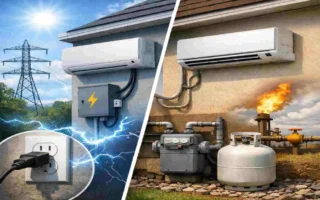
The easiest way is to look behind the unit. If you see a flexible metal pipe (usually yellow or stainless steel) connecting the appliance to the wall, it uses gas. You can also check for a blue flame when it turns on. If it only has a thick black cord plugged into a large outlet, it is likely electric.

You may also like...

Leave a Reply

Your email address will not be published. Required fields are marked *