Ever run your finger across a shelf and watch a cloud of dust puff up? If you’re constantly wondering, “Why is my house so dusty?” despite your best cleaning efforts, you’re definitely not alone. According to EPA data, over 80% of households struggle with excess dust, and it can feel like a never-ending battle.
what exactly is dust? It’s a mix of tiny particles — dead skin cells, pollen, fabric fibers, pet dander, and even outdoor pollutants. These particles settle on your furniture, floors, and even float in the air you breathe.
Why Is My House So Dusty? Understanding the Dust Cycle
Dust in your home isn’t just random dirt — it follows a cycle influenced by many factors.
What Is Dust Made Of?
Most household dust is composed of about 80% indoor sources, such as skin flakes, fabric fibers, pet dander, and dust mites. The rest comes from outdoors — pollen, soil, and pollution blowing in through windows and doors.
How Does Dust Move Around?
Dust particles constantly float in the air, carried by air currents and your home’s heating and cooling system (HVAC). When air moves, it stirs up dust from carpets, furniture, and other surfaces. Eventually, these particles settle back down — and you see that dusty layer on your shelves.
Dust Statistics and Health Risks
Did you know the average home accumulates about 40 pounds of dust every year? That’s roughly the weight of a small child! Dust doesn’t just look messy; it can trigger allergies, worsen asthma, and irritate your eyes and throat.
Why Does Dust Build Up So Quickly?
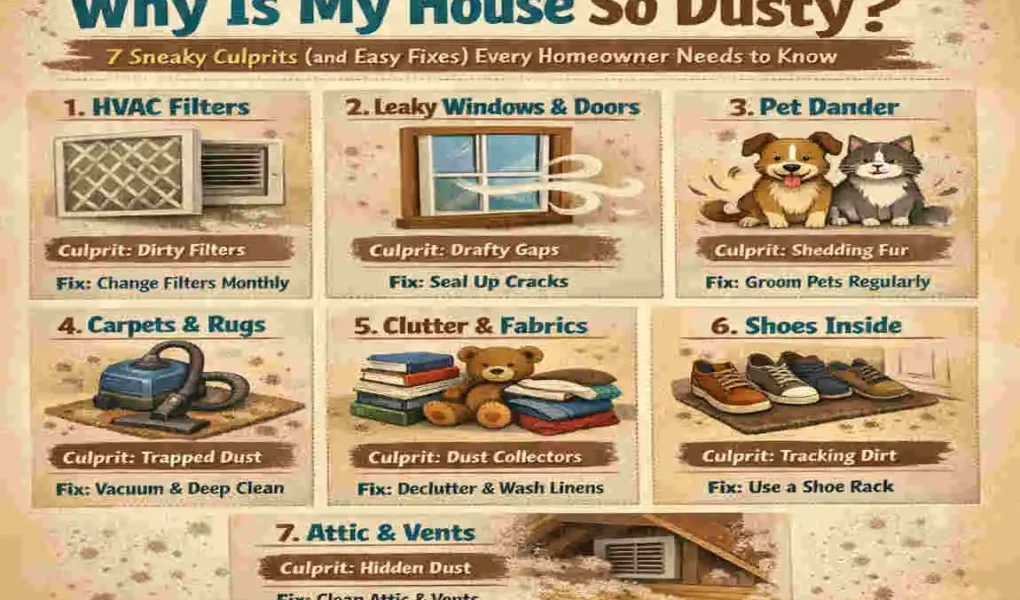
Several lifestyle and home factors speed up dust buildup:
- Poor ventilation traps dust indoors.
- Carpets and fabrics hold onto dust.
- Pets constantly shed hair and dander.
- Outdoor dust sneaks in through cracks and open windows.
Pro tip: Look closely at your dust. Dark specks could signal mold or pet dander, which require special attention.
Faulty HVAC Systems – The Silent Dust Factory
Why Your HVAC Makes Your House Dusty
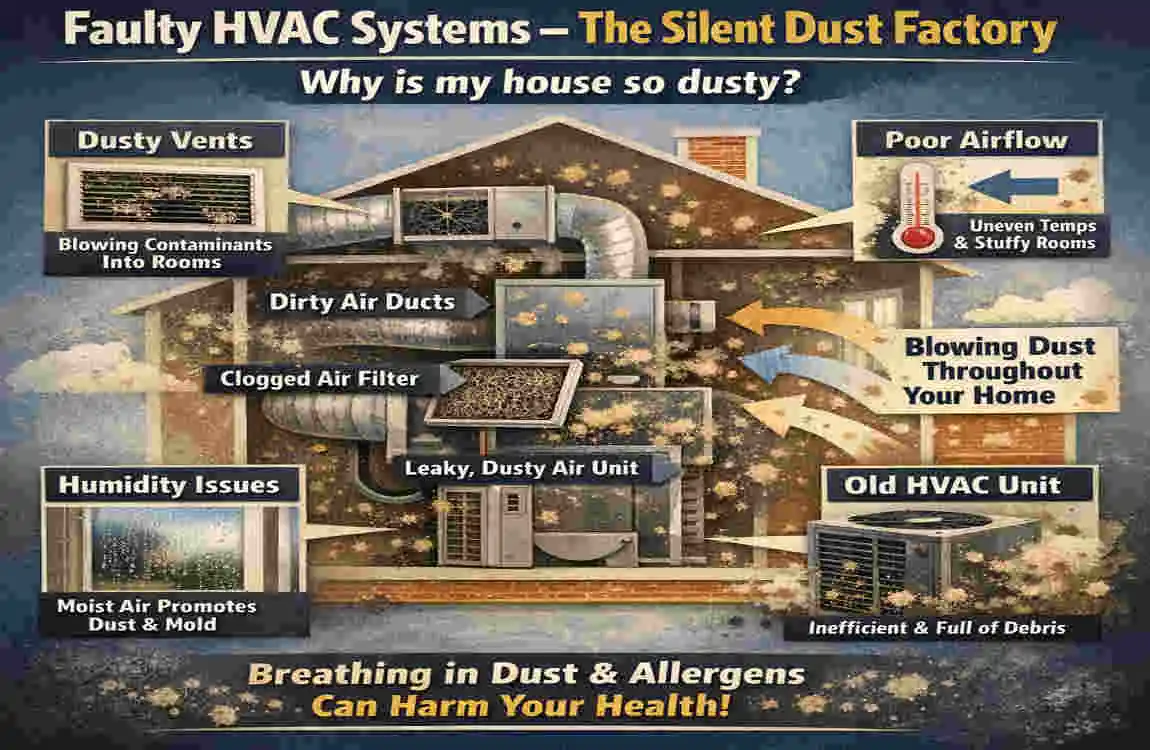
Your heating and cooling system is supposed to filter dust out of the air — but many systems don’t do a great job. Standard filters trap only about 10-30% of dust particles, leaving the rest to circulate. Over time, dust builds up in the ducts — about 1 pound per month on average.
Signs your HVAC is contributing to dust include:
- Uneven temperatures in rooms.
- Musty or stale smells.
- Visible dust blowing from vents.
Easy Fixes
- Swap filters quarterly. Use HEPA filters for better dust trapping.
- Schedule duct cleaning every few years ($300-$500) to improve air quality.
- Add vent covers or screens to catch dust before it spreads.
Open Windows and Hidden Pollen Invaders
Outdoor Dust Sneaking In
We love fresh air, but open windows invite more than just a breeze. Pollen, pollution, and even tiny dirt particles slip through cracks and gaps. This is especially true in spring and fall, when pollen counts peak.
The tricky part is that microscopic particles can bypass standard window screens and settle inside your home.
Easy Fixes
- Install fine-mesh screens that block smaller particles.
- Run exhaust fans during high pollen seasons to reduce indoor dust.
- Seal window gaps with weather stripping (DIY kits cost about $20).
Carpets and Rugs – Dust Magnets You Walk On
How Flooring Traps Dust in Your Home
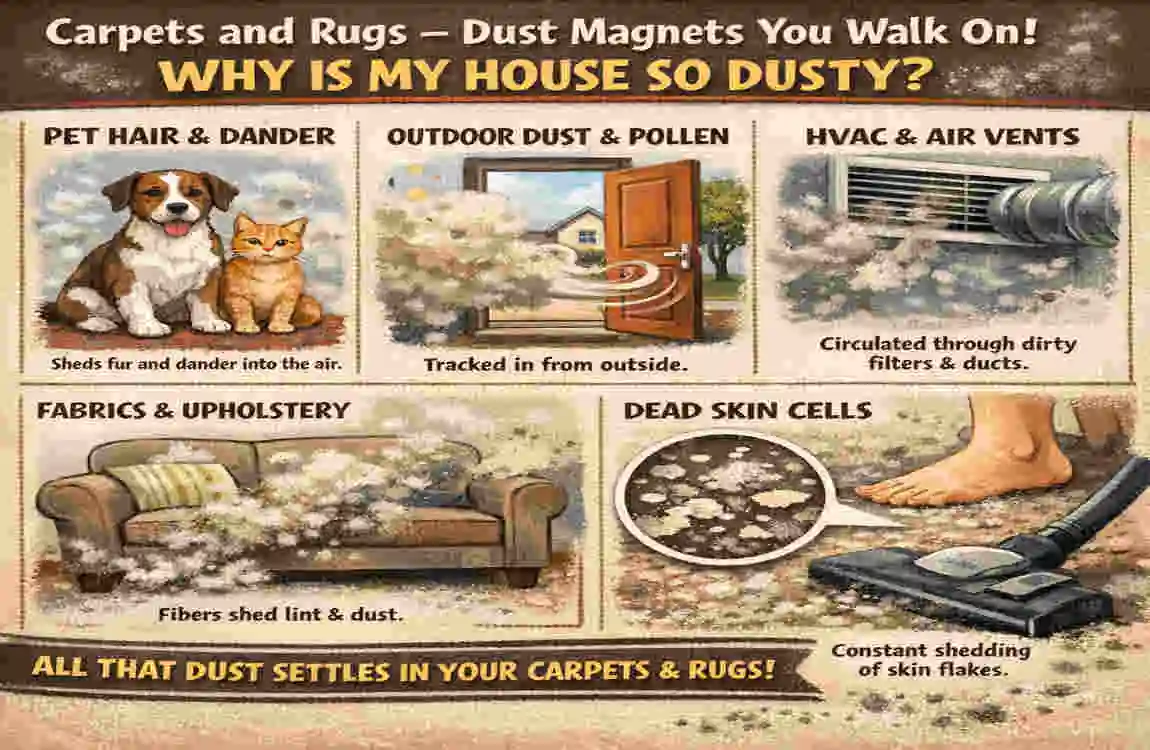
Carpets and rugs are cozy, but they’re also notorious for holding dust. Studies show carpets trap 4 times more dust than hardwood or tile floors. The fibers in carpets shed micro-particles, and electrostatic cling pulls in lint, skin flakes, and pet hair.
Every step you take stirs up dust from these surfaces, making it harder to keep the air clean.
Easy Fixes
- Vacuum 2-3 times a week with a HEPA-filter vacuum cleaner.
- Steam clean carpets every few months to kill dust mites.
- Consider switching to low-pile rugs or hard flooring to reduce long-term dust.
Pet Hair and Dander Dust Bombs
Pets as Secret Dust Contributors
We love our pets, but they shed more than just fur. Pet dander — tiny skin flakes — makes up about 80% of pet allergens in homes. If you have multiple pets, dust buildup can double.
This invisible dust can trigger sneezing, itchy eyes, and breathing troubles.
Easy Fixes
- Brush your pets weekly, ideally outside.
- Wash pet beds and blankets once a week.
- Use robot vacuums daily to pick up pet hair and dander.
Clutter and Fabric Havens
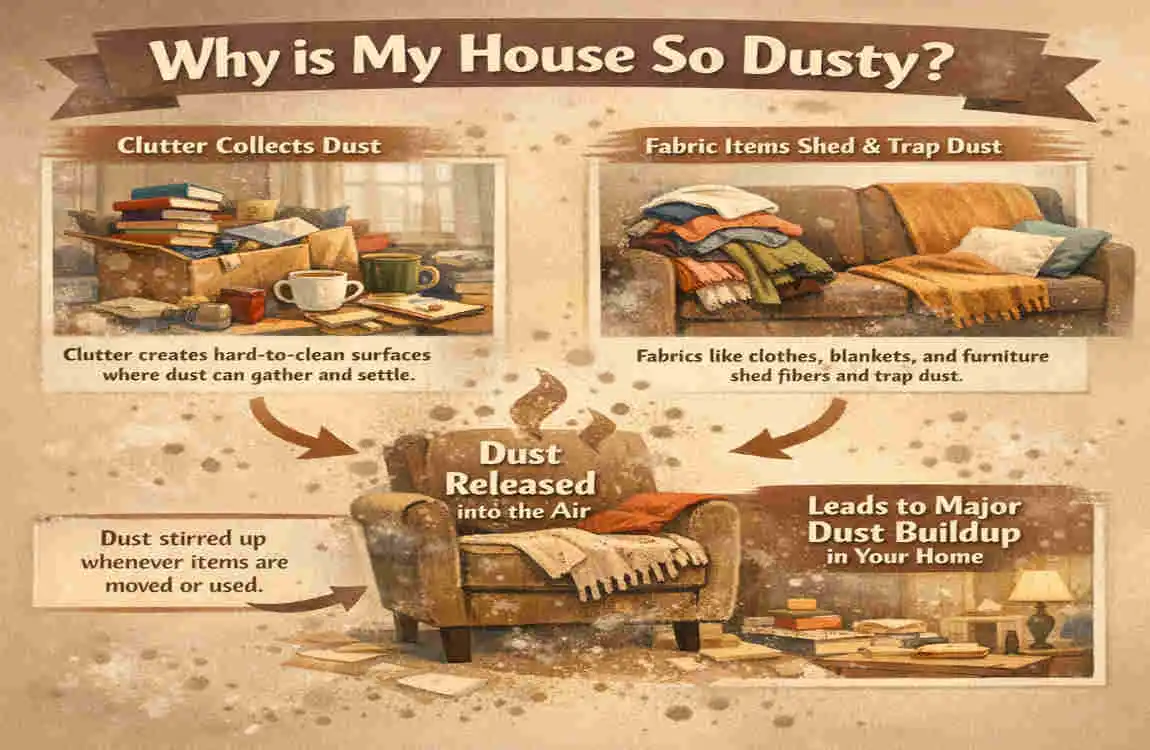
Why Clutter Turns Homes Dusty
Bookshelves, piles of clothes, curtains, and upholstered furniture act like dust traps. These surfaces can hold up to 50% of airborne dust in your home.
Fabrics continuously release tiny fibers, adding to the dust load.
Easy Fixes
- Declutter using the Kon Mari method — keep only what sparks joy, and dust gets easier.
- Wash curtains quarterly to remove built-up dust.
- Use dust-repellent sprays on upholstery.
Humidifiers and Moisture Traps
Dampness Breeding Hidden Dust
High humidity encourages dust mites to thrive. A mattress can hold up to 2 million dust mites per gram of dust! These tiny creatures feed on skin flakes and worsen allergies.
The problem is often invisible until allergy symptoms flare up.
Easy Fixes
- Keep indoor humidity between 30% and 50% using a hygrometer (about $10).
- Clean humidifiers weekly to prevent mold.
- Use a dehumidifier in damp areas, such as basements.
Everyday Human Habits
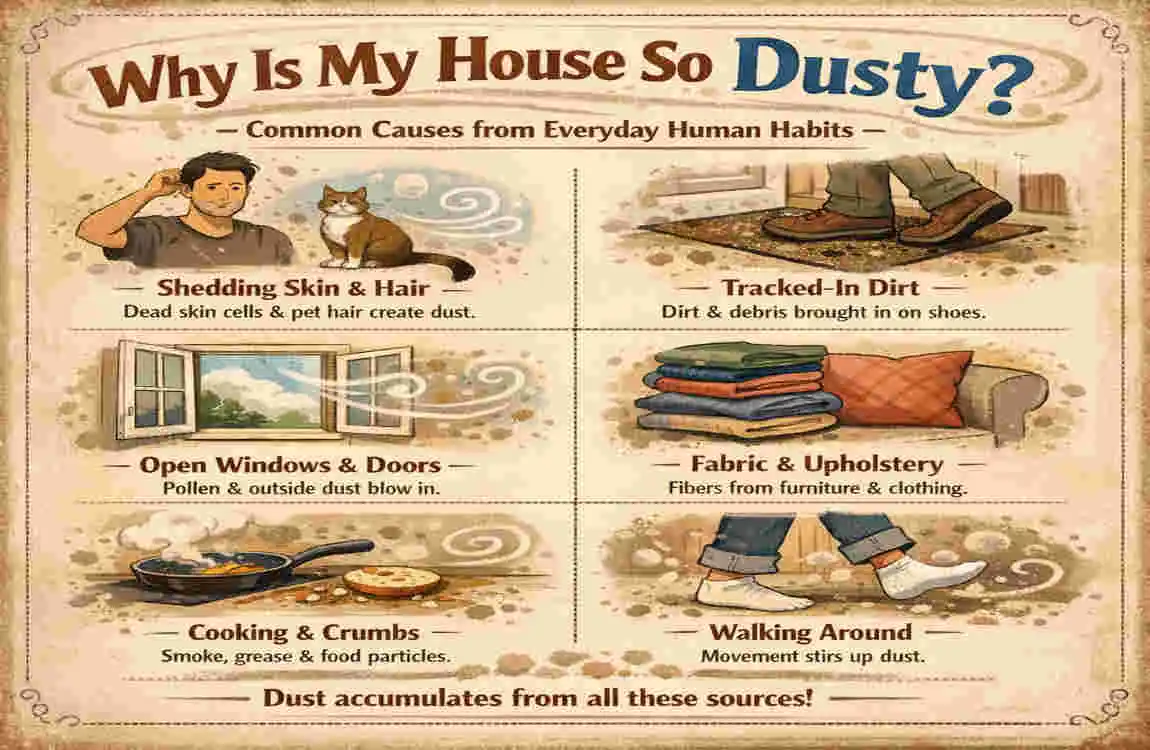
Lifestyle Choices: Dusting Up Your Space
We’re all part of the dust problem! On average, a person sheds about 1 million skin flakes every day, adding to dust buildup. Wearing shoes indoors tracks in dirt and pollen. Cooking oils also aerosolize particles that settle as dust.
Easy Fixes
- Adopt a no-shoes policy inside your home.
- Wipe down surfaces daily with microfiber cloths.
- Use air purifiers with true HEPA filters to clean the air.
Bonus: Quick-Start Dust-Busting Routine for Any Home
Here’s a simple checklist to help you tackle dust daily and weekly:
- Wipe surfaces from top to bottom to catch falling dust.
- Launder bedding weekly to reduce dust mites.
- Use microfiber cloths instead of paper towels — they trap dust better.
Task Frequency: Why It Helps
Vacuum carpets/rugs 2-3 times/week. Removes embedded dust particles
Change HVAC filters every 3 months. Keeps air cleaner
Dust surfaces Weekly Prevents buildup
Wash curtains Quarterly : Clear trapped dust
Clean humidifiers weekly to stop mold and mite growth
FAQs: Why Is My House So Dusty? Top Answers
Q: Why is my house so dusty all the time?
A: Usually, a mix of poor HVAC filtration, open windows, carpets, pets, and daily habits.
Q: How can I reduce dust in my home fast?
A: Change HVAC filters, vacuum with a HEPA filter, and wipe surfaces daily.
Q: Does closing windows help with dust?
A: Yes, especially during high pollen seasons or windy days.
Q: Can air purifiers really reduce dust?
A: Absolutely, especially those with true HEPA filters.
Q: How often should I clean my ducts?
A: Every 3-5 years or if you notice dust blowing from vents.