House flies are one of the most common household pests people deal with, especially in warm weather. You may see them buzzing around your kitchen, landing on food, or sitting on your arm, and wonder, ” Can house flies bite? It is a fair question, especially when a fly keeps coming back again and again.
The simple answer is no, house flies do not bite humans. They do not have the right mouthparts for biting skin. But that does not mean they are harmless. House flies can still spread germs, contaminate food, and make your home feel unclean.
That is why learning about house flies and natural cleaning tips matters. When you understand how these flies behave, you can stop them from getting comfortable in your home.
What Are House Flies?
House flies are small insects that often live near people because they are drawn to food, waste, and moisture. They are among the most common indoor flies and are usually found in kitchens, trash areas, pet areas, and places where food is left out.
Physical Characteristics of House Flies
A modern house fly is usually gray, with a fairly small body, red eyes, and clear wings. It may look harmless at first glance, but it moves quickly and can be difficult to catch. These insects are built for Survival in human spaces.
Where House Flies Commonly Live
You will often find house flies near:
- Kitchens and dining areas
- Garbage bins
- Pet waste zones
- Farms or animal areas
- Drains or damp surfaces
Why House Flies Are Attracted to Homes
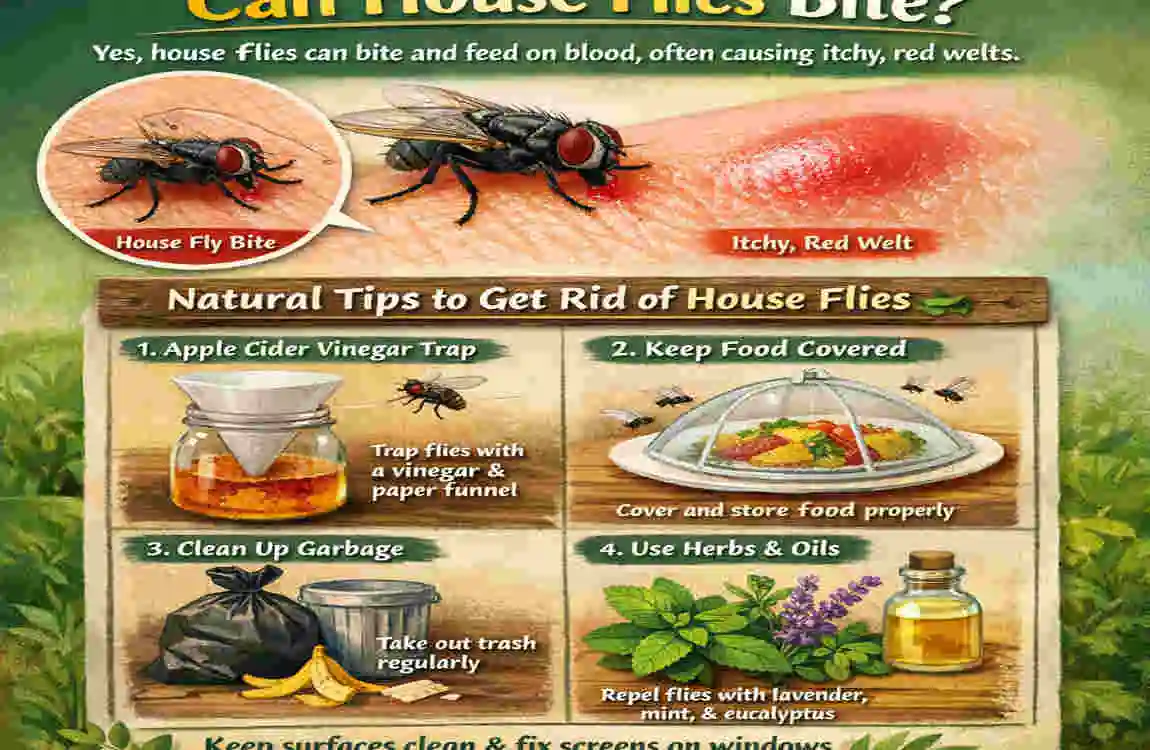
House flies are attracted to food residue, moisture, and organic waste. Even tiny crumbs or a dirty drain can draw them in. If your home has easy access to scraps, spills, or open trash, flies will notice it very quickly.
Can House Flies Bite Humans?
The Simple Answer
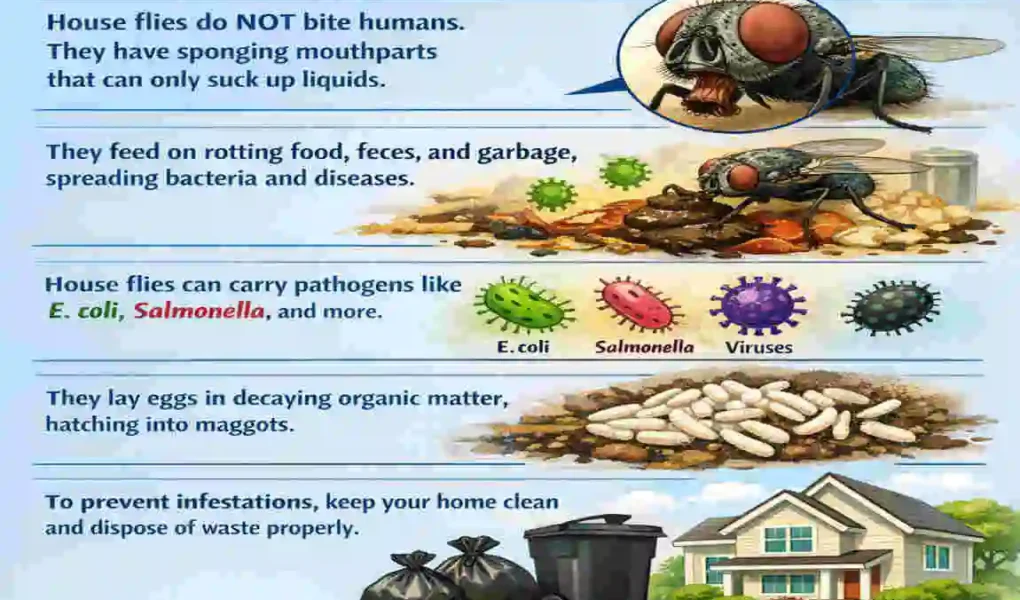
House flies do not bite humans. They have sponge-like mouthparts, not the sharp mouthparts needed to pierce skin. Instead of biting, they feed by soaking up liquids and soft food particles.
Why People Think House Flies Bite
Sometimes people feel a fly land on their skin and assume it has bitten them. This usually happens because the fly keeps landing, moving around, or rubbing its legs together. That tickling feeling can be annoying and may feel like a bite, even though it is not.
Difference Between Biting Flies and House Flies
Here is a quick comparison to help you tell them apart:
Fly TypeBites Humans? Main Risk
House Fly No Germ spread
Horse Fly : Yes , painful bites
Stable Fly Yes Blood feeding
Fruit Fly No Food Contamination
Can House Flies Break Skin?
No, modern house flies cannot break skin or pierce it as biting flies can. Still, they can leave behind germs from their bodies, legs, and mouthparts. So while they do not bite, they can still cause problems through contamination.
What Happens When House Flies Land on You?
A fly landing on your skin is not usually dangerous by itself, but it can still be unpleasant. The bigger concern is what the fly may carry.
Germ Transfer Explained
House flies travel through dirty places before landing on clean ones. Their legs and bodies can pick up bacteria, and they may also carry germs from waste or decaying material. When they land on your skin, food, or kitchen surfaces, they can spread those germs around.
Diseases Linked to House Flies
House flies can help spread germs linked to:
- Salmonella
- E. coli
- Cholera
- Food poisoning
This is why fly contamination is a real concern in homes, especially around food.
Risks for Children and Pets
Children and pets may be more exposed because they touch more surfaces and may put things in their mouths. Pet food bowls, litter areas, and outdoor play spaces can also attract flies if they are not cleaned regularly.
Signs You’re Dealing with Biting Flies Instead of House Flies
If you actually have a bite, the insect may not be a modern house fly at all.
Common Biting Fly Species
Some flies that bite include:
- Horse flies
- Stable flies
- Black flies
- Deer flies
How to Identify Fly Bites
Bites from these flies often cause:
- Red bumps
- Swelling
- Painful welts
- Itching
When to See a Doctor
You should get medical advice if you notice spreading redness, fever, signs of infection, or a severe allergic reaction. That is especially important if the skin becomes hot, painful, or begins to ooze.
Why House Flies Are Still Dangerous Even Without Biting
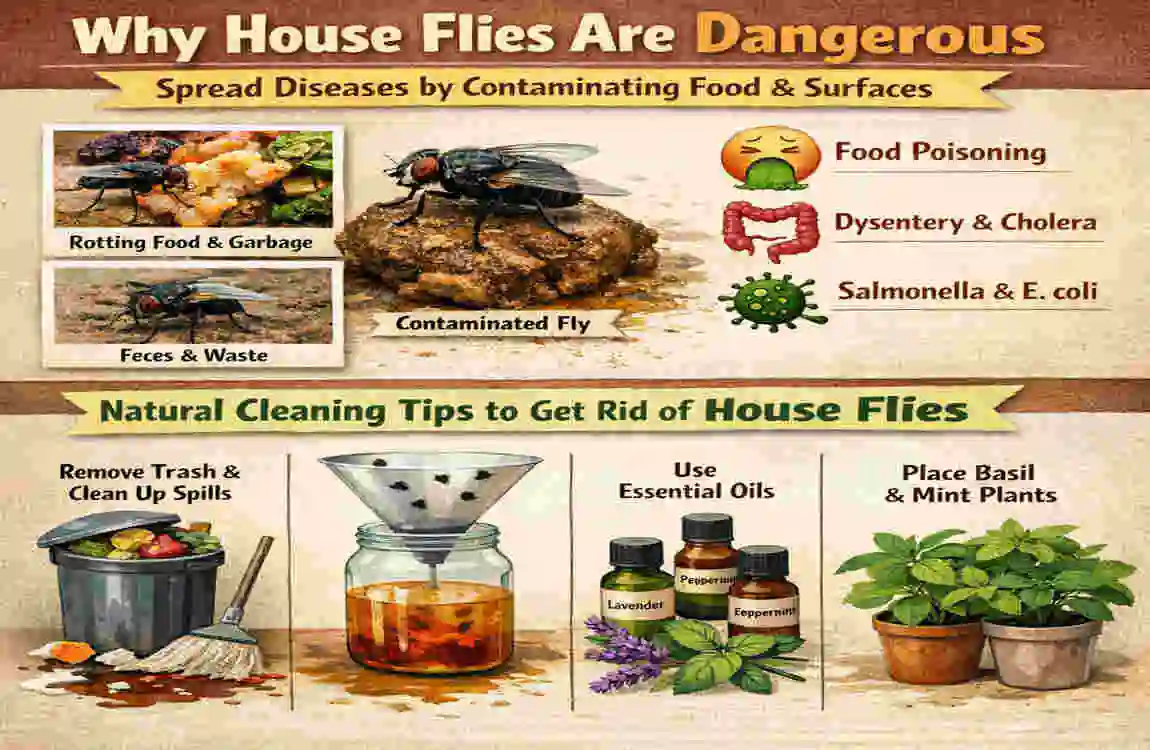
Even without biting, house flies can still pose serious health risks.
How Flies Spread Bacteria
Flies move from waste to food very quickly. They may land on garbage, pet waste, or dirty drains, then move straight to your counter or plate. That is how bacteria get spread around the home.
Food Safety Concerns
Open food is one of the biggest targets. A fly that lands on uncovered leftovers, fruit, or bread can leave behind germs that make food unsafe to eat.
Health Risks in Homes and Restaurants
In homes and restaurants, flies can cause rapid contamination. They are especially unwanted in kitchens because even a short visit can create hygiene problems.
Seasonal Increase in Fly Activity
Fly problems usually get worse in warm months. Heat helps them breed faster and become more active, so summer often brings more fly trouble indoors.
Can House Flies Lay Eggs in Your Home?
Yes, and this is one reason they can quickly become a bigger problem.
Where Flies Lay Eggs
House flies often lay eggs in:
- Trash bins
- Rotting food
- Animal waste
- Dirty organic material
How Quickly Flies Multiply
Flies grow fast, especially in warm weather. If food waste is left out or trash is poorly managed, a fly problem can quickly turn into many.
Warning Signs of an Infestation
Watch for:
- Clusters of flies near windows
- Constant buzzing indoors
- Maggots in trash or waste areas
- Flies are returning even after cleaning
Natural Cleaning Tips to Prevent House Flies
This is where natural fly prevention really helps. Clean homes are much less inviting to flies, and simple habits can make a big difference.
Keep Kitchen Surfaces Clean
Wipe up spills right away. Clean counters, tables, and sinks often. Even small food bits can attract flies, so daily cleaning matters.
Natural Cleaning Ingredients That Repel Flies
Some simple ingredients may help discourage flies while keeping your home cleaner:
- White vinegar
- Lemon
- Baking soda
- Essential oils
- Apple cider vinegar
These are useful for eco-friendly pest control and regular home cleaning.
DIY Natural Fly Repellent Spray
You can make a simple spray at home:
- 1 cup water
- 1/2 cup white vinegar
- 10 drops peppermint oil
- 10 drops lemon eucalyptus oil
Mix it in a spray bottle and use it on counters, sink areas, and other fly-prone spots. Always test on a small area first.
Proper Trash Management
Trash is one of the biggest fly magnets. Use sealed bins, empty garbage often, and clean the bins themselves if they start smelling. Outdoor bins should also be kept tightly closed.
Drain and Sink Cleaning Tips
Dirty drains can hold organic buildup that attracts flies. Flush drains with baking soda and vinegar, then rinse with hot water. This helps reduce odors and buildup.
Pet Area Hygiene
Pet food and waste can attract flies fast. Clean food bowls often, scoop litter boxes regularly, and remove pet waste promptly from yards and other outdoor spaces.
Improve Airflow and Ventilation
Fans can make it harder for flies to land and stay in one place. Good airflow also helps your home feel less stuffy and less attractive to insects.
Best Natural Fly Repellents for the Home
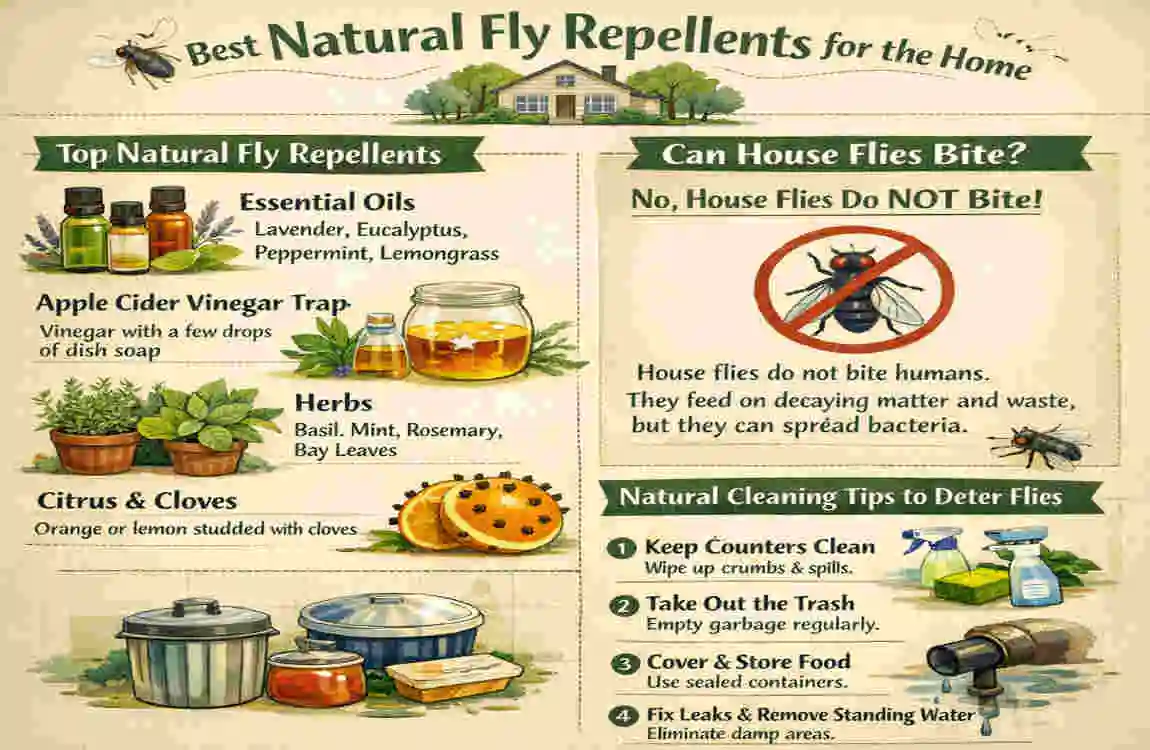
If you want natural ways to keep flies away, these options are worth trying.
Essential Oils That Repel Flies
Flies tend to dislike:
- Lavender
- Peppermint
- Citronella
- Eucalyptus
Use them in sprays, diffusers, or cotton balls placed near problem areas.
Indoor Plants That Help Keep Flies Away
Some plants may help make your space less appealing to flies, including:
- Basil
- Mint
- Venus flytrap
They will not solve a big infestation, but they can support your prevention plan.
Homemade Fly Traps
Simple vinegar traps or sugar-water traps can catch a few flies indoors. These work best when the fly problem is still small.
When Natural Remedies Are Enough
Natural solutions usually work well for mild fly issues and regular prevention. If the fly problem keeps growing, you may need more help.
Frequently Asked Questions
Can house flies bite pets?
No, house flies do not bite pets. However, they can still irritate animals and spread bacteria near pet food or waste.
Why do house flies keep landing on me?
Flies are often drawn to sweat, body heat, moisture, and salt on your skin.
Are fly bites dangerous?
Some fly bites can be painful or itchy, depending on the species. House flies do not bite, but biting flies can irritate.
Can flies spread disease without biting?
Yes. Flies spread germs by landing on dirty surfaces and then moving to clean food or other areas of your home.
What smell do flies hate most?
Many flies dislike vinegar, peppermint, and citronella.
How do I get rid of flies naturally?
Clean often, remove trash fast, use natural sprays, and keep food covered.
| Question | Short Answer | SEO Snippet |
|---|---|---|
| Can House Flies Bite? | No, house flies cannot bite humans. | House flies do not bite, but they can spread germs by landing on food and surfaces. |
| What You Need to Know | If you feel bitten, it was likely a different fly, such as a stable fly. | House flies have sponging mouthparts, not biting mouthparts, and they are known for contaminating food rather than biting. |