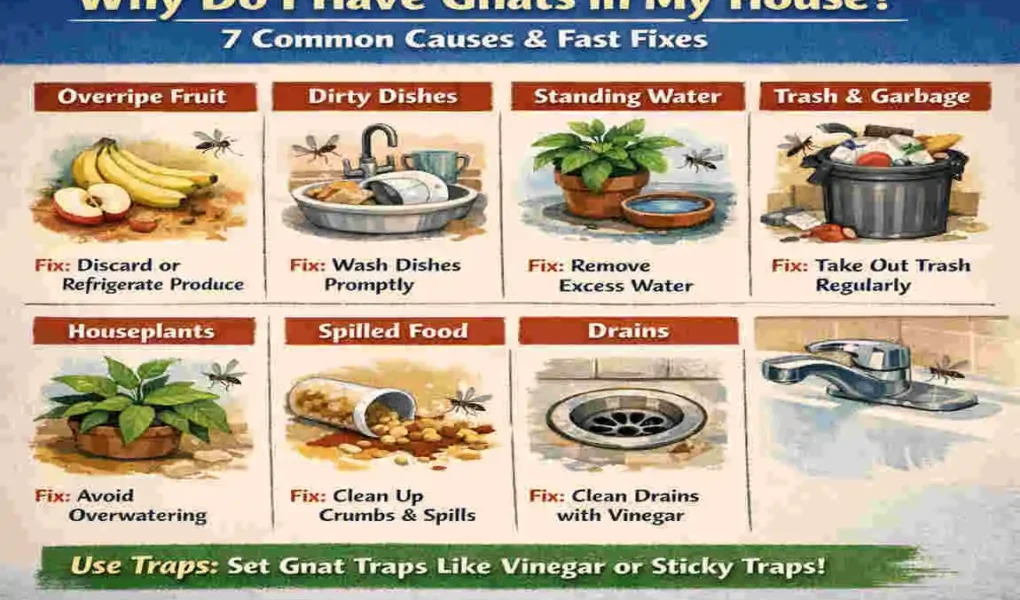
It can feel like they showed up overnight. One day everything seems normal, and the next day your home has a cloud of little pests that refuse to leave. The good news is this: gnats do not appear for no reason. They usually show up because something inside your home is giving them exactly what they need—moisture, warmth, and decaying organic matter.
That is why you often see them around wet potting soil, old produce, drains, trash cans, and damp corners. In many cases, the problem is not the adult gnats you see flying around. The real issue is the breeding spot hidden somewhere nearby. If you only swat the adults but ignore the source, the infestation keeps coming back.
What Are Gnats and Why Are They Invading Homes?
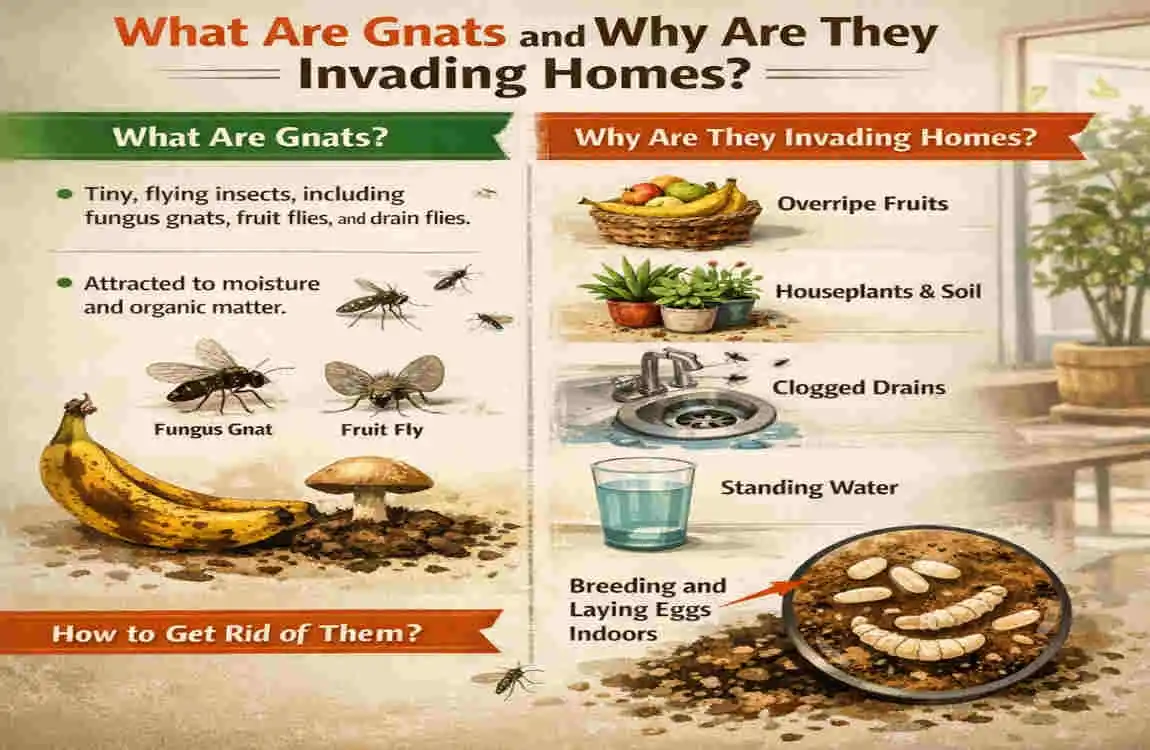
Before you can solve the problem, it helps to know what you are dealing with.
The word “gnats” is often used as a general term for several kinds of tiny flying insects. Most are very small, dark-colored, and easy to confuse with one another. Indoors, the most common troublemakers are fungus gnats, fruit flies, and drain flies.
Some people notice them near potted plants. Others see them near garbage bins or sinks. That is why the answer to why do I have gnats in my house depends a lot on where you are seeing them most often.
Common Indoor Gnats at a Glance
TypeWhat They Look LikeWhere You Usually Find ThemWhat Attracts Them
Fungus gnats Tiny black or dark gray flies Houseplants, potting soil, seed trays Moist soil and decaying plant matter
Fruit flies Small tan or brown flies with rounder bodies Fruit bowls, produce, recycling, sugary spills Fermenting fruits, vegetables, and sweet liquids
Drain flies Fuzzy, moth-like tiny flies Bathroom sinks, kitchen drains, floor drains Slime, grime, and organic buildup in drains
Why Gnats Multiply So Fast
Gnats seem to come out of nowhere because their life cycle is short and fast. Many species lay eggs in moist organic matter. Once those eggs hatch, the larvae feed on whatever is nearby—rotting food, algae, fungi, or decaying material. In warm indoor conditions, they can develop into adults in a surprisingly short time.
That means a small problem can turn into a full gnat infestation very quickly.
You may only notice a few adults at first. But those few adults often mean many more eggs and larvae are already hiding nearby.
Why Your House Feels Perfect to Them
Your home gives gnats several things they love:
- Warm temperatures
- Steady moisture
- Food sources
- Safe indoor shelter
A humid kitchen, an overwatered fern, a forgotten onion in the pantry, or grime in a drain can all become a breeding zone. So if you keep wondering, why do I have gnats in my house all of a sudden, the answer is usually that one of these conditions quietly built up over time.
Now let’s break down the most common causes one by one.
Common Causes of Gnats in Your House
Overwatered Houseplants
One of the biggest reasons people ask, ‘Why do I have gnats in my house?’ is their indoor plants.
If gnats hover around your potted plants, especially when you water them, you are likely dealing with fungus gnats. These pests love wet potting soil. The top layer of constantly damp soil becomes the perfect place for adults to lay eggs. Once the eggs hatch, the larvae live in the soil and feed on fungi, decaying material, and sometimes delicate plant roots.
This problem often starts with good intentions. You want your plants to thrive, so you water them often. But when the soil stays wet for too long, it creates a mini breeding ground.
You may notice a few warning signs. Gnats may fly up when you touch the pot or move the plant. Seedlings may struggle. Leaves may start yellowing, not only from the gnats but also from the overwatering itself. In some cases, the plant looks unhealthy even though you are trying to care for it.
Plants in poor drainage, decorative pots without proper drainage holes, or dense soil mixes are even more likely to attract gnats.
The key issue here is not the plant itself. It is the combination of soil moisture and decaying organic matter. If your plant pots are the center of activity, this is your answer.
Rotting Fruits and Vegetables
Another very common answer to why do I have gnats in my house is sitting right on the kitchen counter.
Overripe bananas, soft tomatoes, old potatoes, onions starting to rot, and forgotten produce at the back of the pantry all give off odors that attract tiny flying pests. In many cases, these are fruit flies, though people often call them gnats. That confusion is normal, and it is one reason the phrase “fruit flies vs. gnats” comes up so often.
As fruits and vegetables break down, they release sugars and fermentation smells. These smells are powerful attractants for small flying insects. Even a piece of produce that looks “mostly fine” can be enough to start a problem.
The same thing happens with:
- Produce scraps in a compost bowl
- Juice spills under appliances
- Sticky residue in recycling bins
- Fruit peels left overnight
If you see gnats mostly near the fruit basket, trash area, or kitchen counters, food decay is a likely cause.
This is especially common after grocery shopping, when people buy more fresh produce than they can use quickly. It also happens when food gets pushed behind something and forgotten.
The adults may seem to gather in open spaces, but they are usually staying close to the source. If you remove the rotting material, the number of gnats often drops fast.
Clogged Drains and Sinks
Sometimes the answer to why do I have gnats in my house is not in plain sight at all. It is hidden inside your drains.
Kitchen and bathroom drains collect a surprising amount of organic buildup. Food bits, soap film, grease, hair, toothpaste residue, and other grime can stick to the inside of pipes. Over time, this buildup creates a damp, slimy layer that certain tiny flies love.
These are often called drain flies, though many homeowners call them gnats. They tend to rest near sinks, tubs, floor drains, and disposal openings. If you notice tiny bugs near the sink in the morning or after dark, the drain may be the source.
Drain problems are frustrating because the insects may appear even when the sink looks clean on the surface. You wipe the counter, rinse the basin, and still see them coming back. That happens because the real breeding spot is inside the pipe, where ordinary surface cleaning does not reach.
You may also notice bad smells, slow drainage, or a constantly damp area around the sink. These are strong clues that buildup has formed.
The more moisture and organic residue inside the drain, the more attractive it becomes. If left alone, the population can keep renewing itself. That is why basic spraying often does not solve the problem for long.
Damp, Dirty Trash Cans
A trash can might seem obvious, but many people still overlook it when asking, why do I have gnats in my house.
Garbage bins offer everything gnats want: food scraps, moisture, warmth, and odor. A little fruit juice at the bottom of the bin, a leaky bag, or leftover sauce stuck to the sides can turn an ordinary trash can into a breeding site.
This is especially true in kitchen bins that hold:
- Fruit peels
- Vegetable scraps
- Tea bags
- Coffee grounds
- Food-soaked packaging
Even if you take the trash out regularly, the bin itself may still be dirty enough to attract gnats. The smell and the sticky residue remain. Once that happens, adult gnats gather around the area and begin laying eggs in hidden moist spots.
Outdoor bins can also make the problem worse. When you open the door or bring trash outside, gnats from the larger bin can easily enter the home and follow food odors inside.
If you see bugs lifting out of the trash every time you open the lid, the bin is almost certainly part of the problem. A clean bag does not help much if the can underneath is still damp and coated with old residue.
In many homes, this is one of the fastest-growing causes of indoor gnats because people focus on throwing trash away, but not always on deep-cleaning the container itself.
Stagnant Water in Hidden Spots
Water does not have to be obvious to attract gnats.
If you are still wondering why you have gnats in your house, look for hidden moisture. Small pools of standing water or constantly damp areas can support breeding, especially when they collect dust, food particles, or organic debris.
These trouble spots often include:
- Water trays under plants
- Pet water bowls left unchanged
- Leaks under sinks
- Refrigerator drip trays
- Damp mop buckets
- Humidifier reservoirs
- Window tracks holding water
What makes this cause tricky is that you may not even realize the moisture is there. A slow leak under the sink can stay unnoticed for weeks. A tray beneath a planter may remain wet at all times. A humidifier can develop residue if it is not cleaned regularly.
Gnats do not need a large puddle. They only need enough moisture and organic material to support eggs and larvae.
If the infestation seems spread out rather than centered in one obvious place, hidden water is worth investigating. This is especially true when you notice gnats in rooms that do not store food, such as a laundry area, bathroom, or hallway near a plumbing line.
Moisture issues often create long-term pest problems because the environment continues to support new breeding cycles until the source dries out or is repaired.
Unsealed Cracks and Entry Points
Not every gnat problem starts indoors. Sometimes the reason you keep asking, ‘Why do I have gnats in my house?’ is that they are coming in from outside.
Gnats are small enough to slip through window gaps, door frames, torn screens, vents, and tiny cracks. If you live near gardens, wet soil, trash areas, compost, or standing outdoor water, you may already have lots of gnats outside. Once they find a way inside, they quickly settle near food, moisture, or indoor plants.
This kind of problem often feels seasonal. You may notice a sudden rise in gnats during warmer months, rainy periods, or humid weather. They gather near windows, porch lights, and doorways, then start spreading into the kitchen or living room.
A common clue is seeing gnats mostly near light sources or windows, rather than around a single indoor breeding spot. If they appear after you open doors often, or if they cluster around damaged screens, outdoor entry is likely part of the issue.
This cause often combines with another one. For example, gnats may enter from outside and stay because your houseplants or trash can provide them with what they need.
So even if they started outdoors, your home can still become the place where they multiply.
High Indoor Humidity Levels
Humidity plays a huge role in pest problems. In fact, high humidity in the air is one of the strongest reasons why I have gnats in my house.
When indoor humidity stays high, your home becomes much more inviting to gnats. Humid air helps keep surfaces damp longer. Soil dries more slowly. Condensation forms around windows and pipes. Bathrooms stay wet. Kitchens become steamy. All of this supports the moist conditions gnats need.
Homes with poor airflow often struggle most. If you rarely open windows, do not use exhaust fans, or live in a naturally humid climate, gnats can thrive more easily. Basements, laundry rooms, bathrooms, and kitchens are common hotspots.
You may notice that the problem gets worse during rainy months or muggy weather. Even if you clean carefully, humidity can continue to support new breeding areas in places you do not think about every day.
High humidity usually does not work on its own. Instead, it boosts other problems:
- It keeps plant soil wet longer
- It slows drying in trash cans and drains
- It helps mold and organic buildup form more easily
- It creates damp corners around plumbing and windows
So if your home feels sticky, stuffy, or damp, that may be a major reason gnats keep returning. Lowering humidity often makes every other fix work better.
Fast Fixes to Get Rid of Gnats Fast
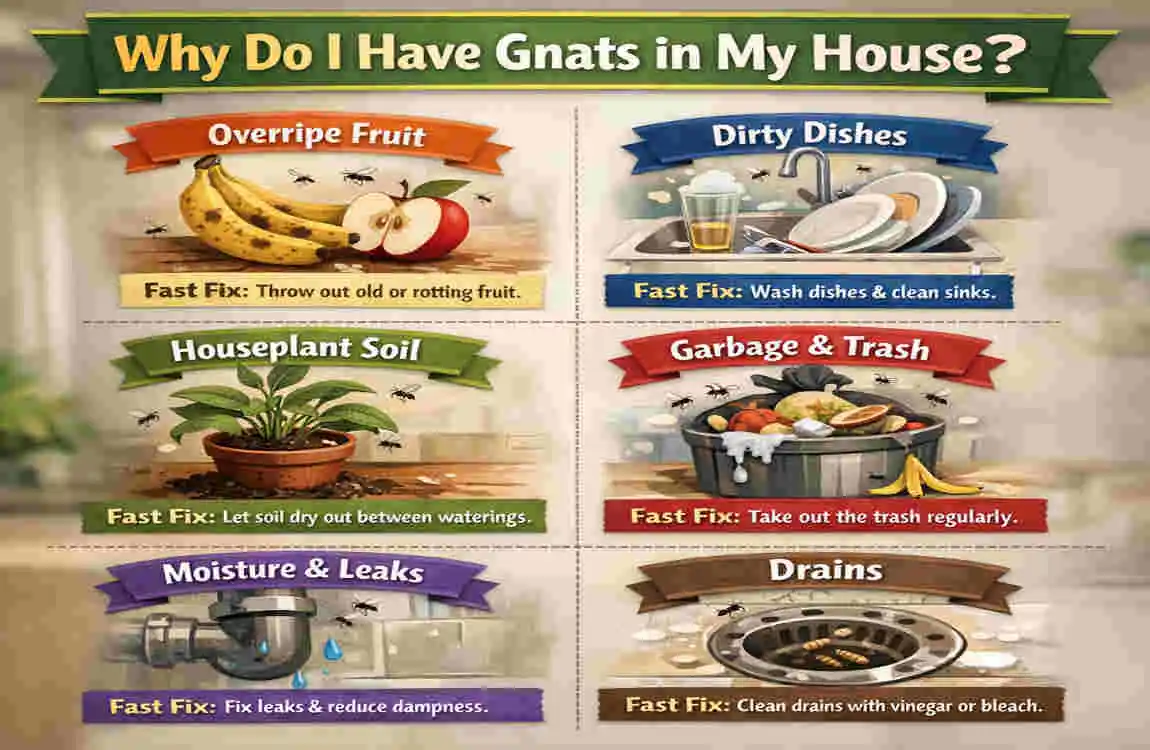
Once you know the source, you can take action. The fastest way to get rid of gnats indoors is to remove the breeding conditions while also reducing the flying adults you already see.
Dry Out Plant Soil and Trap Fungus Gnats
If your houseplants are the issue, let the top layer of soil dry out for a few days before watering again. Fungus gnat larvae need moisture, so drying the surface interrupts their life cycle.
You can also place yellow sticky traps near the pot to catch adults. Another simple trick is to set raw potato slices on the soil for a day or two. Larvae are drawn to them, and you can remove the slices afterward.
In the future, water from the bottom when possible and make sure pots drain well. This helps you keep plants healthy without creating a gnat nursery.
Remove Bad Produce and Set a Vinegar Trap
If the problem is in the kitchen, first inspect all fruits and vegetables. Throw away anything soft, leaking, overripe, or forgotten.
Next, make a quick trap using apple cider vinegar in a small bowl with a few drops of dish soap. The smell attracts the insects, and the soap breaks the surface tension, allowing them to sink.
Wipe down counters, check under appliances, and rinse sticky containers. Store ripe produce in the fridge whenever possible. This simple reset often works quickly when food decay is the main cause.
Clean Drains Deeply, Not Just the Surface
For sink-related gnats, start by thoroughly cleaning the drain opening and the surrounding area. Then use a mix of baking soda and vinegar, followed later by hot water, to help loosen buildup.
A better long-term option is an enzyme-based drain cleaner, which helps break down the organic slime that insects feed on. Avoid assuming one rinse is enough. Drain pests return if the inside walls of the pipe still harbor grime.
If possible, scrub reachable parts with a drain brush. The goal is to remove the breeding layer, not just kill a few adults.
Empty and Wash Trash Cans Thoroughly
Do not stop at taking out the trash. Empty the bin, then wash the inside with warm, soapy water or a mild disinfectant. Pay attention to the lid, edges, and bottom, where sticky residue tends to collect.
Dry the can fully before adding a new bag. If moisture is a recurring issue, sprinkle a little diatomaceous earth or baking soda in the bottom to help keep it drier between cleanings.
Take food waste out often, especially during warm weather. A clean trash can removes one of the easiest breeding zones for gnats.
Eliminate Standing Water Everywhere
Walk through your home with fresh eyes and look for damp spots. Empty saucers under plant pots, refresh pet bowls daily, clean humidifiers, and check under sinks for leaks.
Do not forget hidden places like refrigerator drip trays, window tracks, or mop buckets. Drying out these spots removes the moisture gnats depend on.
If you find a leak, repair it as soon as possible. Even a slow drip can keep feeding the problem. This fix may seem simple, but it makes a big difference when the infestation feels scattered around the house.
Seal the Ways They Get In
If gnats are getting in from the outside, focus on blocking entry. Repair torn screens, add weatherstripping to loose doors, and seal cracks around windows or vents.
Keep doors closed as much as possible during heavy bug activity, especially in the evening. If outdoor lighting attracts swarms near entrances, consider reducing bright lights near doors when practical.
This step is especially important when you notice seasonal spikes. You do not want to remove indoor gnats only to have new ones replace them every day.
Lower Indoor Humidity Fast
When humidity is high, your home stays gnat-friendly. Use bathroom and kitchen exhaust fans, run the air conditioner if you have one, and open windows only when outside air is drier.
A dehumidifier can make a huge difference in damp rooms. You can also place moisture absorbers in closets, laundry rooms, or bathrooms that tend to stay muggy.
The goal is to keep your indoor environment less moist overall. Once surfaces, soil, drains, and corners dry more efficiently, gnats lose the conditions they need to survive and reproduce.
Prevention Tips to Keep Gnats Away for Good
Once you solve the immediate problem, the next goal is to prevent it from recurring. The best prevention plan is simple, consistent, and focused on cleanliness plus moisture control.
Here are some habits that help keep gnats away for the long term:
- Water houseplants only when needed, not on a fixed schedule that keeps soil soggy.
- Store ripe fruits and vegetables properly, and avoid leaving produce out too long.
- Clean drains regularly, especially in kitchens and bathrooms used every day.
- Wash trash cans often, not just the bags or liners.
- Fix leaks quickly under sinks, behind appliances, and around windows.
- Change pet water and clean bowls daily.
- Use exhaust fans in bathrooms and kitchens to reduce the amount of damp air.
- Keep humidity under control, especially during rainy or muggy seasons.
- Inspect screens and door seals before warm weather starts.
- Check hidden corners weekly for standing water, mold, or residue.
If you live in a humid climate or deal with rainy months, you need to be extra careful. During damp seasons, plant soil takes longer to dry, drains stay wetter, and trash odors build faster. That means even small habits matter more.
You should also pay attention to timing. If you notice gnats return every year around the same season, start prevention before the problem begins. Deep-clean drains, reduce overwatering, and seal entry points early.
Sometimes, though, the infestation is too large or too persistent. If you have cleaned, dried, sealed, and trapped but still see major activity, it may be time to call a pest control professional. That is especially true if the issue involves hidden plumbing leaks, structural moisture, or a severe breeding source you cannot locate.
How to Tell Which Gnat Problem You Have
If you still feel unsure, this quick guide can help you narrow it down.
Signs It’s a Plant Problem
Gnats fly up when you water plants or disturb the pot. You mostly see them near windows with houseplants, shelves, or planters. The soil stays wet for long periods.
Signs It’s a Kitchen Food Problem
The bugs gather around fruit bowls, produce bags, recycling, or the trash. You notice soft or overripe food somewhere nearby. The problem gets worse after groceries or cooking.
Signs It’s a Drain Problem
Gnats appear around sinks, tubs, or drain openings. You may notice odor, slow drainage, or activity early in the morning. Wiping the counter does not solve anything.
Signs It’s a Moisture or Humidity Problem
The bugs seem spread across several rooms. You have damp air, condensation, leaks, or poorly ventilated spaces. The issue gets worse during humid weather.
This step matters because the best fix depends on the source. If you keep asking, why do I have gnats in my house, but never identify the exact hotspot, the problem can drag on much longer than it needs to.
FAQs About Gnats Indoors
Why do I have gnats in my house plants?
You likely have fungus gnats. They are drawn to moist potting soil, especially when plants are overwatered. The adults lay eggs in the soil, and the larvae grow in the damp organic matter near the roots.
Are gnats harmful in the house?
Most indoor gnats are more annoying than dangerous. They usually do not bite or cause serious harm. However, fungus gnat larvae can stress young plants, and large infestations are unpleasant and unsanitary around food or drains.
What is the difference between fruit flies and gnats?
People often confuse them. Fruit flies are usually attracted to fermenting fruits and sugary spills. Fungus gnats are more common around houseplants and wet soil. Drain flies gather near slimy drains and pipes.
Why do I suddenly have gnats in my house overnight?
Gnats reproduce quickly. You may not notice the early stage, but once several adults emerge at once, it feels sudden. A hidden source, such as wet soil, a dirty drain, or rotting produce, is often the reason.
How do I get rid of gnats indoors fast?
Start by finding the source. Dry wet plant soil, throw out rotting produce, clean drains deeply, wash trash cans, remove standing water, and use traps for adults. Source removal plus trapping is the fastest approach.