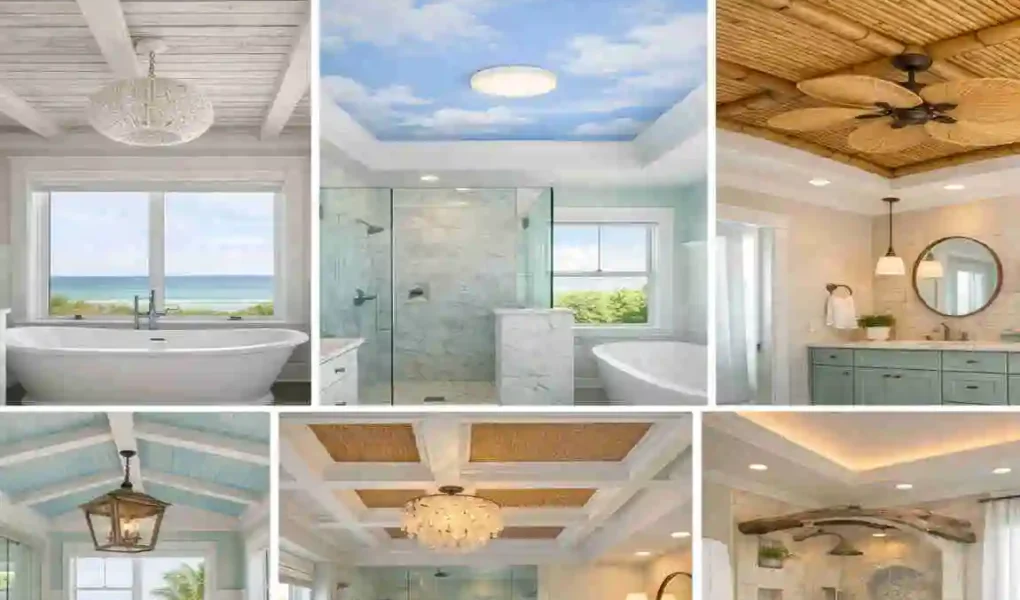
Living in the Sunshine State is a dream, but let’s be honest—it comes with a few unique challenges for your home. You already know about the intense heat, the heavy summer downpours, and the salty ocean breezes. But have you considered how these elements affect your bathroom? High humidity, salt air, and specific coastal aesthetics demand a bathroom that is not just beautiful, but tough as nails. You need moisture-resistant, house-ready ceilings that can handle the steamiest showers and the stickiest July afternoons.
So, you might be asking yourself: What is the new trend in bathroom ceilings in Florida? The answer is clear for 2026. The days of boring, flat, mold-prone drywall are over. Today’s homeowners are choosing durable, spa-like designs that feature textured panels, organic materials, and smart technology. We are talking about designs that effortlessly blend high-end style with rugged, water-repelling practicality.
Why Bathroom Ceilings Matter in Florida Homes
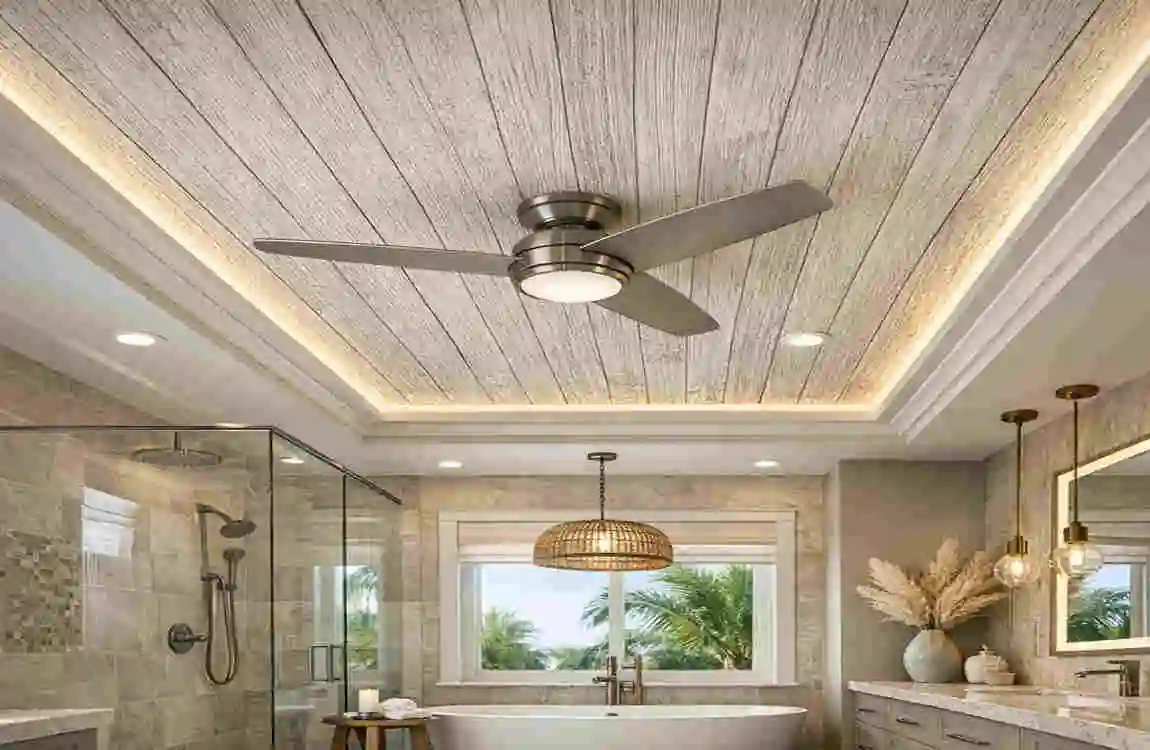
Before we get to the fun design stuff, we need to talk about why your ceiling matters so much. If you live anywhere from Miami to Tampa, or Jacksonville down to Key West, you know that humidity is a constant companion.
When you take a hot shower, that steam rises. In a normal climate, an exhaust fan might easily pull it out. But in Florida, the outside air is already thick with moisture. Standard builder-grade ceilings—usually just basic drywall painted flat—cannot withstand these coastal zones for long. They absorb moisture like a sponge. This leads to ugly water spots, structural warping, and the homeowner’s worst nightmare: black mold.
To create a bathroom that lasts, you have to prioritize humidity-resistant ceilings. When you are looking to upgrade, you need to keep three major factors in mind:
- Ultimate Moisture Resistance: Your materials must repel water. Think PVC, treated fiberglass, or heavily sealed woods.
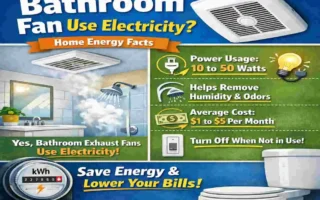
- Smart Ventilation Integration: The best new ceilings hide powerful, quiet exhaust fans that actively fight Florida’s humidity.
- The Perfect Coastal Aesthetic: Function is great, but form matters too. You want light colors, natural textures, and a breezy beach vibe.
Let’s take a quick look at how standard materials stack up against the harsh Florida climate.
Common Ceiling Materials vs. Florida Suitability
Material Pros and Cons Florida Rating (1-10)
Basic Drywall: Very cheap, easy to paint, quick to install. Highly mold-prone, peels easily in humidity. 3
PVC Panels 100% waterproof, easy DIY install, won’t rot. It can look artificial if you buy cheap brands. 9
Shiplap Wood Unbeatable coastal charm adds massive character. Requires heavy, consistent sealing to stop warping. 8
Upgrading your bathroom ceiling isn’t just about avoiding mold; it is a smart financial move. In the competitive Florida real estate market, upgraded, moisture-proof bathrooms can increase resale value by up to 12%. Buyers want move-in-ready, worry-free homes.
Now that you know the stakes, what is the current state of the bathrooms in Florida? Let’s break down the 7 best house-ready picks for 2026.
Textured Shiplap Panels
If you want to capture that breezy, beach-house feel, textured shiplap is your best friend. Interior design reports for 2026 show a massive surge in white-washed shiplap ceilings across coastal Florida. It brings an airy, cottage-like charm that instantly relaxes you the moment you step out of the shower.
When people ask me what the new trend in bathroom ceilings in Florida is, I often point them straight to shiplap. But here is the catch: you cannot use raw wood. For Florida homes, you must use humidity-sealed versions or PVC-composite shiplap. These specialized panels resist warping, swelling, and mold. Plus, you can often install them directly over your existing ugly popcorn or flat drywall ceilings!
The Pros and Cons of Shiplap in Florida:
- Pros: It is relatively affordable (averaging $5 to $8 per square foot). It is also incredibly DIY-friendly if you are handy with a nail gun.
- Cons: The horizontal grooves can become tiny dust traps if you don’t use a glossy, easy-to-wipe sealant.
House-Ready Design Tip: Pair your crisp, white shiplap ceiling with nautical navy blue walls and brass fixtures. The contrast is absolutely stunning.
Quick Shiplap Installation Mini-Guide
- Locate the studs in your current ceiling and mark them clearly.
- Apply construction adhesive to the back of your treated shiplap boards.
- Nail the boards directly into the ceiling joists, interlocking the grooves as you go.
- Caulk the edges and apply a final coat of mildew-resistant, high-gloss paint.
Shiplap Cost Breakdown Table
Expense Type Estimated Cost (per 100 sq ft)
Pre-sealed Shiplap Boards $400 – $600
Nails & Adhesive $30 – $50
Mold-Resistant Paint/Caulk $40 – $60
Total DIY Cost $470 – $710
Metallic Accent Panels
Are you looking for something a little more glamorous? Metallic accent panels are making huge waves in high-end Florida real estate. These panels feature stamped, intricate designs that mimic the classic tin ceilings of the 1920s. Still, they are built with modern, rust-proof technology.
How does metal survive the salt air? The secret is in the modern anti-corrosive coatings. Manufacturers now treat shimmering copper, bronze, and brushed nickel panels specifically for coastal environments. These panels reflect your bathroom lighting beautifully, making the space feel larger and hiding any ceiling imperfections.
When condo owners in Miami ask what the new trend in bathroom ceilings in Florida is, metallic panels are a top answer. In fact, many luxury condos are using this exact trend to bump their property values by up to 20%. Homebuyers absolutely love the vintage-meets-modern spa glow.
- Easy Installation: You don’t need to do any heavy demolition. Most metallic panels are “glue-up” or drop-in, meaning you stick them right over your old ceiling.
- Budget-Friendly Luxury: At just $10 to $15 per square foot, it looks much more expensive than it actually is.
- Lighting Integration: These look breathtaking when paired with recessed LED lighting that washes over the metallic texture.
Color Options for Coastal Homes
Metallic Finish, Best Bathroom Vibe, Salt Air Durability
Brushed Nickel: Modern and clean; pairs well with cool grays. Excellent (Clear-coated)
Aged Copper Warm, rustic, perfect for tropical designs. Very Good (Requires thick seal)
Matte White Tin Traditional coastal, highly reflective. Outstanding (Baked enamel)
PVC Tongue-and-Groove
If you want absolute, zero-stress durability, let me introduce you to PVC tongue-and-groove ceilings. Let’s face it: Florida gets rainy. During the summer storm season, moisture tries to invade your home from every angle. PVC ceilings are the ultimate shield.
When local builders are asked what the new trend for ceilings in bathrooms in Florida that requires zero maintenance is, PVC is the undisputed champion. These are 100% waterproof interlocking panels that mimic the look of real painted wood. They are absolutely ideal for the ceiling directly above your shower enclosure.
This trend is exploding in 2026 because homeowners are tired of repainting drywall every three years. PVC panels never rot, they never rust, and mold cannot grow on them.
- Incredible Durability: You can easily expect a 20+ year lifespan from a high-quality PVC ceiling.
- Versatile Styles: You can choose a tight beadboard look for a cottage feel, or wide, flat panels for a sleek, modern aesthetic.
Coffered Wood Ceilings
If you have a primary bathroom with high ceilings and want to inject a serious dose of luxury, coffered wood ceilings are the way to go. A coffered ceiling features a series of recessed, geometric panels—usually squares or rectangles—that add incredible architectural depth to a room.
Normally, putting heavy wood on a bathroom ceiling in a humid state sounds risky. But 2026 has brought us incredible new sealing technologies. Builders are now using naturally water-resistant woods, like Teak or Cedar, and treating them with marine-grade sealants.
This trend pairs beautifully with the rise of the smart home. Homeowners are hiding dimmable, smart LED strips inside the recessed ridges of the coffers. You can set the lights to a cool blue for an energizing morning shower, or a warm amber for a relaxing evening soak in the tub.
Coffered Ceiling Cost and Value
FeatureDetailsCost Estimate
Materials Treated Teak, Pine, or Faux Wood Polyurethane. $15 – $25 per sq ft
Labor-intensive carpentry is required for perfect symmetry. $10 – $20 per sq ft
Overall, value adds extreme luxury appeal to primary suites. Very High ROI
The Before and After Experience:
- Before: A flat, boring, 10-foot drywall ceiling that feels cold, echoes loudly, and lacks any visual interest.
- After: A rich, textured masterpiece that absorbs sound, lowers the visual height to make the room feel cozy, and looks like a five-star resort spa.
Mirrored or Reflective Surfaces
Let’s pivot to something incredibly modern and daring. If you are still wondering what the new trend in bathroom ceilings in Florida for smaller, contemporary spaces is, look up at mirrored ceilings.
Now, I am not talking about the tacky mirrored ceilings of the 1970s. The 2026 iteration is sleek, sophisticated, and highly functional. We are seeing large, seamless panels of reflective acrylic or fog-resistant glass installed over freestanding soaking tubs.
Why does this work so well in Florida? First, reflective surfaces bounce the abundant Florida sunshine all around the room, making tiny condo bathrooms feel twice as large. Second, modern reflective panels are treated with anti-fog coatings. Even on the steamiest, most humid Florida mornings, your ceiling stays crystal clear and dripping-free.
The Design Twist for 2026: The absolute hottest way to install these reflective panels is to float them slightly off the main ceiling and run LED backlighting behind the edges. This creates a “halo” effect that is breathtakingly modern.
Critical Safety Note: If you choose to use actual glass instead of reflective acrylic, you absolutely must use tempered safety glass. Hire a professional who specializes in heavy installations. In a hurricane-prone state like Florida, you want every heavy fixture secured by a licensed pro.
Sustainable Bamboo or Recycled Panels
Floridians are increasingly conscious of their beautiful natural environment. As a result, eco-friendly design is no longer just a niche; it is a major driving force in home renovations. The green-conscious homeowner wants to know: What is the new trend in bathroom ceilings in Florida that protects the planet?
Enter sustainable bamboo and recycled composite panels.
Bamboo is a wonder material for tropical climates. It is technically a grass, not a wood, meaning it grows incredibly fast and is highly renewable. But the best part for your bathroom is that bamboo is naturally mold-resistant and incredibly tough. When woven or laid into slatted grid panels, it allows air to circulate beautifully, reducing trapped moisture.
- Eco-Certifications: Always look for FSC-approved (Forest Stewardship Council) bamboo. This ensures it was harvested responsibly.
- Budget-Friendly: Despite being a specialty eco-product, bamboo panels are surprisingly affordable, ranging from $7 to $12 per square foot.
- The Vibe: It instantly transforms your bathroom into a Balinese-inspired tropical retreat. Pair it with live indoor plants (which thrive in humid Florida bathrooms) for the ultimate organic sanctuary.
Integrated Smart Ceilings
We have saved the most futuristic trend for last. As we move deeper into 2026, technology is infiltrating every corner of our homes. If you want a bathroom that feels like a sci-fi luxury suite, the integrated smart ceiling is exactly what you need.
Instead of having a separate light, a separate ugly vent, and a separate Bluetooth speaker cluttering up your ceiling, this trend combines them all into seamless, flush-mounted smart panels.
When tech-lovers ask what the new trend in bathroom ceilings in Florida is, this is the ultimate answer. These smart panels are controlled via your smartphone or voice assistant.
The Perfect Florida Fit: The coolest feature for Floridians? Built-in dehumidifier sensors. You don’t even have to turn on the exhaust fan. The smart ceiling constantly monitors the room’s humidity levels. The moment you turn on the hot water and the steam rises, the ceiling detects the moisture spike and silently activates high-powered, hidden vents.
Some smart ceilings even feature infrared heating panels. While Florida is usually hot, those brief January cold snaps can make stepping out of the shower brutal. An infrared ceiling heater warms your body directly, rather than just blowing hot air around the room.
Florida-Specific Installation Guide
Choosing your trend is only half the battle. Surviving the installation in a coastal climate is where the real work begins. If you are ready to tackle these coastal bathroom trends, you need a game plan tailored specifically to the Sunshine State.
Here is your step-by-step guide for coastal homes:
Step 1: Assess Your Moisture Levels. Before you buy any materials, look at your current bathroom. Are there black spots in the corners? Is the paint peeling above the shower? If yes, you have an active moisture problem. You must fix your ventilation before installing a new ceiling, or the new materials will eventually fail as well.
Step 2: Choose Your Materials Wisely. Based on the trends above, select your material. If your bathroom gets incredibly humid and lacks a window, focus heavily on the PVC tongue-and-groove or treated shiplap.
Step 3: Gather Your Tools. If you are taking the DIY route, make sure you have the right gear. You will need:
- A high-quality stud finder.
- A laser level (crucial for straight lines on uneven ceilings).
- Moisture-resistant construction adhesive.
- A brad nailer and stainless steel nails (regular nails will rust in Florida).
- Anti-microbial silicone caulk.
Step 4: Decide Between Pro vs. DIY Not every ceiling should be a weekend project. Here is a quick breakdown to help you decide.
Installation Type: Best For, Average Labor Cost, Difficulty Level
DIY Installation: PVC panels, basic shiplap, glue-up metallic. $0 (Just your sweat!) Moderate
Pro Contractor Coffered wood, heavy mirrored glass. $50 – $100 per hour Hard
Licensed Electrician Smart ceilings, integrated LED lighting. $75 – $150 per hour Expert/Dangerous
Important Warning: Always hire licensed contractors for any electrical work. Florida building codes are strict for a reason. Wiring a smart ceiling or adding new LED lights near water requires proper grounding and GFCI protection. Do not risk your safety to save a few dollars.
Cost Comparison and Budget Tips
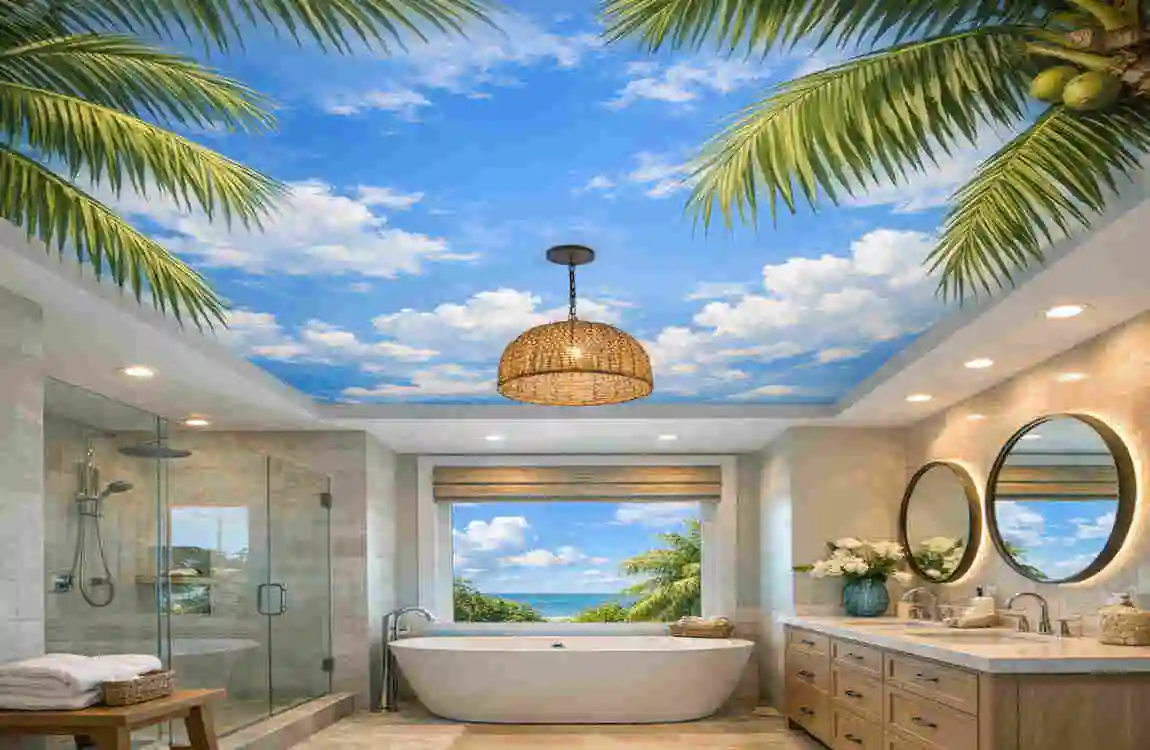
Let’s talk numbers. Renovating a bathroom is a significant investment, but as we discussed earlier, it yields a fantastic return when you sell your home.
To help you plan, here is a full breakdown of the costs associated with the top trends. Let’s assume you have a standard, moderately sized primary bathroom with about 100 square feet of ceiling space.
Full Cost Breakdown Table
Ceiling Trend Average Cost (per sq ft)Total Estimate (100 sq ft)Estimated Durability (Years)
Textured Shiplap $6 $600 15+ (With proper sealing)
Sustainable Bamboo $9 $900 15 – 20
PVC Panels $10 $1,000 20+ (Essentially lifetime)
Metallic Panels $12 $1,200 20+
Smart Ceilings $25+ $2,500+ 10 (Tech updates needed)
Coffered Wood $30 $3,000 25+
(Note: These totals reflect average material costs and basic installation supplies. Professional labor will add to the final price.
Savings Hacks for Florida Homeowners
You don’t have to drain your bank account to get a gorgeous coastal ceiling. Here are a few ways to keep costs down:
- Shop Local Florida Suppliers: Big box stores are convenient, but local Florida lumber yards and coastal specialty shops often carry humidity-treated woods and PVC panels at better bulk prices. Plus, you avoid massive shipping fees for heavy materials.
- Keep the Existing Drywall: If your current drywall ceiling is not molding or rotting, don’t tear it down! Demolition costs time and money. Trends like shiplap, metallic panels, and PVC can be installed directly over the existing ceiling, acting as a decorative shield.
- Upgrade Ventilation First: If you are on a tight budget, spend your money on a high-end, smart exhaust fan first. Protecting a cheap painted ceiling from moisture is better than installing an expensive wood ceiling and letting it rot because you skipped the fan.
FAQ Section
What is the new trend for ceilings in bathrooms in Florida? The biggest trends focus on moisture-resistant materials combined with coastal style. Top choices for 2026 include textured shiplap, waterproof PVC tongue-and-groove panels, metallic accent panels, sustainable bamboo, and integrated smart ceilings that feature hidden ventilation.
What is the best ceiling material for highly humid bathrooms? PVC (Polyvinyl Chloride) panels are widely considered the best option for extreme humidity. They are 100% waterproof, they never rot, and they are completely immune to mold growth, making them perfect for Florida’s muggy climate.
Can I put real wood on a bathroom ceiling in Florida? Yes, but you have to be careful. You cannot use raw or untreated wood. You must use naturally water-resistant species like Teak or Cedar, and they must be heavily coated with marine-grade polyurethane sealants on all sides to prevent warping.
How much does it cost to upgrade a bathroom ceiling? It depends on the material. Simple DIY shiplap can cost as little as $500 for a 100-square-foot room. Mid-range options like metallic panels average $1,200. High-end custom coffered ceilings or smart tech installations can range from $2,500 to $4,000+.
Does upgrading the ceiling increase my home’s value? Absolutely. In the Florida real estate market, buyers look closely for signs of water damage. A beautifully upgraded, moisture-resistant bathroom ceiling can boost your home’s overall resale value by 10% to 15%.
Do I need to remove my old drywall ceiling first? Not always! If your current ceiling is flat, structurally sound, and free of mold, lightweight materials such as PVC panels, beadboard, and tin-style metallic panels can be installed directly over the existing drywall.