Did you know that a standard asphalt shingle roof typically needs to be replaced every 15 to 20 years? Now, compare that to a metal roof, which easily lasts 40 to 70 years. If you are a homeowner looking for a permanent solution, exploring the different types of metal roofing for houses is one of the smartest moves you can make.
Gone are the days when metal roofs were only for old barns or industrial warehouses. Today, they are perfect for modern houses, offering a stunning mix of curb appeal, unbeatable protection, and massive energy savings. When you choose a metal roof, you are making a one-time investment that protects your family and increases your property value.
But not all metal roofs are created equal. The market is flooded with a variety of materials, styles, and installation methods. Because of this variety, understanding the specific types of metal roofing for houses truly matters. You need to know which material fits your local climate, matches your budget, and complements your home’s architectural style.
Why Choose Metal Roofing for Houses?
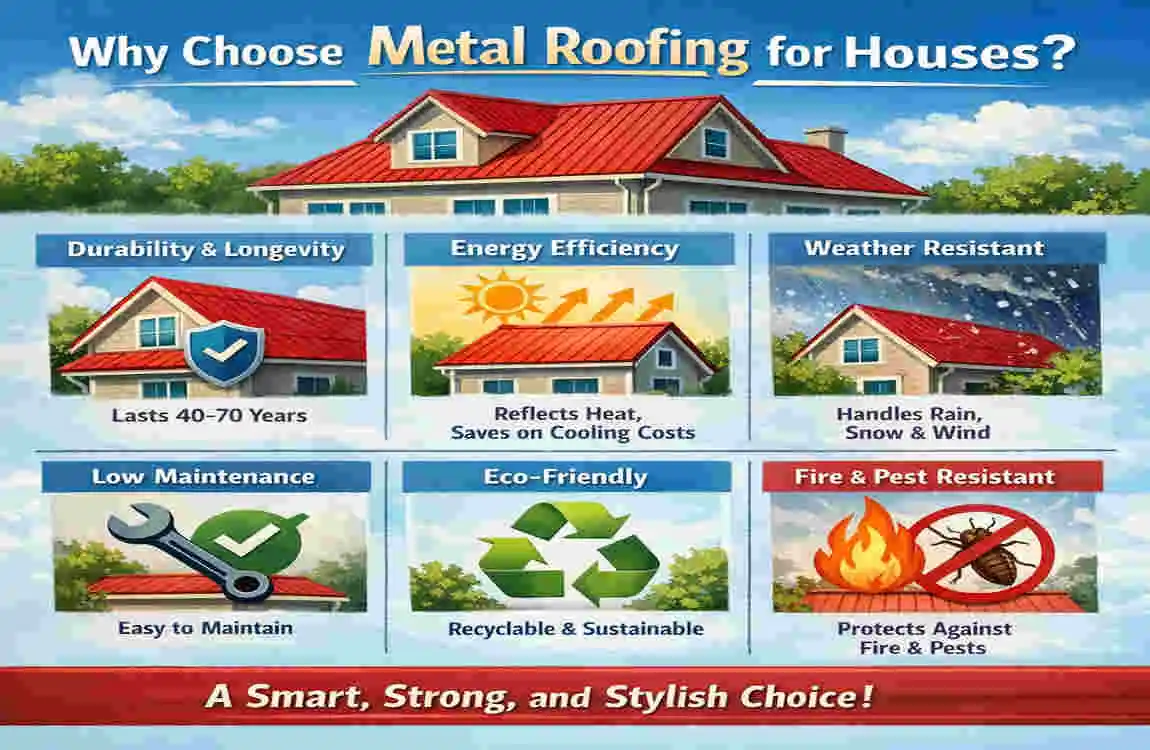
Before we explore the specific materials, you might be wondering why you should upgrade to metal in the first place. The simple answer is that metal roofing completely outperforms traditional roofing materials in almost every category.
First and foremost, let’s talk about the durability of metal roofs. These roofs are incredibly tough. They boast massive resistance to extreme weather conditions. Whether you live in an area prone to massive hail, severe windstorms, or even wildfires, metal provides a protective shell over your home. Many metal roofs carry a Class 4 hail impact rating and a Class A fire rating, which is the highest level of protection available.
Next, consider the longevity. As we mentioned, a quality metal roof can easily last over 50 years. Some Premium metals even last over a century! Once you install a metal roof, you will likely never have to replace it again in your lifetime.
Finally, do not overlook the incredible energy efficiency. Metal roofs are highly reflective. Instead of absorbing the summer sun’s heat as dark asphalt shingles do, metal reflects it away from your home. This process keeps your attic significantly cooler, which means your air conditioning system does not have to work as hard. Ultimately, this leads to lower monthly energy bills and a much more comfortable living space. You might even qualify for special energy rebates or insurance discounts!
To give you a clear picture, let’s compare standard asphalt shingles with standard metal roofing.
Roofing Material Comparison Table
Roofing Type Average Lifespan Upfront Cost Energy Savings Maintenance Level
Standard Asphalt 15 – 20 Years Low to Medium Poor High (Needs frequent repairs)
Metal Roofing 40 – 70+ Years Medium to High Excellent (Reflects heat) Very Low
Standing Seam Metal Roofing
Description and Style
When most people think of modern residential metal roofs, they picture standing-seam metal roofing. This style features long, continuous vertical panels that run directly from the top ridge of your roof down to the edge.
What makes standing seam so special is its hidden fastener system. The panels interlock, and the screws that hold the roof to your house are completely concealed beneath the seams. This creates a sleek, smooth, contemporary look that instantly upgrades any home’s appearance.
Durability and Lifespan
When it comes to metal roof durability, standing seam is an absolute powerhouse. Because the fasteners are hidden away from the sun and rain, they do not degrade over time. You can expect this roof to last anywhere from 40 to 70 years without breaking a sweat.
Furthermore, standing seam roofs often carry a Class 4 hail rating. They can also withstand hurricane-force winds, easily resisting gusts of 150 miles per hour or more.
Cost Breakdown
Because of the complex interlocking design and the need for skilled labor, standing seam is considered a Premium option.
- Average Cost: You can expect to pay between $8 and $14 per square foot, fully installed.
- Regional variations apply depending on your local labor rates and the thickness of the steel you choose.
Pros and Cons
- Pros: Incredible aesthetic appeal, virtually zero maintenance required, extremely weather-resistant, and no exposed screws to cause leaks.
- Cons: The upfront cost is higher than basic metal or asphalt, and it requires highly trained professionals to install correctly.
The Best Pick For…
Standing seam is the absolute best pick for sloped roofs in stormy or high-wind areas. For example, consider a homeowner living in a hurricane-prone coastal city. By upgrading to a standing seam roof, they not only secure peace of mind during storm season but often see a significant reduction in their home insurance premiums!
Corrugated Metal Roofing
Description and Style
If you want to talk about classic, time-tested roofing, you have to talk about corrugated metal roofing. You will recognize this style immediately by its classic, wavy “U” shape pattern.
These panels are typically made from galvanized steel, which means they are coated in zinc to prevent rust. Corrugated metal brings a fantastic rustic, farmhouse, or industrial vibe to residential homes. It has become incredibly popular in modern farmhouse designs, adding texture and character to the property.
Durability and Lifespan
While it might look traditional, corrugated metal is tough. You can expect a lifespan of 30 to 50 years.
The unique wavy design is not just for looks; it serves a structural purpose. The corrugated grooves give the lightweight steel incredible strength, allowing it to easily support heavy snow loads. Furthermore, those same grooves act as natural channels that rapidly shed heavy rain off your roof and away from your home’s foundation.
Cost Breakdown
If you are looking for the cheapest type of metal roofing for houses, corrugated metal is usually your winner.
- Average Cost: Installation typically ranges from $5 to $10 per square foot.
Pros and Cons
- Pros: Very affordable, fast, and relatively easy to install, lightweight, and charmingly rustic.
- Cons: This system uses exposed fasteners (screws that go straight through the panel), which require maintenance. It can also be slightly noisier during heavy rain compared to other materials.
The Best Pick For…
Corrugated panels are the perfect choice for barn-style houses, cabins, or any homeowner working with a strict budget under $10,000. It offers you the longevity of metal without the Premium price tag of standing seam.
Metal Shingles and Shakes
Description and Style
Do you love the traditional look of architectural asphalt shingles, cedar shakes, or clay tiles, but crave the strength of steel? If so, metal shingles and shakes are exactly what you need.
Manufacturers create these by stamping high-quality steel into shapes that mimic traditional roofing materials. To make them look even more authentic, they are often coated with a layer of crushed stone (known as stone-coated steel). This gives your upscale house a highly textured, traditional appearance while hiding a core of indestructible metal.
Durability and Lifespan
Stone-coated metal shingles easily last 50+ years. The stone coating is heavily treated to be UV-resistant, meaning your roof will not fade or change color under the harsh summer sun.
Additionally, they boast a Class A fire rating. Because they interlock on all four sides, they provide a nearly impenetrable barrier against wind-driven rain and snow.
Cost Breakdown
Combining beautiful aesthetics with heavy-duty manufacturing means this option falls into the mid- to high-priced tier.
- Average Cost: Expect to invest between $10 and $17 per square foot installed.
Pros and Cons
- Pros: Delivers a gorgeous, traditional look that easily passes strict Homeowner Association (HOA) rules; very lightweight compared to real clay or slate.
- Cons: The installation is quite complex and tedious, driving up labor costs. It can also be difficult to walk on without bending the stamped shapes if you do not know where to step.
The Best Pick For…
Metal shingles are the ideal choice for historic homes, upscale neighborhoods, or any shingle-replacement project where preserving the house’s classic look is paramount. In many before-and-after case studies, homes upgraded with metal shakes see a massive boost in curb appeal without losing their original architectural charm.
Screw-Down Metal Roofing
Description and Style
Often referred to as exposed fastener roofing, screw-down metal roofing consists of wide, flat panels with minor raised ribs.
Unlike standing seam, where the screws are hidden, screw-down roofs are exactly what they sound like. The installer drives screws directly through the face of the metal panel into the roof deck below. These screws have little rubber or neoprene washers on them to seal the hole and keep water out.
Durability and Lifespan
While not quite as long-lasting as hidden fastener systems, screw-down roofs still offer solid metal roof durability. You can expect a lifespan of 25 to 40 years.
Because the panels overlap and are screwed down tightly, they create a very rigid structure that holds up well in high-wind zones.
Cost Breakdown
This is the true budget king of the roofing world, perfect for homeowners trying to save every possible dollar.
- Average Cost: Ranging from $4 to $8 per square foot installed.
Pros and Cons
- Pros: Extremely affordable, widely available, and very easy to install (making it highly appealing for DIY-friendly houses). If a panel gets damaged, it is simple to unscrew and replace it.
- Cons: The exposed rubber washers will dry out, crack, and degrade over time under the sun. If you do not perform routine maintenance and replace these screws every 10 to 15 years, the roof will become prone to leaks. Furthermore, because the metal cannot expand and contract freely, the screw holes can widen over time.
The Best Pick For…
Screw-down roofing is the undisputed best pick for agricultural homes, large detached garages, workshops, and backyard sheds. If you want a cost-saving tip: use a standing seam on your primary residence, but use a matching color screw-down roof on your detached shed or garage to save thousands of dollars!
Aluminum Roofing
Description and Style
When we talk about types of metal roofing for houses, we usually assume the metal is steel. However, aluminum roofing is a fantastic alternative that brings its own unique set of superpowers.
Available in standing seam, corrugated, and shingle styles, aluminum is incredibly lightweight. But its true claim to fame is its extreme corrosion resistance. Unlike steel, which requires a special coating to prevent rust, aluminum naturally resists rust.
Durability and Lifespan
Aluminum roofs offer an excellent lifespan of 40 to 60 years.
Because aluminum does not suffer from red rust, it will maintain its structural integrity for decades, even in the harshest, wettest environments. It simply does not degrade in the presence of heavy moisture the way other metals might.
Cost Breakdown
Because aluminum is a Premium raw material, it commands a higher price point than basic steel.
- Average Cost: You should budget between $9 and $15 per square foot for a fully installed aluminum roof.
Pros and Cons
- Pros: Highly corrosion-resistant, incredibly lightweight (meaning no extra structural support is needed), and very eco-friendly. In fact, most aluminum roofs are made from up to 90% recycled materials and are 100% recyclable at the end of their life!
- Cons: Aluminum is a softer metal than steel. Because of this, it is more susceptible to cosmetic dents from massive hailstones or falling tree branches.
The Best Pick For…
Aluminum is the absolute best pick for coastal houses or beachfront properties. If you live near the ocean, the salty air will quickly eat through standard steel roofing. Aluminum won’t rust in humid or salty air, making it the perfect seaside shield for your home.
Copper Roofing
Description and Style
If you are looking for the absolute pinnacle of luxury and elegance, copper roofing stands in a league of its own. Used for centuries on castles, cathedrals, and grand estates, copper is a Premium, high-end material.
When first installed, copper shines like a brilliant new penny. Over time, however, it undergoes a natural oxidation process. This means it slowly changes color, developing a stunning blue-green “patina.” This natural aging process gives high-end houses a sense of timeless beauty and historic elegance that no factory-painted metal can replicate.
Durability and Lifespan
Copper is often called a “forever roof.” Its durability is legendary, boasting a lifespan of 100+ years!
The patina that forms on the surface isn’t just for looks; it acts as a self-healing, antimicrobial protective layer that completely prevents the metal from degrading. It will never rust, never rot, and never fail you.
Cost Breakdown
As you might expect, this level of prestige and longevity requires a significant financial investment.
- Average Cost: Copper is a luxury item, costing roughly $20 to $35 per square foot installed.
Pros and Cons
- Pros: Unmatched, timeless beauty; self-healing properties; incredibly lightweight; and a lifespan that will outlive the home itself.
- Cons: The exceptionally steep price tag puts it out of reach for most standard home budgets. Also, the shiny new look does not last, which could be a con if you do not like the green patina aesthetic.
The Best Pick For…
Copper is the ideal pick for luxury mansions, historic home restorations, or as an accent roof. Many homeowners use copper over bay windows, front porches, or architectural domes to add massive curb appeal without paying to cover the entire house. If you run an ROI (Return on Investment) calculator, copper adds massive resale value to high-end real estate.
Zinc Roofing
Description and Style
Rounding out our list of the best types of metal roofing for houses is a material highly favored by modern architects: zinc roofing.
Like copper, zinc is a natural metal that does not require painting. Instead, it forms its own protective layer (patina) over time, usually settling into a beautiful, matte dark gray or soft blueish-gray finish. Zinc is highly malleable, meaning installers can easily fold, bend, and shape it to fit unique, modern, and contemporary home designs.
Durability and Lifespan
Zinc is phenomenally durable, generally lasting 60 to 80 years with ease.
Because of its natural patina, zinc is entirely self-sealing. If the roof gets scratched by a falling tree branch, the zinc will naturally heal the scratch over time as it continues to interact with the weather. Furthermore, zinc is naturally resistant to mold, mildew, and fungus.
Cost Breakdown
Zinc falls into the Premium category, sitting slightly below copper but above standard steel.
- Average Cost: You can expect to pay between $12 and $20 per square foot installed.
Pros and Cons
- Pros: Incredible self-healing properties, beautiful modern aesthetic, low thermal expansion (meaning it doesn’t warp easily in extreme heat), and it is highly eco-friendly due to its low melting point during manufacturing.
- Cons: It requires a very specialized professional installation. If the underside of the zinc panels becomes trapped with moisture, it can corrode from the inside out, making proper ventilation absolutely critical.
The Best Pick For…
Zinc is the ultimate choice for custom-built contemporary homes and green building projects. Because of its low energy footprint and ultimate recyclability, zinc easily meets strict sustainability certifications for eco-conscious homeowners.
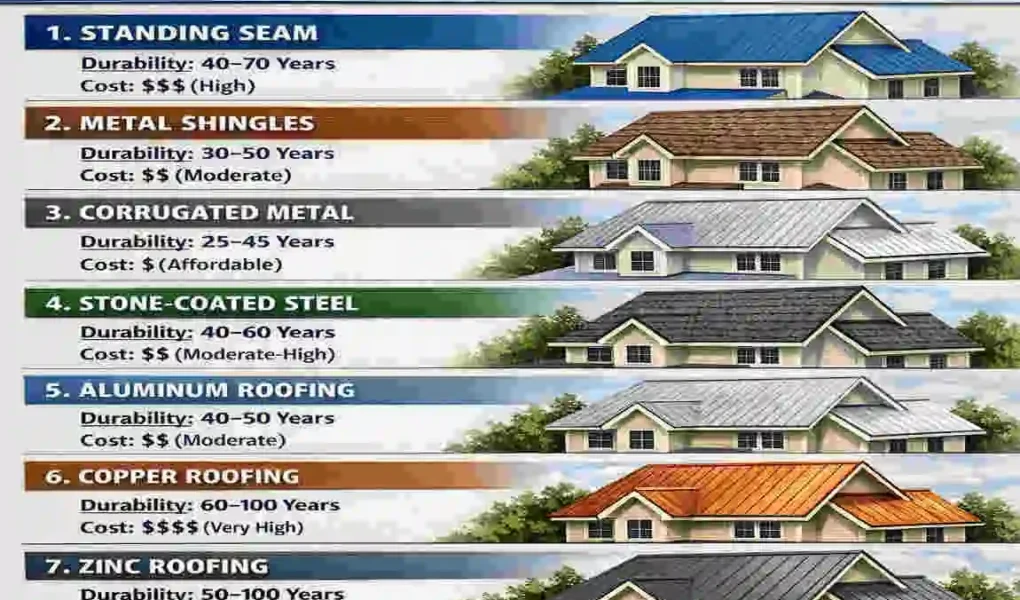
Comparison Table: Top Types at a Glance
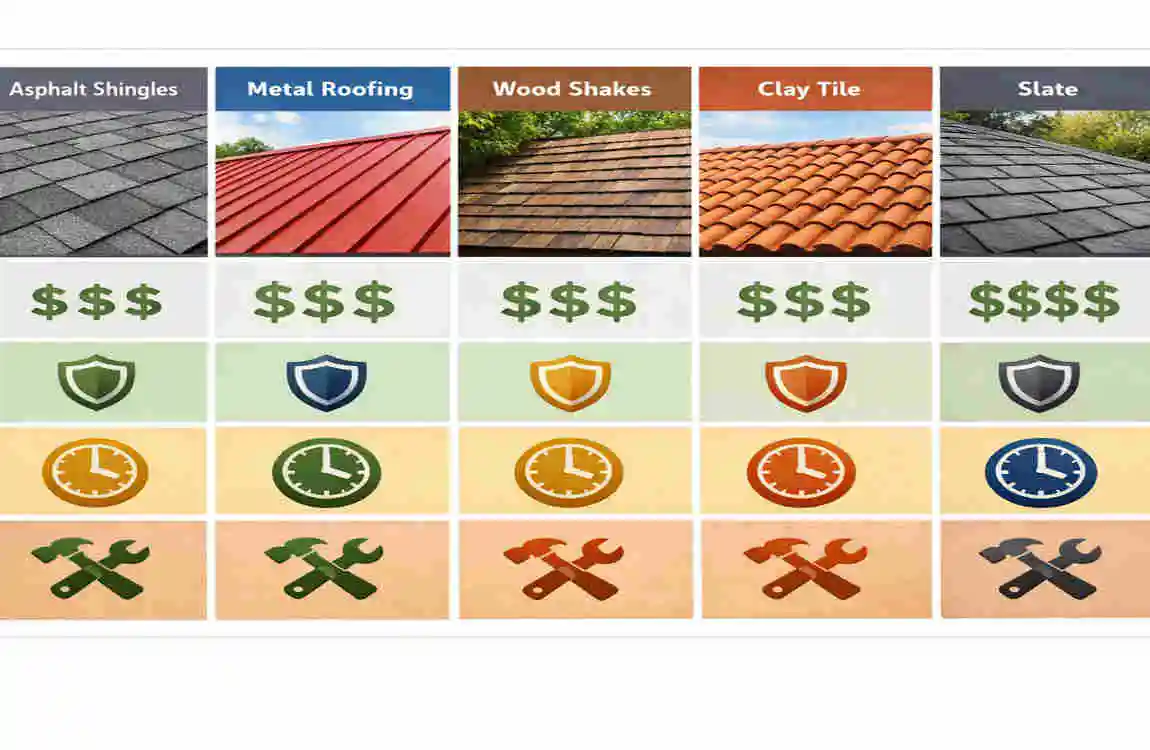
To make your decision easier, we have compiled the key details of the top types of metal roofing for houses into a quick reference guide.
Here is how the different options stack up against each other:
Roofing Type Durability (Years)Avg. Cost ($/sq ft)Best Climate Match Overall Rating (1-10)
Standing Seam 40 – 70 $8 – $14 Stormy / High Wind 9.5 / 10
Corrugated Metal 30 – 50 $5 – $10 Snowy / Rural 8.0 / 10
Metal Shingles 50+ $10 – $17 Sunny / Upscale 8.5 / 10
Screw-Down 25 – 40 $4 – $8 Mild / Dry 7.0 / 10
Aluminum 40 – 60 $9 – $15 Coastal / Humid 9.0 / 10
Copper 100+ $20 – $35 All Climates 9.5 / 10
Zinc 60 – 80 $12 – $20 Variable / Modern 9.0 / 10
Quick Insights:
- Cheapest Option: Corrugated and Screw-Down metal.
- Longest-Lasting Option: Copper and Zinc.
- Best All-Around Value: Standing Seam.
Factors to Consider Before Choosing
Reading about the different types of metal roofing for houses is just the first step. Before you pull out your wallet and sign a contract, there are several crucial factors you need to evaluate regarding your specific property.
Not every roof fits every house, so you must carefully align your choice with your home’s unique needs. For example, your local climate plays a massive role. If you live on the beach, you must avoid standard steel and opt for aluminum. If you live in a hurricane-prone area, a hidden-fastener standing-seam roof is your safest bet.
You also need to think about your roof pitch (the steepness of your roof). Certain metal roofs, like metal shingles, require a specific slope to shed water properly and cannot be installed on flat roofs. Furthermore, always check your local building codes and HOA guidelines, as some neighborhoods have strict rules against exposed fastener systems or unpainted metals.
When it comes to warranties, make sure you understand what you are getting. A standard metal roof warranty covers the paint finish against fading and chalking for 25 to 40 years.
Finally, consider the installation process. While screw-down corrugated panels might tempt you into a weekend DIY project, Premium systems like standing seam or zinc require highly specialized, professional tools and training.
Here are 5 key decision factors to review before buying:
- Climate Match: Does the metal resist your local weather (salt, hail, high winds)?
- Roof Pitch: Is your roof steep enough for the specific metal panel style?
- HOA & Local Codes: Are you legally permitted to install the color and style you want?
- Warranty Quality: Does the manufacturer offer a 25-to-40-year paint finish warranty?
- Installation Method: Do you need a certified pro, or are you attempting a DIY install?
FAQs on Types of Metal Roofing for Houses
As you dive deeper into metal roofing costs and materials, you may have a few lingering questions. Let’s clear up some of the most common things homeowners ask us.
What is the cheapest type of metal roofing for a house? The cheapest options are exposed fastener systems, specifically corrugated metal panels and screw-down roofing. These typically run between $4 and $10 per square foot for installation, since the materials are affordable and the labor is quick.
Are metal roofs incredibly noisy when it rains? This is a massive myth! When properly installed over a solid wood roof deck with standard roofing underlayment and attic insulation, a metal roof is no louder than a traditional asphalt shingle roof. You will not hear deafening pings during a rainstorm.
How durable are metal roofs against hail? They are exceptionally durable. Most steel standing seam roofs carry a Class 4 impact rating, meaning they can easily withstand hits from large, 2-inch hailstones without puncturing or compromising the roof’s structural integrity.
Will a metal roof attract lightning strikes? No. A metal roof does not attract lightning any more than an asphalt roof does. However, if your home is struck by lightning, metal is actually safer! Because metal is non-combustible, it safely dissipates electrical energy without catching fire.
Can I install a metal roof directly over my old shingles? In many cases, yes! Because metal is so lightweight, local building codes often allow you to install a new metal roof directly over one layer of existing asphalt shingles. This saves you thousands of dollars in tear-off labor and landfill disposal fees.