Roof replacement and repair projects require efficient debris removal, and dumpsters are typically positioned as close to the structure as possible to support tear-off operations. In residential settings, that usually means placing the container on a driveway. While this location improves workflow, it also introduces the risk of surface damage if placement and loading are not handled carefully.
For roofing contractors, understanding how to prepare and protect driveways and surrounding surfaces during dumpster use helps prevent property damage, reduce homeowner concerns, and support smoother project closeout.
Why Driveway Protection Matters on Roofing Projects
Roofing debris is dense and accumulates quickly. Asphalt shingles, underlayment, and wood sheathing create heavy loads that increase pressure on the surface beneath the dumpster. Even short-duration projects can leave marks, scrapes, or indentations if precautions are not taken.
Homeowners are particularly sensitive to visible driveway damage because it affects curb appeal and property value. Addressing protection proactively strengthens trust and reduces post-project disputes.
Assessing Surface Type Before Placement
Not all driveways respond the same way to weight and pressure. Contractors should evaluate the surface type before delivery to determine the appropriate level of protection.
Common driveway surfaces include:
- Poured concrete
- Asphalt
- Pavers
- Decorative stamped surfaces
Concrete generally handles weight better than asphalt, but both can be marked by metal edges or shifting loads. Pavers and decorative surfaces may require additional caution due to joint movement or surface texture.
Understanding the material helps determine the best protective approach.
Using Protective Barriers Under the Dumpster
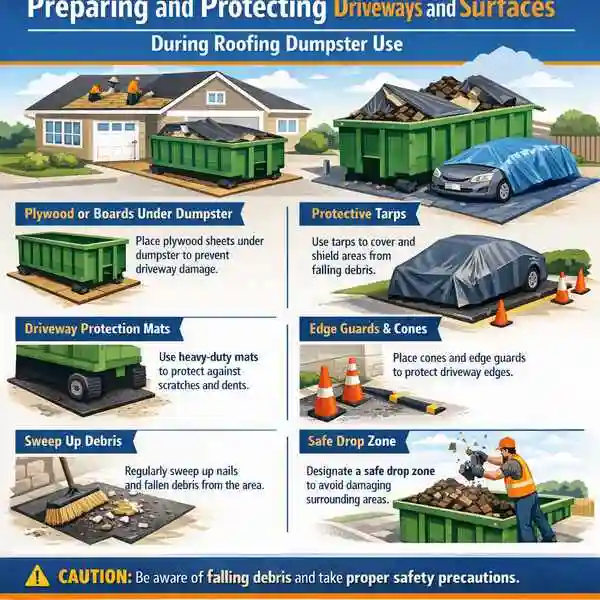
One of the most effective ways to protect driveways is by placing a barrier between the dumpster and the surface. Contractors often use wooden boards or similar protective materials beneath contact points.
Protective measures help:
- Distribute weight more evenly
- Reduce metal-to-surface friction
- Minimize scraping during placement and pickup
- Protect against surface indentation
Boards should be positioned under the dumpster rails or wheels before the container is set down. Ensuring the surface is level also reduces shifting.
Planning Placement Carefully
Driveway protection begins with thoughtful placement. The dumpster should be positioned in a stable, level area away from weak edges or sloped sections.
Contractors should avoid:
- Placing dumpsters on newly poured or freshly sealed surfaces
- Positioning containers near expansion joints or edges prone to cracking
- Blocking garage access unless necessary
Discussing placement with the homeowner beforehand helps align expectations and avoid misunderstandings.
Accounting for Weight During Tear-Off
Roofing projects generate heavy debris in concentrated bursts. Multiple layers of shingles or water-damaged materials increase total load weight significantly.
Contractors should monitor fill levels carefully and avoid exceeding weight allowances. Overloading a dumpster not only risks overage charges but also increases pressure on the driveway surface.
Even distribution of shingles within the container helps maintain balanced weight and reduces stress on specific areas of the driveway.
Minimizing Surface Impact During Loading
How debris is loaded can influence surface impact. Dropping heavy materials from excessive height increases shock and vibration, especially on asphalt surfaces.
Encouraging crews to:
- Lower debris carefully into the container
- Avoid dropping large bundles at once
- Distribute weight gradually
helps reduce sudden stress on the driveway.
Maintaining steady, controlled loading practices protects both the surface and the container.
Preparing for Weather Conditions
Weather affects driveway protection. Rain can soften asphalt surfaces, making them more susceptible to indentation under heavy loads. High temperatures can have a similar effect.
When possible, contractors should account for weather conditions and consider additional protective boards during hot or wet periods. Monitoring surface condition throughout the project helps identify potential issues early.
Protecting Surrounding Landscaping and Hardscapes
Driveways are not the only surfaces at risk. Curbs, sidewalks, landscaping edges, and decorative features may also be impacted during delivery or pickup.
Before the dumpster arrives, contractors should:
- Clear surrounding obstacles
- Ensure adequate maneuvering space for the truck
- Identify areas where protective boards may be needed
Clear access reduces the likelihood of accidental contact during placement.
Communicating Protection Measures to Homeowners
Homeowners often express concern about driveway damage during roof replacement. Clear communication about protective steps builds confidence.
Contractors should explain:
- How the dumpster will be positioned
- What protective materials will be used
- How weight will be managed
Proactive communication demonstrates professionalism and reduces post-project concerns.
Coordinating With Experienced Roofing Disposal Providers
Working with providers familiar with roofing projects supports better surface protection. Experienced services understand how to position containers carefully and align placement with driveway conditions.
Many roofing contractors rely on roofing dumpster rental services that are structured around the realities of roof tear-offs, including heavy debris and short-duration projects. Coordinated delivery and pickup help reduce unnecessary movement and surface impact.
Inspecting Surfaces After Pickup
Once the dumpster is removed, contractors should inspect the driveway and surrounding area. Early identification of any marks or minor surface issues allows for prompt discussion and resolution.
This step reinforces attention to detail and closes the project professionally.
Integrating Surface Protection into Standard Roofing Practice
Driveway protection should not be an optional step. Incorporating protective boards, placement planning, and loading guidelines into standard operating procedures helps ensure consistency across projects.
By making surface protection routine, roofing contractors reduce variability and protect their reputation.
Roofing projects depend on efficient dumpster use, but that efficiency should not come at the expense of driveway or surface damage. By assessing surface type, using protective barriers, monitoring weight, and coordinating careful placement, contractors can protect driveways while maintaining productivity.
Preparing and protecting surfaces during roofing dumpster use demonstrates professionalism and attention to detail. When these practices are integrated into project planning, roofing crews can manage heavy debris effectively while preserving the condition of the homeowner’s property from start to finish.