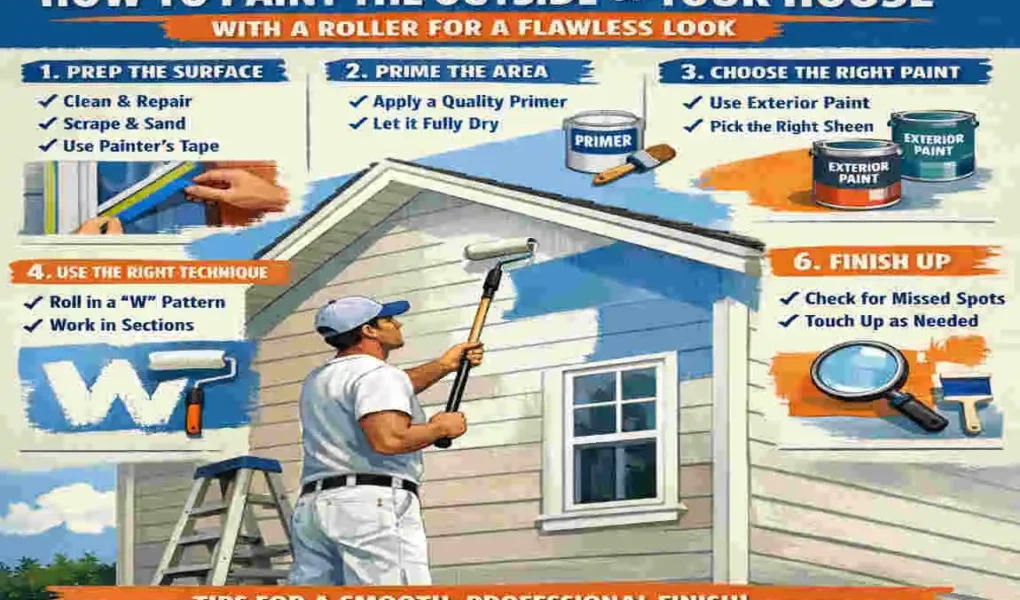
Painting the exterior of your house can seem like a daunting task, but with the right tools, preparation, and techniques, it’s a project you can confidently tackle on your own. Using a roller is one of the best methods for exterior painting, offering speed, even coverage, and a professional finish that will make your home the envy of the neighborhood.
Why Choose a Roller for Exterior Painting
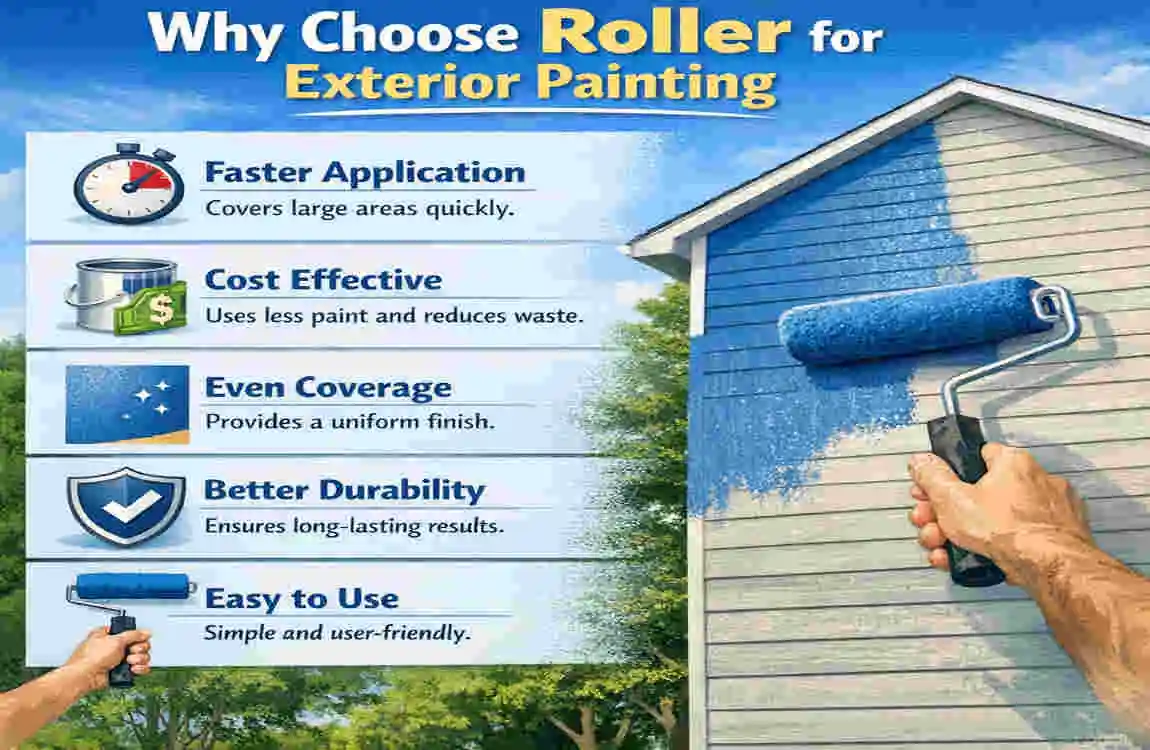
When it comes to painting your house’s exterior, you have a few options: brushes, sprayers, and rollers. Rollers are a standout choice, especially for DIY enthusiasts. Here’s why:
Advantages of Rollers
- Speed and Efficiency: Rollers can cover large areas much faster than brushes. In fact, they can speed up your project by up to 5x.
- Even Coverage: Rollers create a uniform finish, minimizing streaks and brush marks.
- Cost-Effective: Compared to sprayers, rollers are affordable and don’t require additional equipment like compressors.
- Less Overspray: Unlike sprayers, rollers are precise and keep paint where you want it, reducing waste.
- Great for Textured Surfaces: Rollers with the right nap thickness work beautifully on stucco, brick, and wood siding.
Potential Drawbacks and Solutions
- Streaks or Lap Marks: These are easily avoided by maintaining a wet edge and using the right technique.
- Time-Consuming for Edges: While rollers are great for large surfaces, you’ll still need brushes for corners and trim.
Essential Tools and Materials
Having the right tools can make or break your painting project. Here’s a checklist of everything you’ll need to paint the outside of your house with a roller:
Roller Supplies
- Rollers: Choose an 18″ roller frame with a 1/2″ to 3/4″ nap for smooth surfaces like wood or vinyl. For rough textures like stucco, opt for a thicker nap.
- Extension Pole: A 4-8 ft pole will help you reach high areas without straining.
- Paint Trays and Grids: Use a deep tray or a 5-gallon bucket with a grid for easy loading.
Other Essentials
- Brushes: A 3″ angled brush is perfect for edges and trims.
- Drop Cloths: Protect your landscaping, driveway, and patio from paint drips.
- Painter’s Tape: Use it to mask off windows, doors, and trim for clean lines.
- Ladders: Ensure you have a sturdy ladder for higher areas.
- Paint: Choose a 100% acrylic exterior paint for durability and weather resistance.
Estimated Budget
Here’s a quick breakdown of costs for an average 2,000 sq. ft. home:
Item Cost Range
Paint (5-10 gallons) $150-$300
Rollers, Brushes $50-$100
Drop Cloths & Tape $20-$50
Ladders & Poles $50-$100
Total $200-$400
Surface Preparation Steps
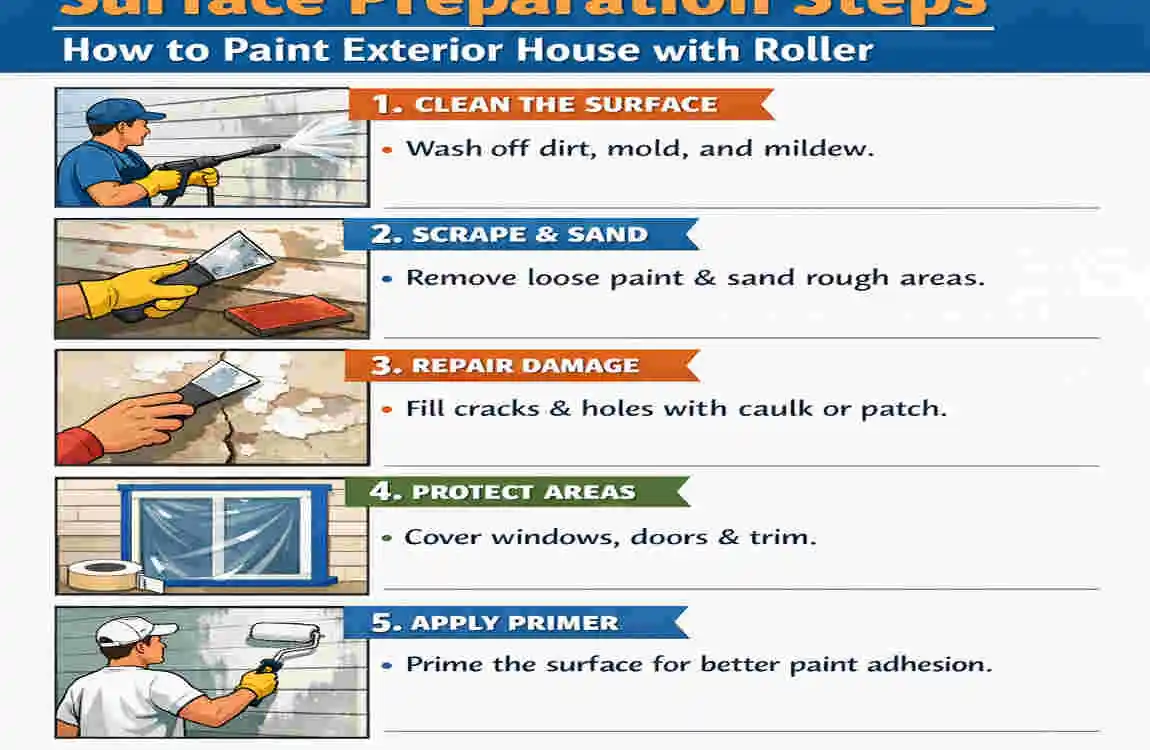
Preparation is the key to a flawless finish. In fact, 70% of the success of your project depends on how well you prep the surface. Here’s what you need to do:
Clean the Surface
- Power Wash: Use a pressure washer to remove dirt, mold, and peeling paint. Aim for 2,000-3,000 PSI for the best results.
- Scrub Stubborn Areas: For areas the power washer can’t reach, use a hard-bristle brush with soapy water.
Scrape and Sand
- Remove Loose Paint: Use a scraper for peeling or flaking paint.
- Sand Glossy Surfaces: Sanding ensures that the new paint adheres properly.
Repair and Fill
- Caulk Gaps: Seal cracks around windows, doors, and siding to create a watertight barrier.
- Spot Prime: Apply primer to bare wood, patched areas, or any stains.
Check the Weather
- Ideal Conditions: Paint when the temperature is between 50°F and 85°F and the humidity is low. Avoid painting in direct sunlight or if rain is forecasted within 24 hours.
Choosing the Right Paint and Primer
Selecting the right paint and primer is crucial for a long-lasting finish.
Paint Types
- Acrylic Latex: Best for exterior walls due to its durability, flexibility, and resistance to cracking.
- Sheen Guide: Use satin or eggshell for the house body and semi-gloss for trims.
Primer Needs
- Always apply a primer on new or unpainted surfaces.
- If you’re repainting with a similar color, you may only need a spot primer.
Coverage Calculator
Estimate the amount of paint you’ll need:
Square Footage x 2 (for two coats) ÷ Coverage Rate (per gallon)
Step-by-Step: How to Paint an Exterior House with a Roller
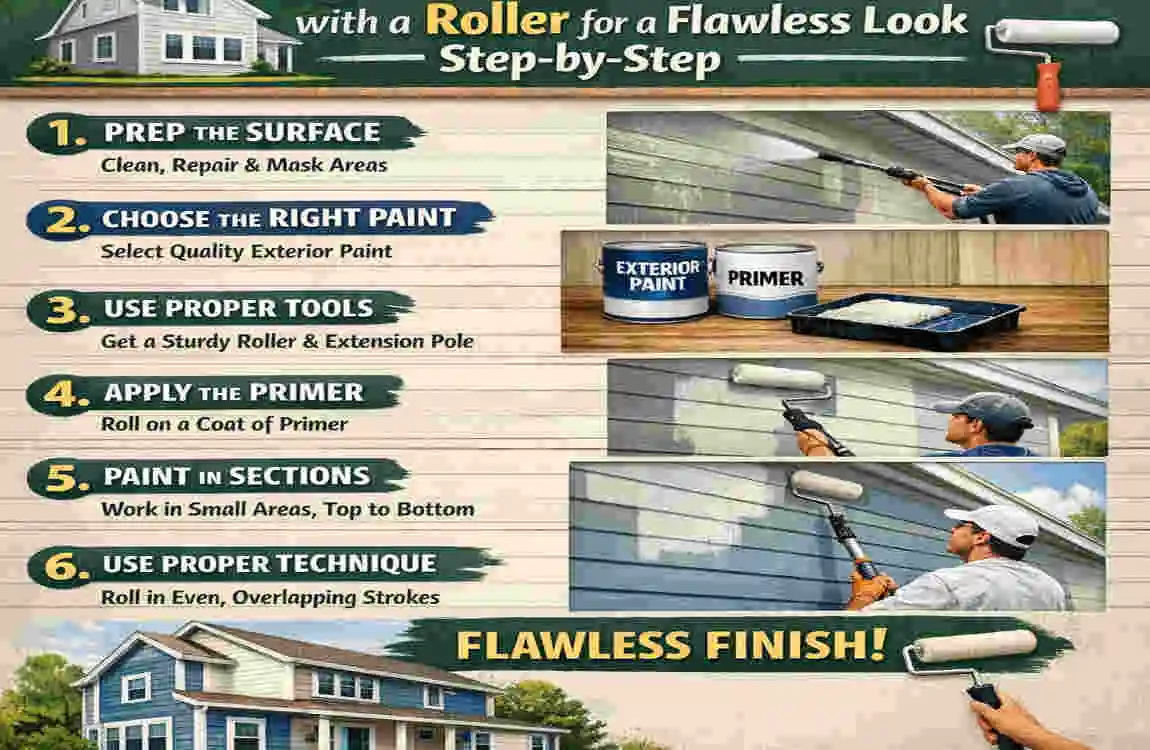
Now that you’re prepared, let’s dive into the painting process:
Cut in Edges First
Use an angled brush to paint 2-3 inches along edges, corners, and trims. This creates a buffer zone for your roller.
Load the Roller Properly
Dampen the roller before use to help it absorb paint evenly. Dip it into the tray, then roll off excess paint on the ridged side.
Apply the Primer Coat
Start with thin, even strokes using a W or M pattern. This ensures even coverage and prevents streaking.
Master Rolling Techniques
- Vertical for Smooth Siding: Roll from top to bottom.
- Horizontal for Lap Siding: Roll across the boards for full coverage.
- Lay On, Lay Off: Roll one section, then lightly go over it to smooth the paint.
Work Safely at Heights
Use an extension pole for high areas and a sturdy ladder for close-up work.
Apply a Second Coat
Wait 4-6 hours before applying the second coat. Focus on even blending and touching up missed areas.
Pro Tips for a Flawless Finish
- Choose the Right Nap: Use a thicker nap for rough surfaces like stucco.
- Paint in the Shade: Direct sunlight can cause the paint to dry too quickly, leading to streaks.
- Clean Rollers Mid-Day: Rinse your roller every few hours to prevent the paint from hardening.
Common Mistakes and Fixes
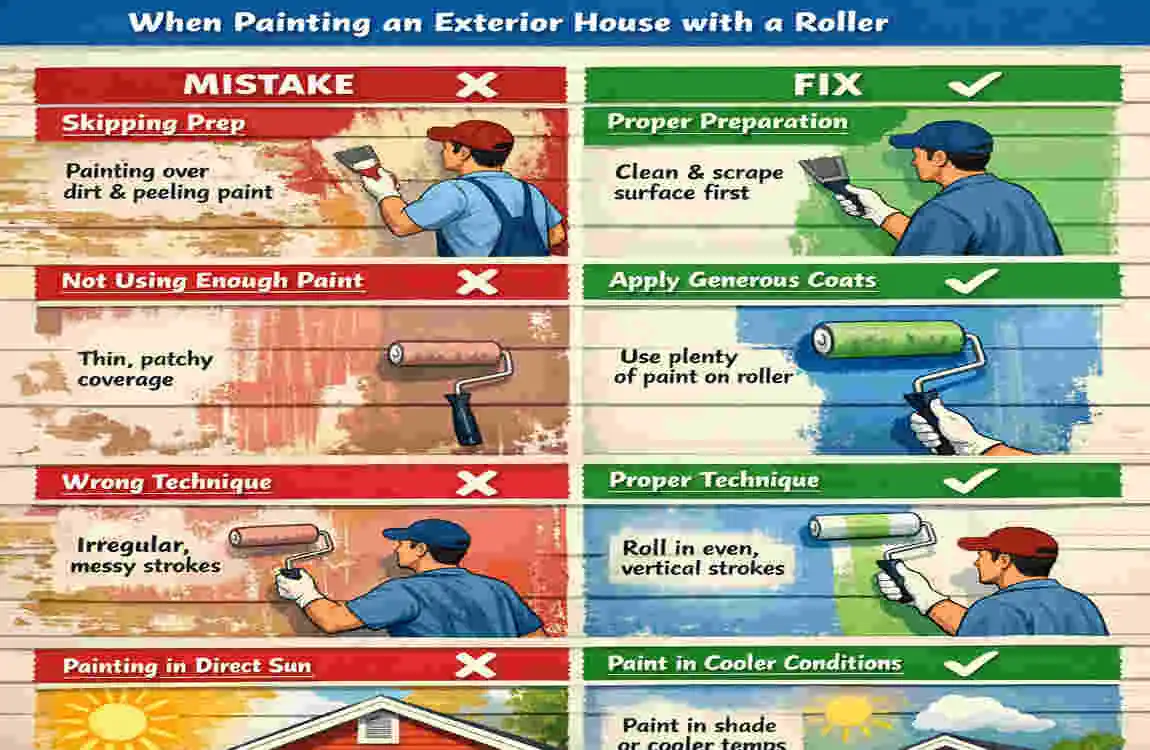
Mistake Solution
Roller Drips Offload excess paint
Lap Marks Maintain a wet edge
Uneven Coverage : Apply a second coat
Wrong Nap Match to surface texture
Maintenance After Painting
Cleaning up is just as important as the painting itself. Wash your rollers, brushes, and trays with soap and water immediately after use. Inspect your painted surfaces annually for any signs of wear or damage.
Cost Breakdown and Savings
By taking the DIY route, you can save anywhere from $3,000 to $8,000 compared to hiring professional painters.
FAQ
What’s the best roller size for exterior house painting?
An 18-inch roller is ideal for covering large surfaces quickly.
Can I paint if it’s raining?
No, always wait for dry weather with low humidity.
How long should I wait between coats?
Allow at least 4-6 hours for the first coat to dry before applying the second coat.