
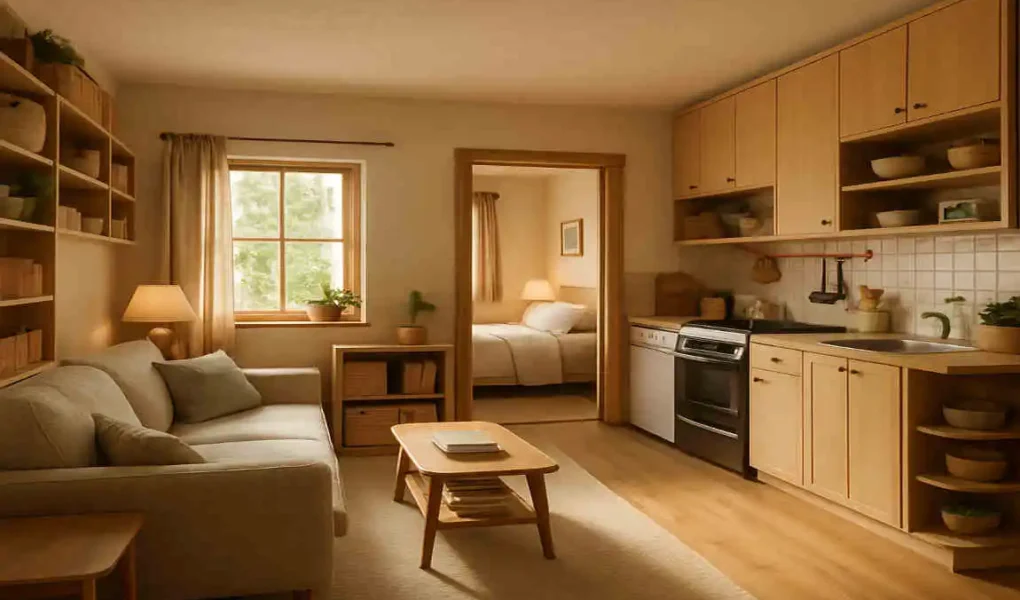
One-bedroom houses have gained popularity in recent years due to their affordability, simplicity, and cosy charm. Whether you’re a single professional, a couple, or a small family, understanding the living capacity of a 1-bedroom house is crucial for ensuring comfort and optimising your space.
Understanding the Size and Layout of a 1 Bedroom House

The typical square footage of a 1-bedroom house can range from 600 to 1,000 square feet, depending on the location and design. These homes usually feature a separate bedroom, a living room, a kitchen, and a bathroom. Some may also include a small dining area or a balcony.
The layout of a 1-bedroom house plays a significant role in determining the usable space and overall comfort. An open-concept design, where the living room and kitchen flow together, can create a sense of spaciousness. On the other hand, a more compartmentalised layout with distinct rooms may offer more privacy, but it can also feel more confined.
To better visualise the space, let’s take a virtual walkthrough of a standard 1-bedroom house:
- Entrance: You step into a small foyer with space for shoes and coats.
- Living Room: The living room is the heart of the house, often featuring a couch, a coffee table, and a TV stand. It may also serve as a dining area, complete with a small table and chairs.
- Kitchen: The kitchen is typically located adjacent to the living room and features basic appliances, including a refrigerator, stove, and microwave. There may be limited counter space and storage cabinets.
- Bedroom: The bedroom is a separate room with a door for privacy. It typically accommodates a bed, a dresser, and a small closet.
- Bathroom: The bathroom is typically located near the bedroom and features a sink, toilet, and either a shower or bathtub.
Factors Influencing How Many People Can Live in a 1 Bedroom House
Several factors come into play when determining how many people can comfortably live in a 1-bedroom house:
- Local Housing Regulations and Occupancy Limits: Each city or state may have specific occupancy limits based on the square footage and number of bedrooms. It’s essential to check with your local housing authority to ensure compliance.
- Room Sizes and Multi-Purpose Furniture: The size of each room and the availability of multi-purpose furniture can significantly impact the living capacity. For example, a larger living room with a sleeper sofa can accommodate an extra person.
- Privacy and Comfort Considerations: Personal preferences for privacy and comfort levels vary. Some people may be comfortable sharing a bedroom, while others require separate spaces.
- Impact of Lifestyle and Daily Routines: The daily routines and lifestyles of occupants can significantly influence how the space is utilised. For instance, if everyone works from home, there may be a need for dedicated work areas.
Here are a few examples of different household scenarios:
- A single person living alone
- A couple sharing the bedroom
- Two roommates are using the living room as a second sleeping area
- A small family with a young child
Space-Saving Tips and Comfort Enhancements
To maximise space and enhance comfort in a 1-bedroom house, consider the following tips:
Furniture Choices
- Opt for multifunctional furniture, such as a sleeper sofa or a storage ottoman.
- Choose a bed with built-in storage drawers or a loft bed to free up floor space.
Smart Storage Solutions
- Utilise vertical space with tall bookshelves and wall-mounted shelves.
- Invest in space-saving organisers for closets, kitchen cabinets, and bathroom storage areas.
Creating Functional Zones
- Define separate areas for sleeping, working, and relaxing to create a sense of structure and organisation.
- Use room dividers, curtains, or strategically placed furniture to delineate different zones.
Decor and Lighting
- Incorporate mirrors to create the illusion of more space and reflect natural light.
- Use light colours on walls and furnishings to create a brighter and more open space.
- Opt for space-saving lighting solutions, such as wall sconces or pendant lights, to maximise your space.
Case Studies and Real-Life Examples
To illustrate how different households make the most of their 1 bedroom living situations, let’s look at a few real-life examples:
The Solo Dweller
Sarah, a 28-year-old professional, lives alone in a 700-square-foot 1-bedroom house. She uses the bedroom for sleeping and the living room as a combined work and relaxation area. Sarah keeps her belongings organised with innovative storage solutions and enjoys the simplicity of her cosy home.
The Couple’s Nest
Mark and Emily, a young couple, share a 900-square-foot 1-bedroom house. They’ve maximised their space by using a Murphy bed in the living room for guests and creating a small home office nook in the corner. The couple enjoys the intimacy of their shared living space.
The Family Trio
John, Lisa, and their 3-year-old son, Max, live in an 800-square-foot 1-bedroom house. They’ve converted the living room into a playroom and sleeping area for Max, using a foldable play mat and a toddler bed. The family has learned to adapt to the limited space by being organised and embracing a minimalist lifestyle.
Pros and Cons of Living in a 1 Bedroom House
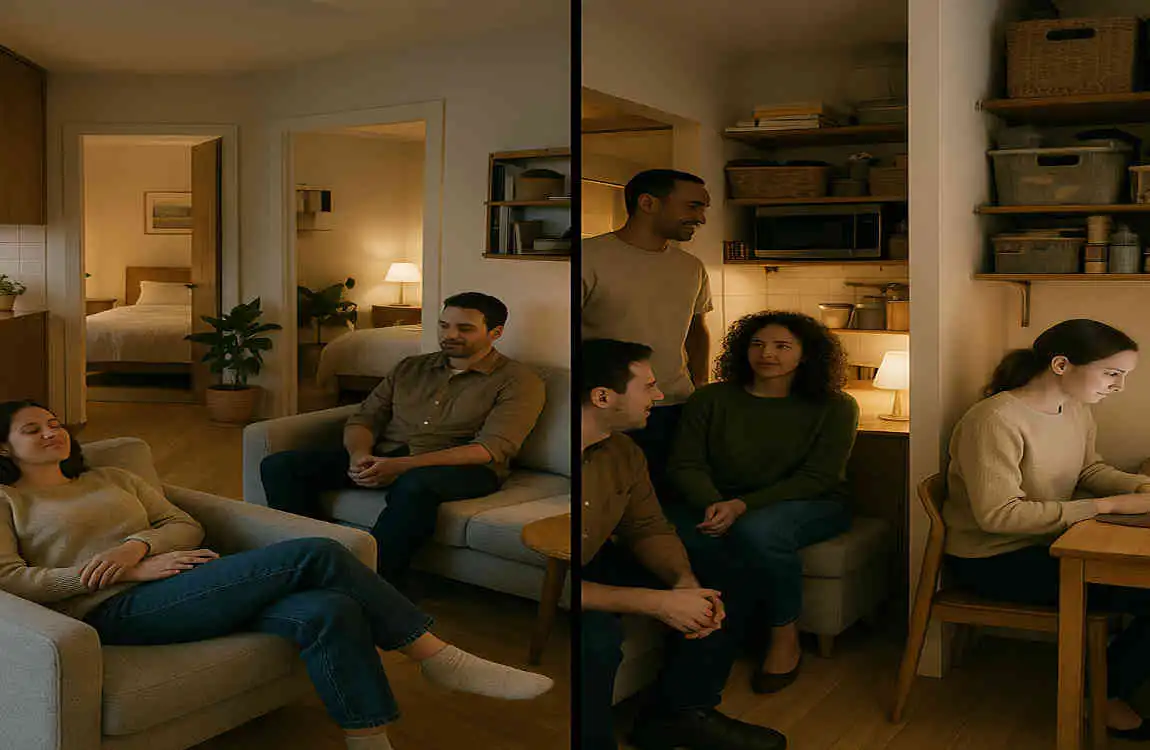
Living in a 1 bedroom house comes with its own set of advantages and disadvantages:
Pros
- Affordability: 1-bedroom houses often have lower rent or purchase prices compared to larger homes.
- Simplicity: A smaller space means less cleaning, maintenance, and clutter.
- Cosiness: The intimate size of a 1-bedroomone-bedroom house can create a warm and inviting atmosphere.
Cons
- Limited Space: The compact size can feel cramped, especially for larger households.
- Privacy Issues: With fewer walls and doors, achieving privacy can be challenging.
- Storage Challenges: Limited storage space may require creative solutions and regular decluttering.
These pros and cons directly influence the number of occupants a 1-bedroom house can comfortably accommodate. A single person or a couple may find the space perfectly suitable, while a family with children may quickly outgrow the limited square footage.
Alternatives and When to Consider a Larger Home
If you find yourself constantly struggling with the limitations of a 1-bedroom house, it may be time to consider alternative living arrangements:
- 2 Bedroom Houses: A 2 Bedroom house offers more privacy and space, making it suitable for families or roommates who need separate bedrooms.
- Studio Apartments: For solo dwellers or couples, a studio apartment can offer a more open and efficient living space compared to a one-bedroom house.
If you’re unsure whether it’s time to upgrade to a larger home, look for these signs:
- Constant clutter and lack of storage
- Feeling cramped and unable to move freely
- Frequent conflicts over shared spaces
- Inability to host guests comfortably
When transitioning to a larger bedroom home, consider factors such as budget, location, and long-term housing goals. Start by decluttering your current space and assessing your essential needs to determine the ideal size and layout for your next home.