

Have you ever walked into a high-end spa and felt an immediate sense of peace just by looking at the floor? That soft, earthy glow often comes from one specific material: limestone. But when you are standing in your own home, perhaps in a humid environment like Lahore or in a busy household in a coastal city, a big question arises. Is limestone suitable for bathroom floors, or is it just a recipe for a maintenance headache?
Choosing the right flooring for your bathroom is one of the most important decisions you will make during a remodel. The bathroom is a unique beast; it handles high humidity, frequent spills, and the constant presence of soap and chemicals. You want something that looks luxurious but doesn’t require a full-time cleaning crew.
What Is Limestone Flooring?
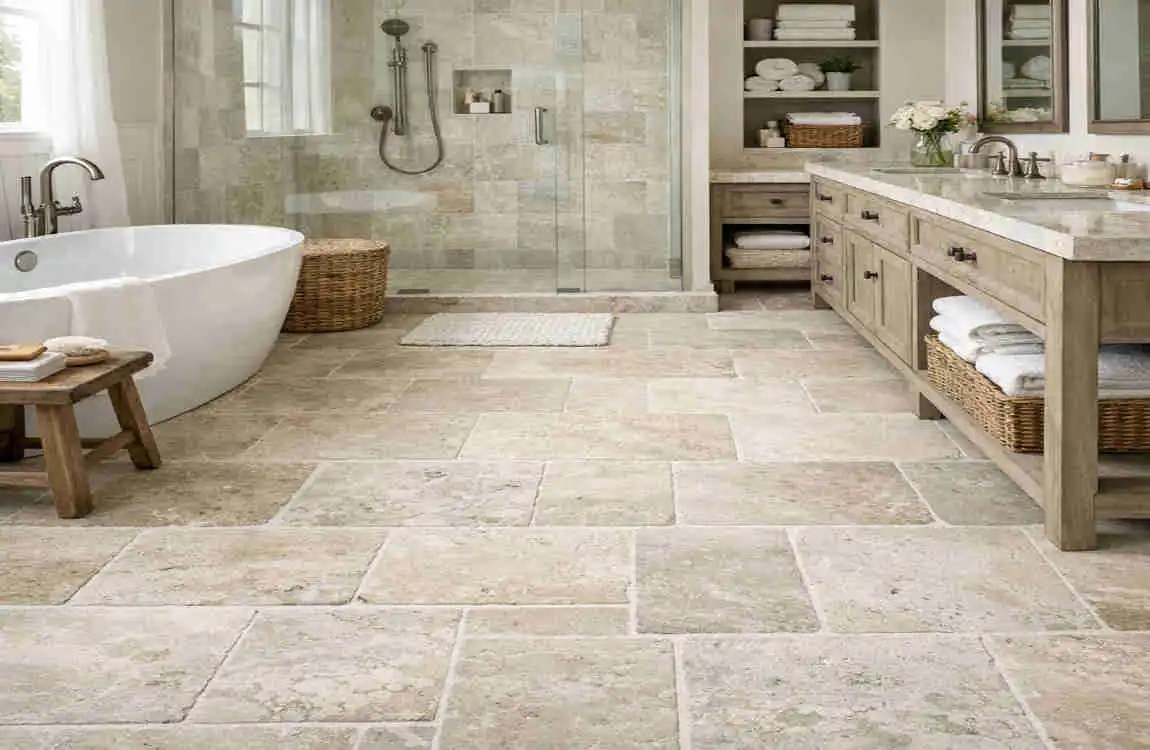
Before we decide if it belongs in your bathroom, let’s talk about what limestone actually is. Unlike artificial tiles, limestone is a natural sedimentary stone. It forms over millions of years at the bottom of lakes and oceans. It is essentially a collection of compressed calcium carbonate, often containing tiny fragments of shells, coral, and other marine life. This is what gives the stone its unique, organic character.
The Basics of Limestone Formation
When you choose limestone tiles for your bathroom, you are literally bringing a piece of Earth’s history into your home. Because it is made from organic materials, it has a “soft” look that a printing machine can’t perfectly replicate. It typically comes in muted, neutral tones like beige, tan, grey, and soft whites.
One thing to keep in mind is that limestone is a porous material. Because it was formed in water, it has tiny microscopic holes that can soak up liquids if they aren’t adequately sealed. This is a key factor in determining if limestone is suitable for bathroom floors in your specific situation.
Different Types of Limestone Finishes
Not all limestone tiles look or feel the same. The “finish” refers to how the stone’s surface is treated after it is cut. This is crucial for bathrooms because it affects both the look and the safety of the floor.
- Honed Limestone: This is the most popular for bathrooms. It has a matte, smooth finish that isn’t shiny. It provides a modern look and is less slippery than polished versions.
- Tumbled Limestone: These tiles have rounded edges and a slightly distressed, weathered look. They offer excellent slip resistance, making them a top choice for wet areas.
- Polished Limestone: This is shiny and reflective, similar to marble. While it looks incredibly high-end, it can be very slippery when wet, so we usually recommend avoiding this for bathroom floors.
- Bush-Hammered: This has a textured, pitted surface. It’s very rugged and provides maximum grip, though it can be a bit harder to clean because dirt can get trapped in the pits.
How It Compares to Marble and Granite
You might be wondering, “Why not just get marble?” Well, limestone is often seen as the more “relaxed” cousin of marble. While marble is known for its dramatic veining and high-gloss shine, limestone offers a more consistent and subtle appearance.
In terms of hardness, limestone is generally softer than granite and slightly silkier than marble. This means it feels a bit “warmer” and more comfortable underfoot, but it can also be more prone to scratching if you aren’t careful. However, for many homeowners, limestone’s affordability compared to high-end marble makes it a beautiful middle ground.
Why Consider Limestone for Your Bathroom?
If you are looking for that “wow” factor without the cold, sterile feeling of some ceramic tiles, limestone is a strong contender. It brings an organic warmth to a room that can otherwise feel very clinical.
When we think about the question, “Is limestone good for bathroom floors?“, we have to look at the atmosphere it creates. It’s the difference between a standard bathroom and a private sanctuary. The natural veining and fossil imprints mean that no two tiles are exactly alike. Your floor becomes a one-of-a-kind work of art.
Moisture and Humidity Performance
Because bathrooms are naturally damp, you need a material that can handle humidity. When adequately sealed, limestone performs beautifully in moisture-prone areas. It doesn’t warp like wood or hold onto allergens like some other materials might. In regions with high humidity, like Pakistan or the southern United States, natural stone can actually help regulate room temperature, keeping it cool and fresh.
Pros of Limestone Bathroom Floors
Let’s get into the “good stuff.” There are several reasons why architects and interior designers keep coming back to limestone year after year. It isn’t just about looks; there are practical benefits to choosing this stone.
Natural Beauty and Timeless Appeal
The number one reason people choose limestone is its aesthetic value. There is a certain “softness” to the colors that you don’t get with artificial porcelain. The earthy tones create a spa-like vibe that can turn a morning shower into a relaxing experience.
Furthermore, limestone is timeless. Trends in tile patterns and colors come and go every few years, but natural stone has been used in construction for centuries. It never goes out of style. This means that if you decide to sell your home in ten years, your limestone floors will likely still be seen as a premium, high-value feature.
Slip Resistance and Safety
Safety should always be a priority in a bathroom. Glossy, polished tiles are a significant slip hazard, especially for children or older people. This is where limestone bathroom flooring really shines.
If you choose a tumbled or honed finish, the stone’s surface has a natural texture that provides excellent grip. Even when the floor is a bit wet, these finishes offer more traction than a standard glazed ceramic tile. This makes limestone one of the best options for family bathrooms where safety is a primary concern.
Durability and Comfort
While limestone is “softer” than some other stones, don’t let that fool you. It is still a rock! It is incredibly durable and can withstand decades of use if you treat it right. It won’t crack as easily as thin ceramic tiles do when something heavy is dropped on them.
One of the most surprising benefits is the thermal comfort. Limestone has a high “thermal mass,” meaning it retains heat well. In the summer, it stays pleasantly cool under your bare feet. In the winter, it is the perfect partner for underfloor heating systems. Because it conducts heat efficiently, it will warm up and keep your toes toasty on those chilly mornings.
Affordability vs. Luxury Stones
If you love the look of natural stone but your budget doesn’t quite stretch to premium Carrara marble, limestone is your best friend. It offers a luxury look at a more accessible price point. You can often find high-quality limestone tiles for a fraction of the cost of marble or high-end granite.
To give you a better idea of how it stacks up, let’s look at this comparison table:
Feature Limestone Marble Porcelain
Average Cost (per sq ft) $5 – $10 $15 – $50+ $3 – $7
Natural Appearance Very High Very High Medium (Printed)
Warmth Underfoot Yes Yes No (Feels Cold)
Slip Resistance High (Textured) Low (Usually Shiny) Medium
Resale Value High Very High Moderate
As you can see, limestone offers a fantastic balance of beauty, safety, and value. These qualities make it an extreme candidate for moderate-traffic homes where you want a bit of luxury without breaking the bank.
Cons of Limestone Bathroom Floors
We want to be completely honest with you. While limestone is beautiful, it isn’t the “set it and forget it” choice that porcelain is. There are some trade-offs you need to consider before you commit. If you are looking for a floor that requires zero effort, limestone might not be for you.
High Maintenance Needs
The biggest drawback of limestone is its porosity. Because it is made of calcium carbonate, it is susceptible to acids. If you spill lemon juice, vinegar, or even certain harsh bathroom cleaners on it, it can “etch.” Etching is a chemical reaction that leaves a dull mark on the stone’s surface.
To keep it looking good, you must seal the floor. Sealing creates a protective barrier that prevents water and soap from soaking into the stone. However, this isn’t a one-time thing. You will likely need to reseal your bathroom floor every 6 to 12 months, depending on how much use it gets.
Limited Durability in Heavy Use
While we mentioned it is durable, limestone is susceptible to scratches. If you have large dogs with sharp claws or tend to drag heavy furniture across the floor, you might notice some wear and tear over time. In a bathroom, this is usually less of an issue than in a kitchen, but it is still something to keep in mind.
It is also a “soft” stone, meaning it can chip if a heavy glass bottle or a metal tool is dropped directly onto an edge. While these can often be repaired by a professional, it’s an extra layer of care you need to be aware of.
Slip Risk if Polished
We touched on this earlier, but it’s worth repeating. Is limestone suitable for bathroom floors if it’s polished? Generally, the answer is no. A polished limestone floor in a wet bathroom is essentially an ice rink. If you absolutely love the polished look, you should limit it to wall tiles or backsplashes rather than the floor.
Summary of Drawbacks
To help you decide, here is a quick look at the challenges:
Drawback: The Issue How to Fix It
Staining absorbs liquids and soaps. Use a high-quality sealer regularly
Etching damaged by acidic cleaners. Only use pH-neutral stone cleaners
Scratching : Softer surface than granite. Use soft-bristle brooms and mats
Cost Over Time Maintenance products add up. Budget for sealer and professional cleaning
If you are the type of person who wants to use bleach and harsh chemicals to scrub your bathroom every weekend, you will likely find limestone frustrating. It requires a gentle touch and a bit of foresight.
Limestone vs. Alternatives for Bathrooms

When you are standing in the tile aisle, you’ll see dozens of options. How does limestone really compare when you put it side-by-side with the heavy hitters? Let’s break it down so you can see which material wins for your specific needs.
Limestone vs. Porcelain
Porcelain is the “king of convenience.” It is artificial, rugged, and completely waterproof. You can find porcelain tiles that look like limestone, but they will never quite have that same depth and feel.
- Winner for Maintenance: Porcelain.
- Winner for Aesthetics: Limestone.
Limestone vs. Marble
Marble is the ultimate symbol of luxury. However, it is usually more expensive and can be just as finicky as limestone when it comes to staining. Limestone offers a more “grounded” and earthy feel, whereas marble is more “glamorous.”
- Winner for Price: Limestone.
- Winner for Resale Value: Marble.
Limestone vs. Travertine
Travertine is actually a type of limestone, but it forms in hot springs. It has distinct “holes” in it that are usually filled with resin. Travertine is very similar to limestone in terms of maintenance, but often has a more rugged, rustic look.
- Winner for Texture: Travertine.
- Winner for Smoothness: Limestone.
Comparison Table for Quick Reference
Material Slip Resistance Maintenance Cost Durability Aesthetic
Limestone High (Textured) High Med Medium Natural/Soft
Porcelain Medium Low Low High Uniform/Printed
Marble Low (Polished) High High Medium Elegant/Veined
Travertine High Med-High Med High Rustic/Pitted
When does limestone win? It wins when you want a bathroom that feels like a natural retreat. In humid climates like Pakistan, the stone’s natural breathability is a huge plus. If you are designing a “spa-style” bathroom, limestone is almost always the superior choice for its vibe.
Expert Installation Tips
If you’ve decided that limestone is the one for you, the next step is getting it into your home. Installation is everything. A bad install can ruin even the most expensive stone. Because limestone is a natural product, it requires a bit more expertise than standard ceramic tiles.
Prep and Selection
Before a single tile is laid, you need to make sure your subfloor is rock solid. Limestone is heavy, and any “flex” in your floor will cause the stone or the grout to crack.
- Pro Tip: If you are in a local market like Lahore, talk to suppliers who specialize in local stone. They can often provide thicker cuts that are better suited for the local climate.
- Selection: Always order about 10-15% more than you need. Since it’s a natural stone, some tiles might have natural “flaws” or colors that don’t quite match the rest of the batch.
Step-by-Step Installation Guide
- Pre-Sealing: This is a secret tip from the pros. Seal the top of the limestone tiles before you install them. This prevents grout from staining the stone during application.
- Use the Right Mortar: Use a “thinset” mortar specifically designed for natural stone. White mortar is usually preferred for lighter limestones to prevent any dark colors from “bleeding” through the porous stone.
- Grouting: Use a non-sanded grout if your joints are small to avoid scratching the surface of the stone. Once the grout is dry, you must seal the grout lines.
- Underfloor Heating: If you are installing heating coils, make sure they are laid perfectly flat and tested before the stone is installed.
Common Mistakes to Avoid
The biggest mistake people make is skipping the sealer. They think, “Oh, it looks fine now,” but six months later, the stone is complete of water spots. Another mistake is using the wrong cleaning products immediately after installation. Never use an acid-based “grout haze remover” on limestone; it will eat the surface of your new floor!
Maintenance Guide for Longevity
So, you have your beautiful new floor. How do you keep it looking like it was installed yesterday? It’s all about creating a simple routine. You don’t need to spend hours cleaning, but you do need to be consistent.
Daily Care
The best thing you can do for your limestone floor is to keep it dry. After a shower, use a quick squeegee or a soft towel to wipe up any standing water. This prevents “efflorescence” (those white powdery salt deposits) and keeps soap scum from building up.
- Sweep or Vacuum: Use a soft-bristled broom or a vacuum without a beater bar. Small bits of sand or grit can act like sandpaper under your feet, dulling the finish over time.
Weekly Cleaning
Use a mop dampened with warm water and a pH-neutral stone cleaner. You can buy these at most home improvement stores. Avoid vinegar, lemon juice, or bleach at all costs. These are the enemies of limestone. If you use them, the calcium in the stone will slowly dissolve, making it look dull and chalky.
The “Water Test” for Sealing
How do you know when it’s time to reseal? Use the water test. Drop a few beads of water on the floor. If the water stays in a bead on the surface, your sealer is still working. If the water soaks into the stone and leaves a dark spot within a minute or two, it’s time for a fresh coat of sealer.
Real Home Examples and Case Studies
To see this in action, let’s look at a recent remodel in a luxury home in Lahore. The homeowners wanted a “Modern Mughal” aesthetic—something that felt historic but clean and fresh.
They chose a honed, cream-colored limestone for their master ensuite. Before the remodel, the bathroom had old, glossy ceramic tiles that felt cold and slippery. After installing the limestone, the entire room felt larger and more cohesive.