Have you ever asked yourself, how wide are metal roofing panels? If you’re planning a new roof or replacing an old one, this is one of the first questions you should answer. The width of your metal roofing panels isn’t just a number—it’s a crucial factor that affects your project’s cost, installation speed, and even the long-term durability of your roof.
Choosing the right width can help you minimize waste, reduce the number of seams (which means fewer potential leaks), and make installation faster and more efficient. For homeowners and business owners alike, understanding the width of metal roofing panels is essential for budgeting, planning, and ensuring your roof stands the test of time.
Standard Widths Explained
What Is Panel Width? Overall vs. Coverage Width
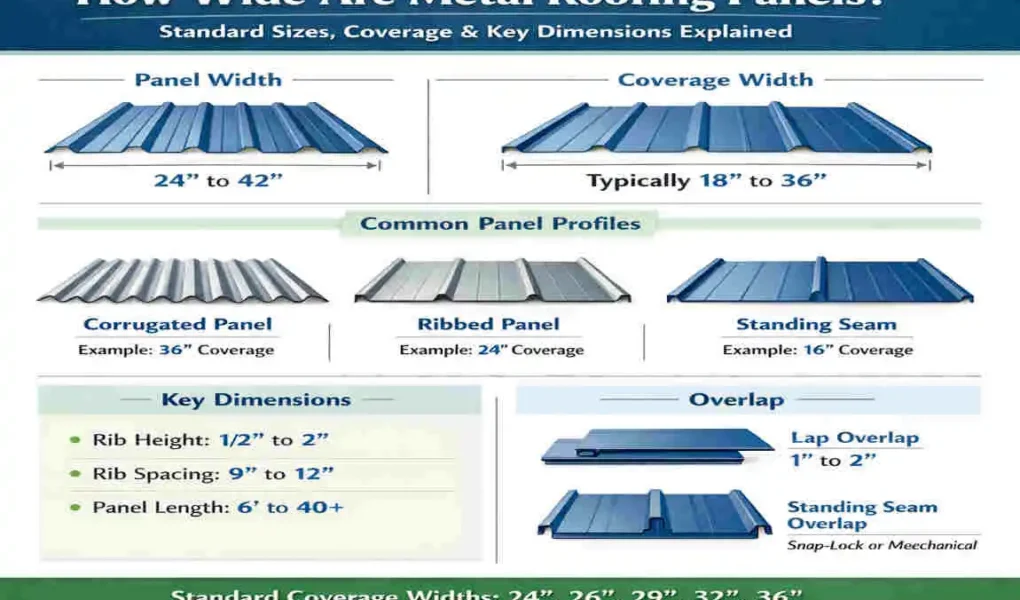
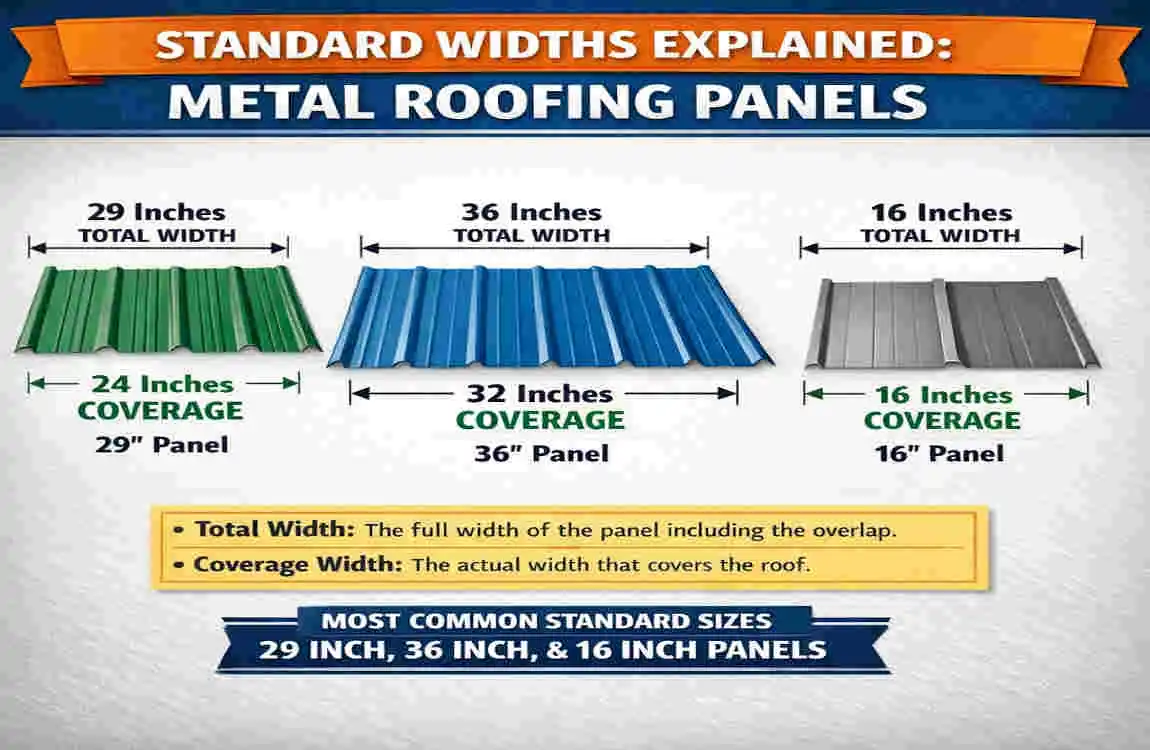
When you ask, how wide are metal roofing panels, it’s important to know there are two key measurements:
- Overall Width: The total width of the panel from edge to edge.
- Coverage Width: The actual width that covers your roof after accounting for overlaps and ribs.
For example, a panel with an overall width of 36 inches might only cover 34 inches once installed, because 1-2 inches are lost to overlaps. This difference is crucial for accurate planning and ordering.
Common Width Ranges
Metal roofing panels typically come in a range of widths to suit different needs:
- Narrow Panels (12-18 inches):
- These are often used for architectural or standing seam roofs. Their slim profile creates a sleek, modern look and is ideal for homes where aesthetics are a priority.
- Medium Panels (24-26 inches):
- The most versatile choice, these widths are popular for residential projects. They strike a balance between ease of handling and efficient coverage.
- Wide Panels (36 inches):
- Commonly used in commercial settings, these panels cover more area with fewer seams, making installation faster and reducing the risk of leaks.
Why Do Widths Vary?
Panel widths can vary by manufacturer, panel profile, and even the metal thickness (gauge). Most manufacturers offer panels in gauges ranging from 26 to 29, which can affect the final width and coverage.
Table: Common Metal Roofing Panel Widths
Panel Type: Overall Width, Coverage Width, Best For
Standing Seam 12-24″ 10-22″ Modern homes
Corrugated 24-36″ 22-34″ Barns/residential
R-Panel/PBR 36″ 34-36″ Commercial
Key Takeaway:
When choosing your panels, always check both the overall and coverage width. This ensures you order the right amount and avoid costly mistakes.
Coverage Width Breakdown
What Is Coverage Width?
Coverage width is the actual area a panel covers on your roof after overlaps are applied. This is usually 1-2 inches less than the overall width, due to how panels interlock or overlap at the seams.
For example, a 36-inch panel might have a coverage width of 34 inches. This means each panel, once installed, will cover 34 inches of your roof’s width.
Rib Spacing and Its Impact
Most metal roofing panels have ribs or raised sections for strength and water drainage. The spacing between these ribs is typically 9 to 12 inches. This design not only adds rigidity but also affects how panels overlap and the final coverage width.
How to Calculate Panels Needed
To figure out how many panels you need, use this simple formula:
Number of Panels = Roof Width (in inches) ÷ Coverage Width (in inches)
Example:
If your roof is 1,000 square feet and you’re using panels with a 36-inch (3 feet) coverage width:
- 1,000 sq ft ÷ 3 ft = ~333 linear feet per row
This calculation helps you estimate the total number of panels required for your project.
Pros of Wider Coverage
- Fewer Seams: Wider panels mean fewer seams, which reduces the risk of leaks.
- Faster Installation: Cover more area with each panel, saving time and labor.
- Less Waste: Efficient coverage means less material wasted on overlaps.
Remember: Always account for overlaps and check the manufacturer’s specifications for exact coverage widths.
Popular Panel Profiles & Dimensions
Standing Seam Panels
Width Range: 12-24 inches
Features: Hidden fasteners, sleek appearance, high durability
Best For: Modern homes, architectural projects
Standing seam panels are known for their clean lines and hidden fasteners. They’re typically narrower, which enhances their visual appeal and makes them ideal for contemporary designs.
Corrugated Panels
Width Range: 24-36 inches
Features: Wavy profile for excellent drainage, exposed fasteners
Best For: Barns, sheds, residential roofs
Corrugated panels are a classic choice, especially for agricultural and residential buildings. Their wavy design helps quickly channel water off the roof, making them a practical option for areas with heavy rainfall.
R-Panel/PBR Panels
Width Range: 36 inches
Features: Structural strength, exposed fasteners, wide coverage
Best For: Commercial buildings, warehouses
R-Panel and PBR panels are designed for large-scale projects. Their wide coverage and structural strength make them a favorite for commercial and industrial roofs.
Exposed Fastener Panels
Width Range: 36-48 inches
Features: Easy installation, cost-effective
Best For: Utility buildings, garages
These panels are the easiest to install and often the most affordable. Their wide coverage makes them ideal for projects where speed and budget are top priorities.
Table: Profile Comparison
Profile Width Range Thickness (Gauge)Pitch Min Durability
Standing Seam 12-24″ 24-26 3:12 High
Corrugated 24-36″ 26-29 5:12 Medium
R-Panel 36″ 26-29 1:12 High
Panel Lengths:
Most metal roofing panels are available in lengths from 20 to 45 feet, allowing for custom sizing to fit your roof perfectly.
Factors Influencing Panel Width
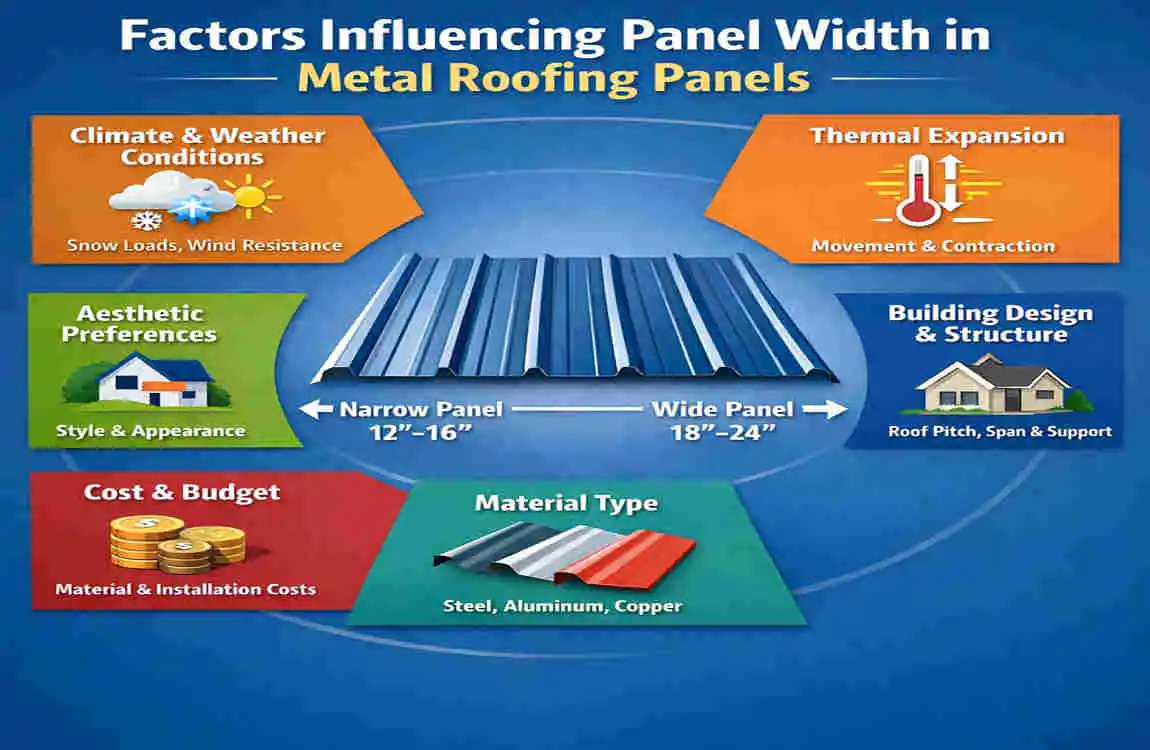
Building Size
Larger buildings often benefit from wider panels. For example, a warehouse or commercial building with a vast roof area will see faster installation and fewer seams with 36-inch panels.
Roof Pitch and Weather
Steeper roofs or those in snowy regions may require narrower panels for better water and snow shedding. Narrow panels also provide more attachment points, which can be beneficial in high-wind areas.
Local Codes and Aesthetics
Local building codes may specify the minimum or maximum panel width. Additionally, your personal style preferences or neighborhood guidelines might influence your choice.
Cost Considerations
Wider panels generally mean fewer panels to buy and install, which can save on labor costs. However, custom widths or specialty finishes may increase the price per panel.
Business Tip:
For clients in Lahore, we often recommend 36-inch galvanized panels. These are durable, cost-effective, and stand up well to the heavy monsoon rains common in the region.
Measuring & Installation Tips
Step-by-Step Guide
- Measure Your Roof:
- Use a tape measure to determine the length and width of your roof. Multiply to get the total square footage.
- Account for Waste and Overhang:
- Add 10-15% to your total to cover waste, cuts, and overhangs at the edges.
- Plan for Overlaps:
- Remember, each panel will overlap the next by 1-2 inches. Use the coverage width, not the overall width, in your calculations.
Essential Tools
- Chalk Line: For marking straight lines on your roof.
- Metal Shears or Saw: For cutting panels to size on-site.
- Measuring Tape: For accurate measurements.
- Safety Gear: Gloves, goggles, and harnesses.
Common Installation Errors
- Ignoring Coverage Width: Always use the coverage width to calculate how many panels you need.
- Not Allowing for Waste: Failing to add extra for waste can leave you short on materials.
- Improper Overlaps: Overlapping too much or too little can lead to leaks or wasted material.
Pro Tip:
Use online roofing calculators to double-check your measurements and panel counts for peace of mind.
Cost & Sizing for Your Project
Price Per Panel
The cost of metal roofing panels varies based on width, gauge, and finish. On average, expect to pay $2 to $5 per square foot. Thicker gauges and specialty finishes will be at the higher end of this range.
Labor Savings
Wider panels can save 10-20% on labor costs by covering more area per piece, reducing installation time.
Long-Term Value
Metal roofs are a long-term investment. With a lifespan of up to 50 years, the initial cost is offset by durability, low maintenance, and energy savings.
FAQs
How wide are metal roofing panels typically?
Most metal roofing panels are 24 to 36 inches wide overall, with coverage widths slightly less due to overlaps.
What’s the coverage width?
Coverage width is the actual area a panel covers after overlaps are accounted for. It’s usually 1-2 inches less than the overall width.
Do panel widths vary by type?
Yes. Standing seam panels are usually 12-24 inches wide, while corrugated and R-panels are often 24-36 inches wide.
Can I get custom panel widths?
Many manufacturers offer custom widths, but these may come at a higher price and longer lead times.
How do I calculate how many panels I need?
Divide your roof’s width by the coverage width of your chosen panel. Always round up and add extra for waste.
Are wider panels better?
Wider panels mean fewer seams and faster installation, but may not suit all roof shapes or local codes.
What’s the standard panel length?
Standard lengths range from 20 to 45 feet, but custom lengths are available.
Does panel width affect roof strength?
Panel width, combined with gauge and profile, impacts strength. Narrower panels may offer more attachment points for high-wind areas.