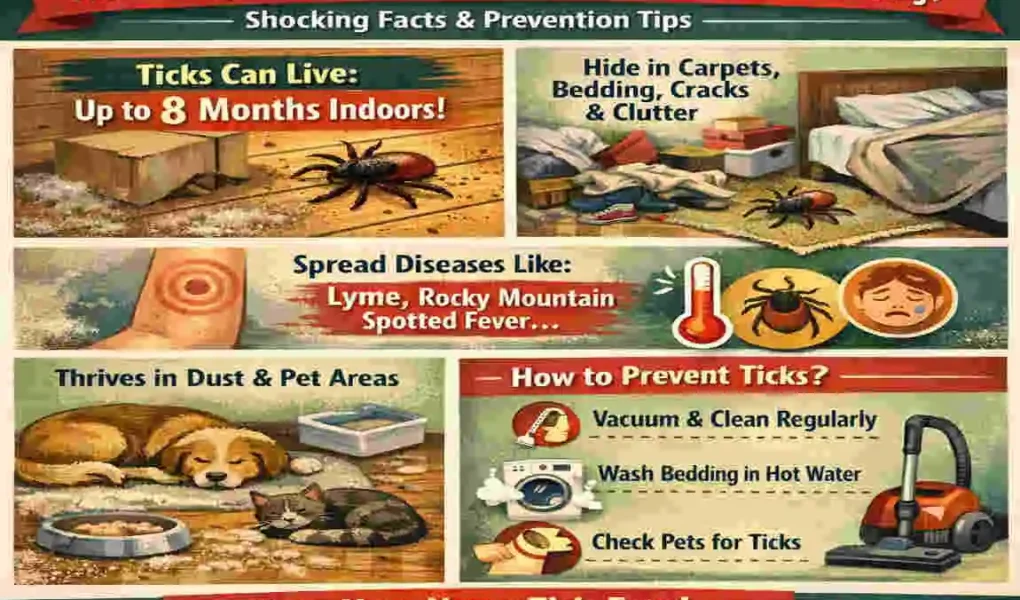
It’s a beautiful Saturday afternoon. You’ve just returned from a refreshing hike through the woods or perhaps just a long walk with your dog in the local park. You kick off your boots, hang up your jacket, and settle in for a relaxing evening. But unbeknownst to you, a tiny, uninvited guest has hitched a ride on your pant leg.
Suddenly, the panic sets in. You find a tick.
Once you’ve safely removed it (and taken a deep breath), a nagging question likely starts to crawl through your mind: If there was one, are there more? And more importantly, how long can ticks live in a house, cleaning routine aside?
It is a terrifying thought for any homeowner or parent. The idea that these disease-carrying pests could be lurking in your carpet or bedding is enough to make your skin crawl. But before you consider burning the house down or moving to Antarctica, let’s take a deep breath and look at the facts.
Tick Biology Basics: Understanding the Enemy
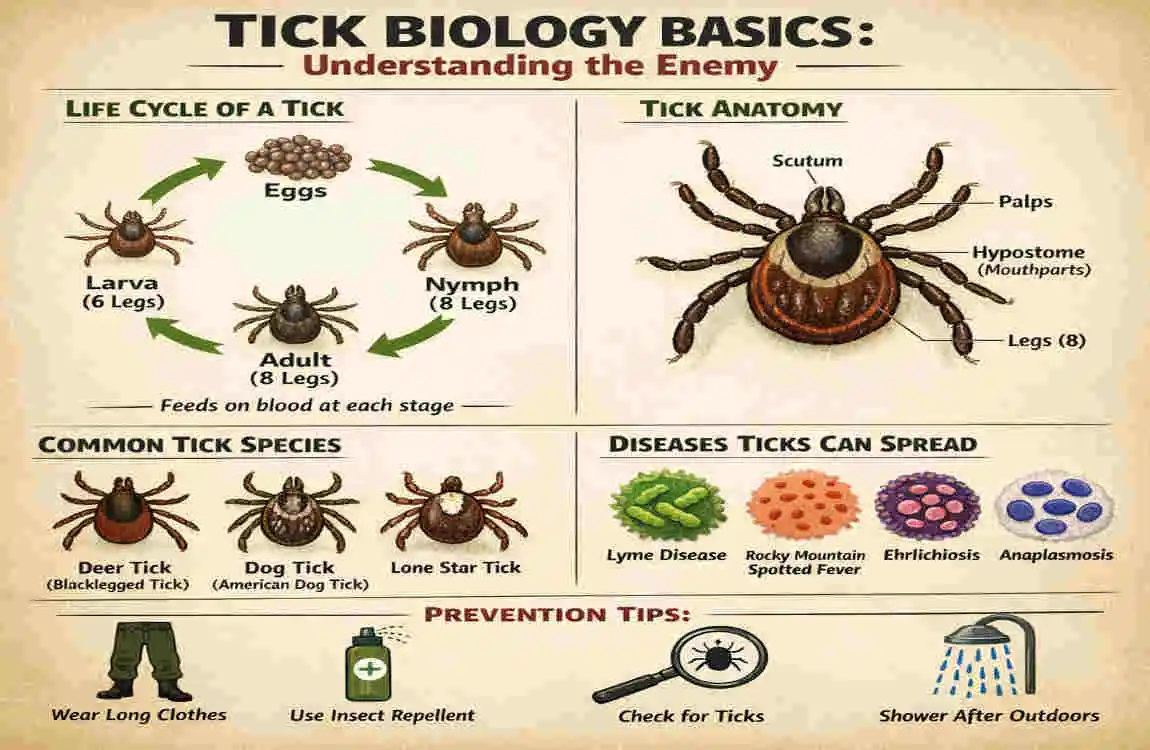
To defeat the enemy, you first have to understand the enemy. Ticks aren’t just tiny insects; they are actually arachnids, cousins to spiders and mites. Understanding their biology is crucial to understanding how long ticks can live in a house, regardless of cleaning.
Ticks have a four-stage life cycle: egg, larva, nymph, and adult. For a tick to graduate from one stage to the next, it must have a blood meal. This biological need is your biggest advantage when they get inside your home.
Why Your Home Isn’t a Tick Paradise
Here is the good news: generally speaking, your home is a hostile environment for a tick. Ticks thrive in high humidity—usually around 90%. They absorb moisture from the air to survive.
Inside the average modern home, specifically those with air conditioning or central heating, the humidity is far too low. It is effectively a desert for a tick. They dry out (desiccate) and die. However, the duration of their Survival depends heavily on their life stage and the specific species.
Life Cycle Breakdown
- Larvae and Nymphs: These are the “babies” and “teenagers” of the tick world. Because they are smaller, they have fewer moisture reserves. Without a host to feed on, they are incredibly vulnerable indoors.
- Adults: An adult tick is tougher. While they still prefer the damp outdoors, an unfed adult tick has a harder shell and more reserves, meaning it can technically survive slightly longer than a nymph, but usually not by much in a dry house.
Let’s look at the data. Below is a comparison of how long ticks survive outdoors versus inside your home.
Tick Survival Comparison Table
Tick StageOutdoor Survival (No Host)Indoor Survival (No Cleaning)
Larva 1-7 days Hours to Days (Rapid desiccation)
Nymph Weeks to Months 1-3 Days (Depending on humidity)
Adult 1-2 Years 24 Hours – 1 Week (In humid spots)
As you can see, the lifespan drops dramatically the moment they cross your threshold. While an adult tick might wait for a host for two years in the leaf litter of a forest, that same tick is on a very short clock inside your living room.
How Long Can Ticks Live in a House Cleaning? The Shocking Truth
This is the core question that brought you here: How long can ticks live in a house, cleaning aside?
If you are looking for a simple answer, here is the “shocking fact” that most pest experts agree on: Most common ticks will die within 24 hours of entering a typical home.
Why? Because your house is too dry. The air conditioning that keeps you cool and the heater that keeps you warm are actively pulling moisture out of the air, dehydrating the ticks until they perish.
However, there are exceptions to this rule, and they are important to know.
The “Laundry Hamper” Factor
While a tick might die in 24 hours on your kitchen floor, it can survive significantly longer—up to 2 to 3 days—if it finds a micro-climate that mimics the outdoors.
Where are these spots?
- Damp piles of dirty laundry: The sweat and moisture on clothes can keep them alive.
- Bathroom rugs: High humidity from showers helps them hang on.
- Unfinished basements: These areas tend to be cooler and damper.
The Brown Dog Tick: The Nightmare Exception
We need to talk about the Brown Dog Tick. This specific species is the rule-breaker. Unlike the Deer Tick (Blacklegged Tick) or the American Dog Tick, the Brown Dog Tick can complete its entire life cycle indoors.
They evolved to live in kennels and homes. They love the dry, warm environment that other ticks hate. If you bring a female Brown Dog Tick inside, she can lay eggs in cracks, crevices, and behind baseboards. This is how you get a full-blown infestation where ticks live in the house without cleaning serving as a deterrent.
Species Survival Breakdown
Different ticks have different “superpowers” when it comes to Survival. Here is a quick look at how the species differ inside your home.
Tick SpeciesIndoor Lifespan (Without Cleaning)
Blacklegged (Deer Tick) < 24 Hours. They require high humidity and die very quickly.
American Dog Tick Days to Months. They are hardier but usually don’t breed indoors.
Brown Dog Tick Indefinite. They can breed, lay eggs, and fully infest a home.
The takeaway? If you find a Deer Tick, it’s likely a lone ranger that will die soon. If you find multiple Brown Dog Ticks, you need to call a professional immediately.
Signs of Indoor Ticks: What to Look For
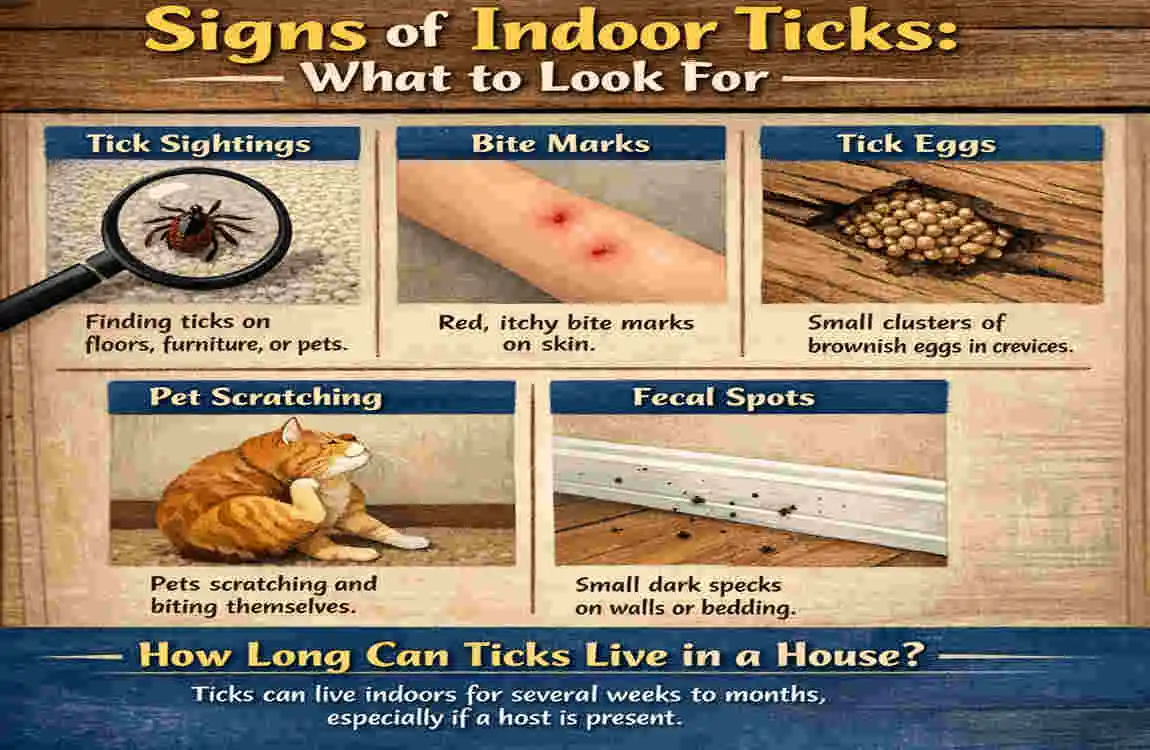
You might be wondering, “If they are so small, how do I know if they are there?” Finding a tick on yourself is obvious, but spotting an infestation requires a keen eye.
Since ticks pose a hidden risk indoors, you need to be vigilant. Here are the warning signs that you might have more than just a straggler in your home.
The “Walking Dot.”
This sounds simple, but it is the most common sign. If you see a small, dark spot moving across your light-colored carpet, tile, or bed sheets, investigate it. Ticks don’t jump or fly; they crawl.
Unexplained Rashes or Red Spots
Sometimes you don’t see the tick, but you see where it has been. If you or your family members wake up with small, red, itchy bumps—or the classic “bullseye” rash associated with Lyme disease—you may have had a tick feeding on you while you slept.
Your Pets are Going Crazy
Your dog or cat is your first line of defense (and unfortunately, the primary victim). If your pet is:
- Scratching excessively behind the ears or on the neck.
- Biting at their paws.
- Seeming lethargic or sluggish.
You need to inspect them immediately. Run your hands through their fur, feeling for small bumps. Ticks love the warm, hidden areas under collars and between toes.
Tiny “Seed” Piles
If you have a Brown Dog Tick infestation, you might see what looks like tiny poppy seeds in the cracks of your floorboards or near your pet’s bedding. These could be tick larvae or egg clusters. This is a “Code Red” situation.
Risks & Health Dangers: Why Cleaning Matters
Why are we so worried about how long ticks can live in a house after cleaning? It isn’t just because they are gross. It is because they are dangerous vectors of disease.
According to the CDC, there are approximately 476,000 cases of Lyme disease diagnosed and treated in the United States every year. That is a staggering number.
The Indoor Threat
When a tick is outdoors, you have layers of protection: shoes, socks, pants. But when a tick gets inside your house, you are often barefoot, in shorts, or sleeping. You are vulnerable.
If a tick survives indoors long enough to find a host, the risks are real:
- Lyme Disease: Transmitted by the Blacklegged Tick. It can cause chronic fatigue, joint pain, and neurological issues if left untreated.
- Rocky Mountain Spotted Fever: A serious bacterial infection transmitted by the American Dog Tick.
- Babesiosis: A microscopic parasite that infects red blood cells.
The “Questing” Danger
Even if a tick is dying of dehydration, it has one instinct left: feed to survive. A desolated tick inside your home may become more aggressive in its search for blood because it is literally dying of thirst. This means it will actively seek out the carbon dioxide you exhale while sleeping.
This is why understanding how long ticks live in a house without cleaning is vital—cleaning disrupts their ability to hide and hunt.
Prevention & Cleaning Tips: Ticks Live in the House Without Cleaning, So Stop Them Now!
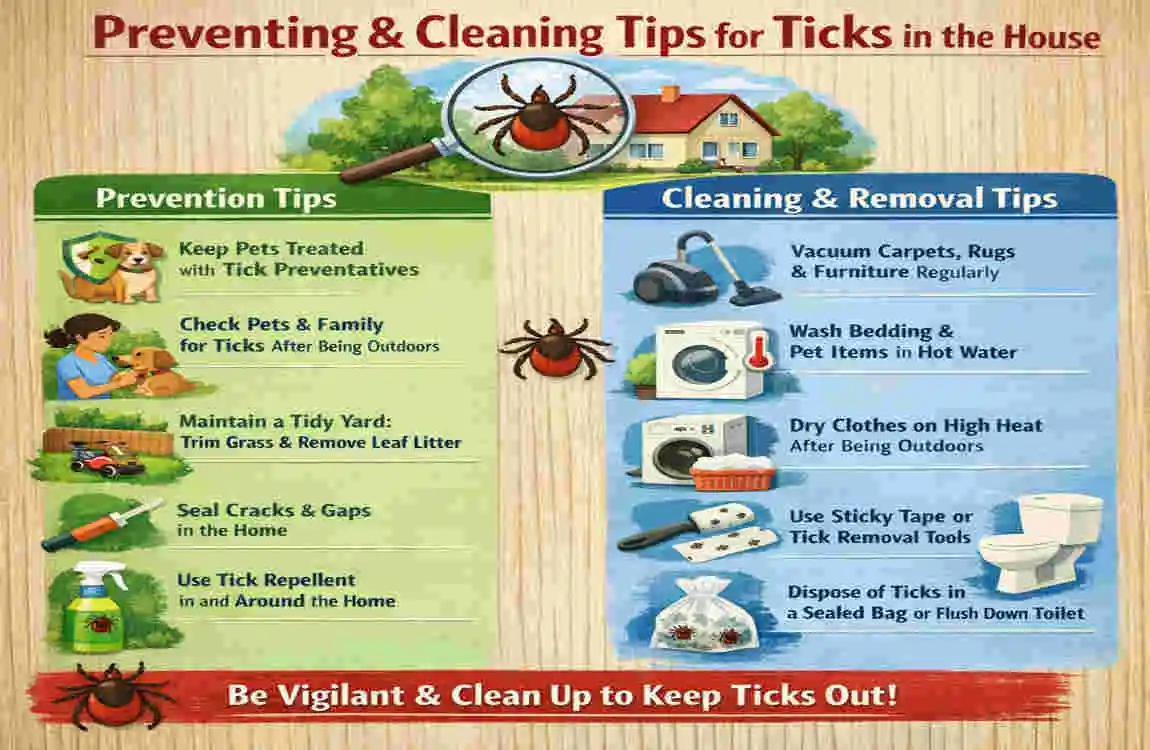
Okay, we have covered the scary stuff. Now let’s talk about solutions. You have the power to make your home a fortress.
We know that ticks live in houses without cleaning for longer periods than in clean homes because clutter provides shade and micro-climates. Here is your step-by-step battle plan to ensure no tick survives the night.
The Vacuum is Your Best Weapon
Vacuuming is not just about aesthetics; it is a lethal weapon against pests.
- Daily Routine: If you suspect ticks, vacuum every single day. Focus on areas where pets sleep, under furniture, and along baseboards.
- The Bag Rule: Ticks can survive inside a vacuum bag. When you are done, seal the bag in a plastic trash bag and dispose of it in an outside bin immediately. Do not leave the dirt in the vacuum.
The “Hot Cycle” Hack
Ticks are incredibly resilient to water. They can survive a trip through the washing machine. However, they cannot survive high heat.
- Dry First: When you come in from a hike, throw your clothes directly into the dryer on high heat for 10 minutes before washing them. The dry heat kills them instantly.
- Wash Hot: If possible, wash bedding and pet beds in hot water.
Fortify Your Pets
Your pets are the Trojan Horse that brings ticks inside.
- Treatments: Use veterinarian-approved flea and tick prevention (collars, spot-on treatments, or oral meds).
- The Check: Brush your dog outside before letting them back in after a walk.
Create a “Tick-Safe” Buffer Zone
Prevention starts in the yard.
- Gravel Barrier: Create a 3-foot-wide barrier of wood chips or gravel between your lawn and any wooded areas. Ticks hate crossing dry, hot surfaces.
- Remove debris: Keep leaf litter raked up. Ticks love damp leaves.
DIY vs. Professional: What Works Best?
Sometimes, a vacuum isn’t enough. Here is a breakdown of your options.
MethodEffectivenessCostBest For…
Vacuuming High (Short-term) Low Immediate removal of visible ticks.
DEET Repellent 80-95% Medium Personal protection while outdoors.
Essential Oils Variable Medium Minor deterrence (Cedar/Eucalyptus).
Pro Pest Service Long-term High Full infestations (especially Brown Dog Ticks).
Advanced Control Strategies
If you are dealing with a persistent issue, or you just want to go the extra mile to ensure how long can ticks live in a house, consider these advanced strategies.
Humidity Control
Since we know ticks need moisture, use it against them.
- Dehumidifiers: Run dehumidifiers in damp basements or laundry rooms. If you can keep the humidity below 45%, ticks cannot survive.
- Air Conditioning: Keep the AC running during tick season to circulate dry, cool air.
Tick Tubes
This is a clever outdoor trick that helps indoors. “Tick tubes” are cardboard tubes filled with cotton treated with permethrin.
- How it works: Mice take the cotton to build nests. The permethrin kills the ticks on the mice, but doesn’t hurt the mice. Since mice are often the ones bringing ticks near your house foundation, this stops the cycle at the source.
Essential Oils
While not a cure-all, certain scents repel ticks.
- Cedar Oil: Ticks hate the smell of cedar. Using a cedar-based spray on your pet’s bedding or around entryways can act as a natural deterrent.
- Eucalyptus & Lemon: These are also known natural repellents, though less effective than chemical barriers.
FAQ Section
Here are answers to the most common questions people ask about indoor ticks.
How long can ticks live in a house without cleaning?
Generally, most ticks (like the Deer Tick) will die within 24 hours due to the dry indoor air. However, in humid conditions (like a damp bathroom) or if left in dirty laundry, they can survive for 2 to 3 days. The Brown Dog Tick is the exception and can live and breed indoors indefinitely.
Do ticks lay eggs indoors?
Most ticks do not lay eggs indoors because the environment is too dry. However, the Brown Dog Tick is capable of laying eggs in cracks, crevices, and curtains inside a home, leading to severe infestations.
Can ticks survive winter inside my house?
Yes. While outdoor ticks go dormant in winter, the warm temperature inside your house “wakes them up.” If a tick hitchhikes inside during winter, it will think it is spring and become active, looking for a host immediately.
Does washing clothes kill ticks?
Washing alone often does not kill ticks because they can survive being submerged in water. Heat is the key. Putting clothes in the dryer on high heat for 10 minutes before washing is the most effective way to kill them.
What smells do ticks hate?
Ticks are repelled by the scents of cedar, peppermint, eucalyptus, and lemon. Using cedar oil sprays or planting these herbs around your patio can help deter them.