Did you know that 90% of architecture hiring managers say a strong portfolio lands the interview? This striking statistic from a recent Arch Daily survey highlights just how crucial your portfolio is in the fiercely competitive architecture job market of 2026.
Whether you’re a fresh graduate, an aspiring architect, or a freelancer eager to break into a top firm, your portfolio is more than just a collection of drawings—it’s your personal brand, your story, and your gateway to the opportunities you dream about. In today’s digital-first world, knowing how to make an architecture portfolio that grabs the attention of hiring teams at legendary firms like Zaha Hadid Architects or Foster + Partners is not just helpful; it’s essential.
Define Your Unique Architectural Voice and Niche
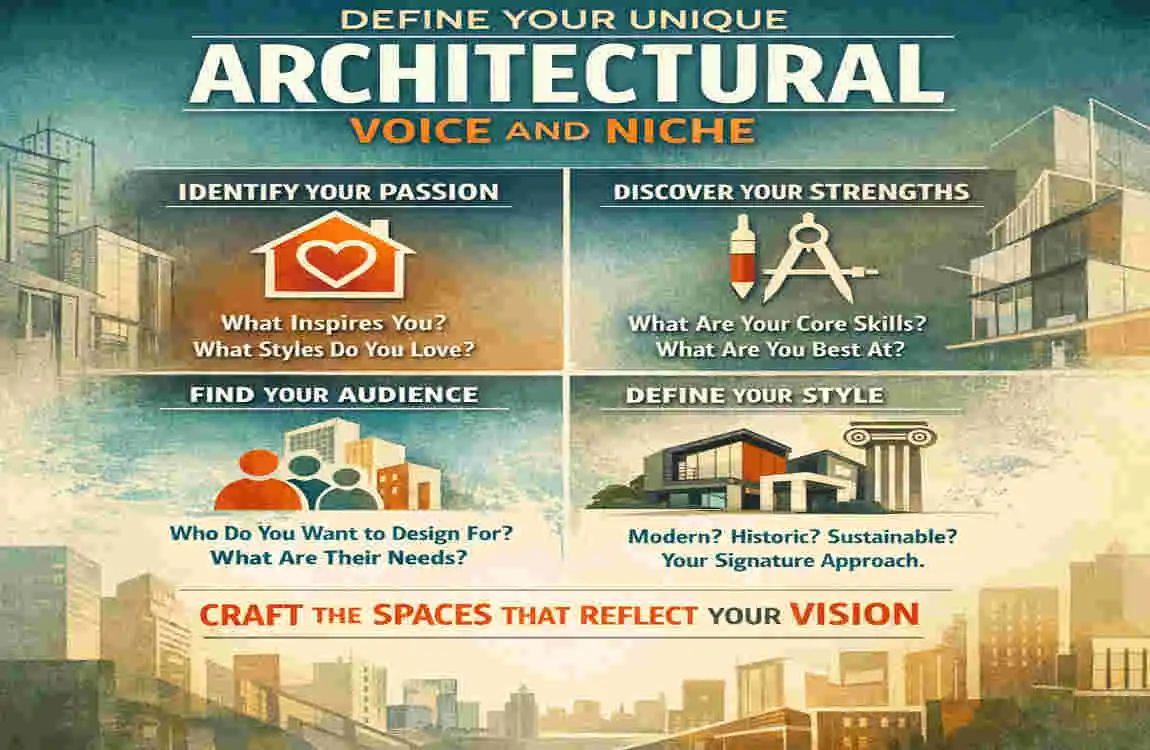
Why It Matters
Portfolios fail when they lack personality. In a sea of competent candidates, the ones who stand out are those who showcase their style and values. Do you gravitate toward sustainable design? Are you obsessed with urban planning or minimalist interiors? Knowing what you stand for helps you attract firms that align with your vision.
Steps to Discover Your Voice
- Self-Assess Your Projects: Look for recurring themes, styles, or interests in your work.
- Research Job Descriptions: Identify what top firms seek—do their projects match your strengths?
- Narrow Your Focus: Decide if you want to specialize (e.g., residential, commercial, adaptive reuse).
Craft Your Voice Statement
A “voice statement” is a short, powerful bio that ties your projects and philosophy together. For example:
“I create eco-conscious spaces that blend urban vibrancy with sustainable technology, guided by a belief that cities must serve both people and the planet.”
Example in Action
Consider Frank Gehry’s evolution—his portfolio screams deconstructivism and risk-taking. That unique voice made him a legend.
What To Do Now
- Audit 20 projects from your archives.
- Select 5-8 that best represent your style and ambitions.
Curate Ruthlessly—Quality Over Quantity
Why Less Is More
A common mistake is overstuffing portfolios with every project you’ve ever worked on. Reviewers don’t have time to sift through 50+ pages. The best portfolios showcase 10-15 stellar projects—each one a highlight reel of your abilities.
How to Curate Like a Pro
- Use the Impact Test: Does this project solve a real problem or demonstrate a design process from sketches to final renders?
- Categorize: Group projects by type (conceptual, built, academic).
- Prioritize Recent Work: Focus on what’s most relevant and reflects your current skills.
Authenticity Counts
Don’t shy away from including 1-2 “failures” with brief lessons learned. It shows humility, growth, and real-world learning.
Table: Before & After Curation
Portfolio Approach: Number of Projects, Reviewer Reaction
Overloaded 37 Overwhelmed, disengaged
Curated 12 Engaged, impressed
Master High-Quality Visuals and Rendering Techniques
The Power of Visuals
Visuals make up 80% of your portfolio’s impact. Crisp, professional images instantly signal skill and attention to detail. Blurry scans or inconsistent styles? They’ll hold you back.
Steps to Create Stunning Visuals
- 3-5 Images Per Project: Include plans, sections, 3D renders, and site photos.
- Consistent Lighting & Style: Harmonize your visuals—use similar color grading and presentation for a sleek look.
- Show Context: Use drone photography or site maps for context.
- Process Matters: Include process sketches, but make sure they’re clean and purposeful.
Tools for Every Budget
- Free: Blender, SketchUp.
- Paid: Rhino, V-Ray, Lumion, Enscape.
Pro Tips
- Compress for Web: Keep images under 2 MB to speed up loading.
- Upgrade Your Renders: Side-by-side, a professional render (clear, well-lit, realistic) always trumps an amateur one.
Tell Compelling Stories Behind Each Project
More Than Pictures
A great portfolio narrates, not just displays. Every project should tell a story—why it matters, what challenges you faced, and what solutions you crafted.
How To Structure Your Project Narratives
- Problem: What was the challenge? (e.g., tight budget, difficult site)
- Solution: How did your design address it?
- Impact: What changed as a result? Use real numbers when possible.
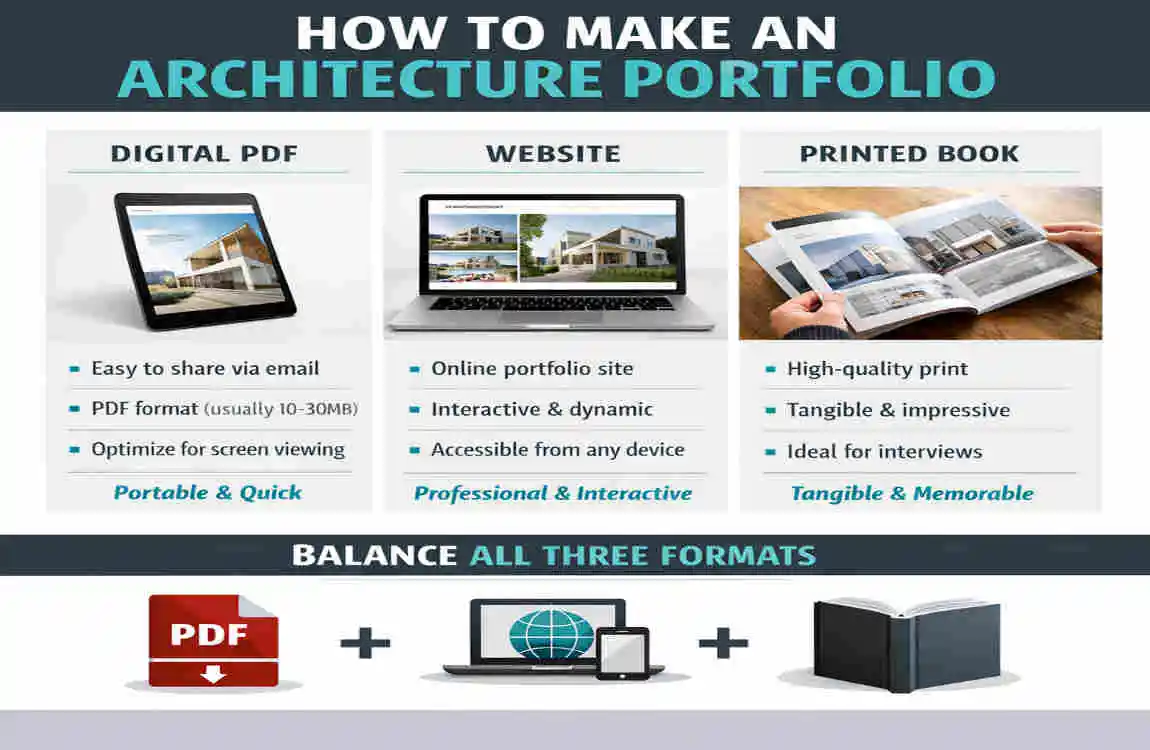
Balance Digital PDF, Website, and Physical Formats
Why Multi-Format Matters
Firms review portfolios in many formats. Some want a quick PDF, others browse your website, and a few may ask for a physical book at interviews. A flexible approach covers all your bases.
Steps for a Multi-Format Portfolio
- PDF: 10-20 pages, email-friendly, easy to print.
- Website: Interactive galleries, mobile-responsive design, easy navigation.
- Print: High-quality paper, strong binding, for in-person interviews.
Pro Tips
- Use Issuu or Adobe Portfolio for online PDFs.
- Buy a custom domain (e.g., yourname-architect.com) through Squarespace or a similar platform.
- Tailor your presentation: a minimalist PDF for corporate firms, an immersive website for creative studios.
Tools to Try
- Canva: For beautifully designed PDFs.
- Webflow: For custom websites.
Table: Format Comparison
Format Pros Cons Best For
PDF Easy to send, print-ready, Less interactive Job applications
Website Interactive, analytics, requires regular updates, portfolio sharing, SEO
Print Tangible, memorable, costly, harder to update In-person interviews
Incorporate Software Skills and Technical Drawings
Show Your Technical Side
Software fluency is a must. Employers want to see that you can handle industry-standard tools like Revit, Rhino, or BIM.
How to Highlight Your Skills
- Dedicate 1-2 pages to your tech stack—showcase software logos, annotated screenshots, or short workflow videos.
- Include detailed technical drawings with clear labels.
- Show interdisciplinary skills—like using AI tools (e.g., Midjourney for concept art).
Highlight Collaborations, Internships, and Real-World Impact
Teamwork Matters
Architecture is collaborative. Firms want to know how you function in a team, so feature group projects and clarify your specific role.
Steps to Showcase Collaboration
- List Internships/Real Projects: Include client testimonials or letters of recommendation.
- Show Built Work: Add site photos and explain your contributions.
- Quantify Impact: “Designed a community center now serving 500+ residents.”
Design with Typography, Layout, and White Space
Your Portfolio is Your First Design Project
The way you arrange your content speaks volumes before anyone reads a word.
Design Rules
- Use Clean Fonts: Choose sans-serif fonts like Helvetica for readability.
- Line Spacing: 1.5x spacing makes text easy on the eyes.
- White Space: Don’t crowd your pages—let content breathe.
Steps for a Beautiful Layout
- Build with a grid system for alignment.
- Use a consistent color palette that draws from your projects.
- Keep layouts minimalist and modern—less is more.
Pro Tip
A/B test your portfolio with peers or mentors. Tools like Figma make iteration easy.
Optimize for ATS and Online Sharing
Standing Out (to Humans and Machines)
Many firms use Applicant Tracking Systems (ATS) to screen portfolios. Make sure your digital portfolio is easy to find and share.
How To Optimize
- Use Keyword-Rich File Names: For example, JaneDoe_Architecture_Portfolio_2026.pdf.
- Integrate with LinkedIn and Behance: Expand your reach and let firms find you.
- Track Views: Use Google Analytics to see who’s looking at your site.
Get Feedback, Iterate, and Update Regularly
Always Evolve
Your portfolio is never finished. The best portfolios are living documents that constantly improve as you gain new experience.
Steps to Keep Improving
- Share with Mentors: Use forums like architect for critique.
- Iterate at Least 3 Times: Each round, refine based on feedback.
- Update Quarterly: Add new work, skills, and achievements.
FAQ: Common Questions on How to Make an Architecture Portfolio
How long should an architecture portfolio be?
10-20 pages is an ideal range for most job applications. Focus on depth, not breadth—showcase your best work with thorough explanations.
What are the best architecture portfolio examples?
Look at portfolios from legends like Frank Gehry (for bold sketches) and Zaha Hadid (for fluid, futuristic forms). Study how they tell their stories and highlight unique perspectives.
Do I need coding skills for an architecture portfolio?
Not essential for every role, but parametric design and scripting (like Grasshopper or Dynamo) can give you a big edge, especially at innovative firms.
How to make an architecture portfolio for beginners?
Start with your best school projects or personal design experiments. Use free tools like SketchUp or Canva to build your layout, and focus on a clear, concise presentation.
Architecture portfolio for jobs: Physical or digital?
Both! Lead with a digital PDF or website for applications, but have a polished physical copy on hand for interviews. This shows you’re prepared and detail-oriented.