
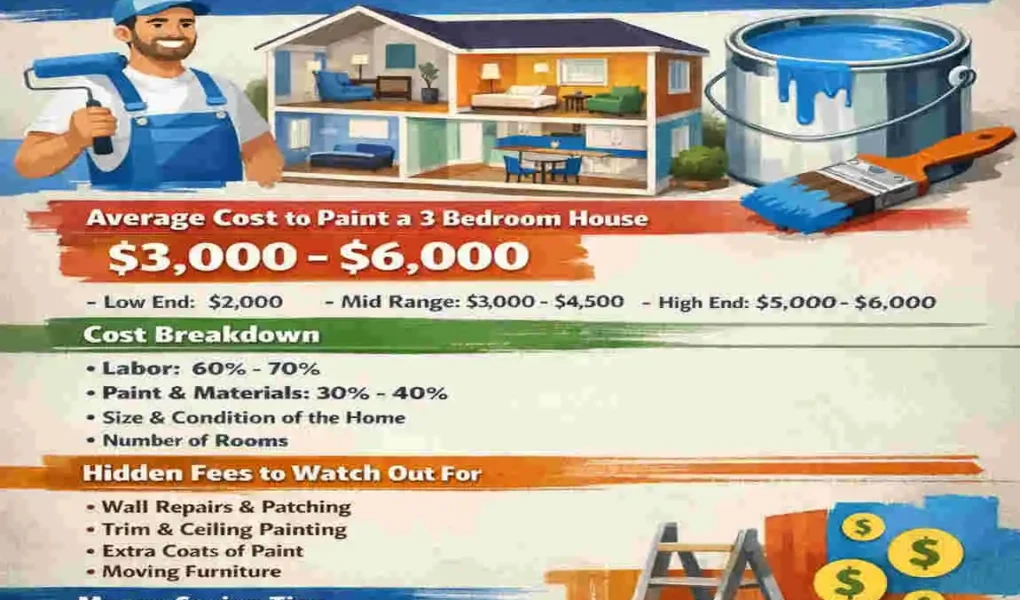
Are you standing in the middle of your home right now, looking at those scuffed, faded, or simply outdated walls, and asking yourself: how much to paint a 3-bedroom house interior in today’s market? You are definitely not alone. Whether you have just purchased a new home, are preparing to sell, or want to breathe fresh life into your daily living space, painting is one of the highest-impact upgrades you can make. But before you dive into picking out paint swatches, you need a clear, surprise-free budget.
Let us be honest—prices have changed recently. As we navigate through 2026, we are seeing rising paint costs across the board. The main culprit? Labor. Paying a skilled professional team now makes up about 70% to 85% of your total bill. Add in the increasing costs of high-quality raw materials, and budgeting correctly becomes more crucial than ever before.
On average, you can pay around $2.75 per square foot if you are only doing the walls. However, if you want the full, professional treatment—which includes walls, ceilings, doors, and all the baseboard trim—that number jumps to about $4.69 per square foot.
Average Costs Overview
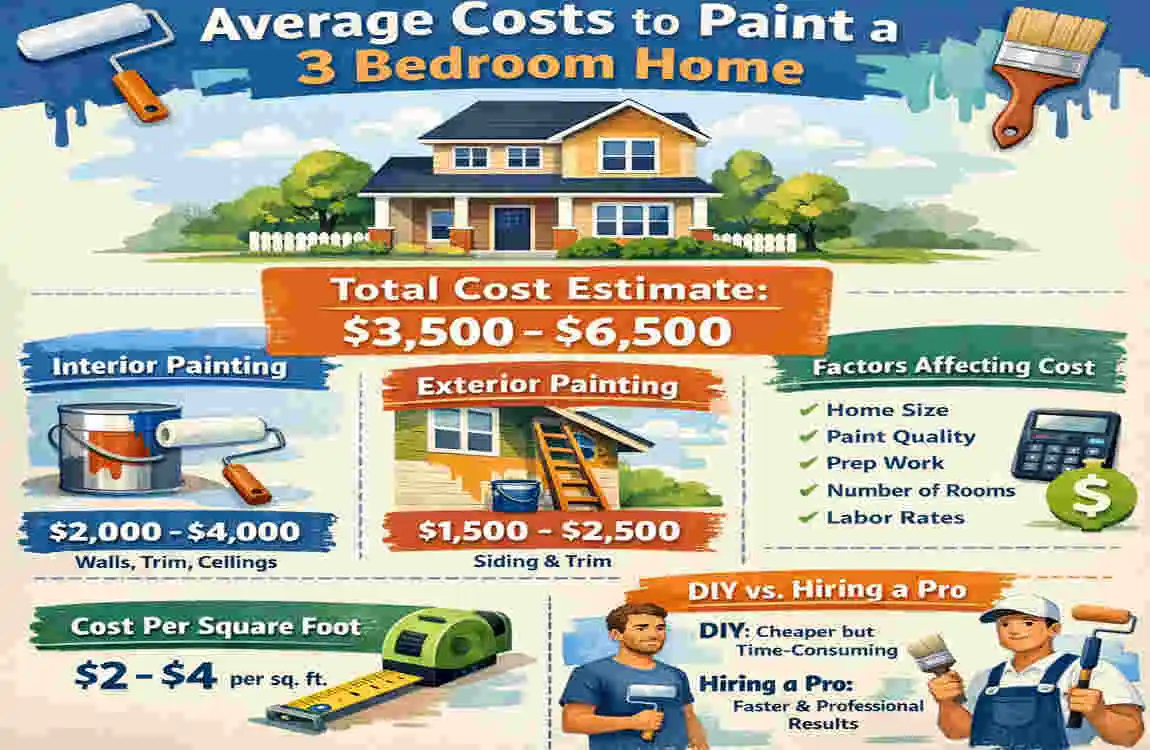
When you are figuring out how much to paint a 3-bedroom house, starting with the broad national averages is the best way to set your baseline expectations. The final price tag will heavily depend on where you live, what exactly you want painted, and the sheer size of your property.
National Averages for a 3 Bedroom Interior
In the United States, a standard 3-bedroom house interior will generally cost you anywhere from $3,500 to $10,000 in total. If you prefer to break it down and tackle the project one step at a time, you are looking at roughly $350 to $850 per room.
If you are reading this from across the pond in the UK, the pricing structure is slightly different but follows a similar logic. A standard paint job in the UK ranges from £1,500 to £3,500. However, if you want a fully comprehensive job that covers absolutely every surface, expect to budget between £2,500 and £5,000.
Here is a quick, easy-to-read breakdown to give you a clear picture:
Area US Cost UK Cost Sq Ft Range
Per Room $350–$850 £400–£800 200–400 sq ft
Full 3 Bedroom $3,500–$10,000 £2,500–£5,000 1,500–3,000 sq ft
Walls Only $1.00–$3.00/sq ft £1.50–£3.00/sq ft N/A
Factors Affecting Your Final Price
You might be looking at that massive $3,500 to $10,000 range and wondering why there is such a huge gap. It all comes down to the unique specifics of your home. No two houses are exactly alike, and painters must adjust their quotes based on a few critical factors.
The True Size of Your Home The most obvious factor is square footage. A typical 3-bedroom house ranges from 1,500 to 2,500 square feet. Naturally, a compact 1,500-square-foot bungalow will cost significantly less to paint than a sprawling 2,500-square-foot two-story home. More wall space equals more paint and more hours on the job.
Ceilings, Trim, and Doors Many homeowners mistakenly believe that an “interior paint job” automatically includes everything. It does not. If you want your ceilings, baseboards, window casings, and doors painted alongside the walls, this will add an extra 40% to 70% to your total bill. Painting trim requires meticulous taping, careful cutting in, and often a different type of glossy paint. Ceilings require special rollers and extra physical exertion.
Your Geographic Location: Where you live plays a massive role in your quote. If you live in a bustling metropolitan area, your costs will skyrocket. For example, painting a home in central London can easily add a 20% to 30% Premium to your bill compared to a rural village in the North of England. The same goes for the US; major cities like New York or San Francisco will always carry higher labor rates than smaller towns in the Midwest.
Room-by-Room Breakdown
To really understand how much to paint a 3-bedroom house, we need to walk through your home room by room. Every space has its own unique challenges, surface areas, and specific paint requirements.
Living Room & Kitchen (The Largest Areas)
Your living room and kitchen are the heart of your home. They are also usually the largest and most complicated areas to paint.
A standard living room usually measures between 200 and 400 square feet. Because of the size, you can expect a US cost of $700 to $1,700. However, living rooms often feature complicated elements. Do you have high vaulted ceilings? Do you have large built-in bookshelves or an intricate fireplace mantle? High ceilings and complex architecture can easily push this price past the $1,200 mark. Painters often need specialized scaffolding or extension ladders, which adds both time and danger to the job.
Kitchens are a completely different beast. While there might be less visible wall space because of your cabinetry, the preparation required is intense. Kitchen walls are famously coated in invisible layers of cooking grease and oils. If a painter does not properly degrease and scrub the walls with heavy-duty cleaners like TSP (Trisodium Phosphate), the new paint will peel right off.
Furthermore, you need highly durable paint in a kitchen to handle moisture and constant wiping. Pro tip: Opting for a Premium glossy or satin kitchen paint will cost extra—roughly £2.50 per square foot extra in the UK—but it is absolutely necessary for the longevity of your walls.
The Three Bedrooms
Next, let us talk about the sleeping quarters. In a standard 3-bedroom house, these rooms typically range from 150 to 250 square feet each.
Because bedrooms are usually straightforward, box-like spaces without major architectural hurdles, they are the easiest rooms to quote. You should budget between $400 and $800 per bedroom.
Do you want to save a little cash here? Consider doing a feature wall! If you only paint one accent wall and leave the other three their original color, you can save about 15% on the cost of the room. This is a highly popular design trend that conveniently leaves more money in your wallet.
Bathrooms & Hallways
Do not let their small size fool you; bathrooms and hallways bring their own headaches. A typical bathroom is usually under 100 square feet. The average cost runs from $300 to $600.
Why is it so expensive for such a small space? First, bathrooms require immense precision. Painters must cut in carefully around mirrors, toilets, sinks, tile backsplashes, and shower enclosures. Second, bathrooms are essentially moisture boxes. You absolutely must use specialty moisture-resistant and mildew-resistant paints. These specialized formulas usually add an extra 20% to the cost of the room, but they will save you from peeling paint and hazardous mold down the line.
Hallways might seem simple, but they are high-traffic zones filled with multiple door frames. Every single door frame requires careful taping and delicate brushwork, which eats up precious labor hours.
Per-Room Cost Comparison Table:
Room Type US Low–High, UK Low–High. Important Notes
Bedroom (x3) $400–$800 £350–£650 2 coats standard application
Living Room $700–$1,700 £600–£1,500 Usually heavy on trim and corners
Kitchen $600–$1,200 £500–£1,000 Prep-intensive, degreasing required
Pro Tip for Homeowners: Want to get the most accurate bids from local contractors? Download a room-measuring app on your smartphone! By providing your painters with exact square footage measurements upfront, you guarantee a highly accurate “how much to paint 3 bedroom” estimate with zero guesswork.
Paint Types & Material Costs
Let us shift our focus away from labor for a moment and talk about the physical liquid going on your walls. The type of paint you choose has a massive impact on your final invoice. Not all paints are created equal, and understanding the tiers of paint quality is vital.
Budget vs. Premium Options
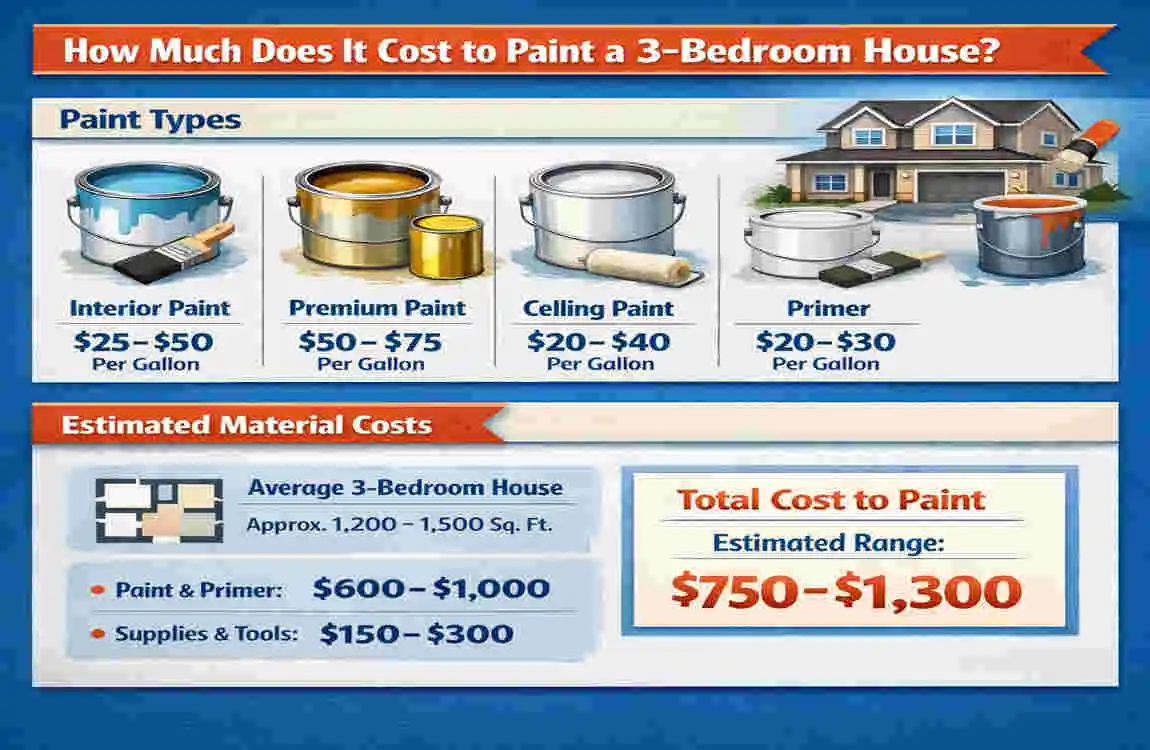
If you are on a tight budget, you will likely look at basic latex paint. This is your standard, run-of-the-mill interior wall paint. In the US, a gallon of basic latex will run you between $20 and $40. A single gallon usually covers about 350 square feet. This is a perfectly fine option if you are flipping a house or painting a low-traffic guest bedroom. However, it may require more coats to achieve solid color coverage, which means more labor time.
Next, we step up to Premium, low-VOC paint. VOC stands for Volatile Organic Compounds. These are the harsh chemicals that give paint its headache-inducing smell and can be harmful to breathe in. As of 2026, low-VOC and zero-VOC paints are the golden standard for residential homes. They are safer for your family, safer for your pets, and they dry almost completely odorless. Expect to pay between $50 and $90 per gallon for Premium brands. You will almost always need two solid coats for a beautiful, flawless finish.
Finally, we have the designer and luxury paints. These are brands favored by high-end interior designers for their unmatched depth of color, unique textures, and ultra-durable finishes. Choosing designer paint will add a massive 50% markup to your material costs, easily pushing prices to £70 or more per gallon in the UK.
What Are the Total Material Costs?
If you decide to take on the project yourself, the total materials to paint a 3-bedroom house will cost you between $300 and $800.
Keep in mind that if you hire a professional, they will bring the materials, but they will also add a professional markup to the cost of the paint to cover their sourcing and transportation time.
When budgeting for materials, do not forget the extras! You need more than just colored paint. Your shopping list will include:
- High-Quality Primer: Around $25 per gallon. Never skip primer, especially if you are painting over a dark color.
- Brushes and Rollers: Expect to spend $50 to $100. Cheap brushes shed bristles into your wet paint. Always buy the good stuff.
- Prep Materials: Drop cloths, high-quality painter’s tape, sandpaper, and drywall putty. These small items add up fast at the hardware store.
Labor Costs & Pro vs. DIY
We have arrived at the biggest slice of the pie: labor. When calculating how much to paint a 3-bedroom house, you are ultimately deciding how much your own time is worth. Let us compare hiring professional contractors versus doing it yourself.
Professional Rates and Timelines
When you hire a professional painting crew, you are paying for their expertise, their speed, and their insurance. In the US, professional painters charge between $50 and $100 per hour, per painter. In the UK, the going rate is typically £20 to £40 per hour.
For a complete 3-bedroom house interior, a standard crew of two professional painters will usually finish the job in 3 to 7 days, depending on the amount of prep work needed. They show up early, they work incredibly fast, and they leave your home spotless.
The DIY Approach: Is It Worth It?
Painting looks easy on television renovation shows, but it is deeply physical, exhausting work. Let us look at a breakdown comparing the two paths.
DIY Savings Table:
Approach, Total Estimated Cost, Time to Complete, Quality Risk
Hire a Pro $3,500+ 1 week Low (High quality)
Do It Yourself $300–$800 2–4 weeks Medium to High
The Pros of Hiring a Pro: The biggest advantage is the warranty. Good contractors guarantee their work. If the paint peels next month, they come back and fix it for free. You also get incredible speed. You don’t have to live in a construction zone for a month.
The Cons of Hiring a Pro: The only real downside is the steep upfront financial cost. It is a large investment.
The Pros of DIY: You save thousands of dollars in labor. If you are extremely tight on cash, DIY is a fantastic way to upgrade your home on a shoestring budget.
The Cons of DIY: It will take over your life. A job that takes pros 4 days will easily take a DIY homeowner 2 to 4 weeks of working every single evening and weekend. You also face the physical toll of climbing ladders, bending over baseboards, and breathing in paint fumes. Furthermore, if you make a mistake, spill paint on a luxury carpet, or fail to prep a wall correctly, you have no one to blame (and no warranty to save you).
Hidden Fees Exposed (Read This Before You Sign!)
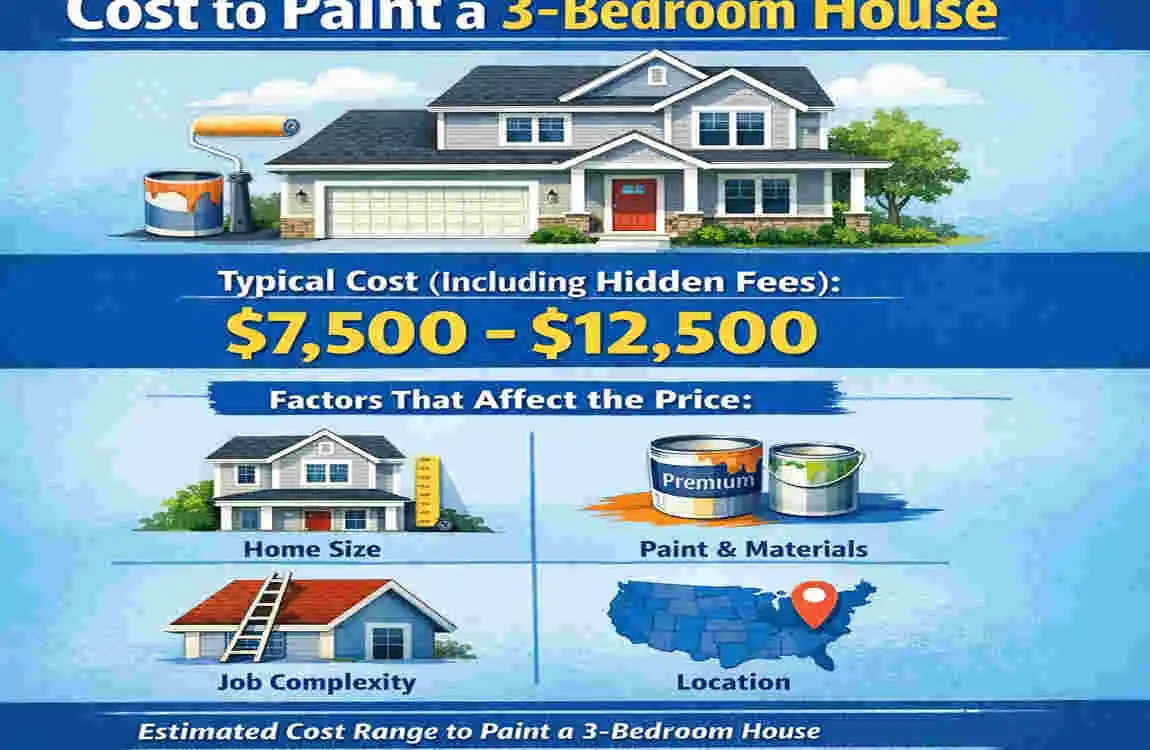
This is arguably the most important section of our guide. When figuring out how much to paint a 3-bedroom house, the initial quote you receive is rarely the exact number you pay at the end. Why? Because of sneaky hidden fees. Let us drag these common surprise charges into the light so you can protect your budget.
Common Surprise Charges Not in Initial Quotes
Surface Repairs and Drywall Patching Painters are not miracle workers. If your walls have dents from doorknobs, holes from heavy picture frames, or long hairline cracks from the house settling, the painters must fix these before opening a single can of paint. Extensive drywall patching and sanding can easily add $200 to $500 to your final bill. You cannot simply paint over a hole.
The Tall Wall Penalty We mentioned ceilings earlier, but extremely tall walls are a hidden trap. If your home has grand, vaulted foyers or double-height living room walls, painters charge extra. Expect to pay around $0.55 or more per extra square foot for tall walls. Furthermore, if they cannot safely reach the top with a standard ladder, they will have to rent interior scaffolding. That equipment rental fee (usually $100 to $300) gets passed directly to you.
Intense Preparation Overruns: Is your current paint flaking, bubbling, or peeling off in large strips? The crew has to scrape all of that off, sand it totally smooth, and apply special bonding primers. This kind of heavy-duty preparation commonly causes a 20% to 30% overrun on your initial estimate.
Cleanup and Disposal Fees. Always read the fine print of your contract. Some contractors charge a separate line item just for cleaning up the job site and properly disposing of empty chemical paint cans and used drop cloths. This can easily cost $150 or more.
Mid-Project Color Swaps Imagine this: you pick a gorgeous shade of blue. The painters apply it to the whole living room. You walk in, look at it in the afternoon light, and absolutely hate it. Changing your mind mid-project will cost you. Contractors will charge a “change order” fee, plus the cost of the new paint, plus the wasted labor. These color swap fees generally range from $50 to $200, not including the new materials.
Your Personal Hidden Fees Checklist
Keep this checklist handy when interviewing painters to ensure they include everything in their written bid:
- Repairs: Are they fixing drywall cracks and addressing minor moisture damage?
- Access Issues: Will they move your heavy oak dining table and massive sectional sofa? Furniture moving can add $100 to $300 to the bill.
- Regional Architectural Add-ons: Does your region feature homes with heavily textured walls or 12-foot ceilings? Factor in a 40% increase for these difficult features.
How to Avoid Getting Scammed by Hidden Fees: You must demand a fully itemized, written bid. Never accept a quote over the phone. Make the contractor walk through your home, inspect the walls closely, and write down exactly what is included.
A Real-World Cautionary Tale: A client recently bought an older 3-bedroom home. They got a cheap painting quote. But when the painters started scraping a slightly bubbling spot near the bathroom baseboard, they discovered extensive wood rot hidden beneath decades of old paint. The painting had to stop immediately, carpenters were called in, and the “cheap” paint job suddenly had $1,000 in carpentry repair fees tacked onto it. Always expect the unexpected with older homes!
Regional Variations: Where You Live Matters
As we briefly touched on earlier, how much to paint a 3-bedroom house swings wildly depending on your zip code. Local cost of living dictates contractor wages, which in turn dictates your quote.
The United States Landscape
In the US, regional differences are stark. If you live in the Midwest—places like Ohio or Indiana—you benefit from a lower cost of living. Homeowners here might pay around $2.50 per square foot for a professional interior job.
However, if you reside in coastal, high-demand areas like California or New York, contractors have to pay massive overheads to run their businesses. In these states, you should brace yourself to pay $4.00 or more per square foot.
The United Kingdom Landscape
The UK sees a similar north-south divide. If you are hiring a crew in the heart of London, you are looking at top-tier pricing, ranging from £3,500 to £5,000 for a full 3-bedroom property. Head up North to places like Manchester or Leeds, and that exact same house will only cost you between £2,500 and £3,500.
A Note for Our Pakistani Audience (Lahore & Beyond)
To localize this for our readers in Pakistan, the dynamics shift completely. In cities like Lahore or Karachi, a 3-bedroom home will generally cost between PKR 200,000 and PKR 500,000.
Here is why: while local daily labor rates are significantly cheaper than in the US or UK, high-quality, imported paints and materials are heavily taxed and highly affected by inflation. Furthermore, if your home is located in an upscale urban sector, contractors will easily add a 25% Premium to the total cost.
Savings Tips & Budget Hacks

Alright, we have looked at the scary numbers. Now, let us talk about keeping your money in your bank account! Here are some insider secrets to lower the cost of painting a 3-bedroom house without sacrificing quality.
Hire During the Off-Season (Winter) Most people want to paint their houses in the spring or summer. Because of this, painters are booked solid and charge Premium rates. But guess what? Interior painting is an indoor job! If you hire a crew in the dead of winter (January or February), painters are often desperate for work to keep their crews busy. You can easily negotiate 10% to 20% off their standard rates.
Do the Preparation Work Yourself. Painters charge by the hour. Why pay them $60 an hour to move your couch? Before the crew arrives, move all your furniture into the center of the room. Take down all your curtains, blinds, and picture frames. Unscrew every single light switch plate and electrical outlet cover. By prepping the rooms, you save the crew hours of tedious labor, which reduces your final bill and prevents those pesky extra fees.
Bundle Your Services Together. Contractors love big jobs because they keep their crew in one location for a week, rather than driving all over town. If you know you want the trim and ceilings painted eventually, do not break it up into separate jobs over three years. Ask for a bundled package. Doing the walls, trim, and ceilings all at once can get you a 15% discount compared to piecemealing the project.
Use a Simple Formula Calculator. Want a quick, on-the-fly estimate while walking through a house? Use a simple mental calculator. Take the total square footage of the home and multiply it by $3. (e.g., 2,000 sq ft x $3 = $6,000). It is a rough estimate, but it keeps your expectations grounded before you call for quotes.
Frequently Asked Questions (FAQs)
Still have some lingering thoughts? Let us clear up the most common questions homeowners ask when researching how much to paint a 3-bedroom house.
How much does it cost to paint a 3-bedroom house yourself (DIY)? If you handle all the labor yourself, you will only pay for materials. Depending on the quality of paint you choose, expect to spend between $300 and $800 on paint, primers, brushes, tape, and drop cloths.
What is the standard timeline for a professional crew? For a standard 3-bedroom home, a professional crew of two experienced painters will typically complete the entire interior in 3 to 5 days. If extensive drywall repair is needed, or if they are painting all the ceilings and trim, push that expectation to a full 7-day week.
What is the average markup for hidden fees? If you do not get a firm, itemized contract upfront, you can expect hidden fees and project overruns to inflate your final bill by an average of 15% to 25%. Always get it in writing!