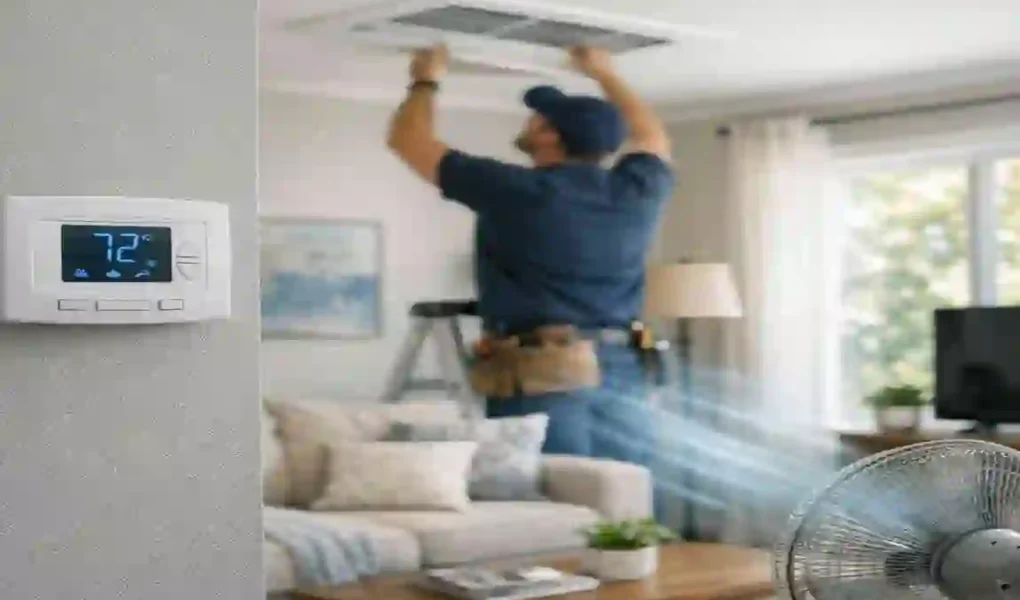
It is the middle of summer. Your house has been heating up for hours because the AC has been out of service. The air feels heavy. The rooms are stuffy. You are sweating, opening vents, checking the thermostat, and waiting for the repair technician to finish. Finally, the AC is fixed, the system turns back on, and you expect cold comfort right away.
Cool air starts coming out, yet the house still feels warmer than you hoped. You walk from room to room and wonder, ” How long does it take for the house to cool down after an AC repair? If the system is fixed, why is the indoor temperature not dropping instantly?
That is a very common question, and it matters more than most homeowners realise. The answer affects your comfort, your patience, your energy bills, and even how well your AC performs after the repair. If you expect instant cooling, you may think something is still wrong. If you understand the normal timeline, you can avoid stress and help your system work better.
The truth is simple: even after a successful repair, your home usually needs time to release built-up heat. Walls, floors, furniture, and the air inside the luxury home all retain heat. Your AC has to remove that heat step by step. Some homes cool down quickly. Others take several hours.
AC Basics Post-Repair
How a Repaired AC Starts Cooling Again
To understand how long it takes for a house to cool down after an AC repair, it helps to know what your air conditioner is doing once it starts running again.
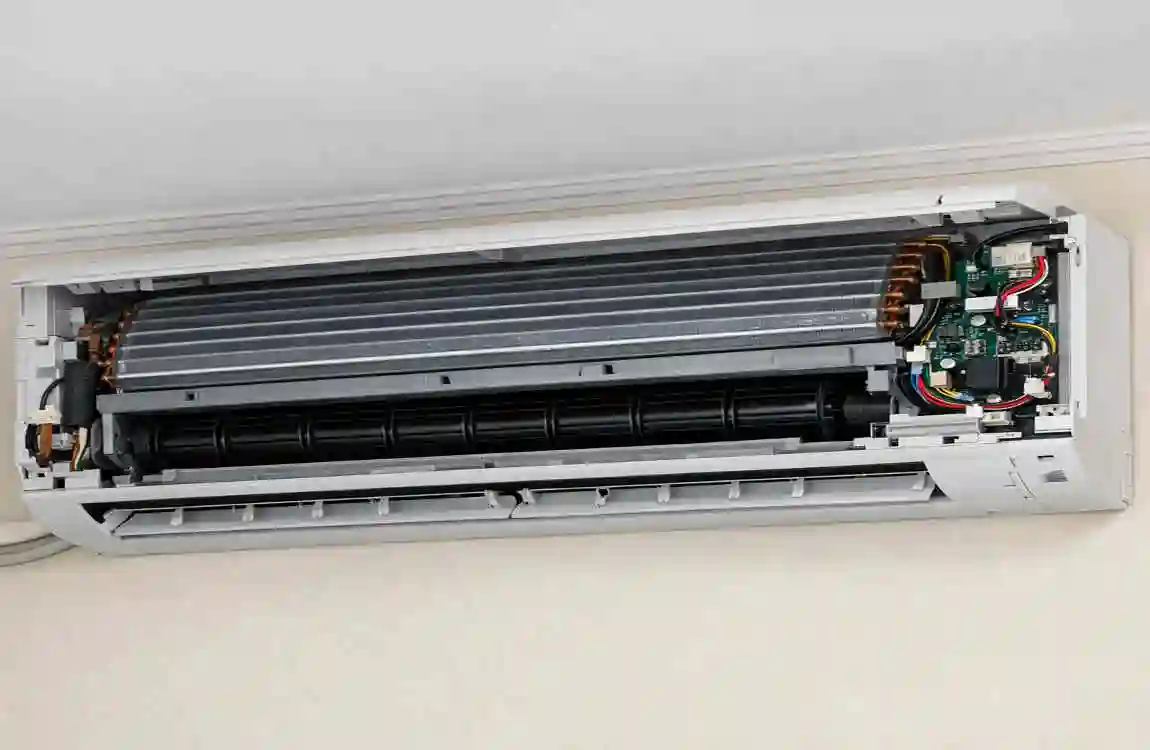
Your AC does not “create” cold air in the way many people imagine. Instead, it removes heat from inside your house and pushes that heat outdoors. That process depends on three important parts working together:
- Compressor
- Evaporator coil
- Refrigerant
The evaporator coil sits inside your indoor unit. Warm indoor air passes over that coil. The refrigerant inside absorbs the heat. Then the compressor helps move the heat-loaded refrigerant through the system so the outdoor unit can release it outside.
When everything is repaired correctly, that cycle starts moving heat out of the home again. But the system still needs time to stabilise and catch up after indoor temperatures rise.
Common Repairs and Their Early Effects
Not all AC repairs affect cooling in the same way. Some fixes restore performance almost right away, while others improve the system more gradually.
Here are a few common repairs:
Refrigerant Leak Repair
If your system had low refrigerant, it likely struggled to cool properly before the repair. Once the leak is fixed and refrigerant levels are corrected, you should notice stronger cooling. Still, the house may take time to recover if it got very hot during the breakdown.
Capacitor Replacement
A bad capacitor can stop the system from starting or running correctly. Once replaced, the AC may start up normally again, but it still needs time to lower the temperature inside the house.
Thermostat Repair or Replacement
If the thermostat was reading temperatures incorrectly, your AC may not have been turning on when needed. Once fixed, the system can finally respond correctly, though the home may already be holding extra heat.
Fan Motor or Blower Repair
If the airflow was weak before the repair, the system could not move enough cooled air through the home. After repair, airflow improves, but rooms may not feel balanced immediately.
Why Cooling Does Not Happen Instantly
Many homeowners expect a repaired AC to cool the house the moment it turns on. That is not how the process works.
Think of it like starting a car on a cold morning. The engine does not reach full rpm in the first second. It needs a little time to settle into proper operation. Your AC behaves similarly after repair.
In many cases, the first noticeable air changes happen within 15 to 30 minutes. That means the air coming from the vents should feel cooler fairly soon. But cooling the entire house takes longer because the AC has to remove heat from:
- The air
- Walls
- Ceilings
- Floors
- Furniture
- Bedding
- Carpets
- Appliances
That stored heat does not disappear right away. So even when the AC is working well, you may still feel lingering warmth indoors for a while.
The Home Itself Needs to Catch Up
This is the part many people forget.
Your house acts like a giant heat sponge. If it sat at 88°F or 90°F for several hours, everything inside absorbed that warmth. So after the repair, your AC is not just cooling the air. It is also pulling heat from the materials all around you.
That is why the answer to how long it takes for the house to cool down after an AC repair depends on more than the repair itself. It also depends on how hot the house got before the fix and how much heat is trapped indoors.
Typical Cooling Timelines
Average Time by Home Size
Once your AC is repaired, how long should it take for the house to feel comfortable again?
In general, a properly working system may need anywhere from 1 hour to 5+ hours to bring the home back down to the thermostat setting. The exact timeline depends on the size of the house, starting indoor temperature, insulation, and outdoor weather.
Here is a realistic breakdown:
Small Homes
For a smaller home, apartment, condo, or house around 1,000 square feet, cooling may happen in about 1 to 2 hours if the house is only moderately warm.
Medium Homes
For a home around 2,000 square feet, expect a cooling window of about 2 to 3 hours, sometimes longer if the indoor temperature climbs well above your target setting.
Large Homes
For large homes around 3,000 square feet or more, it may take 3 to 5+ hours to cool down, especially on very hot days or in homes with multiple stories.
Cooling Timeline Table
House Size Starting Temp Time to Cool 10°F
1,000 sq ft 85°F 1-2 hours
2,000 sq ft 90°F 2-4 hours
3,000+ sq ft 95°F 4-6 hours
This table gives a helpful estimate, but keep in mind that real-life conditions can shift these numbers up or down.
Starting Temperature Makes a Big Difference
One of the biggest factors is the temperature inside your home when the repair is finished.
A house that has risen to 80°F will recover much faster than a house sitting at 90°F or higher. That is because every extra degree adds more heat for the system to remove.
For example:
- If your thermostat is set to 74°F and your home is at 80°F, the AC may catch up fairly quickly.
- If your home is at 90°F, the system has a much larger job and may run for several hours before reaching that target.
So, if you are asking, how long does it take for the house to cool down after an AC repair, always consider where the temperature started.
Seasonal Conditions Also Matter
Summer weather affects how quickly a home cools down.
On a milder day, your AC has an easier job because the outdoor unit can release heat more efficiently. On an extremely hot day, especially when temperatures reach 95°F to 100°F or higher, the system has to work much harder.
Humidity also slows the process. When the air is humid, your AC has to remove both heat and moisture. That extra work can stretch the cooling timeline.
What a Realistic Recovery Feels Like
Here is what normal post-repair cooling often looks like:
First 15 to 30 Minutes
You should feel cool air from the vents. The home may still feel warm overall.
First 1 to 2 Hours
Smaller rooms may feel noticeably better. Bedrooms and shaded spaces usually cool first.
2 to 4 Hours
A medium-sized home should feel much closer to normal, though upper floors may still run warmer.
4+ Hours
Larger homes or homes that got very hot may still be catching up, especially if insulation is weak or outdoor temperatures are high.
The key is to expect progress, not instant perfection. A repaired system should show steady improvement, even if the whole house does not feel ideal right away.
Key Factors Affecting Cool-Down Time
Why One Home Cools Faster Than Another
If two homes use similar air conditioners, they still may cool at very different speeds. That is because the AC system operates within a larger environment. The size of the house, how well it retains cool air, and even the weather outside all shape the answer to how long it takes for the house to cool down after an AC repair.
Below are the biggest factors to watch.
House Size and Insulation
A larger home naturally contains more air and more materials that store heat. That means the AC has more work to do.
Poor insulation makes that job even harder. If cool air escapes through attic gaps, old windows, or poorly sealed doors, the house loses progress as the AC is trying to recover.
What this means for you:
A small, well-insulated home may cool fairly quickly after repair. A large home with weak insulation may take hours longer.
Helpful sub-tips:
- Keep doors and windows fully closed.
- Close blinds or curtains during the hottest part of the day.
- Check for drafts around windows and exterior doors.
- Make sure attic insulation is in decent shape.
AC Capacity (Tonnage)
Your AC must be properly sized for the home. “Tonnage” refers to the unit’s cooling capacity, not its physical weight.
If the unit is too small for the house, it may run constantly and still struggle to lower the temperature. If it is the right size, it can recover more effectively after a repair.
A repaired AC will not suddenly perform beyond its design. So if your unit was already undersized before the repair, recovery may still be slow.
What this means for you:
A working AC can still cool slowly if it is not matched well to the home’s size.
Helpful sub-tips:
- Ask your HVAC technician if your system size fits your home.
- Do not assume a bigger unit is always better. Oversized systems bring other problems.
- Pay attention to whether your AC struggles every summer, not just after repairs.
Outdoor Temperature and Humidity
When the weather outside is extremely hot, your AC has to reject heat into the air that’s already very warm. That makes the process less efficient. If humidity is high, the system also needs to remove moisture, which adds to the time required.
This is why a small house may cool faster on an 82°F day than on a 100°F day, even with the same thermostat setting.
What this means for you:
The hotter and more humid it is outside, the longer it may take for the indoor temperature to drop.
Helpful sub-tips:
- Avoid setting the thermostat dramatically low during extreme heat.
- Use ceiling fans to help your body feel cooler sooner.
- Keep heat-producing activities to a minimum during recovery.
Ductwork and Airflow
Your AC can only cool the house if the cooled air actually reaches the rooms properly. Leaky ducts, blocked vents, dirty filters, and weak blower performance all slow things down.
You may have a repaired AC, but if the airflow path is poor, the house still may not cool as expected.
What this means for you:
Good airflow can make a major difference in post-repair cooling time.
Helpful sub-tips:
- Replace dirty air filters right away.
- Make sure vents are open and not blocked by furniture.
- Have duct leaks checked if some rooms stay warm.
- Listen for weak airflow in distant rooms.
Thermostat Settings
A common mistake is dropping the thermostat far below the desired temperature in hopes of cooling the home faster. For example, someone may set it to 65°F when they really want 74°F.
That does not make most AC systems cool faster. It only keeps the unit running longer and may create unnecessary strain. A more realistic approach is a gradual drop, often around 1 to 2°F per hour, in practical recovery conditions.
What this means for you:
A smart thermostat setting supports steady cooling. Extreme settings do not create instant comfort.
Helpful sub-tips:
- Set the thermostat to your actual target temperature.
- If the house is extremely hot, be patient while the system catches up.
- Avoid constantly adjusting the thermostat every few minutes.
- Let the AC run through a full cooling cycle.
Quick Summary of the Biggest Cooling Factors
Here is a simple recap of what affects cool-down time most:
- Larger homes usually take longer to cool.
- Weak insulation lets cool air escape.
- Undersized AC units struggle to catch up.
- Hot, humid weather slows recovery.
- Poor airflow or duct issues reduce cooling power.
- Thermostat misuse can create longer wait times.
When you look at all these together, it becomes clear why one home may cool in 90 minutes while another needs half a day.
Common Post-Repair Delays and Fixes
Myth: “The AC Should Cool Instantly”
One of the biggest myths homeowners believe is that the house should feel perfectly cool the moment the repair technician leaves.
That is rarely how it works.
Yes, the AC should start producing cool air fairly soon if the repair solves the issue. But that does not mean the whole house will instantly drop to the set temperature. Stored heat inside the home takes time to remove.
So if you are asking, “How long does it take for the house to cool down after an AC repair?” remember this: steady cooling is normal; instant cooling is not.
Dirty Filters Can Slow Everything Down
Sometimes the repair is successful, but the home still cools slowly because the air filter is clogged. A dirty filter reduces airflow, and weak airflow means less conditioned air moving through the rooms.
This is one of the easiest issues to fix, yet many homeowners overlook it.
If your AC has just been repaired and cooling feels sluggish, check the filter first.
Thermostat Recovery Can Take Time
Some thermostats, especially smart models, go through a recovery period after power interruptions, setting changes, or system restarts. That does not always mean something is broken.
If the thermostat is reading accurately and calling for cooling, give it time to work through the recovery process before assuming the repair failed.
A Heat-Soaked House Feels Warm Longer
Even as the air temperature starts to drop, the big house may still feel warmer than expected because surfaces are still holding heat.
Warm couches, floors, walls, and bedding can make the whole home seem less comfortable. This is normal after a breakdown, especially if the home sat hot for several hours.
Quick Fixes You Can Try Right Away
If cooling seems slow after a repair, try these simple fixes before panicking:
- Check that the thermostat is set to cool and not fan or heat
- Make sure the target temperature is below the current room temperature
- Replace a dirty filter
- Open all supply vents
- Close blinds and curtains
- Keep exterior doors shut
- Turn on ceiling fans to improve circulation
These steps often help the house recover more smoothly.
Avoid Frequent Cycling
It is tempting to turn the system off, lower the thermostat, turn it back on, and keep repeating the cycle. Resist that urge.
Frequent cycling interrupts the cooling process and can put extra stress on the equipment. Once the system is running properly, let it do its job.
In most cases, patience and a few smart adjustments work better than constant thermostat changes.
Expert Tips to Speed Up Cooling
Small Actions Make a Big Difference
If you want to shorten the wait after a repair, you do not need complicated tools or expensive upgrades. A few practical actions can help your home cool faster and reduce strain on the AC.
Here are the best ways to improve the answer to the question, “How long does it take for a house to cool down after an AC repair?”
Pre-Cool Strategically Before Repair
If you know a repair visit is coming and the AC still has some partial function, try to keep the house from overheating before the work begins. Even small reductions in indoor heat can help the system recover faster afterwards.
If the AC is completely down, keep blinds shut and avoid adding extra heat indoors while you wait.
Seal Air Leaks and Clean Filters Immediately
Cool air escapes through gaps faster than many homeowners realise. Check doors, windows, and any obvious drafts. Even temporary weather stripping or door sweeps can help.
Also, replace the air filter immediately if it is dirty. This one small step improves airflow and helps the repaired AC perform at its best.
Use Fans for Better Air Circulation
Fans do not lower the air temperature on their own, but they help move cooled air throughout the house. That makes rooms feel better sooner and reduces hot spots.
Use ceiling fans in occupied rooms. If needed, use portable fans to push cool air into distant spaces or upstairs rooms.
Optimise the Thermostat
A thermostat setting around 78°F is often considered a practical summer balance between comfort and efficiency. If the house has become very warm, set the thermostat to a realistic target and let the system work steadily.
Do not crank it down much lower, expecting faster cooling. That usually only increases runtime, not cooling speed.
Reduce Heat Sources Indoors
Your AC cannot catch up quickly if you keep adding heat inside the home.
During post-repair recovery, avoid:
- Using the oven for long cooking sessions
- Running the dryer during the hottest part of the day
- Leaving many lights on
- Using heat-producing appliances unnecessarily
Less indoor heat means faster cooling.
Cool-Down Checklist: Step by Step
Use this simple checklist right after the repair is completed.
Check the Thermostat
Make sure it is set to cool, and the desired temperature is below the current room temperature.
Replace or Inspect the Filter
If the filter is dirty, install a clean one right away.
Open and Clear Vents
Walk through the house and make sure vents are open and not blocked by rugs, curtains, or furniture.
Close the House Up
Shut all windows and exterior doors. Keep blinds and curtains closed on sunny sides of the home.
Turn On Ceiling Fans
Set ceiling fans to help move air downward in occupied rooms.
Avoid Heat-Producing Activities
Hold off on baking, long hot showers, or running large appliances if possible.
Give It Time
Let the system run without constant thermostat changes. Watch for steady improvement over the next few hours.
Best Habits for Faster Cooling Every Time
If you want better cooling not just today but every summer, build these habits into your routine:
- Change filters on schedule
- Keep supply vents clear
- Shade sunny windows
- Schedule maintenance before peak summer heat
- Watch for airflow issues early
- Keep attic and duct insulation in good condition
The faster your home holds cool air, the less your AC has to fight to regain comfort after repair.
Energy Efficiency After Repair
Faster Cooling Usually Means Lower Bills
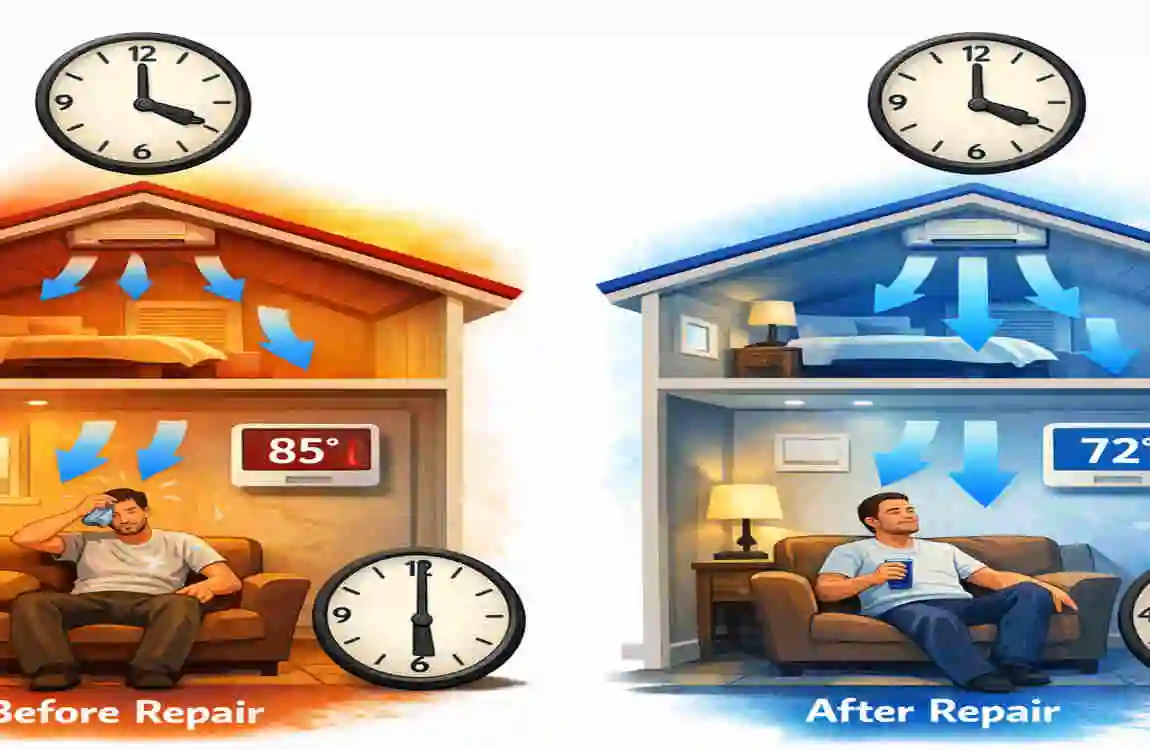
There is a direct connection between cooling speed and energy use. When your AC cools efficiently, it reaches the target temperature sooner and avoids wasting electricity on longer-than-needed runtime.
That means understanding how long it takes for a house to cool down after an AC repair is not just about comfort. It is also about monthly costs.
A properly maintained system can significantly reduce energy waste. In many cases, good maintenance habits may improve efficiency enough to save roughly 10% to 20% over time, depending on the condition of the system and the home.
Why Efficiency Matters Right After Repair
After a repair, your system should be working closer to its intended performance. That gives you a chance to protect that improvement.
If you ignore filters, airflow, insulation, or thermostat settings, the AC may run longer than necessary, even though the original repair was done correctly.
Simple Ways to Protect Efficiency
Schedule Annual Tune-Ups
A yearly tune-up helps catch issues before they turn into expensive breakdowns. It also keeps key parts clean, adjusted, and working efficiently.
Use a Smart Thermostat
A smart thermostat can reduce unnecessary cooling and improve temperature stability. It can also help you avoid overcooling when nobody is home.
Keep the Outdoor Unit Clear
Leaves, weeds, and debris around the outdoor unit can reduce performance. Give it breathing room so it can release heat effectively.
Long-Term Return on Investment
Energy efficiency is not just about cutting one utility bill. It adds up over time.
When your system cools efficiently:
- Parts often experience less strain
- The unit may last longer
- Repairs may become less frequent
- Indoor comfort stays more consistent
In other words, a good repair followed by good maintenance gives you better comfort now and better value later.
When to Call a Professional
Signs the Cooling Delay Is Not Normal
Some waiting is normal after a repair. But some delays point to a bigger issue.
You should call a professional if:
- The house shows little or no cooling after 4 hours
- Air from the vents is not cool
- You hear strange noises like grinding, buzzing, or rattling
- The system turns on and off too often
- Ice forms on the indoor or outdoor unit
- Some rooms get no airflow at all
These signs may mean the system still has a problem beyond the original repair.
Why Certified Technicians Matter
If your system is under warranty, using a qualified and certified technician is especially important. Improper service can create new issues and may affect warranty coverage.
A trained professional can test refrigerant levels, airflow, electrical parts, thermostat behaviour, and duct performance. That is much better than guessing while the stunning house stays hot.
If the cooling timeline feels far outside normal expectations, trust your instincts and get it checked.
FAQs
How long does it take for the house to cool down after an AC repair?
Most homes need 1 to 5+ hours, depending on house size, indoor starting temperature, insulation, weather, and AC capacity.
Why is my house still warm after the AC was fixed?
Your AC may be working, but the house itself could still be holding stored heat in walls, floors, furniture, and air. Recovery takes time.
What if it takes longer than expected?
Check the thermostat, filter, vents, and blinds first. If cooling remains poor after several hours, call a technician.
Should I set the thermostat much lower to cool faster?
No. That usually does not speed up cooling. It just makes the system run longer.
Is it normal for upstairs rooms to stay warmer?
Yes. Heat rises, and upper floors often take longer to cool, especially in multi-story homes.
Can fans help after AC repair?
Yes. Fans improve circulation and help you feel cooler sooner, even though they do not directly lower the room temperature.
How did the repair actually work?
You should feel cool air from the vents, and the indoor temperature should gradually drop.