
You have just driven home after a long, exhausting day at work. The sky suddenly turns dark, and the heavy Lahore monsoon rain begins to pour down in buckets. You press the button on your garage remote, expecting the welcoming sound of the motor, but nothing happens. The power grid has failed, and you are officially stuck in the pouring rain.
Power outages can happen at the most inconvenient times, leaving homeowners stranded in their driveways or locked inside their own homes. This is exactly why knowing how to open a roller house garage door manually is an absolute lifesaver. Roller doors are fantastic additions to modern homes because they are compact, incredibly secure, and space-saving. They roll neatly into a tight coil above the opening, freeing up valuable ceiling space. However, this complex mechanical design means that when the electricity stops flowing, you need a solid backup plan.
If you are wondering how to safely bypass the electrical motor and take control of the situation, this comprehensive guide covers it all. You do not need to panic, and you certainly do not need to wait hours for the power company to restore the grid.
Why Roller Garage Doors Need Manual Operation
Before you start pulling cords and lifting heavy metal, it helps to understand exactly what you are dealing with. A roller garage door operates differently from a traditional sectional door. Instead of sliding flat along the ceiling on horizontal tracks, a roller door consists of a single continuous curtain made of interlocking horizontal slats. When you press your remote, the electric motor pulls this slatted curtain up, rolling it tightly around a spinning drum located right above the door opening.
Because of this unique rolling design, these doors are heavily reliant on continuous electrical power and properly tensioned internal springs. When everything works, it feels like magic. But several common failure points can quickly bring that magic to a halt.
Common Reasons for Door Failures
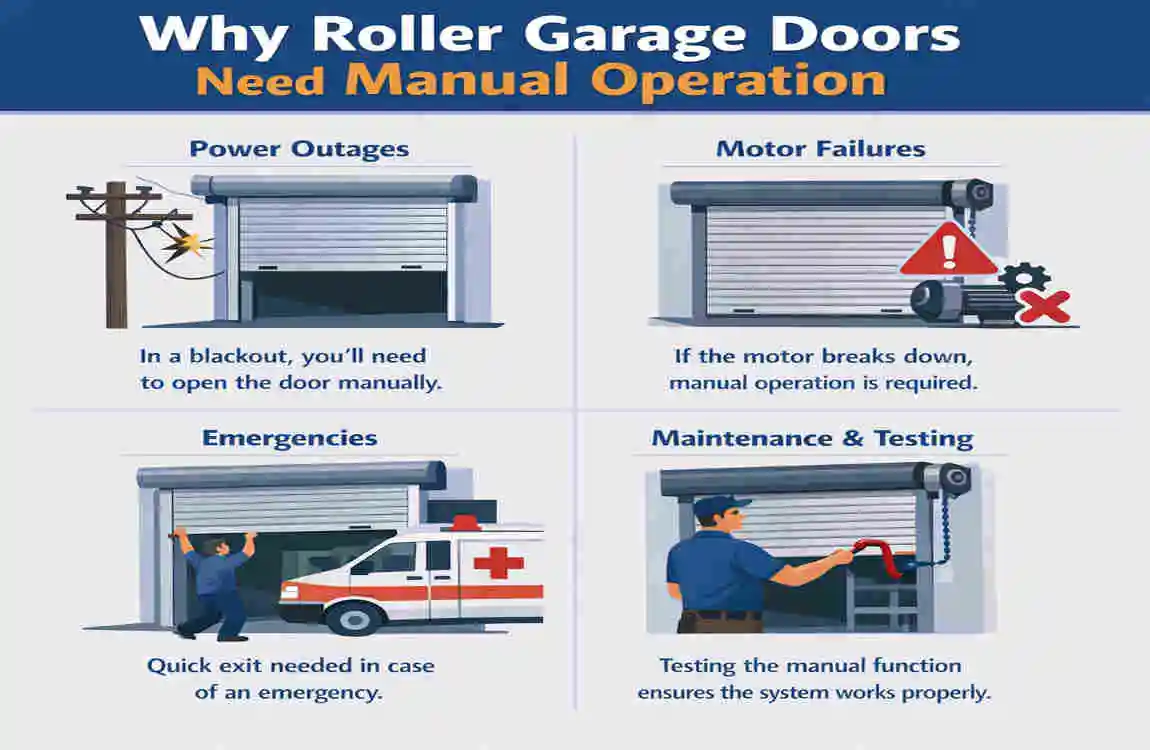
The most obvious culprit is a standard power outage. The moment the local grid goes down, your electric motor loses its power supply. But power cuts are not the only reason you need to use the manual override. Sometimes, your remote control batteries might die. Other times, the electrical motor itself might experience a fault, or a power surge could fry the delicate internal circuit board.
In major urban areas, dealing with these interruptions is simply a part of daily life. For instance, recent statistics suggest that sudden power outages and load-shedding events affect nearly 70% of urban homes in areas like Lahore every single year. When the grid is unpredictable, your ability to adapt must be rock solid.
Saving Time and Money
Understanding the manual roller garage door release process offers incredible peace of mind. But beyond safety and convenience, it also protects your wallet. Calling out an emergency garage door technician during a severe storm or after regular business hours is incredibly expensive. In the Punjab region, an emergency weekend callout can easily cost you PKR 5,000 or more just for the technician to show up and pull the emergency cord for you!
By learning how to operate the manual Mode yourself, you avoid these costly, unnecessary fees. You take back control of your home access, ensuring that a simple neighborhood blackout never derails your entire daily schedule.
Always remember, though: dealing with heavy, spring-loaded doors requires caution. We must always prioritize safety before attempting any physical manual overrides.
Tools and Safety Precautions
Attempting a power outage garage door fix without the right preparation is a recipe for disaster. Roller garage doors are incredibly heavy pieces of metal. While the internal springs do a lot of the heavy lifting, you still need to be careful. Before you touch the door, gather a few basic items from around your house to make the job easier and safer.
Essential Tools List
You do not need an entire mechanic’s workshop to get your door open, but you should have the following items nearby:
- Step Ladder: You need a stable, non-slip ladder to reach the emergency release cord safely, especially if you have high ceilings. Do not balance on a wobbly chair!
- Heavy-Duty Gloves: Leather or thick rubber-grip gloves are highly recommended. Garage door panels and tracks can have sharp metal edges, and gloves protect your fingers from painful pinches.
- Flashlight or Headlamp: Power outages usually mean pitch-black garages. A headlamp is ideal because it keeps both of your hands fully free to work.
- Owner’s Manual: If you have it tucked away in a drawer, grab it. Every door brand has slight variations, and your model-specific manual is a great quick-reference guide.
Safety Checklist
Garage doors hold an immense amount of stored energy. To keep yourself and your family safe, please review this critical safety checklist before proceeding.
Precaution Reason Pro Tip
Ensure the door is closed before release. Prevents sudden, dangerous drops. Check twice to ensure the door is resting fully on the ground.
Work with a reliable partner. Shares the physical load (doors weigh 50-100kg). Always use your strong leg muscles, not your lower back, when lifting.
Avoid if springs or cables look damaged. High risk of violent snap-back injury. Listen closely for loud grinding, popping, or scraping noises.
Unplug the garage opener first to stop the motor from accidental, sudden activation. Use the inside access door from your house if possible during the outage.
Recognizing Warning Signs
Never try to force a stubborn, stuck door. If you pull the emergency cord and the door absolutely refuses to move upward, stop immediately. Do not throw your entire body weight into it. A door that will not budge manually often indicates a severely jammed track or, far worse, a broken torsion spring.
The torsion springs are the heavily coiled metal parts that balance the weight of the door. If a spring snaps, the full dead weight of the door is unleashed. Trying to lift a door with a broken spring can cause severe back injuries, and if the door slips from your grip, it can crash down and crush anything underneath it. If you suspect broken components, step away and call a professional.
Step-by-Step: How to Manually Open from Inside
If you are already inside your house or your garage when the power drops, you are in the best possible position. Opening the door from the inside is straightforward because you have direct access to the motor and the release mechanisms.
Follow this detailed, step-by-step guide to master your manual roller garage door release safely and efficiently.
Disconnect the Power Source
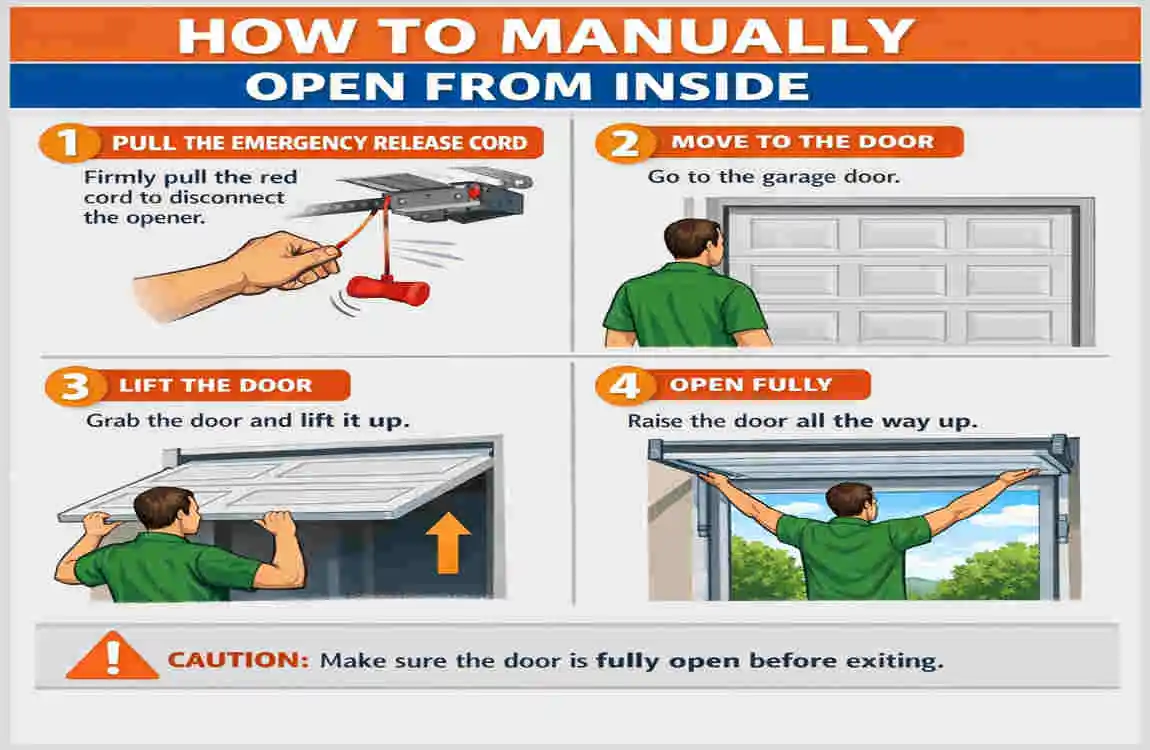
The very first thing you must do is eliminate any chance of the door suddenly springing to life. If the power company suddenly restores the grid while you are handling the door’s mechanical parts, the motor could engage and cause serious injury. Look up at the ceiling where your garage door motor is mounted. Find the power cord plugging into the ceiling outlet and pull the plug out completely.
Locate the Red Emergency Release Cord
Next, grab your flashlight and look up at the metal track running down the center of the garage ceiling. Attached to this track, usually hanging down a few feet from the carriage trolley, you will see a brightly colored cord. In almost all modern models, this roller door emergency cord is bright red and features a small plastic handle at the bottom. This handle is designed to be highly visible, even in low-light conditions.
Pull the Cord to Disengage the Motor
Position your sturdy step ladder securely beneath the cord. Climb up carefully, maintaining three points of contact. Grab the red plastic handle firmly. You need to pull the cord straight down and slightly away from the door opening. You are not just pulling a rope; you are physically pulling a spring-loaded metal lever that disconnects the door from the motorized track.
Pull firmly until you hear a loud, distinct “click.” That clicking sound is your confirmation that the trolley carriage has successfully disengaged from the motorized drive chain or belt.
Lift the Door Evenly
Climb down from the ladder and move to the center of the garage door. Put your heavy-duty gloves on. Bend at your knees, keeping your back perfectly straight. Grip the bottom handle of the garage door with both hands. It is crucial that you lift from the dead center. If you try to lift from one side, the door can tilt, wedge itself into the side tracks, and become permanently stuck.
Use your strong leg muscles to push the door upwards smoothly. Because the internal springs are doing the heavy lifting, the door should glide up relatively easily. It should not feel like you are lifting 100 kilograms.
Secure the Door in the Open Position
Push the roller door all the way up to the top of its track until it stops naturally. Make sure it stays there! Before you try to walk under it or drive your car out, let go of the door slowly. Ensure that the springs are holding it firmly in the open position. If the door slowly tries to slide back down, the springs are weak. In this case, you must have a partner hold the door open while you move your vehicle, or securely prop it open with a sturdy piece of wood.
A Quick Tip for Lahore Residents: The extreme humidity during the local monsoon season can actually cause the metal tracks to swell slightly and become very stiff—dirt and grit mix with this moisture, acting like glue. If you find the door hard to push, make a mental note to thoroughly clean and lubricate those tracks once the weather clears up.
Step-by-Step: How to Manually Open from Outside
Being locked inside your garage is an inconvenience, but being locked outside during a storm is a true emergency. If your house does not have a separate side-entry access door to the garage, a power outage means you cannot get inside to pull the red hanging cord.
Fortunately, most high-quality roller doors come equipped with an external manual release mechanism specifically designed for these locked-out scenarios. Here is how to conquer the outside power outage garage door fix.
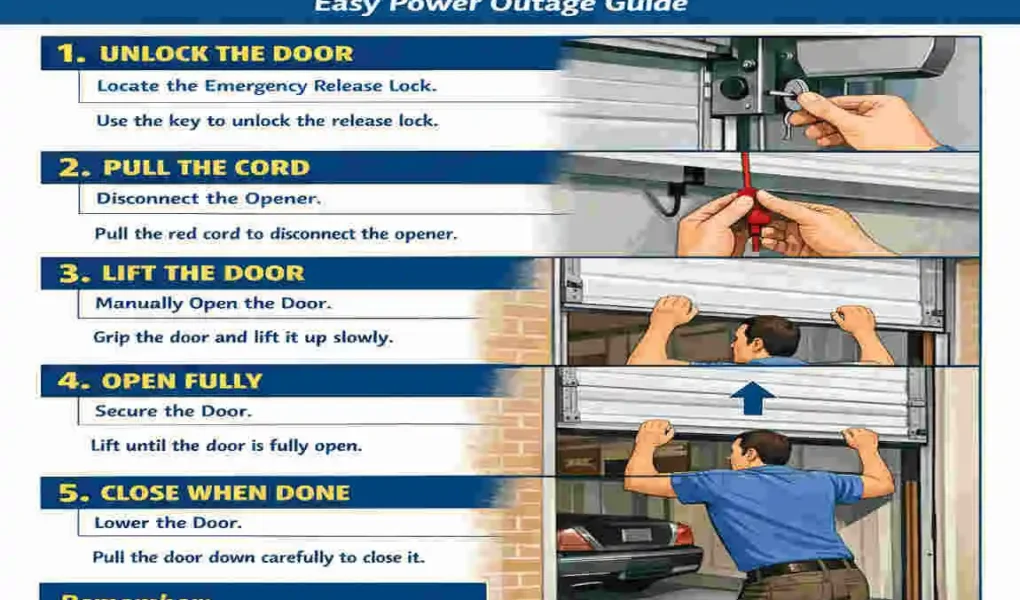
Locate the External Key Lock
Look at the front exterior of your roller garage door. Near the top center, or sometimes situated directly on the main faceplate, you will find a small, circular metal lock. This is not the lock that secures the door to the ground; it is a specialized emergency release lock. When you first purchased your home or installed the door, you should have received a specific, small key for this exact cylinder.
Trigger the Internal Release Cable
Insert your emergency key into the external lock cylinder. Turn the key firmly. Instead of just turning a latch, this action allows the entire lock core (the small metal cylinder inside) to pop out slightly.
Once it pops out, pull the lock core out toward you. Attached to the back of this metal core is a hidden steel cable that runs through the door and connects directly to the red emergency release lever inside. By pulling the core all the way out, you are essentially mimicking the action of pulling the red cord from the inside. Pull the cable firmly until you feel the resistance give way, signaling that the motor is disengaged.
Manually Lift the Door
Now that the motor is disconnected, you can open the door. Stand dead center facing the door. Grip the designated handles or the sturdy bottom lip of the bottom slat. Keep your posture straight and bend your knees. Lift the door straight up. Because you are outside, you do not have to worry about ladders.
Just like lifting from the inside, ensure you apply even pressure with both hands so the curtain rolls evenly onto the top drum.
Lock the Door in the Open Position
Push the door entirely to the top. Test the tension by letting go slightly to ensure the springs hold the door safely above your head. You can now drive your vehicle out of the pouring rain!
Brand Variations and Crucial Warnings
Some specific models, like the popular B&D roller doors, might have slight variations in how the external lock operates. Some require you to twist a specific external handle after inserting the key. Always familiarize yourself with your specific brand before an emergency strikes.
Important Safety Warning: You must only attempt the external manual release if the garage door is resting fully closed on the concrete floor. If the power failed while the door was halfway open, using the manual release will disconnect the motor support. A partially open door might instantly slam down to the floor, posing a massive crush hazard. In a partially open situation, wait for the power to return or call a professional.
Reconnecting the Opener After Power Returns
The storm has passed, the sun is shining, and your neighborhood lights are flickering back to life. It is time to put everything back to normal. Understanding how to reconnect a garage opener after an outage is just as important as knowing how to open it. If you do not reset it properly, your automatic remote will run the motor without actually moving the door!
Follow these simple steps to re-engage your automatic system.
Close and Lock the Door
First, you must pull the garage door all the way back down to the closed position manually. Do this slowly and carefully, using the central handle. Ensure the bottom weather stripping is resting flat and flush against the concrete floor. Attempting to reconnect the motor while the door is stuck in an open or partially open position can cause the trolley mechanism to misalign.
Reset the Emergency Release Cord
Grab your step ladder and position it under the central track again. Look at the red emergency release cord. When you disconnected it earlier, you pulled it down and away from the door.
To reconnect it, you must pull the red cord gently toward the closed garage door. You will see the small spring-loaded lever on the trolley snap horizontally back into its original resting place. This action arms the carriage, making it ready to grab the chain or belt again.
Cycle the Motor to Re-engage
Now, plug the garage door motor’s power cord back into the ceiling electrical outlet. Step back and find your wall-mounted button or your hand-held remote control. Press the button to activate the door.
You will hear the electric motor start running, and the central chain or belt will begin to move along the track. The metal carriage will slide along the track until it forcefully bumps into the manual release attachment. You will hear a loud, sharp “click” or “clunk.” This sound is excellent news—it means the system has successfully snapped back together! The motor will now take over and lift the door.
Test the Full System
Let the door run through one complete cycle. Allow it to open all the way to the top, and then press the button to close it all the way to the bottom. Watch and listen. The movement should be smooth, and there should be no weird jerking motions.
If the door does not reconnect, or if the motor hums without moving the chain, you might have tripped a circuit breaker in your main house panel, or a fuse inside the motor might have blown during the power surge. Check your electrical panels before assuming the motor is broken.
Troubleshooting Common Roller Door Issues
Even when you follow the instructions perfectly, mechanical objects can be stubborn. Sometimes, pulling the roller door emergency cord does not go exactly as planned. When you are performing a power outage garage door fix, you might encounter a few hiccups.
Here is a quick reference table for the most common issues you might face, along with straightforward fixes.
Table: Quick Fixes for Manual Operations
IssueSymptomImmediate Fix
The door feels far too heavy to lift. The springs are worn out, overstretched, or broken. Do not force it. Inspect the side cables for slack. You must call a professional service immediately.
The emergency cord is completely stuck. Debris or rust has jammed the locking lever. Apply a quick spray of lubrication, let it sit, and try a gentle, firm pull.
Carriage won’t re-engage after power returns. The trolley and track are severely misaligned. Give the door a slight, manual upward nudge while the motor is trying to catch the trolley.
Excessively noisy or grinding operation. The vertical side tracks are bone dry. Apply a quality silicone spray lubricant (widely available for around PKR 500 at local hardware stores).
Expanding on the Troubleshooting Fixes
Handling Heavy Doors: If you pull the red cord and try to lift the door, but it feels like it weighs a ton, stop immediately. A properly functioning roller door requires only about 5 to 10 kilograms of lifting force from you. If it feels heavier, the torsion springs have failed. You cannot fix springs yourself without specialized winding tools, and attempting to do so can cause fatal injuries.
Dealing with Stuck Cords: If the red lever refuses to move, it has likely seized up from years of sitting completely unused, before pulling so hard that the rope snaps, grab a can of rust-penetrating spray (like WD-40). Spray the mechanical lever assembly on the track above your head. Wait about five minutes for it to soak into the metal joints, then try pulling again.
When to Call the Local Experts: Minor squeaks and stuck cords are easy DIY fixes. However, if you notice frayed steel side cables, doors that hang unevenly on a severe slant, or loud banging noises, you need to step away. In areas like Lahore, there are dozens of excellent local roller shutter professionals who carry the proper safety gear and replacement parts to fix complex tension issues quickly.
Maintenance Tips for Reliable Roller Doors
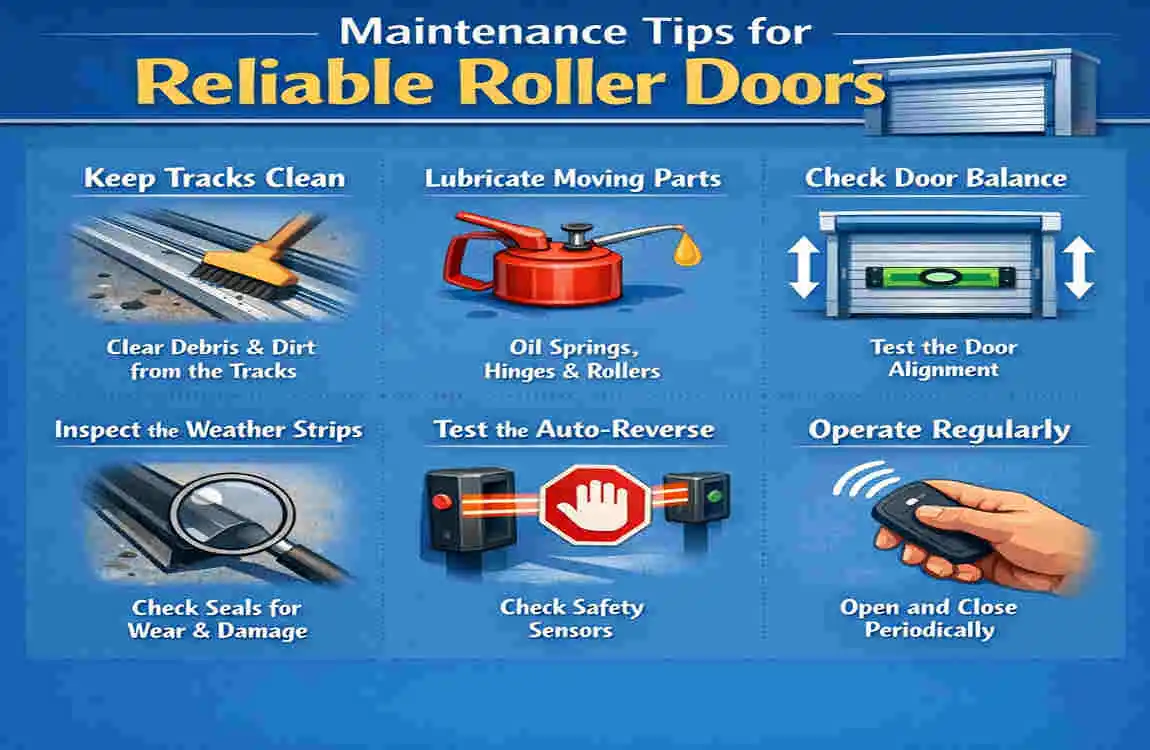
The best way to handle a manual emergency is to ensure your door is in top-tier shape before the power fails. By dedicating just twenty minutes a month to simple maintenance, you can extend your roller house garage door’s life and create power outage-proof habits.
Monthly Cleaning and Lubrication
Your roller door slides up and down on vertical metal tracks. Over time, dust, dirt, leaves, and cobwebs accumulate in these tracks. When mixed with humidity, this dirt turns into a thick, sticky sludge that strains your electric motor and makes manual lifting incredibly difficult.
Every single month, take a damp rag and wipe down the inside of the vertical tracks. Once clean, lightly spray a high-quality silicone-based garage door lubricant onto the tracks and the small wheels/rollers. Do not use heavy grease, as grease actually attracts more dirt! A well-lubricated door is a dream to open manually.
Annual Professional Spring Check
While you should not adjust the springs yourself, you should absolutely inspect them visually. Once a year, stand inside your garage with the door closed. Look at the springs above the door. Check for large gaps, heavy rust, or signs of intense wear.
A great way to test your spring tension is to perform a balance test. Disconnect the door using the manual release cord. Lift the door exactly halfway up the opening and let go. If the door stays perfectly in place, your springs are beautifully balanced. If it slams down or shoots up, call a technician for an adjustment.
Invest in a Backup Battery System
If you live in an area prone to frequent power grid failures, consider bypassing the manual hassle entirely. Many modern garage door openers feature backup battery options.
A backup battery unit typically sits right on top of your existing motor casing. It constantly charges while the power is on. When the grid fails, the battery instantly kicks in, allowing you to open and close the door automatically multiple times. These units are highly affordable, often costing around PKR 10,000, and they can completely eliminate the anxiety of coming home to a dark, locked house.
FAQs: Your Quick Emergency Answers
When homeowners face a sudden lockout, they often have immediate, pressing questions. Here are the clear answers to the most common queries regarding manual roller garage door release procedures.
Can all roller doors be opened manually? Yes. According to international building and safety codes, every motorized residential garage door must be equipped with a mechanical manual override system. It is a critical fire and safety requirement to prevent entrapment during emergencies.
What if my door has no release cord hanging down? If you cannot find a red cord dangling inside, look closely at the central track trolley. Sometimes, technicians zip-tie the cord up high so it does not snag on tall vehicles. If you are locked outside, check for the external key lock mechanism described earlier. Always consult your specific manufacturer’s owner manual for hidden release locations.
Is it safe to leave the door manually open during severe storms? Generally, you should avoid leaving the door open during extreme wind. A large, open garage door acts like a massive parachute or sail. High winds can enter the garage and create immense upward pressure, potentially blowing the roof off the structure! If you must open the door manually during a storm to get your car in, immediately pull the door back down and secure it to protect your home’s structural integrity.
How do I lock the door manually from the inside? When the motor is disconnected, the door is essentially unlocked and can be lifted by anyone from the outside. To secure your home overnight during a long power outage, look for the manual slide lock mechanism located on the side vertical track. Slide the metal bolt right through the slot in the vertical track to physically pin the door to the ground. Just remember to unlock it before reconnecting the motor!