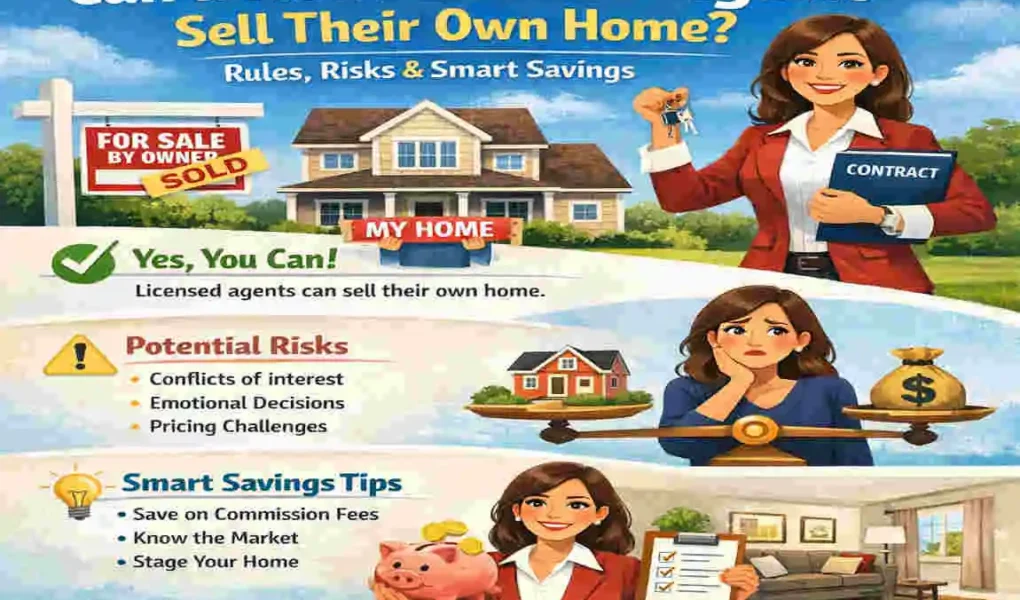
You are a highly successful real estate agent. You spend your days helping families buy their dream properties and assisting sellers in maximizing their profits. You know the local market like the back of your hand. Now, the time has come to sell your own property. Naturally, you might be thinking about listing it yourself to pocket that juicy commission instead of handing it over to another agent. It sounds like an absolute dream, right?
According to recent 2025 and early 2026 data from the National Association of Realtors (NAR), nearly 80% of standard For Sale By Owner (FSBO) attempts end in failure or in a sale for far less than market value. But you are not a standard seller. As a licensed professional, you have the insider knowledge to beat those odds. Doing it right could save tens of thousands of dollars.
Why Real Estate Agents Consider Selling Their Own Home
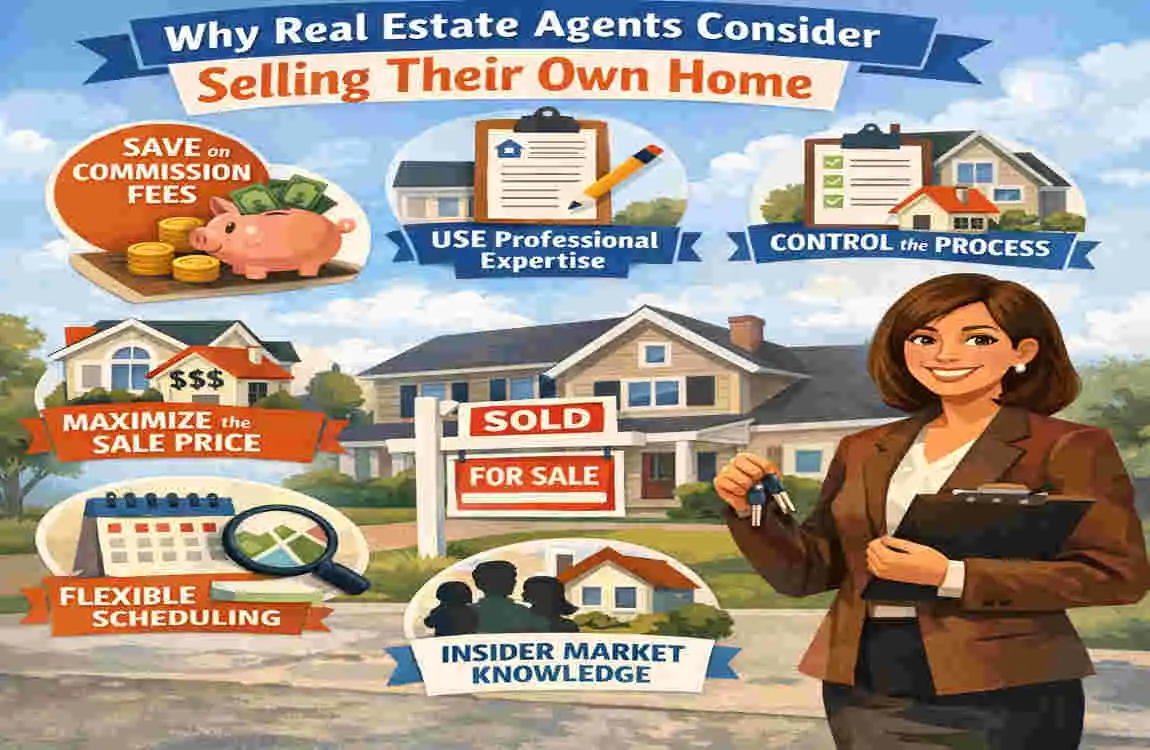
Let us start with the obvious question: why take on the stress of selling your own property when you already have a full-time job doing it for others? The reasons usually boil down to incredible market trends, massive financial savings, and the undeniable edge your professional expertise provides.
Riding the Wave of Market Trends
As we move through 2026, real estate values in many regions continue to appreciate. Recent data from major platforms like Zillow indicates that home prices are holding steady or rising in competitive markets. When property values are high, the traditional 5% to 6% agent commission becomes a massive chunk of money.
If you are living in a hot neighborhood, you know exactly how quickly homes are flying off the market. As an agent, you understand the local demand. You see the trends before the general public does. This insider perspective makes the idea of a self-sale all the more tempting. Why pay someone else to sell a house that you know will practically sell itself?
The Massive Financial Incentives
The biggest driving force behind an agent selling their own home is, without a doubt, the financial savings. Let us break down the numbers in simple terms.
Imagine your home is worth $500,000. In a traditional real estate transaction, the seller typically pays around 6% in total commission, split between the buyer’s agent and the listing agent. That is a whopping $30,000 leaving your pocket at the closing table.
If you step in as your own listing agent, you can immediately cut that cost in half. You might still offer a 3% commission to the buyer’s agent to attract other realtors to show your home, while keeping your 3% listing fee. That is $15,000 saved! If you find an unrepresented buyer, you can save the entire $30,000. For most people, that is life-changing money.
Your Unfair Expertise Edge
Let’s be honest: you have an unfair advantage compared to the average homeowner. A regular person trying to sell their home as an FSBO (For Sale By Owner) usually lacks the skills needed to price it correctly, stage it beautifully, and market it effectively.
You, on the other hand, do this for a living. You have access to the Multiple Listing Service (MLS). You know the best professional photographers in town. You know how to write a listing description that makes buyers swoon. You understand how to read a comparative market analysis (CMA) to price the home for a bidding war.
Here is a simple breakdown of how much you can save depending on the route you choose.
Commission Savings Calculator (Based on a $500,000 Home)
Selling Method, Total Commission Paid, Estimated Cost, Total Savings vs. Traditional
Traditional Agent (6%) 6% $30,000 $0
Agent-FSBO (Buyer has Agent) 3% $15,000 $15,000
Agent-FSBO (No Buyer Agent) 0% $0 (plus minor fees) $30,000
As you can see, the financial perks are hard to ignore. But before you plant that “For Sale” sign in your front yard, we need to talk about the rules.
Legal Rules: Can a Real Estate Agent Sell Their Own Home Without a License?
You may be wondering if it is legal for a licensed agent to represent themselves in a real estate transaction. The good news is that there is no federal law banning you from selling your own property. However, it is not the Wild West. You must follow strict guidelines to avoid jeopardizing your hard-earned license.
The Federal Baseline
On a national level, the federal government does not care if you sell your own house. However, you still have to comply with standard federal real estate laws. The most important one is the Real Estate Settlement Procedures Act (RESPA).
In simple, everyday language, RESPA prevents real estate professionals from giving or receiving kickbacks for referrals. If you are selling your own home, you cannot accept secret payouts from title companies, mortgage lenders, or home inspectors just because you are sending your own transaction their way. Everything must be above board and completely transparent.
State-Specific Regulations
This is where things get more complicated. Can a real estate agent sell their own home under state law? Yes, but every state has its own specific rulebook.
For example, in California, the laws heavily focus on total transparency. If you are an agent in California selling your own home, you must explicitly disclose your licensed status in writing to all potential buyers.
In Texas, the rules are slightly different. You can sell your own home, but your brokerage might require you to get formal written consent from your managing broker before you list the property. Some brokerages even demand a cut of the transaction, even if it is your personal home, to cover their liability insurance.
As a licensed agent pursuing a personal FSBO, you have certain rights. You can list the property, market it, and negotiate. But you must always wear two hats: the homeowner and the licensed professional. The law will hold you to the standard of a licensed professional, meaning you cannot plead ignorance if something goes wrong.
Dual Agency Pitfalls
If you are selling your own home, you need to understand the dangers of dual agency. Dual agency happens when one real estate agent represents both the buyer and the seller in the same transaction.
When you are the seller, representing yourself is natural. But what happens if an unrepresented buyer shows up at your open house and wants to make an offer? If you help them write the offer, you are stepping into dual agency territory.
This is incredibly risky. How can you negotiate the highest price for yourself while simultaneously trying to get the lowest price for your buyer? It is a massive conflict of interest. Because of this, some states have banned dual agency entirely. In states where it is legal, you absolutely must have the buyer sign clear, written consent forms acknowledging that you represent yourself first and foremost.
Strict Disclosure Requirements
The most critical rule of all is disclosure. You cannot hide the fact that you are a real estate agent. You might think, “Why does it matter what my job is?” It matters because the law views you as an expert. Buyers have the right to know they are negotiating against a professional.
According to the National Association of Realtors (NAR) Code of Ethics, specifically Article 4, Realtors must disclose their ownership interest in a property to the purchaser in writing. This must happen before any contracts are signed.
You need to put this disclosure everywhere. Put it in the MLS agent’s remarks. Put it in the public property description. Bold it in the purchase agreement. If you try to hide your licensed status to gain a negotiating advantage, you risk losing your license entirely. Transparency is your best friend here.
Key Risks of a Real Estate Agent Selling Their Own Home
Now that we have covered the rules, we need to talk about the dark side of self-selling. While the savings are fantastic, the risks are very real. When you mix your personal life with your professional life, things can quickly get messy. Let us break down the biggest dangers you need to watch out for.
Conflicts of Interest
As we touched on earlier, conflicts of interest are the most common trap for agents selling their personal homes. When it is your own money on the line, it is incredibly difficult to remain objective.
You might find yourself pushing back too hard during negotiations or becoming emotionally attached to the perceived value of your home. In recent 2024 and 2025 lawsuits, buyers have sued agent-sellers, claiming the agent used their superior market knowledge to take advantage of them. Even if you act with perfect integrity, the mere appearance of bias can invite legal trouble. Buyers are naturally suspicious when they know the seller is a real estate shark!
Liability Exposure
When you sell a home for a client, your brokerage’s Errors and Omissions (E&O) insurance usually covers you if a mistake is made. However, many E&O policies explicitly exclude coverage for an agent’s personal property transactions.
This means if you accidentally forget to disclose a leaky roof or a boundary dispute, and the buyer sues you after closing, you are completely on your own. You will have to pay for your own legal defense out of pocket.
Furthermore, you are still bound by strict Fair Housing laws. If a buyer feels they were discriminated against during your self-sale, they can file a complaint against your real estate license, which could threaten your entire livelihood.
Market and Transaction Risks
You might assume that because you are an agent, your home will sell instantly. Surprisingly, that is not always the case. According to statistics from platforms like Redfin, homes sold by agents as personal FSBOs sometimes take up to 20% longer to sell than standard listings.
Why does this happen? Often, agents overprice their own homes. Because of their emotional attachment, they see the value in every little upgrade they make. Additionally, when you are busy managing your clients’ transactions, your personal home sale might take a back seat. You might miss buyer calls or fail to follow up on financing hurdles, causing the deal to fall through.
Reputation Damage
In the real estate business, your reputation is everything. If a personal home sale goes sour, the fallout can damage your career.
Imagine a buyer feels slighted during negotiations and decides to leave a scathing one-star review on your Yelp or Google Business profile. They might complain to your broker or post negatively about you in local community Facebook groups. Even if you were in the right, this erosion of client trust can cost you future business that far exceeds the commission you saved.
5 Real-World Risk Examples and Outcomes
To make this crystal clear, let’s look at a few examples of what can go wrong when an agent sells their own home:
- The Undisclosed Defect: An agent forgot to mention minor basement flooding. The buyer found out, sued for fraud, and the agent had to pay $15,000 in damages out of pocket because their E&O insurance did not cover personal sales.
- The Dual Agency Disaster: An agent helped an unrepresented buyer write an offer on the agent’s own home. The buyer later claimed they were pressured into a high price. The state real estate commission heavily fined the agent.
- The Overpricing Trap: An agent listed their home 15% above market value out of emotional attachment. It sat on the market for six months, becoming a “stale” listing, and eventually sold for less than a fair starting price.
- The Unintentional Fair Housing Violation: An agent casually told a prospective buyer their home was great for “young families.” An older couple overheard the incident, felt discriminated against, and filed a formal complaint.
- The Brokerage Backlash: An agent sold their home without notifying their managing broker. The broker found out, felt exposed to liability, and fired the agent from the firm.
Pro Tip: Always consult with a qualified real estate attorney before listing your own home to ensure you are fully protected!
Smart Strategies to Sell Your Home as an Agent and Maximize Savings
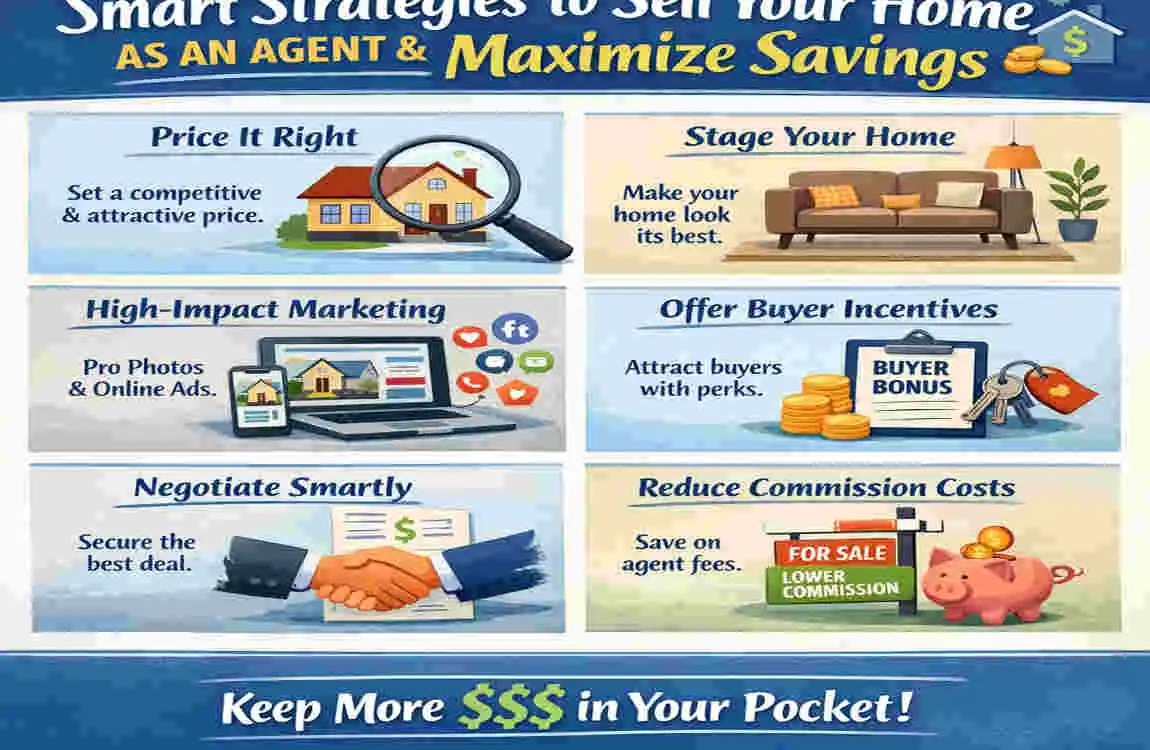
Okay, we have scared you with the risks. But do not worry! If you follow the rules and play it smart, you can absolutely succeed. Here are the best strategies to sell your home as an agent while maximizing your savings and minimizing your stress.
Prep Like a Pro
The first step is to treat your own home exactly like you would treat your most important client’s home. You must remove your emotions from the equation.
Start by pricing the home correctly. Do not rely on your gut feeling. Run a detailed Comparative Market Analysis (CMA) using professional tools like CompSpy or your local MLS data. Look at the hard numbers. What are similar homes actually selling for in your neighborhood today?
Next, focus on staging. As an agent, you know exactly what modern buyers want to see. Declutter your personal items, take down family photos, and apply a fresh coat of neutral paint. If your home is vacant, consider using virtual staging software for your online listing photos. It is cheaper than renting furniture and looks incredibly realistic to online shoppers.
Marketing Mastery
You know that sticking a sign in the yard is not enough. You need eyes on your property. Your biggest advantage is your access to the MLS. Depending on your broker’s rules, you can usually list your home on the MLS, which automatically syndicates it to massive sites like Zillow, Realtor.com, and Redfin.
But do not stop there. Lean into your professional network. Share your listing with other agents in your office and pitch it at weekly sales meetings.
If you are working in vibrant, community-focused markets—for example, if you are a local agent in bustling areas like Lahore or the wider Punjab region where word-of-mouth is highly powerful—social media is your secret weapon. Use WhatsApp groups, targeted Facebook ads, and Instagram Reels to showcase your property’s best features. Localized social media hacks can bring in dozens of unrepresented buyers.
Negotiation and Closing Tips
When the offers start rolling in, take a deep breath. It is easy to feel offended by a lowball offer when it is your own home. Remember, it is just business.
Review every offer logically. Look beyond the purchase price and examine the financing contingencies, inspection timelines, and closing dates. When choosing a title company or escrow service, select a neutral, highly reputable third party to handle the paperwork. This provides an extra layer of transparency and proves to the buyer that the transaction is legitimate.
Also, look into specific real estate strategies, such as a 1031 exchange, if the property you are selling is an investment home rather than your primary residence. A 1031 exchange allows you to roll the profits from the sale directly into a new investment property, deferring your capital gains taxes entirely!
The Hybrid Approach
If you are feeling overwhelmed by the idea of doing everything yourself while juggling your regular clients, consider a hybrid approach.
You can partner with another agent in your office or use a discount or flat-fee brokerage. You handle marketing and showings, but the flat-fee broker handles the legal paperwork and MLS listing. Or, you can hire a colleague to represent you for a reduced, flat fee. This gives you a neutral buffer during negotiations and provides E&O insurance coverage, all while still saving you a massive amount of money.
Pros and Cons: Full FSBO vs. Discount Broker vs. Self-Sale (Agent)
Selling Strategy: The Pros: The Cons
Traditional FSBO (Non-Agent) Saves all commission. Total control. High failure rate. Low market exposure.
Discount / Flat-Fee Broker MLS access for a low fee. Takes care of legal paperwork. Still requires you to do showings—less hands-on help.
Agent Self-Sale (You) Saves up to 6%. Full MLS access. High market expertise. Emotional stress. High liability. E&O insurance gaps.
Tax Implications and Financial Perks for Agents Selling Personally
When you successfully sell your home, the savings are incredible. But before you start spending that extra cash, we need to talk about taxes. The IRS has specific rules for home sales, and as an agent, you need to understand how they impact your bottom line.
Capital Gains Exclusions
The best news for any homeowner—including real estate agents—is the Section 121 exclusion. Under the IRS rules for 2026, if you have lived in the home as your primary residence for at least two of the last five years, you can exclude a massive amount of profit from your capital gains taxes.
If you are single, you can exclude up to $250,000 of pure profit from the sale. If you are married and filing jointly, that number jumps to $500,000! This means that if you bought your house for $300,000 and sold it for $600,000, the entire $300,000 profit is tax-free.
Deductible Expenses
Even if your profits exceed the exclusion limit, or if the home was an investment property, you can still lower your tax bill. As an agent handling your own sale, keep a meticulous track of your expenses.
You can deduct the costs associated with preparing and selling the home from your final capital gains. Some common deductible expenses include:
- Professional photography and drone footage.
- Home staging furniture rentals.
- Deep cleaning and landscaping services.
- Title fees, escrow fees, and transfer taxes.
- Any commission you paid to a buyer’s agent.
Busting Commission Recapture Myths
There is a common myth in the real estate world that if an agent saves the 3% listing commission, the IRS will somehow view that “saved” money as taxable income. This is completely false.
When you waive your own commission, you are simply reducing the overall sales price or increasing your net proceeds. You are not receiving a 1099 tax form for a commission payout from your broker, so it is not taxed as ordinary income. The savings stay firmly in your equity column!
Real-Life Case Studies: Agents Who Sold Their Own Homes
Sometimes, the best way to understand a complex topic is to look at real-world examples. Let’s look at two totally different outcomes from agents who decided to sell their own homes.
The Success Story: Saving $25K in a Hot Market
Meet Sarah, an experienced real estate agent operating in a highly competitive suburban market. When Sarah decided to sell her upgraded four-bedroom home, she knew exactly what to do.
She got written permission from her broker, disclosed her license status on the very first line of the MLS remarks, and priced the home slightly below market value to trigger a bidding war. She offered a generous 3% to buyer’s agents to ensure high foot traffic. Within three days, she received multiple offers. She chose an offer from a buyer represented by another strong agent, completely avoiding dual agency. Sarah closed in 30 days and kept her $25,000 listing commission, which she used to fund her new kitchen renovation. It was a flawless victory!
The Failure Story: A Lawsuit Over Undisclosed Defects
Now, let’s look at David, a broker who rushed his personal home sale. David’s property had an aging HVAC system that rattled loudly. Instead of fixing it or disclosing it, he listed the home “As-Is” and hoped for the best.
He found an unrepresented buyer and guided them through the paperwork, inadvertently stepping into an illegal dual-agency role. A week after closing, the HVAC completely failed. The furious buyer discovered David was a licensed broker and immediately sued him for deceptive practices and failing to disclose known material defects. Because David’s E&O insurance denied coverage for personal property, he spent over $15,000 in attorney fees alone, wiping out all the commission he thought he saved.
Lessons Learned from the Trenches
- Transparency is mandatory: Always over-disclose any flaws in your personal property.
- Never represent the buyer: Insist that unrepresented buyers hire their own agent or a real estate attorney.
- Keep your broker in the loop: Never list your home without your managing broker’s blessing.
- Treat yourself like a client: price it right, stage it beautifully, and don’t let your emotions ruin a good deal.
FAQ Section
Can a licensed real estate agent sell their own home as FSBO? Yes, a licensed real estate agent can absolutely sell their own home as a For Sale By Owner (FSBO). However, the rules are much stricter for you than for an average citizen. Even though you are acting as the homeowner, the law still views you as a licensed professional. This means you must adhere to your state’s real estate commission guidelines, follow all fair housing laws, and rigorously document every step of the transaction to protect your license.
What are the dual agency rules for agents selling personally? Dual agency occurs when you represent both the seller (yourself) and the buyer. When selling your personal home, acting as a dual agent is highly risky and, in many states, completely illegal due to the massive conflict of interest. How can you negotiate fairly for a buyer when you want the highest price for your own house? If your state allows it, you must obtain crystal-clear, written, informed consent from the buyer acknowledging that you are primarily representing your own financial interests.
How much can an agent save by selling their own property? The savings can be monumental. Typically, a seller pays around 5% to 6% of the home’s total sale price in real estate commissions. If you sell your own home, you can eliminate the listing agent’s portion of that fee (usually 2.5% to 3%). On a $500,000 property, skipping the 3% listing fee saves you $15,000 instantly. If you find a buyer who doesn’t use an agent, you could save the entire $30,000!
Are there penalties for non-disclosure? Yes, the penalties for failing to disclose your licensed status are incredibly severe. Both state laws and the National Association of Realtors (NAR) Code of Ethics mandate that you must disclose your status as a real estate agent in writing before any contracts are signed. If you hide your profession to gain an edge, a buyer can sue you for fraud. Furthermore, your state’s real estate commission can heavily fine you, suspend your license, or revoke it permanently.