You’ve just moved into a bustling urban apartment in Lahore. You want your home to feel stylish, be easy to clean, and—importantly—allow quick changes if your tastes shift. Maybe you’re a renter, or maybe you love updating your space. In today’s world, where convenience and flexibility matter as much as beauty and durability, finding the right flooring can feel like searching for treasure.
That’s where magnetic flooring enters the conversation. This modern innovation is changing the way people think about floors. But what exactly is it? In simple terms, magnetic flooring uses special tiles or planks embedded with magnets. These click securely onto a metallic underlayer—no glue, no nails, and no mess. When you want a new look, you lift the tiles and replace them.
What Is Magnetic Flooring and How Does It Work?
The Technology Behind Magnetic Flooring
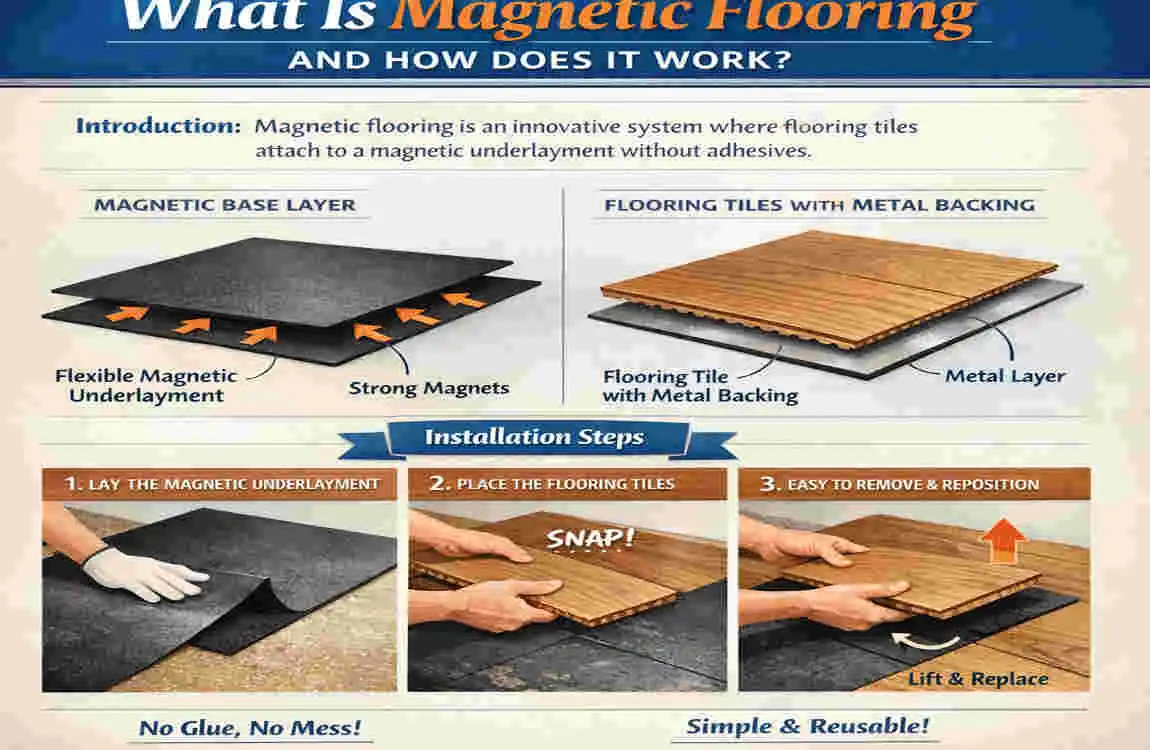
At its core, magnetic flooring is an innovative, modular system designed for quick, clean, and flexible installation. Each tile or plank has a layer of magnets embedded within it. When placed over a metallic subfloor (or a special magnetic underlay), the tiles snap into place and stay put—until you decide to move them.
These tiles are often made from flexible PVC or vinyl. This material makes them tough, waterproof, and easy to clean. The magic lies in the magnetic core, which forms a strong bond with the underlayer while still allowing easy removal and replacement.
How does it work?
- The subfloor (your base) needs to be metallic, or a magnetic underlay needs to be installed.
- Tiles are laid down, and the magnetic force holds them snugly in place.
- No adhesives or nails are required.
Types and Variations
Magnetic flooring isn’t one-size-fits-all. Here’s a quick look at the main types:
- DIY Peel-and-Stick Tiles: Designed for easy home installation, these are perfect for renters or anyone wanting a quick décor change.
- Commercial-Grade Tiles: Thicker, more durable, and often used in offices or shops.
- Design Options: From realistic wood and stone looks to modern geometric patterns, there’s a style for every taste.
You’ll find options that suit minimalist homes, bold contemporary styles, or even classic interiors.
Magnetic Flooring vs. Traditional Vinyl/Laminate: Comparison Table
Let’s break down how magnetic flooring stacks up against the more familiar vinyl and laminate choices:
Feature Magnetic Flooring Traditional Vinyl Laminate
Average Cost High ($5-12/sq ft) Low ($2-5/sq ft) Low-Mid ($2-6/sq ft)
Install Time 1-2 days DIY 2-3 days, pro or DIY 2-3 days, pro or DIY
Durability Moderate-High Moderate Moderate
Removability Excellent (Reusable) Low (Usually Damaged) Low (Usually Damaged)
Water Resistance High High Moderate
Customization High (Modular) Moderate Moderate
Pros of Magnetic Flooring: Why It Might Be a Good Idea for Your Home
Magnetic flooring is gaining fans for a reason. Let’s explore the top benefits in detail—and see why it’s catching on in modern homes across Lahore and beyond.
Easy DIY Installation and Removal
Forget about messy glue or noisy hammering. Magnetic tiles snap into place. If you’re renting, you can lay down flooring, enjoy it for a year, then take it with you when you move. Want a fresh look? Just swap out the tiles—no professional help needed.
Cost-Effective in the Long Run
While the upfront cost is higher, you save money in the long term. Tiles are reusable—move them from room to room, or even from one home to another. Plus, you avoid the cost of adhesives, special tools, or contractor fees.
Customizable Designs for Modern Aesthetics
Do you love changing your style with the seasons? With magnetic flooring, you can. Bold geometric tiles for spring, wood-look planks for winter—the options are nearly endless. This flexibility is perfect for homes in Lahore, where blending traditional and modern is the norm.
Water-Resistant and Hypoallergenic
These tiles are often made from PVC or vinyl, making them resistant to spills and moisture. In Pakistan’s humid climate, that’s a huge plus. Plus, no glued seams means less chance of dust or mold gathering—great for allergy sufferers.
Quick, Stress-Free Repairs
Dropped something heavy? No problem. Just lift the damaged tile and pop in a new one—no need to replace the whole floor or call a repair service.
Eco-Friendly and Recyclable
Many brands use recycled materials and make tiles fully recyclable at the end of their life. This reduces landfill waste, especially compared to glued-down flooring, which is rarely recyclable.
Noise Reduction and Comfort
The layered design of magnetic flooring reduces footfall noise—a big win in multi-story apartments or busy family homes. Plus, the underlay adds a slight cushion, making it comfortable underfoot.
Perfect for Renters and Temporary Spaces
If you’re living in a rental or planning to move in the near future, magnetic flooring is a smart investment. It won’t damage the original floor, and it moves with you.
Real-Home Example: Lahore Apartment Makeover
Consider a young couple in Gulberg, Lahore, who wanted to upgrade their rental apartment. With magnetic tiles, they transformed their drab floors into a stylish, wood-look surface in just a weekend. When their lease ended, they took the tiles to their new home—saving money and reducing waste.
Magnetic Flooring Pros for Busy Modern Families
To sum up, here’s a quick list of magnetic flooring advantages for today’s families:
- Fast, mess-free updates
- Budget-friendly over time
- Safe, non-toxic materials
- Durable against everyday spills and stains
- Simple repairs and replacements
- Modern, customizable styles
- Noise reduction for peaceful living
Cons of Magnetic Flooring: Potential Drawbacks to Consider
Magnetic flooring isn’t perfect. Let’s look at the challenges—and some ways you can address them.
Needs a Magnetic or Metallic Subfloor
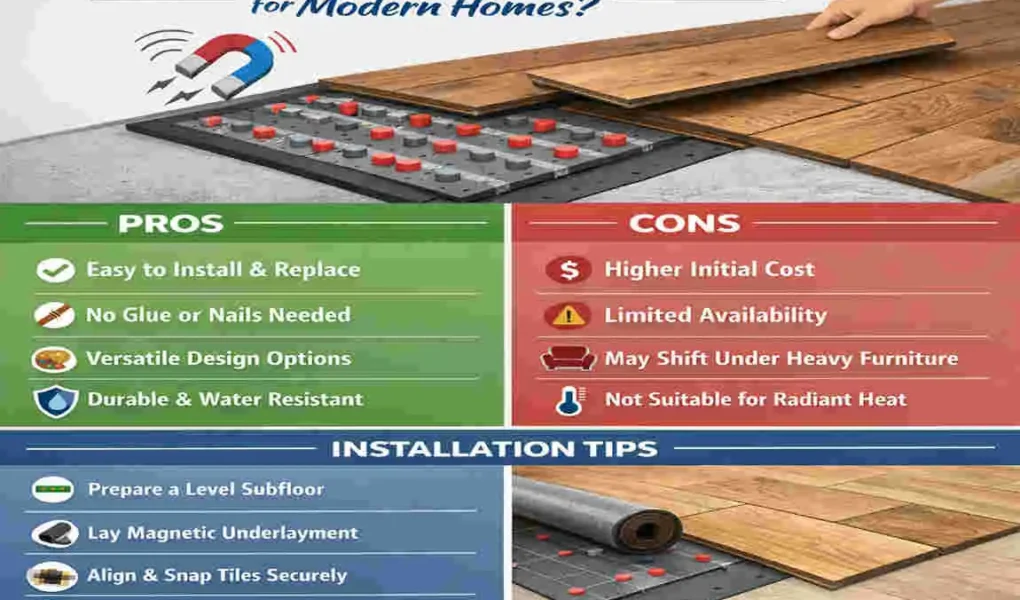
The biggest catch: Magnetic flooring won’t stick to just any surface. You’ll need a ferrous metal subfloor or a special magnetic underlay. If your current floor isn’t suitable, installing an underlay adds extra cost and effort.
Higher Upfront Price Tag
At $5-12 per square foot, magnetic flooring costs more than standard vinyl or laminate. If you’re covering a large area, the price can add up quickly.
Durability in High-Traffic Areas
While magnetic tiles are tough, they may wear out more quickly in very busy areas, such as entryways or commercial lobbies. Over time, you might notice fading or surface scratches.
Magnet Strength Can Vary
Not all brands are equal. Some tiles may shift under heavy furniture or if the magnetism isn’t strong enough.
Not for Uneven Floors or Extreme Conditions
If your subfloor is uneven or if you live in an area with extreme temperature swings, you might experience tile instability.
Availability and Import Issues in Pakistan
Magnetic flooring is a newer concept in Pakistan, so options may be limited. Most products are imported, which can mean longer lead times and higher costs.
Limited Styles Compared to Traditional Flooring
While design options are growing, the range isn’t as wide as what you’ll find with classic vinyl, laminate, or hardwood.
Not Ideal for Permanent Installations
If you’re renovating a forever home and want a “set it and forget it” floor, magnetic might not be your first choice. It’s best for those who value flexibility.
Potential Magnetic Interference
Some people worry about magnets affecting electronics, but in practice, it’s rare. Still, it’s worth considering if you have lots of sensitive tech.
Balanced View: When Magnetic Flooring Is Not a Good Idea
Magnetic flooring probably isn’t your best bet if:
- You want a permanent, ultra-durable floor for a high-traffic family home.
- Your subfloor is uneven or not compatible.
- You’re on a tight renovation budget.
Pros & Cons Comparison Chart
Feature: Magnetic Flooring, LVT (Luxury Vinyl Tile), Hardwood
Installation Easy DIY Pro/DIY Professional
Removability Excellent Poor Very Poor
Upfront Cost High Moderate High
Durability Moderate-High High Very High
Style Options Moderate Wide Wide
Water Resistance High High Low-Moderate
Eco-Friendliness High Moderate Variable
Is Magnetic Flooring a Good Idea for Modern Homes? Key Factors to Evaluate
You’ve seen the pros and cons, but is magnetic flooring a good idea for your home? Let’s break down the decision with a simple quiz and scenario analysis.
Decision Framework: Quiz Yourself!
Ask yourself these questions:
- Do you rent your home?
- Yes → Magnetic flooring is a great idea!
- Do you love changing your interior style?
- Yes → You’ll love the flexibility.
- Do you have heavy kids or pets?
- Yes → Proceed with caution; consider high-durability tiles.
- Is your subfloor flat and compatible?
- Yes → Installation will be a breeze.
- Are you on a strict budget?
- No → Magnetic flooring could be expensive upfront.
- Is your renovation permanent?
- Yes → You might prefer traditional flooring.
Home-Type Breakdown
Apartments and Rentals
Magnetic flooring is ideal for:
- Renters who want to avoid damaging original floors
- People who move often
- Those who want a fast, no-mess update
Kitchens and Bathrooms
Water-resistance is a major plus. These tiles handle spills and moisture well, making them excellent for kitchens, bathrooms, or even laundry areas.
Living Rooms
Magnetic flooring shines with style and comfort. Just check durability if your living room sees lots of foot traffic or heavy furniture.
Cost Analysis Table (Per Square Meter)
Item Magnetic Flooring Traditional Vinyl Laminate
Materials $54-130 $22-54 $22-65
Tools $15-30 $12-25 $12-25
Labor $0 (DIY) $0-40 $0-40
Time Saved 1-2 days 2-3 days 2-3 days
Ultimately, is magnetic flooring a good idea?
It depends on your needs. If flexibility, style, and easy updates matter, magnetic flooring is a smart solution for modern homes—especially in busy cities like Lahore.
Magnetic Flooring Installation Tips: Step-by-Step Guide
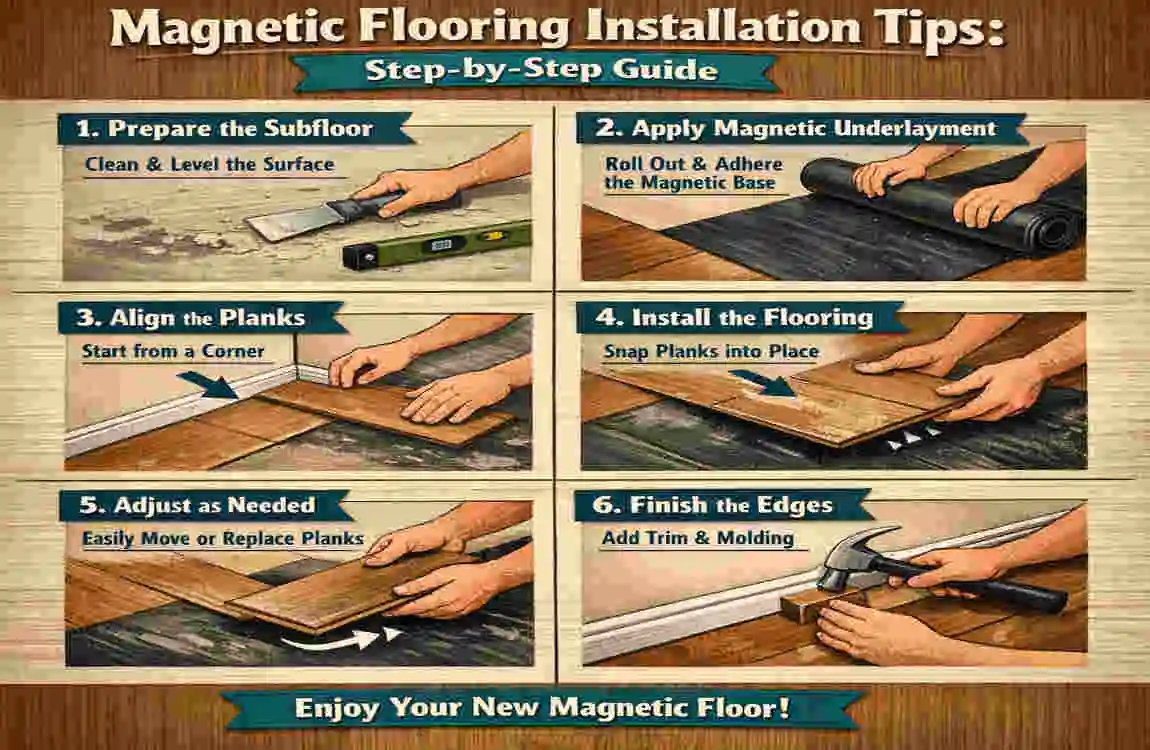
If you love a hands-on project, magnetic flooring is a dream for DIYers. Here’s how to get it right.
Prep Checklist: What You Need
- Utility knife
- Level
- Magnetic underlay (if needed)
- Measuring tape
- Chalk line
- Clean mop or vacuum
Step-By-Step Installation
Assess Your Subfloor
Make sure it’s flat, clean, and either metallic or ready for a magnetic underlay. Uneven subfloors will cause problems.
Clean and Prime
Sweep, mop, and dry the surface. Any dirt or moisture can affect the magnetic grip.
Lay the Underlay
If your subfloor isn’t metal, roll out the magnetic underlay. Smooth out any bubbles or wrinkles.
Start from the Center
Use your chalk line to mark the center of the room. This ensures even, symmetrical tile placement.
Snap Tiles into Place
Place your first tile at the center point. Work outward, letting each tile’s magnets “click” them into position.
Cut Edges for Perimeters
Use a utility knife to trim tiles for a snug fit around walls or corners.
Test Stability; Seal Seams (Optional)
Walk over the floor and check for shifting. If needed, use a seam sealer for extra waterproofing.
Common Mistakes to Avoid
- Ignoring expansion gaps: Leave a small gap at the edges to allow for tile movement.
- Not leveling the subfloor: Bumps can cause tiles to rock or shift.
- Skipping the underlay: If your subfloor isn’t compatible, the tiles won’t stick.
Time & Cost Estimate
- Time: 1-2 days for a 100 sqm room (for two people working together)
- Cost: Tools ($20-40), underlay (varies), tiles ($5-12 per sq ft)
Cost Breakdown and Best Brands for Magnetic Flooring
Pricing Tiers
- Budget: $3-6 per sq ft (basic patterns, thinner tiles)
- Premium: $8+ per sq ft (high-end designs, thicker wear layers)
Top Brands
- International: Interface, Tarkett, MagneBuild
- Local (Pakistan): Master Tiles (check for magnetic options), or specialized importers in Lahore
Where to Buy
- Online: Platforms like Daraz.pk often have flooring options; check for magnetic-specific listings.
- In-Store: Major flooring retailers in Lahore—bring a sample to check magnet compatibility.
- Import Tips: Ask about lead times and warranties when ordering from abroad.
FAQs: Quick Answers on Magnetic Flooring
Is magnetic flooring a good idea for beginners?
Absolutely! The installation is much easier than most traditional flooring options. If you can measure, cut, and place tiles, you can handle magnetic flooring.
How durable is magnetic flooring?
Moderately durable. It handles daily wear well and is water-resistant, but heavy, constant traffic can speed up wear. Thicker, commercial-grade tiles last longer.
Can I install magnetic flooring over existing tiles?
Yes, if you use a compatible magnetic underlay. The existing floor must be flat and clean for the best results.
What’s the warranty on magnetic flooring?
Most brands offer a 10-20-year warranty on wear and manufacturing defects. Always check with your supplier.
Is magnetic flooring safe around electronics?
Yes. The magnetic field is weak and designed not to interfere with most household devices. But avoid placing strong magnets near hard drives or sensitive devices.