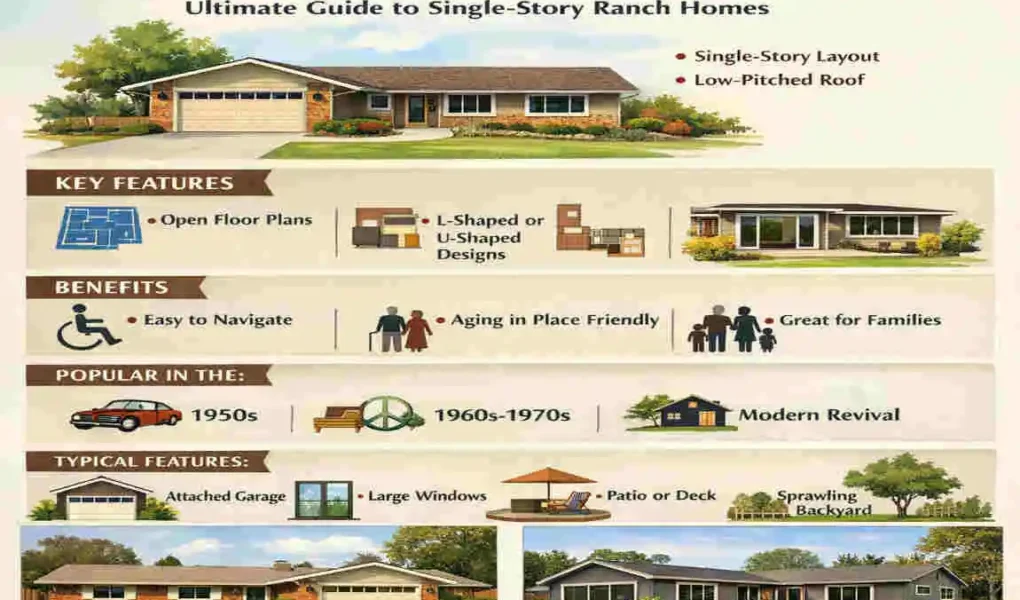
These homes became hugely popular after World War II, when families sought practical, comfortable, and affordable spaces that fit a rapidly growing suburban lifestyle. Today, they are making a fresh comeback for very different reasons. People want homes that support aging in place, easy movement, open living, and a stronger connection between indoor and outdoor spaces. In other words, what a rambler house is no longer just a historical question—it is a very modern one, too.
| Feature | Description |
|---|---|
| Stories | Single-level (no stairs) |
| Layout | Open-concept; L, U, or rectangular |
| Roof | Low-pitched with wide eaves |
| Foundation | Concrete slab |
| Windows/Doors | Large picture windows, sliding doors |
| Origins | California, 1930s–1950s suburban boom |
History of Rambler Houses
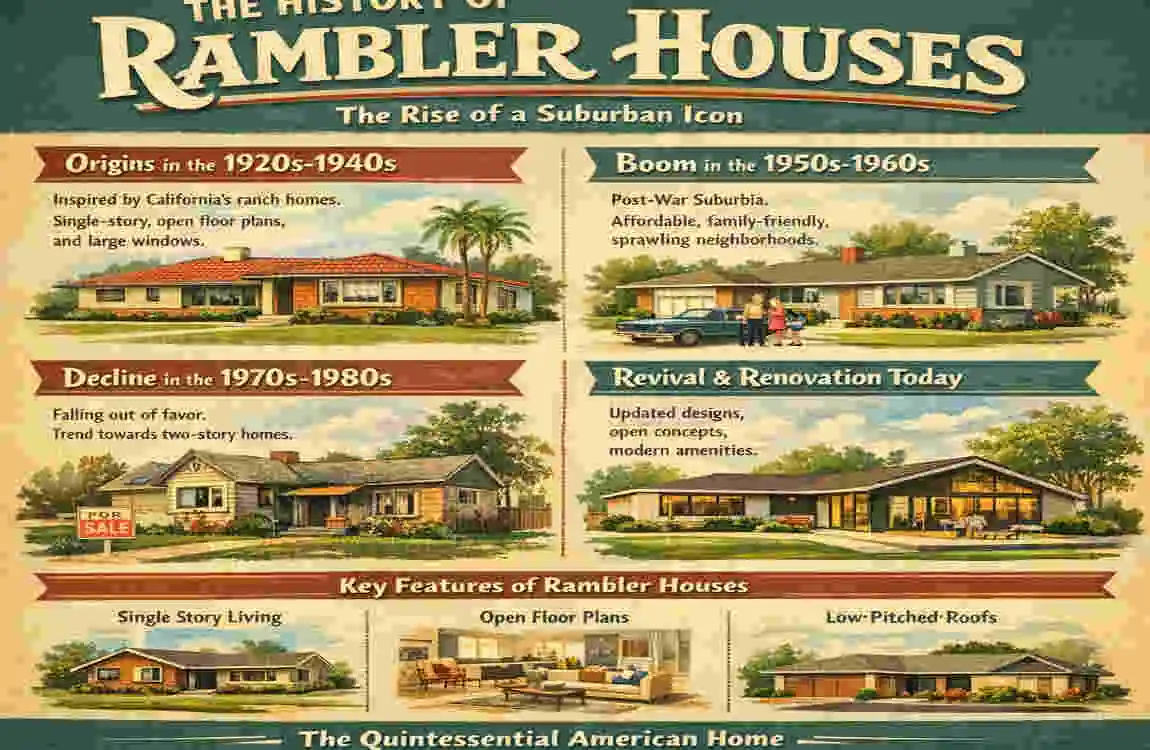
Rambler houses have a long and interesting story, and that story helps explain why they still feel so appealing today. Their roots go back to California in the 1920s, where builders and architects began experimenting with low, broad homes that felt relaxed and practical. These early designs were influenced by Spanish Colonial architecture and the wide, open ranch landscapes of the American West. The goal was simple: create a house that felt natural, casual, and easy to live in.
The rambler style truly took off after World War II. During the 1940s through the 1970s, suburban neighborhoods expanded quickly, and families needed homes that could be built efficiently without losing comfort. Ramblers fit that need perfectly. Their single-story layout made them easy to construct, easy to move through, and comfortable for everyday family life. The wide, low shape of the house also gave it a peaceful feel, as if it were stretching across the land rather than sitting on top of it.
This is part of what gave the rambler its name. The house seemed to “ramble” across the lot with a long, low profile. That image matched the open spirit of the American West, where space felt wide and life felt less cramped. People loved that feeling. At a time when many families were building their first suburban homes, ramblers represented a kind of practical freedom.
By the 1950s and 1960s, rambler homes had become a common sight across the United States. They moved beyond basic farmhouse inspiration and started blending in more modern ideas. Open floor plans became more common. Living rooms connected more naturally to kitchens and dining areas. Large windows brought in more light. Homes were no longer just about shelter—they were about lifestyle.
Ramblers also fit the postwar dream of family life. They felt approachable, not flashy. They worked well for children, older adults, and people who wanted convenience without sacrificing style. In many ways, the rambler became one of the defining homes of suburban America.
Evolution into Modern Ramblers
Like many classic home styles, the rambler has not stayed frozen in time. In the 2020s, it has come back with fresh updates that make it feel both nostalgic and modern. Today’s ramblers often include energy-efficient windows, better insulation, smart home features, and sustainable materials. That means the style now serves both beauty and performance.
Modern buyers still love the single-level layout, but they also want stronger energy savings, improved lighting, and smoother indoor-outdoor flow. Designers have responded with larger sliding doors, covered patios, cleaner exterior lines, and more flexible spaces inside. The result is a home that keeps its classic low profile while meeting today’s expectations.
If you want a deeper look at how this style evolved, a Ranch House History post can also fit naturally into your reading journey.
Key Features of Rambler Houses
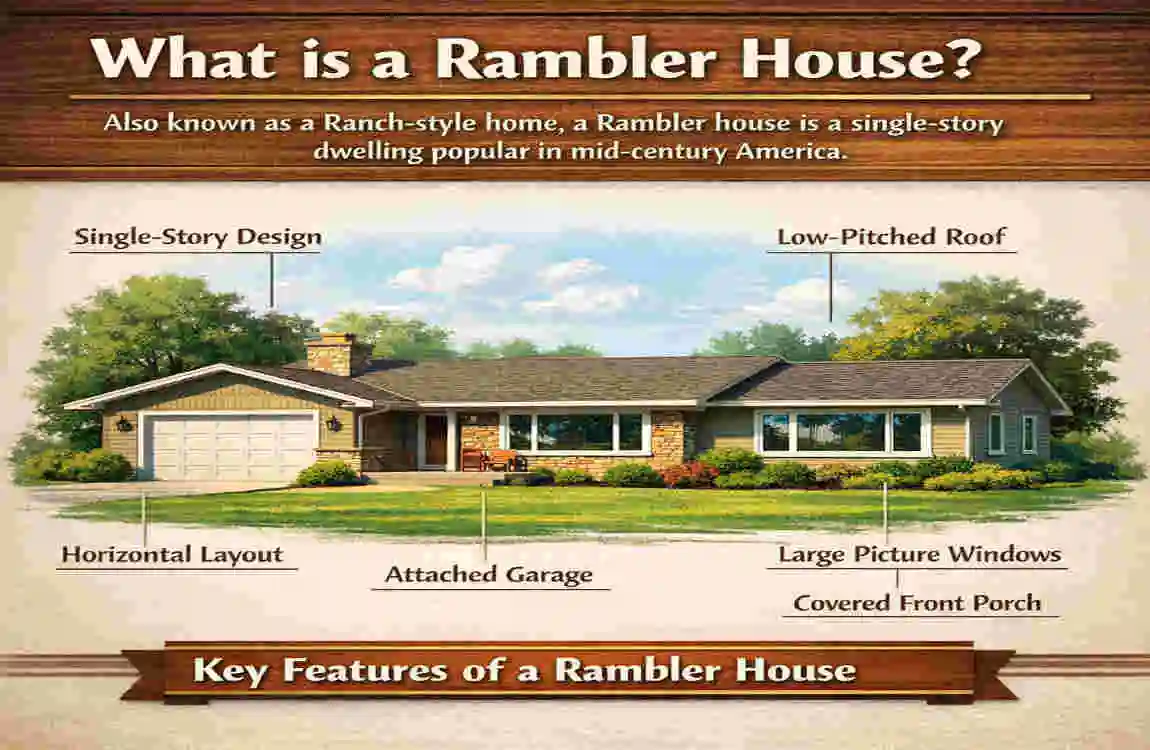
Rambler houses are easy to recognize once you know what to look for. Their design usually follows a simple formula: one level, a long shape, and a relaxed layout. But while the style may seem simple on the surface, a lot is going on behind it.
The defining feature, of course, is the single-story design. Everything sits on one level, which makes movement easy and direct. You do not need to climb stairs to get from the bedroom to the kitchen or from the living room to the backyard. That simple idea is one of the biggest reasons people still love rambler homes.
Another major feature is the low, horizontal profile. Instead of reaching upward, a rambler spreads outward. This creates a grounded look that feels calm and connected to the land. Many rambler homes are rectangular or L-shaped, though some use U-shaped layouts as well. The overall effect is open and unfussy.
Rambler homes also often have ground-level entries, which makes them feel welcoming and easy to access. You usually step directly into the main living area or a small entry foyer rather than climbing stairs. This is one reason ramblers are so popular with older adults, families with young children, and anyone who values ease of use.
Large windows are another signature feature. These windows let in plenty of daylight and help connect the home to the outdoors. In many ramblers, you will also see picture windows in the front or back of the house. These windows add curb appeal while making the interior feel brighter and more spacious.
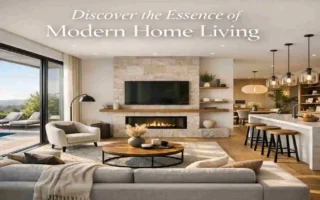
Inside, the layout is often more open than in older home styles. Living, dining, and kitchen spaces may flow into one another, creating a more social feel. This is especially helpful if you enjoy entertaining or want a home that feels less boxed in.
Many rambler houses also include attached garages, often with a side-loading design. This keeps the front of the house clean and simple while making the garage easy to reach. Rooflines are usually gable- or hip-style, both of which work well with the home’s horizontal shape.
Exterior materials are straightforward and durable. You will often see brick, wood, stucco, or a mix of these materials. The look is usually minimal rather than ornate. That restraint is part of the rambler’s charm. It does not try too hard. It just feels balanced and comfortable.
Inside, another common detail is the split-bedroom layout. In this setup, the primary bedroom sits apart from the other bedrooms, creating privacy. This design is especially useful for families who want a little breathing room between sleeping areas and shared spaces.
Signature Design Elements
A few design touches help modern ramblers stand out even more:
- Expansive sliding doors that open to patios or backyards
- Vaulted ceilings in updated versions to create more visual height
- Wide hallways that make the home easier to move through
These features are not just attractive. They also make the home feel more usable. A rambler is often at its best when the design feels calm, practical, and light-filled.
If you are exploring plans or layouts, you may also want to compare different single-story options from architectural plan collections before deciding which best fits your needs.
Types of Rambler House Styles
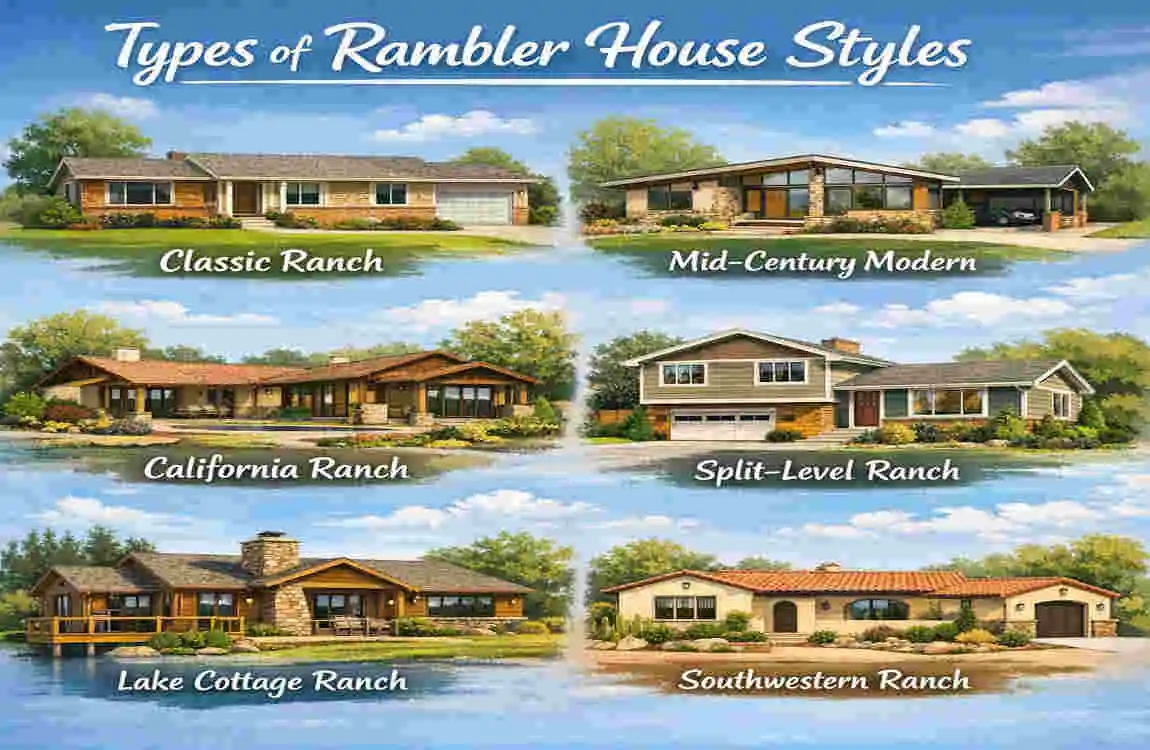
Not every rambler house looks the same. Over the years, the style has branched into several versions, each with its own personality. Some lean traditional and cozy, while others feel sleek and modern. Knowing the differences can help you decide what kind of rambler suits your lifestyle.
Classic Rambler
The classic rambler is the version most people picture when they hear the word. These homes were especially common from the 1940s through the 1970s. They often feature brick facades, simple shapes, gable roofs, and compact open plans. The look is straightforward, warm, and practical.
Classic ramblers usually focus on function first. They may not have dramatic design details, but they offer a reliable and comfortable living experience. If you like a retro feel and want a home that is easy to update over time, this style is a strong fit.
California Rambler
The California rambler brings in a more relaxed, sun-soaked personality. This version often includes stucco walls, terracotta roof tiles, courtyards, and Spanish-inspired details. It feels especially at home in warm climates because it emphasizes outdoor living.
This style often blends beautifully with gardens, patios, and open yard spaces. It feels casual, breezy, and more decorative than the classic version. If you want a rambler that feels especially tied to the outdoors, the California version is worth considering.
Modern Rambler
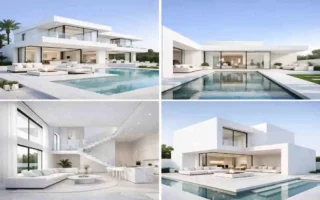
The modern rambler is where old and new meet. These homes keep the single-story layout and low profile. Still, they often add flat roofs, large glass walls, smart technology, and eco-friendly materials. The result is cleaner and more contemporary.
Modern ramblers are a great choice for buyers who love the basic shape of the classic ranch but want a fresher look. They often feel more minimal and architectural, emphasizing light, openness, and efficiency.
Split-Level Rambler
The split-level rambler takes the basic idea and adds a slight twist. It keeps the ranch-style foundation but includes a partial second level or staggered floor arrangement. This can be useful when a lot has a slope or when the homeowner needs more separation between spaces.
You may see a split-level rambler with a garage tucked below the main living floor or with a few steps leading to a bedroom area. It is still connected to the rambler family, but it adds a bit more depth and flexibility.
Rambler Style Comparison Table
Type Key Traits Best For
Classic Brick, gable roof, simple open plan Budget-friendly retro charm
California Stucco, courtyards, Spanish influence Warm climates and outdoor living
Modern Flat roof, glass walls, eco-materials Contemporary buyers
Split-Level Partial multi-level design Sloped lots and flexible layouts
Each type offers something a little different. The best one for you depends on your lot, your taste, and how you want your home to function every day.
Pros and Cons of Single-Story Ranch Homes
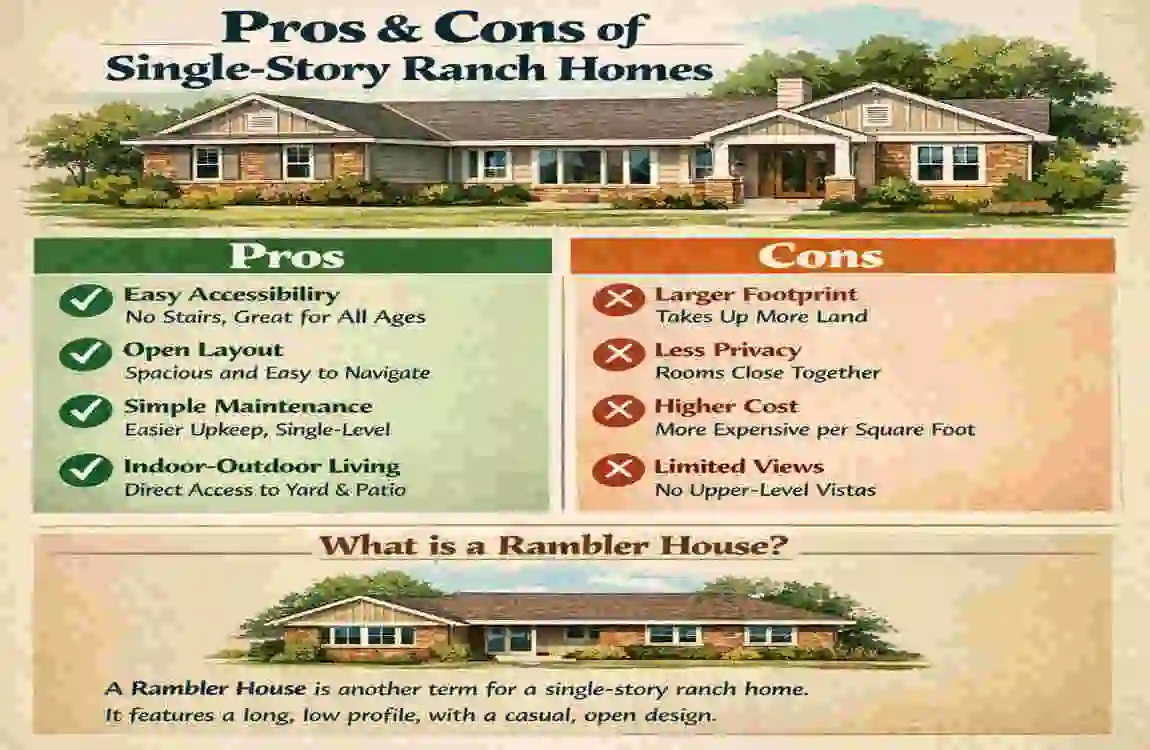
Like any home style, a rambler comes with both strengths and limitations. That does not make it better or worse than other houses. It means you should understand how it works before making a decision.
Pros
One of the biggest advantages of a rambler is the lack of stairs. This makes daily life easier for many people. If you are raising young children, caring for older family members, or planning to age in place, the single-level setup can be a real benefit. You can move through the house without worrying about stairs, falls, or extra effort.
Another major plus is the open flow. Many rambler homes feel more connected than older compartmentalized houses. The kitchen, living room, and dining area often work together to support conversation and entertaining. If you enjoy having people over, this layout can feel very natural.
Ramblers are also often easier to maintain. With everything on one level, chores like cleaning, moving furniture, and making repairs can feel less complicated. In many cases, future additions or remodels are also more straightforward than in a multi-story home.
The easy access to the outdoors is another major benefit. Many rambler homes open directly onto a backyard, patio, or garden area. That makes outdoor living feel like a true extension of the home. On a nice day, you can move from the kitchen to the patio in just a few steps.
Cons
Still, there are some trade-offs. One of the most obvious is the larger lot size. Because the house spreads out horizontally, it usually needs more land than a compact two-story home. That can raise the overall cost, especially in neighborhoods where land prices are high.
Privacy can also be more limited. Since everything sits on one floor, bedrooms and shared spaces may be closer together than in a home with multiple levels. If you like a stronger divide between sleeping areas and social areas, you may need a more carefully planned layout.
Another possible downside is energy use, especially in older ramblers that have not been updated. Larger roof surfaces and more exterior wall area can lead to greater heat gain or loss if the house lacks modern insulation and efficient windows. The good news is that many of these issues can be improved with renovations.
Quick Pros and Cons Table
ProsCons
Accessibility for all ages Bigger lot needed
Open, flowing spaces Less vertical privacy
Easier maintenance More exposure to the elements
Simple outdoor access Limited upper-level storage
As one design perspective often puts it, ramblers offer barrier-free living that still feels timeless. That is a major reason the style continues to attract so much attention.
Benefits for Modern Families
Modern families are often looking for more than just square footage. They want a home that supports real life—busy mornings, working from home, children moving between activities, and weekends spent with family. That is where a rambler really shines.
One of the biggest benefits is that the home works well for multigenerational living. Since there are no stairs, grandparents, children, and adults can all move through the house more easily. This creates a more inclusive setting for families living together or sharing responsibilities.
Ramblers also support flexible living spaces. A large front room can serve as a home office, play area, hobby room, or guest space, depending on your needs. Because the layout is usually open, it is easier to adapt over time. If your family grows or your work changes, the home can change with you.
For remote work, this kind of layout can be very practical. You can carve out a quiet office corner without making the home feel closed off. A rambler gives you enough openness to feel connected while still allowing you to create separate zones when needed.
Another major advantage is improved energy efficiency when the home is properly updated. A single-level structure can sometimes be simpler to heat and cool evenly, especially with modern HVAC systems and better insulation. That can help reduce energy waste and improve comfort.
The style also works beautifully with warm climates. In a place like Lahore, for example, a rambler’s indoor-outdoor flow can feel similar to the openness of local courtyard living. That makes the home feel familiar while still offering a classic American ranch-style character.
If your family values comfort, convenience, and adaptable space, a rambler may be one of the most practical choices available.
Rambler House Floor Plans and Layouts
The floor plan is where a rambler really shows its personality. Since the whole house sits on one level, the layout needs to do a lot of work. A good rambler floor plan creates flow, privacy, and function without making the home feel crowded.
Typical rambler homes range from about 1,500 to 3,000 square feet. Many include three or four bedrooms, a central great room, and a kitchen that opens toward the main living space. This makes it easier for family members to stay connected during the day.
One popular option is the U-shaped layout, which wraps around a courtyard or backyard area. This design helps create a more private outdoor space and can make the home feel more protected from street noise. Another common option is the L-shaped layout, which clearly separates the living and sleeping wings.
Split plans are especially popular. In a split-bedroom layout, the primary bedroom sits away from the other bedrooms. That gives homeowners more privacy while still keeping everything on one level. This is a smart solution for couples, parents, or anyone who wants a quiet retreat.
Another favorite layout is the open kitchen-living arrangement. In this version, the kitchen connects directly to the living or dining area. This works well for entertaining children, supervising them, or making daily routines feel easier.
Customization Ideas
You can also make a rambler feel more modern by adding features such as:
- Sunrooms for extra daylight and indoor relaxation
- Covered patios for hot climates and outdoor dining
- Extended kitchen islands for gathering and prep space
- Built-in storage to reduce clutter in a single-level layout
These additions can make a big difference, especially if you want the house to feel more spacious and personalized.
A rambler does not have to be plain. With the right plan, it can feel warm, open, and very stylish.
Cost to Build or Buy a Rambler House
Cost is always a major part of the conversation, and rambler homes can vary widely depending on location, size, and materials. In the United States, the average cost to build a rambler may fall around $150 to $300 per square foot, though local labor and material prices can shift that range quite a bit.
A rambler can sometimes be more affordable to build than a more complex multi-level house because the structure is simpler. However, the larger footprint can increase land costs, foundation work, and roofing expenses. So while the house itself may be straightforward, the site and material choices still matter a lot.
In the Lahore context, costs may be shaped by local brick, cement, finish quality, and labor rates. A rough planning range might land somewhere around PKR 4,000 to 7,000 per square foot, depending on the level of finish, design complexity, and the specific materials you choose.
Several factors influence the final price:
- Lot size
- Quality of finishes
- Roof design
- Window choices
- Plumbing and electrical upgrades
- Custom features such as patios or built-ins
In many cases, the real cost question is not just “How much does it cost to build?” but “How much do you want the home to do for you?” A basic rambler can stay modest and functional, while a custom rambler can become a highly designed, modern family home.
If you want accurate numbers, the best next step is usually a custom quote tailored to your site and preferred layout.
Modern Design Ideas and Updates
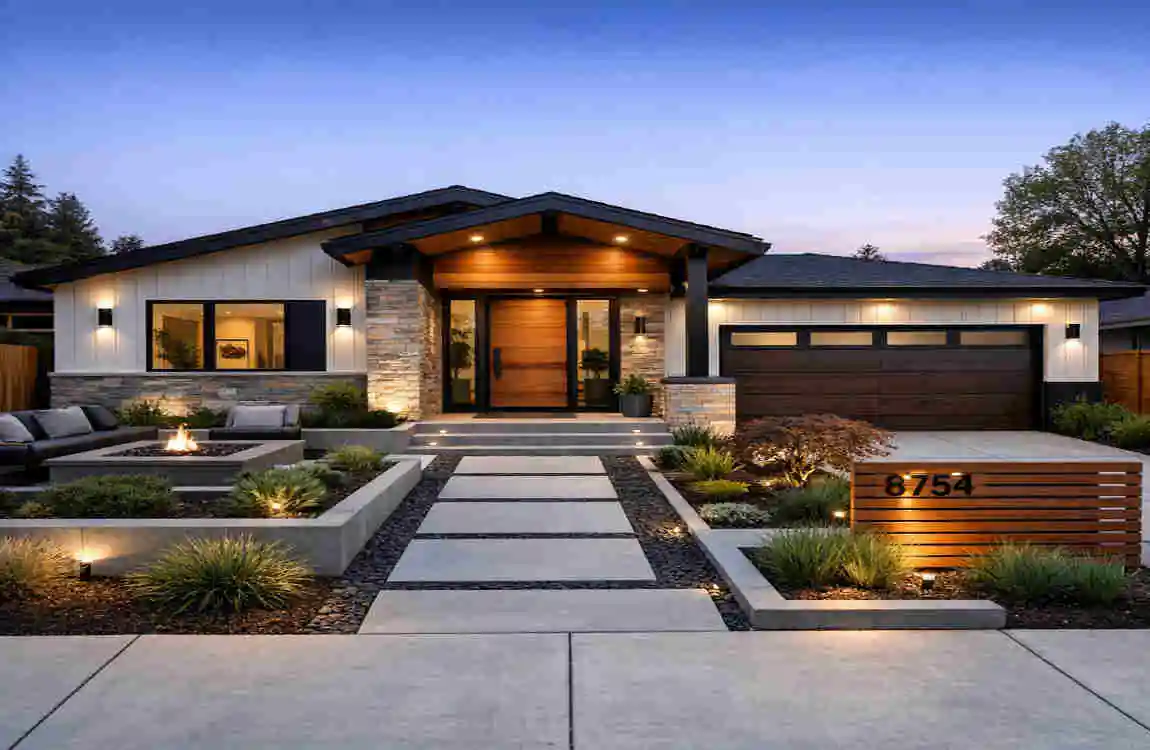
One reason the rambler is still so relevant in 2026 is that it adapts well to new ideas. The classic form is simple enough to update without losing its identity. That gives homeowners a lot of freedom.
Trends for 2026
One of the biggest trends is the rise of smart homes. Rambler houses now often include smart lighting, automated thermostats, security systems, and connected appliances. These upgrades make everyday life easier while blending into the home’s clean layout.
Another important trend is solar integration. Because rambler homes usually have broad roof surfaces, they can be well suited for solar panels. That makes them appealing for homeowners who want to lower energy bills and reduce dependence on traditional power sources.
You will also see more biophilic design, which means bringing nature into the home more intentionally. This can include living walls, indoor plants, natural wood finishes, and bigger views of the landscape. Since ramblers already connect well with outdoor space, this trend fits the style beautifully.
In the kitchen, many modern ramblers now include large islands, quartz counters, and open shelving. The goal is to make the kitchen feel social and useful without making it too heavy or formal.
Exterior updates often combine wood, stone, and stucco for a richer look. Instead of using just one material, designers mix textures to create visual interest while keeping the home grounded and calm.
Bathrooms are also getting more thoughtful. Walk-in showers, wider doors, and low-threshold entries make the house more accessible while giving the rooms a cleaner, more modern appearance.
A Fresh Rambler Feel
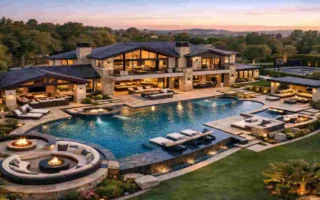
Picture a dusk-lit ranch-style home with warm lighting, pine trees nearby, and clean lines across the facade. That kind of scene captures the best of the rambler: simple, peaceful, and very livable. The style is not about being loud. It is about being comfortable in a way that feels timeless.
How to Buy or Renovate a Rambler House
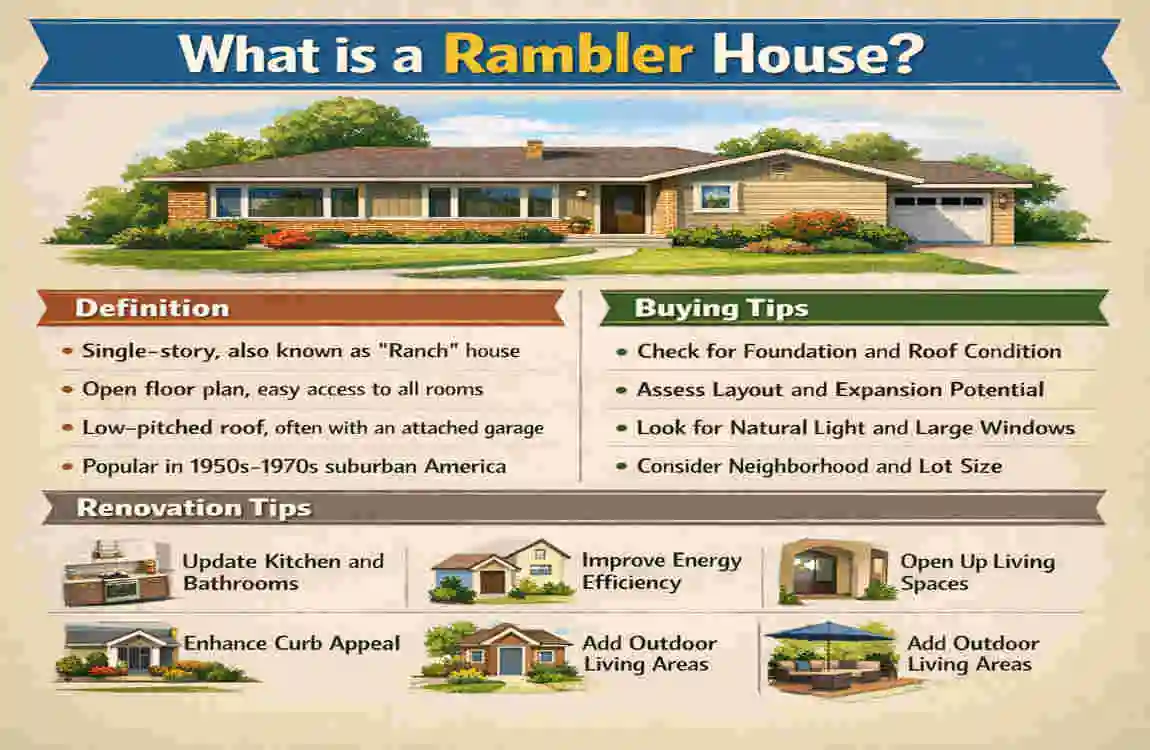
If you are considering buying a rambler, the first step is to look closely at the house’s bones. Since many ramblers were built decades ago, they may need updates even if their designs still feel strong.
Buying Tips
When touring a rambler, inspect the foundation, roof, windows, plumbing, and insulation. Older homes may look charming on the surface but need serious work behind the scenes. Check whether the house already has important updates or whether those costs will fall on you after purchase.
It is also smart to think about the lot itself. Since ramblers spread out more than two-story homes, you want to know whether the property gives you enough outdoor space without feeling cramped.
Renovation Tips
If you already own a rambler, there are many ways to improve it. You can open walls, add a deck, improve kitchen flow, or update the windows for better light and energy efficiency. Even small changes can make a big difference in how the home feels.
It is wise to budget about 20% extra for surprises when renovating any older home. Hidden issues can surface once work begins, especially in homes that have not been touched for many years.
If you are planning a project, this is also a good place to refer to the Renovation Checklists post to stay organized and avoid missed steps.
A careful purchase or renovation can turn a modest rambler into a truly beautiful home.
FAQs: What Is a Rambler House?
What is a rambler house?
A rambler house is another name for a ranch-style home. It is usually a single-story house with a long, low profile and an open floor plan .
Why is it called a rambler house?
The word “rambler” refers to the way the home spreads out horizontally across the land, rather than rising upward in multiple levels .
What are the main features of a rambler house?
Common features include one-story living, open interiors, simple exterior design, low-pitched roofs, and a layout that supports easy indoor-outdoor living .
Where did rambler houses come from?
The original rambler home grew out of the California ranch style designed by Cliff May in the 1930s. That style is known for an L- or U-shaped floor plan with a central courtyard .
When did rambler houses become popular?
Rambler houses became especially popular in the 1950s and 1960s, when homeowners wanted practical, comfortable homes for modern family life .
Are rambler houses and ranch houses the same thing?
Yes, they are often used to mean the same thing. Many sources describe a rambler house as simply another name for a ranch-style home .
What makes a rambler house attractive to buyers?
People like rambler houses because they are usually easy to move around in, have simple layouts, and create a nice connection between the inside and outside of the home .
Is a rambler house a good family home?
Yes, many rambler-style homes are seen as practical for families because their open plans make shared spaces feel larger and easier to use .