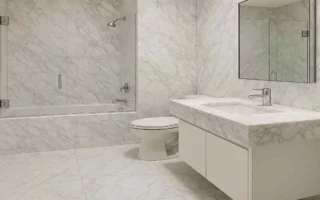
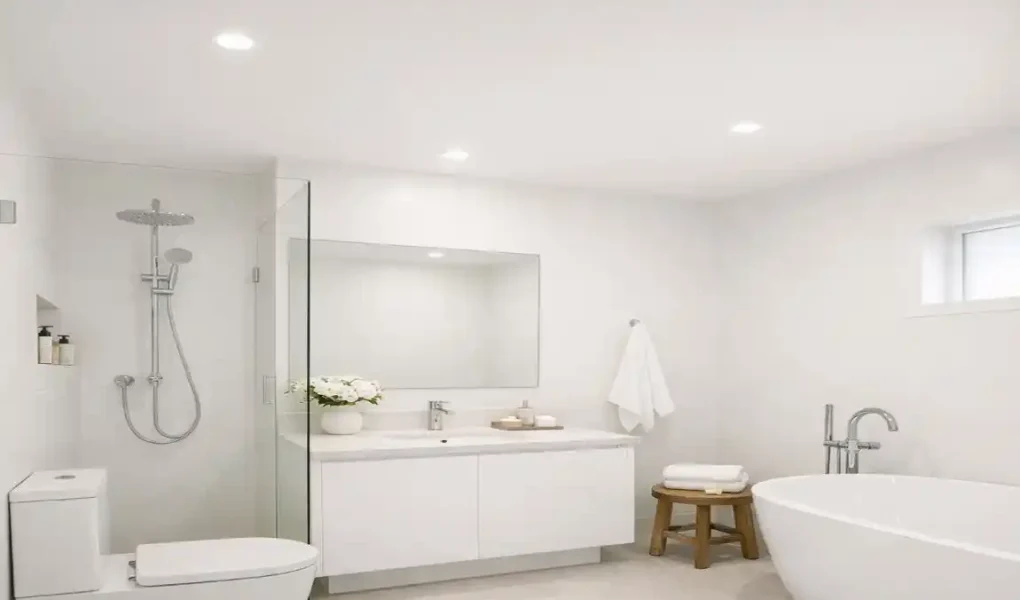
Should bathroom ceiling be same color as walls? If you are currently renovating a cramped powder room or staring up at a plain white ceiling in your master bath, you have probably asked yourself this exact question.
Have you ever walked into a small bathroom and felt like the walls were closing in on you? You are definitely not alone. Small bathrooms can easily feel like tiny boxes, especially when they lack natural light. For decades, the standard rule of home design was simple: paint the walls whatever color you like, but leave the ceiling stark white.
However, design rules are meant to be broken. Recently, a massive trend has taken over TikTok, Pinterest, and interior design blogs. Homeowners and professional designers are ditching the traditional white ceiling and painting it the same color as the walls. These viral hacks for small spaces are completely changing how we think about bathroom renovations.
Why is this trend catching fire? Because painting your ceiling to match your walls acts like a visual magic trick. It creates a seamless, expansive feel that blurs the boundaries of the room. Instead of your eyes stopping at a hard white line, they are drawn continuously upward.
Of course, you might have heard some common myths. Some people worry that a matching ceiling will make the room feel like a dark, cave-like dungeon. But when you use the right colors and the right lighting, the exact opposite happens. You get a space that feels surprisingly bigger, beautifully brighter, and incredibly luxurious.
Why Match Your Bathroom Ceiling to the Walls?

When you are trying to make a small room feel larger, your biggest enemy is visual interruption. Every time your eye catches a sharp contrast—like a dark blue wall meeting a bright white ceiling—your brain immediately registers the exact size and height of the room.
The Magic of Optical Illusions
By matching your bathroom ceiling to your walls, you are utilizing a powerful optical illusion. When the walls and the ceiling share the same hue, those harsh dividing lines disappear. You are effectively erasing the room’s corners.
When your eyes cannot easily detect where the wall ends and the ceiling begins, your brain gets tricked. It perceives the ceiling as being much higher than it actually is. This technique is an absolute lifesaver for bathrooms with low ceilings, especially those sitting under the standard eight-foot mark.
Creating a Cozy, Cohesive Look
Beyond just making the room look taller, this technique creates an incredibly cohesive and wrapped feeling. Designers often refer to this as “color drenching.” When you wrap a room in one continuous color, it feels deliberate, sophisticated, and custom-designed. It also does a fantastic job of hiding architectural imperfections. If your ceiling is slightly uneven or has awkward slopes, a matching paint color will camouflage those flaws beautifully.
However, you must be careful. While matching colors erase lines, using very dark shades in a bathroom with zero natural light can sometimes backfire, making the space feel enclosed.
To help you understand the differences, let’s look at how a standard white ceiling compares to a matching ceiling.
Comparing Your Ceiling Options
Aspect Traditional White Ceiling Matching Ceiling and Walls
Height Perception Defines the boundary clearly; can make the ceiling feel lower in small spaces. Blurs the boundary lines; tricks the eye into thinking the ceiling is much taller.
Brightness Reflects the maximum amount of light, but can feel stark or cold. Depends heavily on the shade and paint finish you choose; creates a softer, warmer glow.
Maintenance Shows dust, dirt, and mold spots very quickly due to high contrast. Hides minor imperfections and water spots much better due to visual unity.
Countless interior designers and lighting studies confirm that when you paint a room one solid color, the light bounces around the space more softly. You lose the harsh shadows that normally gather in the corners of the room, resulting in a much more flattering environment.
Weighing the Pros and Cons: Is It Right for You?
Before you rush to the hardware store and buy gallons of matching paint, it is crucial to look at both sides of the coin. Every home is different, and what works in a massive main bathroom might not work in a tiny basement powder room.
Let’s break down the decision factors so you can make the best choice for your specific layout.
The Benefits of Color Drenching
Seamless Flow with Tile: If you have a bathroom that features half-wall tiling or wainscoting, painting the upper half of the wall and the ceiling the same color creates a stunning, seamless flow. It prevents the room from feeling chopped up into three different visual layers (tile, wall paint, and ceiling paint).
Enlarges Small Spaces: As we mentioned, removing the room’s boundaries expands your field of vision. If you have a small footprint, wrapping the room in a single color prevents the space from feeling choppy.
Luxurious Aesthetic: Matching your walls and ceiling instantly elevates the room. It looks like you hired an expensive interior designer. It brings a boutique-hotel vibe straight into your home, enveloping you in color the moment you step out of the shower.
The Drawbacks to Consider
The Moisture Trap: Bathrooms are naturally humid environments. If your bathroom has poor ventilation, painting the ceiling the same color as the walls can be risky unless you use the right type of paint. Standard wall paint on a ceiling will peel and invite mold. You absolutely must use mildew-resistant formulas.
The “Heavy” Feeling: If you choose a dark charcoal or emerald green, and your bathroom lacks a window, the matching ceiling can feel oppressive. Without ample artificial lighting, the room might absorb too much light, making it difficult to do your makeup or shave.
Pros and Cons Summary Table
Pros of Matching Ceilings Cons of Matching Ceilings
Creates a seamless, expansive visual flow. Can feel closed in if dark colors are used poorly.
Makes low ceilings feel significantly higher. Requires high-quality, mildew-resistant paint.
Hides awkward ceiling slopes and imperfections. It highlights poor lighting if the room is dim.
Delivers a high-end, professionally designed look. Makes changing the room’s color later more laborious.
Real-world examples prove these points time and time again. For instance, consider a cramped basement bathroom with no windows. By painting the walls and the ceiling a soft, matching dove gray, the eye is tricked into seeing a nine-foot ceiling, transforming a dingy space into a modern retreat.
The Best Colors for Matching Ceilings
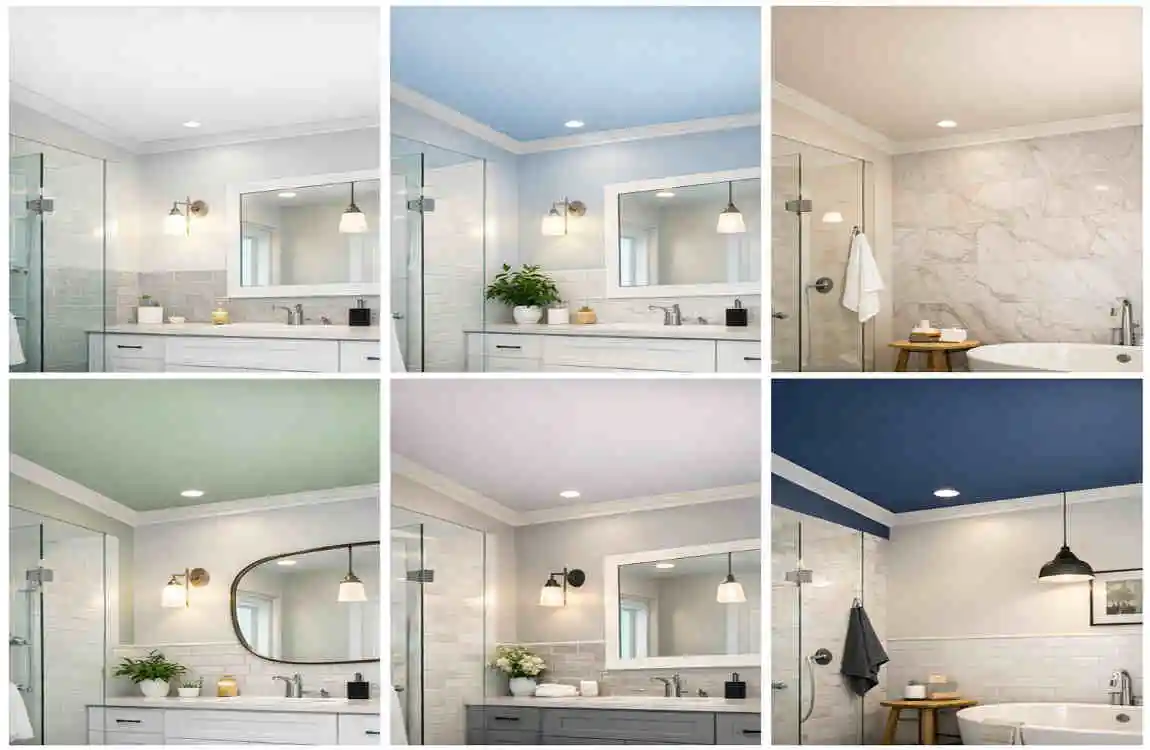
When you decide to paint your bathroom ceiling the same color as your walls, choosing the right hue is your most important task. The color you select will dictate the entire mood of the room.
Light neutrals generally rule the roost because they maximize brightness and maintain an airy feel. However, you can certainly play with color if you want a specific vibe.
Light and Airy Neutrals
Soft grays, warm beiges, and creamy off-whites are incredibly popular for a reason. They reflect a massive amount of light, creating a soothing, spa-like atmosphere. When you wrap a room in a warm beige, it feels like a comforting hug. It is neutral enough to pair beautifully with brushed nickel, matte black, or brass fixtures.
Serene and Calming Cool Tones
If you want to elevate the serenity of your bathroom, cool tones are your best friend. Pale blues, soft seafoams, and mint greens bring the outside in. These colors mimic the sky and the ocean, which naturally makes a room feel more expansive and breathable.
Avoid dark colors unless your bathroom is exceptionally well-lit with both natural sunlight and layered artificial lighting. If you have a huge window and great vanity lights, a dark navy bathroom can look incredibly chic. If not, stick to the lighter side of the spectrum.
Top 5 Colors for a Matching Bathroom
Warm White (Not Stark White) A stark, builder-grade white can feel clinical and cold. Instead, choose a warm white with subtle undertones of cream or blush. When painted on both the walls and ceiling, it creates a luminous, glowing space that feels immaculately clean but still welcoming.
Light Taupe Taupe is the perfect bridge between gray and beige. It offers an earthy, grounding feel. A light taupe bathroom feels incredibly sophisticated and pairs wonderfully with natural wood vanities and woven baskets.
Mint Green Mint green is having a massive resurgence. It offers a vintage, fresh energy that wakes you up in the morning. When carried up onto the ceiling, it feels like you are showering in a bright, sunlit garden.
Lavender Don’t be afraid of purple! A very pale, dusty lavender is the ultimate color for relaxation. It is a fantastic choice for a main bathroom where you want to soak in the tub and forget the stresses of the day.
Navy Blue (The Bold Hack) Navy is the exception to the “keep it light” rule. Painting a bathroom entirely navy creates a “night sky” effect. The edges of the room disappear into the shadows. However, you must pair this with bright, warm LED lighting and lots of mirrors to bounce the light around.
7 Viral Hacks for Bigger, Brighter Bathrooms
Tik Tok and Instagram have completely revolutionized interior design. Homeowners are coming up with brilliant, budget-friendly ways to maximize their spaces. If you want your bathroom to feel bigger and brighter, painting the ceiling is just the first step.
Here are seven viral hacks to take your space to the next level.
Hack : The Sheen Switch
This is the ultimate designer secret. If you are painting your walls and ceiling the same color, you should switch up the paint finishes.
Step-by-Step for the Sheen Switch:
- Prep the Space: Clean your walls and ceiling thoroughly with a degreaser to remove humidity residue and hairspray buildup.
- Check Ventilation: Ensure your bathroom fan is working perfectly. You need good airflow for the paint to cure properly.
- Paint the Walls: Apply two coats of a high-quality, moisture-resistant matte or eggshell paint. This gives a soft, velvety look.
- Paint the Ceiling: Apply two coats of the same color, using a satin or semi-gloss finish.
The glossy ceiling will catch the light from your vanity and bounce it around the room, making the ceiling feel infinitely higher. At the same time, the matte walls keep the room looking modern and chic.
Hack : Hidden LED Strips Under Eaves
Lighting is everything in a small bathroom. Grab some waterproof, warm-white LED light strips and install them out of sight. Hide them under the lip of your vanity, behind your mirror, or along the crown molding if you have it. This hidden “glow” pushes the walls outward and makes the ceiling feel like it is floating.
Hack : Glossy Tiles on One Accent Wall
If you have a matching matte color on the walls and ceiling, introduce an accent wall of high-gloss tiles behind the sink or in the shower. The reflective surface acts like a mirror, doubling the room’s visual depth and bouncing your lighting perfectly.
Hack : The Floating Vanity and Mirror
Floor space dictates how big a room feels to your brain. If your vanity sits too low to the floor, it eats up visual real estate. Swap it out for a wall-mounted floating vanity. When you can see the tile floor continuing all the way to the wall underneath the sink, the room instantly feels 20% larger. Pair this with a frameless, floating mirror to complete the airy look.
Hack : Embrace the Skylight or Frosted Window
If you are doing a major renovation, punching a hole in the ceiling for a skylight is the ultimate hack for a matched-color bathroom. It floods the space with natural light. If you cannot install a skylight, add frosted glass to your door or window to let light from the hallway filter in without sacrificing your privacy.
Hack : Oversized, Edge-to-Edge Mirrors
Forget tiny medicine cabinets. Take a custom mirror and run it the entire length of your vanity wall, up to your freshly painted ceiling. This literally doubles the bathroom’s visual size and reflects every single ounce of light you have.
Hack : Vertical Striping or Wainscoting
If you want to push that matching ceiling even higher, install vertical shiplap or beadboard wainscoting on the lower half of your walls. Paint the wood a crisp white, and then paint the upper wall and the ceiling your matching color. The vertical lines draw the eye straight up, maximizing the illusion of height.
Lighting and Finish Tips for a Flawless Look

We touched on the “Sheen Switch” hack above, but paint finishes and lighting are so critical that they deserve their own deep dive. The key to successfully matching your bathroom ceiling to your walls is preventing the room from looking flat or dead.
Why Paint Finish Matters More Than You Think
If you paint an entire room—walls, doors, trim, and ceiling—in a flat, matte finish, the room will absorb all the light. It will look like the inside of a chalk box. By mixing your sheens, you create subtle dimensions that bring the color to life.
For the ceiling, a satin or semi-gloss finish is your best friend. Why? Because bathrooms get wet. When steam rises from your shower, it hits the ceiling. A flat paint will absorb that moisture, eventually leading to bubbling, peeling, or mildew. A satin or semi-gloss finish acts like a protective barrier. The moisture beads up on the surface, making it incredibly durable and easy to wipe down. Plus, that slight gloss reflects your bathroom lights, bouncing brightness back down onto your face.
Pairing Your Paint with the Right Light
Your matching paint job will only look as good as the light shining on it. Do not rely on a single, harsh flush-mount ceiling light. That will cast terrible shadows on your face and make the room look tiny.
Instead, pair your newly painted ceiling with evenly spaced recessed lighting (can lights). Then, add wall sconces on either side of your mirror at eye level. This cross-illumination eliminates shadows, makes the room glow, and highlights the beautiful continuous color of your walls and ceiling.
Budgeting for Your Paint Finishes
To help you plan your project, here is a quick breakdown of paint finishes, their average costs, and their durability in a bathroom environment.
Paint Finish Average Cost per Sq. Ft. Durability in Bathrooms Best Use Case
Matte / Flat $0.50 Very Low (Absorbs moisture, hard to clean) Guest bath walls with low humidity.
Satin / Eggshell $0.75 High (Resists moisture, wipes clean easily) Everyday bathroom walls and ceilings.
Semi-Gloss / Gloss $1.00 Best (Highly water resistant, highly reflective) Trim, doors, and ceilings in high-steam baths.
Real-World Examples and Case Studies
It is easy to talk about design theory, but seeing is believing. Let’s look at how homeowners are using this exact strategy to transform their trickiest spaces.
The Basement Bathroom Miracle
Consider a typical basement bathroom. These spaces usually feature low, seven-foot ceilings, no windows, and bulky ductwork. One homeowner decided to stop fighting the small space and lean into it.
They painted the walls and ceiling in a rich, matching charcoal gray. At first thought, you might think this would make the room feel like a closet. Instead, the dark matching tones erased the low ceiling line. They installed bright, warm LED recessed lights and a massive floating mirror. The result? The ceiling seemed to disappear into the shadows, tricking the eye into believing the room was 9 feet tall. It turned a dingy basement utility bath into a moody, modern retreat.
The Coastal Powder Room Escape
In another real-world example, a homeowner had a tiny, narrow powder room under the stairs. It felt like a cramped hallway. They chose a bright, coastal teal for both the walls and the ceiling.
By wrapping the room in this vibrant, oceanic color, the space lost its narrow, tunnel-like feeling. The matching ceiling pulled the whole look together, making the bathroom feel like a deliberately designed, custom-made jewel box rather than an architectural afterthought.
The Climate Factor: A Lahore-Specific Tip
In recent interior design polls, over 70% of homeowners stated they prefer matching paint in small bathrooms. But your geographic location matters when executing this trend.
For example, if you are renovating in a hot, humid climate like Lahore, Pakistan, you have to be extra careful. The ambient humidity outside combined with the steam from a shower inside can destroy a paint job in months.
Local Tip: When color-drenching a bathroom in humid climates, invest in high-quality, acrylic-based, humidity-resistant paint. Do not buy cheap, builder-grade flat paint. Look for cans specifically labeled “Kitchen and Bath” or “Mildew Resistant.” These formulas contain antimicrobial agents that prevent mold from taking hold on your beautiful new matching ceiling.
Common Mistakes to Avoid When Painting
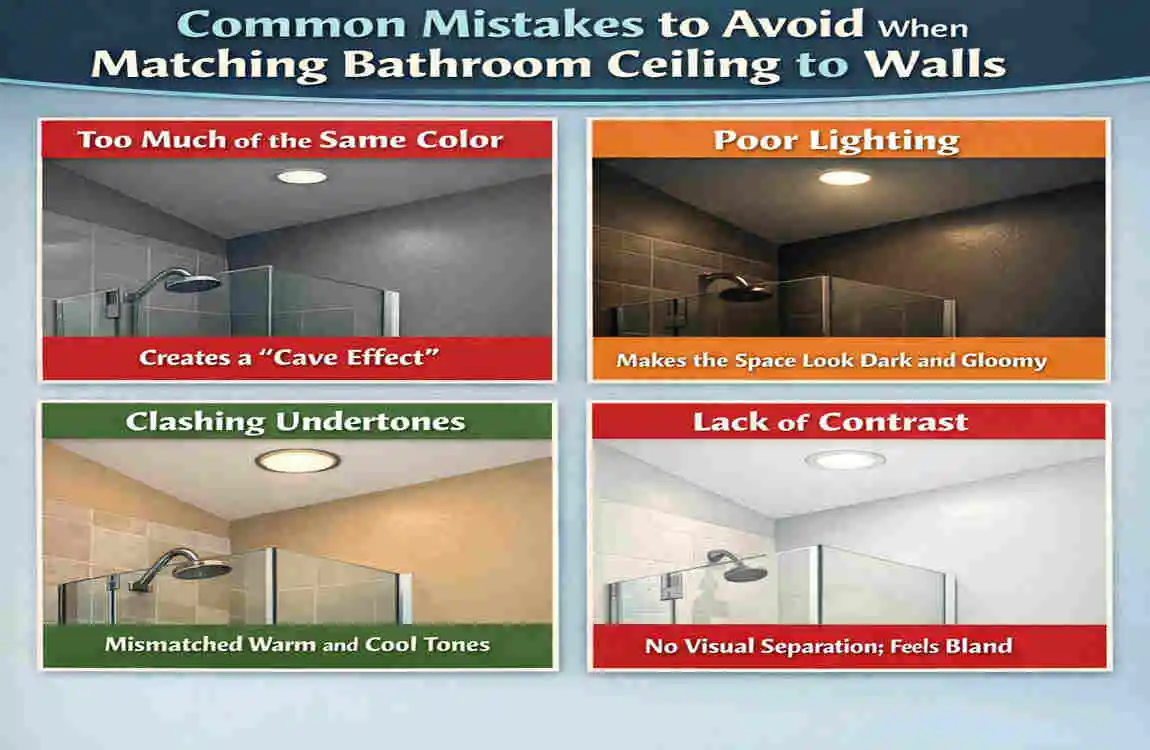
Even the best viral design hacks can go wrong if they are executed poorly. If you want to paint your bathroom ceiling the same color as your walls, avoid these common pitfalls.
Using Dark Colors Without Adequate Lighting
This is the number one mistake people make. They see a moody, dark green bathroom on Pinterest and replicate it in a bathroom with one weak lightbulb. If you are going to use a dark color on your ceiling, you must upgrade your lighting first. Add sconces, put high-lumen bulbs in your fixtures, and ensure the room is brilliantly lit.
Ignoring Grout Shadows
When you paint a ceiling a darker color, it changes how light reflects down onto your floors and showers. If you have white subway tiles with deep, uncleaned grout lines, a colored ceiling will cast shadows that make your grout look dirty or dingy. Always ensure your tile and grout are sparkling clean, and consider re-grouting in a lighter color to maintain brightness.
Skipping the Primer in Humid Areas
Never, ever skip the primer in a bathroom. Bathrooms are wet, sweaty rooms. If you apply fresh paint directly over an old, glossy builder-grade ceiling without priming, your new paint will eventually peel off in sheets. Use a high-quality, mold-killing primer to create a strong bond for your new color.
Quick-Fix Checklist for Success:
- Upgrade Ventilation First: Before you open a can of paint, make sure your exhaust fan actually pulls moisture out of the room.
- Clean the Ceiling: Dust and hairspray float up. Wipe the ceiling with a damp cloth and mild soap before priming.
- Tape Carefully: If you are leaving crown molding white, use high-quality painter’s tape to ensure crisp lines.
Frequently Asked Questions (FAQs)
Should bathroom ceiling be same color as walls? Yes! Painting them the same color provides a seamless, cohesive look that erases harsh visual lines, making small or low-ceilinged bathrooms feel significantly larger and taller.
What is the best paint finish for a bathroom ceiling? You should always use a moisture-resistant or mildew-resistant paint. A satin or semi-gloss finish is highly recommended for bathroom ceilings because it repels steam, wipes clean easily, and gently bounces light around the room.
Will a matching ceiling make my bathroom too dark? Not if you choose light, neutral colors like warm white, light taupe, or seafoam green. If you choose a dark color, ensure you have plenty of bright, layered lighting (such as sconces and recessed lights) to keep the space well-lit.