You turn on the shower in the morning, expecting a decent blast of hot water, and instead you get a weak trickle that barely rinses the shampoo out of your hair. If you live in an older terraced house, a rural cottage, or even a newer build at the far end of a supply line, that scene feels very familiar.
Low water pressure is one of those home problems that seem small at first but affect your whole day. It slows down showers, makes baths take ages to fill, leaves upstairs taps underperforming, and can even make your washing machine or boiler feel less efficient. If you have been searching for how to increase water pressure in UK house systems without wasting money on the wrong fix, you are in the right place.
In the UK, low pressure is common for a few reasons. Many homes receive mains pressure somewhere around 1 to 3 bar, which is often enough for normal use but not always enough to feel powerful, especially at peak times. Older properties may still rely on gravity-fed systems, where water pressure depends on the height of the storage tank. On top of that, modern 2026 water-efficiency standards and low-flow fittings are designed to reduce waste, which is great for bills and sustainability, but not always great for that “strong shower” feeling.
It is estimated that around 40% of UK homes experience some water pressure issue, whether that is poor flow at one outlet, inconsistent hot water pressure, or weak pressure across the whole property. The good news is that not every fix involves tearing out pipes or spending thousands.
Why UK Houses Suffer Low Water Pressure

Before you try to fix the problem, it helps to understand why it happens in the first place. In the UK, water pressure varies by location. It is strongly influenced by pipework and the type of plumbing system in the house.
Regional demand and supply differences
Homes in London and the South East often deal with fluctuating pressure because demand is high, especially in the morning and evening. When many households use water at once, pressure can dip. That is why your shower may feel fine at 11 am but weak at 7 am.
In rural areas, the issue is often different. Many properties rely on older infrastructure or gravity-fed systems, where pressure naturally runs lower than in a direct mains-fed setup.
Older pipework causes restrictions.
If your home was built before the 1970s, old pipework may be part of the problem. Galvanised steel pipes and aging copper can collect scale, rust, and debris over time. That narrows the pipe’s internal diameter and slows water flow.
Even if the mains supply is acceptable, old pipes inside the property can choke performance.
New efficiency standards reduce flow.
Modern homes are often fitted with eco taps, efficient showers, and flow restrictors. These support the 2026 water-saving goals and can help keep usage at or below 12 litres per minute at certain outlets. That is good for bills and sustainability, but it can make pressure feel weaker than expected.
Quick comparison of common UK pressure types
Pressure Type: Typical Bar, Common UK Issue
Mains 1-3 Urban peaks and dips
Gravity-Fed 0.5-1 Common in rural homes
Combi Boiler 1-2 Inconsistent hot water flow
Why matters
With water bills rising and efficiency becoming a bigger concern in 2026, more households are looking for smart fixes rather than simply using more water. That means improving pressure while still respecting modern water-saving standards.
The key point is simple: low pressure can come from outside your home, inside your home, or both. Once you know where the issue sits, the right fix becomes much easier.
Check and Open Stop Valves
One of the easiest answers to how to increase water pressure in UK house plumbing is also the one people forget most often: check the stop valves.
What a stop valve does
A stop valve, or stopcock, controls the flow of water into your home or into a specific part of your plumbing. If it is only partly open, it can reduce pressure throughout the property.
This happens more often than you might think. Sometimes, a previous owner declined it during repairs. Sometimes it was never fully reopened after plumbing work. In some homes, the valve has stiffened over time and sits half-shut without anyone realising.
Where to find it
In many UK homes, the internal stopcock is located:
- Under the kitchen sink
- In a downstairs cupboard
- Under the stairs
- Near the front door
- In a utility room
You may also have an external boundary stop valve near the pavement or property boundary.
Step-by-step check
Find the internal stopcock
Look for a small valve attached to the incoming mains pipe. It often has a round handle or a tap-style head.
Turn it anti-clockwise
Turn the stopcock fully anti-clockwise to open it completely. Do this slowly and carefully.
Check if it feels stiff
If it is very hard to move, do not force it aggressively. Older valves can break, turning a quick check into an emergency repair.
Test the water flow
Turn on a tap or shower before and after adjusting the valve. You can also use a simple pressure gauge or a flow test with a jug and a stopwatch.
Check the external valve too
If the internal stopcock is fully open and the pressure still feels low, the external valve may also need to be checked. If you are unsure, contact your water supplier or a plumber.
Visual placeholder: Diagram showing internal stopcock location under the kitchen sink and external boundary stop tap near the pavement.
Pros and cons
Pros:
- Free to check
- Takes only a few minutes
- Can produce an instant improvement
Cons:
- Only helps if the valve is actually restricted
- Stiff or old valves can fail if handled roughly
Safety note
If your stop valve is seized, corroded, or leaking around the spindle, stop and call a plumber. A small drip can quickly become a bigger problem.
This fix will not solve every pressure issue, but it is always worth doing first. It is quick, simple, and sometimes surprisingly effective.
Clean Aerators and Showerheads
If low pressure affects only one tap or shower, the issue may not be your entire plumbing system. It could be a blocked outlet.
Why taps and showerheads get clogged
In many UK areas, especially the South East, hard water leaves behind limescale. Over time, that scale builds up inside:
- Tap aerators
- Showerheads
- Handheld shower hoses
- Flow restrictors
Tiny bits of debris from pipework can also collect there. The result is reduced flow and a patchy spray pattern that feels low-pressure.
Signs this is your problem.
You might notice:
- One tap runs weakly, but others are fine
- The shower sprays unevenly
- Water spits or pulses
- The hot side is weaker than the cold side
If that sounds familiar, cleaning is a smart next step.
How to clean a tap aerator
Unscrew the aerator
Most tap aerators unscrew from the end of the spout. You can do it by hand. If not, use pliers with a cloth wrapped around the fitting to avoid scratching it.
Take apart the pieces
Inside, you will usually find a small mesh insert and flow components. Lay them out in order so you can reassemble them easily.
Soak in vinegar
Place the parts in white vinegar for a few hours. This helps dissolve limescale naturally.
Scrub gently
Use an old toothbrush to remove any remaining deposits. Rinse thoroughly.
Refit and test
Put the aerator back together and run the tap. In many cases, the difference is immediate.
How to clean a showerhead
Remove the showerhead if possible
Unscrew it from the hose or wall mount.
Soak it in vinegar
Leave it in a bowl of vinegar for several hours, or overnight for a heavier scale.
Clear the nozzles
Rub the rubber nozzles with your fingers or a soft brush to break up the build-up.
Flush with water
Rinse it well before reinstalling it.
Test the flow
Run the shower and compare the spray pattern and pressure.
Before-and-after flow test
A simple test helps you see if cleaning worked. Hold a measuring jug under the tap or shower for 10 seconds, then multiply by six to estimate litres per minute.
If the flow improves noticeably, you have found the problem.
Why this matters in 2026
Aerators and efficient showerheads are now common because they help reduce water use and bills. That is useful, but only if they are clean. A modern low-flow fitting should still perform well when maintained properly.
Pro tip: upgrade the fitting
If your existing outlet is old, damaged, or badly clogged, it may be worth replacing it with a better model. Look for:
- WRAS-approved products
- Quality anti-limescale showerheads
- Efficient fittings around 6L/min for taps where low-flow compliance matters
That gives you a better balance between water saving and usable pressure.
Why this hack works so often
People often assume low pressure must mean a big plumbing issue. In reality, the problem is sometimes sitting right at the very end of the tap. Cleaning aerators and showerheads is cheap, easy, and often one of the fastest improvements you can make.
If you are trying to figure out how to increase water pressure in UK house bathrooms without major work, start here. It is one of the best DIY wins on the list.
Fix Leaks in Pipes and Joints
Leaks do not just waste water. They also reduce pressure, especially if the leak is somewhere along the line feeding a bathroom or kitchen.
How leaks affect pressure
Every time water escapes through a crack, pinhole, or loose joint, less of it reaches the outlet where you need it. Even a small leak can make the system feel sluggish, especially upstairs or during heavy use.
Signs of hidden leaks
Not all leaks are obvious. Look out for:
- Damp patches on walls or ceilings
- A musty smell under floors or in cupboards
- Hissing sounds from the pipe run
- A water meter is moving when no water is being used
- Unexplained increases in your bill
A simple pressure test at home
Turn off all taps and water-using appliances. Then check your water meter. If the reading continues to move, you may leak somewhere on your property.
You can also isolate sections of pipework if you know your system well, but if you are not confident, call a professional.
Common leak points
In UK homes, leaks often show up at:
- Compression joints under sinks
- Toilet inlet connections
- Old radiator valves near combined plumbing runs
- Loft tank pipework in gravity-fed homes
- Corroded sections of older copper or steel pipe
Tools that can help
DIY leak detector kits are more affordable than they used to be, and moisture meters can help confirm dampness behind surfaces. For harder-to-find leaks, plumbers may use acoustic listening equipment or thermal imaging.
Legal point to know
If you suspect a leak on the mains supply outside your property boundary, report it to your water supplier. That part is usually their responsibility.
Why quick action matters
A dripping tap alone can waste around 10,000 litres of water per year. A hidden pipe leak can waste much more and also damage plaster, flooring, and timber.
Fixing leaks will not always create dramatic pressure gains, but it removes a major cause of waste and inconsistency. It is one of the most sensible steps you can take before investing in pumps or upgrades.
Inspect and Adjust the Pressure Regulator
Some homes have a pressure-reducing valve, often called a PRV, fitted where the mains water enters the property. Its job is to prevent pressure from inside the house from getting too high.
Why a PRV can cause low pressure
A pressure regulator is useful when the incoming mains pressure is strong or variable. But if it is set too low, faulty, or partly blocked, it can leave the whole house underperforming.
In other words, you may already have enough incoming supply, but the regulator is holding it back.
Where to find it
A PRV is usually installed:
- Near the internal stopcock
- On the incoming mains line
- Close to the water meter in some setups
It often looks like a brass valve body with an adjustment screw or cap.
How to check it
Confirm that your house has one
Not every property does. Older homes may not have a PRV at all.
Check current pressure
Use a pressure gauge on an outside tap or washing machine outlet if possible. This gives you a better idea of what the system is doing.
Inspect for faults
Look for signs of:
- Corrosion
- Leaks
- Debris build-up
- Noisy operation
- Unstable pressure from tap to tap
Adjust carefully
Some PRVs can be adjusted by turning the screw according to the manufacturer’s instructions. In most domestic settings, a target of around 3 to 4 bars maximum is common, depending on the system and fittings.
Do not just keep winding it up. Too much pressure can damage appliances, joints, and taps.
When to call a plumber
You should call a plumber if:
- You are not sure which valve is the PRV
- The pressure remains inconsistent after adjustment
- The valve is old or leaking
- You suspect the regulator has failed internally
update: smarter regulation technology
Newer pressure control products in 2026 are becoming more efficient and more precise. Some modern regulator systems are designed to maintain steadier performance while reducing wasted water and protecting appliances.
That matters because homes now need a better balance between comfort, efficiency, and compliance.
Why is this worth checking
If you are working out how to increase water pressure in a UK house plumbing system without overspending, checking the regulator is a smart move. A poorly set or failing PRV can make an otherwise decent water supply feel weak throughout the property.
Install a Shower Pump
If your biggest complaint is a weak upstairs shower, especially in a property with a hot water cylinder and loft tank, a shower pump can be a brilliant upgrade.
Who does this work best for
A shower pump is usually best for gravity-fed systems. These are common in older UK homes where cold water is stored in a loft tank and hot water comes from a cylinder.
Because gravity-fed systems rely on height rather than strong mains pressure, they often struggle to deliver a powerful shower, particularly upstairs.
What a shower pump does
A shower pump increases the flow of hot and cold water to the shower, creating a stronger, more consistent spray. It does not usually improve the entire house. Its job is to transform that one important outlet.
Main types of shower pumps
Positive head pump
This type works when there is already a small amount of natural flow from the shower before the pump kicks in. It is the most common option.
Negative head pump
This is designed for situations where the shower outlet is close to or above the water tank level, and the natural flow is too weak to activate a standard pump.
If you choose the wrong type, performance will disappoint, so proper assessment matters.
What to look for
Choose a model that is:
- Suitable for your plumbing system
- Correctly sized in bar rating
- WRAS-approved
- Quiet enough for your home layout
- Installed with proper isolation valves and pipework support
Brands such as Stuart Turner are often considered for UK gravity-fed systems, but the right model depends on your setup.
Cost in the UK
A shower pump typically costs around £200-£500 for the unit, with extra for installation. Total installed cost can vary depending on pipework changes, electrics, and accessibility.
Basic installation overview
This is not a job most people should attempt unless they are very confident and understand plumbing and electrics.
A typical installation involves:
- Confirming the shower is fed from the correct tank and cylinder sources
- Selecting the correct positive or negative head pump
- Positioning the pump on a solid base, often near the cylinder
- Connecting hot and cold feeds correctly
- Fitting isolation valves and flexible connectors where specified
- Wiring the unit safely
- Testing for flow, noise, and leaks
If the work affects electrical connections or the wider hot water system, use a qualified installer. If any part of the job involves a gas appliance or boiler adjustments, use a Gas Safe registered engineer for that part.
Real-world benefit
A properly installed shower pump can deliver a 2-bar boost in an upstairs bathroom, turning a frustrating shower into one that actually feels enjoyable. For many households, this is the single best lifestyle upgrade on the list.
Pros and cons
Pros:
- Excellent for weak gravity-fed showers
- great improvement in comfort
- More affordable than a whole-house system
Cons:
- Usually helps only one area
- Needs a correct system matching
- It can be noisy if installed badly
When this is the right move
If your taps are acceptable but your shower is poor, and your home uses a tank-and-cylinder setup, a shower pump makes a lot of sense. It is one of the clearest solutions for people searching for how to increase water pressure in UK house bathrooms without rebuilding the full plumbing system.
Upgrade to a Whole-House Booster Pump
When low pressure affects the entire home, a shower pump may not be enough. In that case, a whole-house booster pump system can be the answer.
What a whole-house booster system does
Unlike a small shower pump, a whole-house booster pump is designed to increase pressure and flow across multiple outlets. That means better performance at kitchen taps, bathrooms, utility appliances, and outdoor taps.
Some systems include a break tank or storage tank, while others are integrated booster sets designed for domestic use.
Who should consider one
This option is best for homes where:
- Mains pressure is consistently poor
- Multiple outlets underperform
- The property is large or spread over several floors
- Existing plumbing is otherwise in good condition
- Simpler fixes have already been ruled out
It is especially useful in rural properties, larger detached houses, or homes at the end of a supply line.
Popular system styles
Booster pump with tank
This setup stores water in a tank and then pumps it through the property at a controlled pressure. It is useful when the incoming supply is too weak or too variable to feed a direct booster alone.
Integrated smart booster sets
Modern systems from brands such as Grundfos and others can automatically adjust to demand, helping maintain steady pressure more efficiently.
Sizing for a family home
Sizing matters a lot. A typical family home may need a tank capacity of around 200 litres, depending on usage patterns and the limitations of the incoming supply.
Too small, and the tank may empty too quickly. Too large, and you waste space and money.
A proper installer should assess:
- Number of bathrooms
- Number of occupants
- Peak demand times
- Incoming mains flow rate
- Pipe sizes and layout
Compliance matters
In the UK, booster systems must be installed carefully to avoid problems with backflow, contamination risk, and excessive draw from the mains. Installations should comply with WRAS guidance and local water regulations.
You also need to be careful not to exceed practical and compliant flow expectations. In 2026, there is a stronger focus on efficient water use, and many systems are configured to balance comfort with responsible consumption.
What installation involves
A whole-house booster system is definitely a professional job. Installation may include:
- Surveying the incoming supply
- Selecting the right tank and pump size
- Installing backflow protection
- Connecting controls and electrics
- Adjusting pressure settings safely
- Testing the full house system
This is not something to rush. A badly designed booster setup can be noisy, wasteful, or unreliable.
Return on investment
This kind of upgrade costs more upfront, but it can bring real value.
You may notice:
- Faster bath filling
- More reliable showers
- Better appliance performance
- Improved comfort during busy mornings
- Less frustration in multi-bathroom homes
For families, that convenience adds up quickly.
trend: smart pumps with apps
One of the bigger developments in 2026 is the rise of smart booster pumps. Some now include digital controls and app-based monitoring, allowing homeowners to:
- Track system performance
- Spot faults early
- Adjust modes for efficiency
- Reduce unnecessary pump runtime
That makes the system more user-friendly and cheaper to run.
Is this worth it?
If you have tried cleaning outlets, checking valves, and confirming the supply issue is broader than one bathroom, a whole-house booster pump can be a game-changer. It is one of the most effective long-term solutions for increasing water pressure in UK house systems when the problem is severe and property-wide.
Replace Old Pipes or Add an Accumulator Tank
Sometimes the problem is not the pressure itself. It is the plumbing layout inside the house.
Why old pipes reduce performance
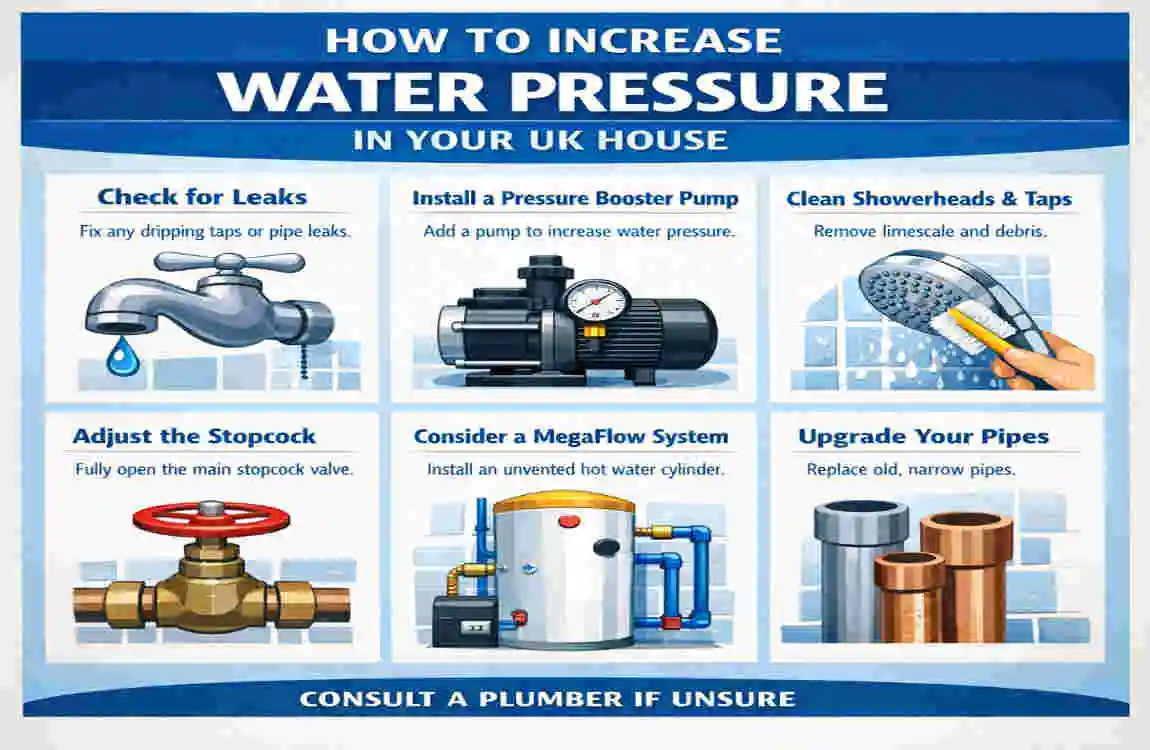
Older UK homes often have 15mm pipework, where larger runs would benefit from 22mm pipe. Over time, corrosion and limescale can further reduce the usable internal diameter.
That means water may technically arrive at the property, but it cannot move through the house quickly enough to meet demand.
When pipe replacement makes sense
Replacing old or undersized pipes is worth considering if:
- Pressure is poor at multiple outlets
- The flow drops badly when two taps run together
- The property has very old plumbing
- There is evidence of corrosion or repeated leaks
- Renovation work is already planned
Upgrading trunk runs from 15mm to 22mm can noticeably improve flow, especially in larger homes.
What an accumulator tank does
An accumulator tank stores water under pressure and releases it when demand increases. It is particularly useful where mains pressure is reasonable but fluctuates, or where a combi boiler struggles to maintain steady performance when several outlets compete for it.
Think of it as a buffer. It helps smooth out pressure dips and reduces sudden changes.
Best uses for an accumulator
This can work well if:
- Your combi system feels inconsistent
- Pressure drops when another tap opens
- The incoming mains is not terrible, just unreliable
- You want a less intrusive alternative to a full booster set
Why professional installation matters
Both pipe replacement and accumulator installation need proper design. A plumber should consider:
- Incoming supply pressure and flow
- Current pipe sizes
- Boiler compatibility
- Space for the vessel or tank
- Expansion and pressure settings
- Compliance with water regulations
This is not a cosmetic upgrade. It affects the core behaviour of your plumbing system.
Long-term benefits
Although this option costs more than DIY fixes, it can deliver lasting improvements:
- Better flow to bathrooms and kitchens
- More stable hot water performance
- Reduced strain on fittings
- Fewer issues caused by aging pipework
- Better resilience as water-efficiency targets tighten
With UK water scarcity concerns growing, it makes sense to invest in a system that uses water more effectively rather than simply pushing more through poor pipework.
If you want a durable answer to how to increase water pressure in UK house plumbing for the long term, this is one of the most serious and worthwhile upgrades to explore.
Additional Tips and Updates
Not every improvement needs to be big. A few smaller changes can also help you get better results from the water you already have.
Smart meters and monitoring
Smart water meters are becoming more common and can help you spot unusual usage, hidden leaks, and pressure-related patterns. If your pressure drops only at certain times, tracking your usage alongside that pattern can be useful.
Air in pipework and admittance issues
Sometimes, poor flow is not purely about pressure. Air trapped in the system or poorly vented pipe runs can make water delivery feel erratic. A plumber can assess whether an air-admittance issue or a layout problem is contributing.
Eco-hacks that still feel good
Efficient fittings do not always mean weak performance. Good-quality aerated taps and modern showerheads can create a fuller spray while using less water. The trick is choosing the right product, not the cheapest one.
Do not over-pressurise your system.
This is important. Chasing a stronger flow by turning everything up too far can backfire. Excess pressure can lead to:
- Burst hoses
- Dripping valves
- Noisy pipework
- Appliance damage
- Premature wear on joints and seals
A strong shower is nice. A flooded kitchen is not.
Best approach
The smartest strategy now is to combine:
- Simple maintenance
- Proper diagnosis
- Efficient modern fittings
- Professional upgrades were needed
That way, you improve comfort without wasting water or creating new problems.
FAQs
Is 1 bar enough water pressure in a UK house?
It’s enough for basic use, but it often feels weak, especially in upstairs showers or homes with multiple bathrooms. Many people start looking into how to increase water pressure in UK house systems when pressure sits around 1 bar or below.
Can I legally install a booster pump in the UK?
Yes, but it must be installed correctly and in line with water regulations. Some setups need careful design to avoid problems with the mains supply, backflow, or excessive draw. Using WRAS-compliant equipment is a smart move.
Why is my hot water pressure worse than my cold water pressure?
This often points to an issue with the hot water side, such as a combi boiler limitation, a blocked filter, scaled pipework, or a gravity-fed cylinder setup. The cold mains may be fine while the hot side struggles.
Will a combi boiler increase water pressure?
A combi boiler does not create mains pressure from nothing. It can deliver hot water efficiently, but the performance still depends on the incoming cold mains supply and the condition of the plumbing system.
What is the fastest DIY fix for low pressure?
Start with the easy checks: open stop valves fully, clean tap aerators, descale showerheads, and look for leaks. These are the quickest steps for anyone researching how to improve water pressure in a UK home.
Is low water pressure the same as low water flow?
Not always. Pressure is the force behind the water. Flow is the volume coming through. You can have decent pressure but poor flow if pipes or fittings are blocked or undersized.
Should I call my water supplier or a plumber?
If the issue seems to be outside your property or affects the street supply, contact your water supplier. If the issue is inside the house, such as old pipes, valves, pumps, or fittings, call a qualified plumber.