You wake up on a peaceful Sunday morning, step out of bed, and your feet hit a puddle of water. You walk into the hallway, and it’s worse. Your kitchen is completely flooded because an old, corroded pipe behind the walls finally gave out. As you scramble to turn off the main water valve and grab every towel you own, one terrifying question races through your mind: how much to replace plumbing pipes before it’s too late?
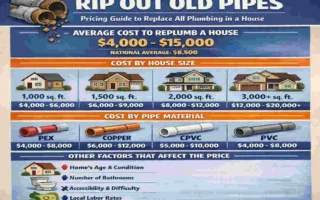
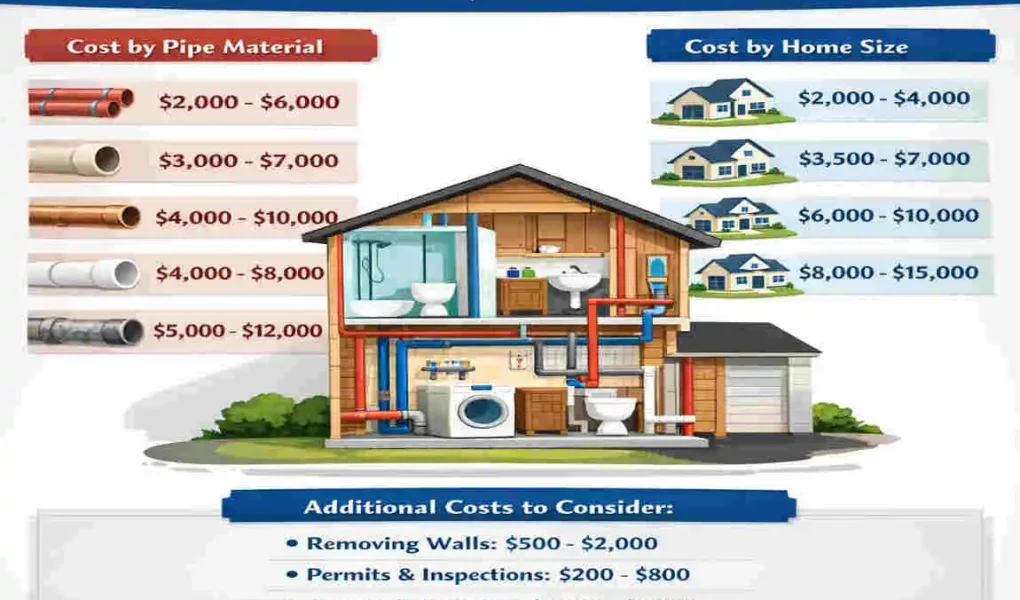
If you are dealing with aging plumbing, you are not alone. Across the country, homeowners are facing the exact same dilemma. On average, the national cost to repipe a house falls between $4,000 and $12,000. However, these numbers can shift dramatically based on a few crucial factors.
When figuring out how much to replace plumbing pipes, the material you choose plays a massive role. Modern PEX piping is incredibly budget-friendly, typically costing just $0.40 to $2.00 per linear foot. On the other hand, if you own a smaller home, your total pipe replacement cost might sit comfortably in the $2,000 to $5,000 range.
But materials are just the tip of the iceberg. You also have to consider hidden factors like municipal permits, drywall removal, and professional labor, which generally run between $45 and $200 per hour. Replacing your plumbing is a major investment, but it protects your home from catastrophic water damage, mold growth, and skyrocketing water bills.
Signs You Need Pipe Replacement Right Now

Before you start budgeting for repiping house costs, you need to know if a full replacement is actually necessary. Sometimes a single leak is just a leak. But often, it is a glaring warning sign of a systemic failure. If you find yourself constantly Googling “how much to replace plumbing pipes,” chances are your home is already showing symptoms.
Here are seven major red flags indicating that your pipes are on their last legs:
- A sudden drop in water pressure: If your morning shower feels more like a weak drizzle, mineral buildup or severe corrosion might be choking the inside of your water lines.
- Discolored, rusty water: Does your tap water look brown, yellow, or rusty when you first turn it on? This means your pipes are literally rusting from the inside out.
- Frequent and recurring leaks: If you are playing a never-ending game of whack-a-mole with pipe leaks, applying temporary band-aids won’t save you. The structural integrity of the entire system is compromised.
- Foul-smelling or bad-tasting water: A metallic taste or a sulfur-like smell often indicates deteriorating metal pipes or dangerous bacterial growth within old lines.
- Loud banging or groaning pipes: Known as “water hammer,” these aggressive noises can mean your pipes are loose, damaged, or suffering from intense pressure fluctuations.
- Visible corrosion on exposed pipes: Take a look at the pipes in your basement or under your sinks. Flaking, rust spots, or greenish oxidation on copper pipes are clear signs of decay.
- Your home was built before the 1980s: Older homes frequently feature galvanized steel or, worse, lead pipes. Replacing these outdated systems typically costs between $1,500 and $15,000, but it is absolutely essential.
The Hidden Health Risks
We cannot stress this enough: old pipes are not just a financial liability; they are a massive health hazard. Lead pipes, in particular, can leach dangerous toxins into your drinking water, leading to severe developmental issues in children and cognitive decline in adults. Galvanized pipes trap rust and bacteria over decades. If your home has these materials, figuring out how much to replace plumbing pipes should become your number one priority. Do not gamble with your family’s health.
Types of Plumbing Pipes: Choosing the Right Material
When you ask a contractor, “How much to replace plumbing pipes?” their first question to you will be, “What material do you want to use?” The plumbing repipe cost by material is the most flexible part of your budget. Let’s compare the most common materials head-to-head so you can make an informed decision for your home.
PEX (Cross-linked Polyethylene)
PEX is the undisputed king of modern residential plumbing. It is a highly durable, flexible plastic tubing. Because it can bend around corners, plumbers do not need to tear down as many walls or use as many connection fittings. It is highly resistant to freezing and corrosion. However, PEX is sensitive to UV light and cannot be used outdoors. If you are repiping an existing modern home, PEX is your best friend.
CPVC (Chlorinated Polyvinyl Chloride)
CPVC is a step up from standard PVC. It is infused with extra chlorine, making it capable of handling hot water temperatures. It is highly affordable and resistant to the chemical reactions that typically destroy metal pipes. While it is not as flexible as PEX, it remains a fantastic, budget-friendly option for indoor water lines.
Copper
Copper is the gold standard of traditional plumbing. It is incredibly durable, naturally prevents bacterial growth, and handles extreme temperatures flawlessly. A well-installed copper system can last 50 to 70 years. However, copper is highly expensive, rigid, and surprisingly prone to theft on active construction sites due to its high scrap value. It is best reserved for high-end custom homes or exposed visual plumbing.
Galvanized Steel (The Outdated Hazard)
You will not install galvanized steel today, but you might be paying to remove it. Used heavily before the 1960s, these pipes rust aggressively, restrict water flow, and inevitably burst. If you have galvanized pipes, do not repair them—replace them immediately. A full removal and replacement job ranges from $1,500 to $15,000.
PVC (Polyvinyl Chloride)
Standard PVC is excellent for drainage, waste, and vent lines. It is cheap, easy to work with, and immune to rust. However, it cannot handle hot water without warping or melting. You will strictly use this for your sewage lines, not your tap water supply.
Quick Comparison Table: Plumbing Repipe Cost by Material
Material Cost per Linear Foot: Pros, Cons, Best For
PEX $0.40–$2.00 Flexible, easy install, completely corrosion-resistant . Cannot be exposed to UV rays/outdoor use. Modern homes, cost-effective repiping
CPVC $1.00–$4.00 Affordable, handles heat well, easy to join. More brittle and less flexible than PEX. Indoor hot and cold water supply lines
Copper $3.00–$8.00 Extremely durable (50+ years), Premium aesthetic. Very expensive, rigid, vulnerable to freezing. High-end homes, exposed vintage plumbing
Galvanized N/A (Replacement: $1,500–$15,000) None—rusts, degrades, and clogs quickly Corrodes internally, causes leaks, lowers pressure Avoid entirely; replace as soon as possible.
PVC $1.50–$4.00 Very cheap, highly durable for waste management. Cannot transport hot water safely. Main sewage lines, drainage, and vents
Lifespan and Material Recommendations
When calculating how much to replace plumbing pipes, think about the long game. Copper boasts a lifespan of 50 to 70 years, while PEX typically lasts 25 to 50 years. However, we almost always recommend PEX to our clients. PEX offers massive cost savings—often up to 40% less than a full copper installation—while drastically reducing the labor time needed to snake pipes through your existing walls.
Detailed Cost Breakdown by Material and Labor
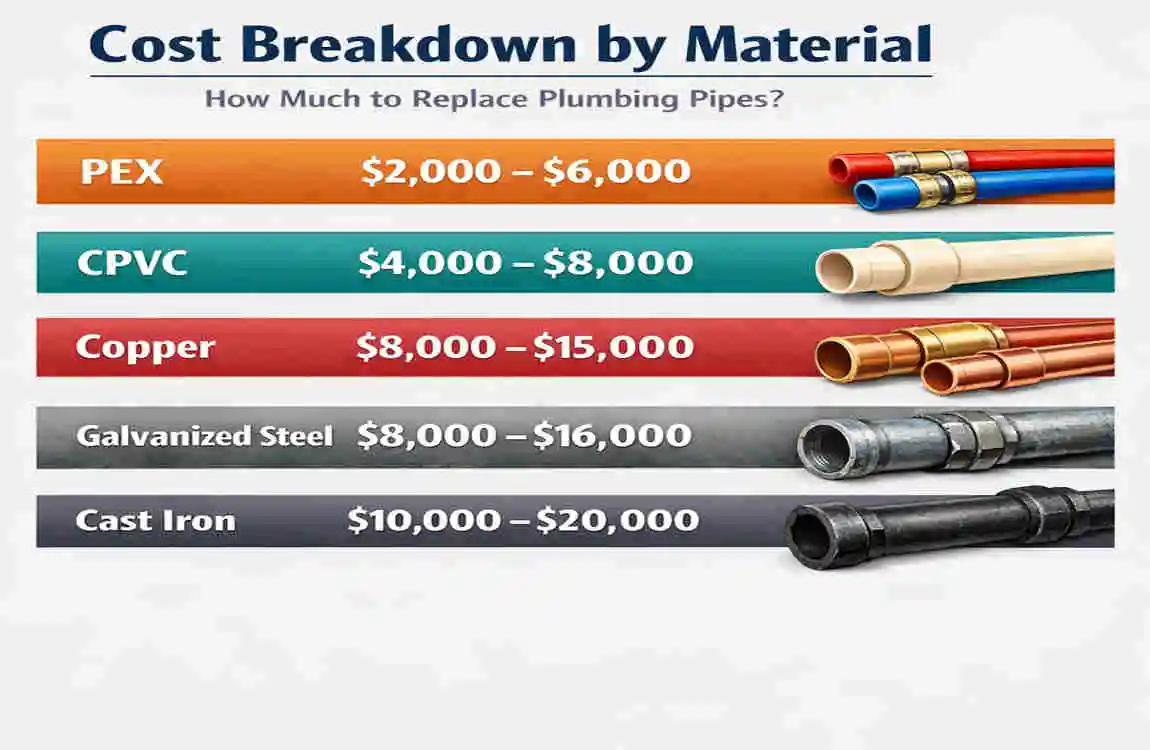
To truly understand how much to replace plumbing pipes, you need to pull back the curtain on how a plumbing contractor generates your invoice. The final number is not just pulled out of a hat; it is a carefully calculated mix of raw materials, hourly labor, and regional logistics.
The Material Cost Ratio
Surprisingly, the physical pipes only make up about 20% to 30% of your total project bill. For example, if you are repiping an average 2,000-square-foot home using PEX, the actual tubing and fittings will likely only cost you between $2,000 and $4,000. If you decide to upgrade to copper, those material costs will skyrocket to several times higher, easily adding thousands of dollars to your baseline estimate.
To put it in perspective, PEX materials run between $0.50 and $2.00 per foot. Copper will demand anywhere from $3.00 to $8.00 per foot. Multiply that by hundreds of feet of plumbing, and you can see why the material you choose dictates the budget.
The Heavy Hitter: Labor Costs
The lion’s share of your invoice goes directly to the professionals doing the hard work. Labor accounts for a staggering 50% to 70% of a pipe replacement job.
Why is it so expensive? Because repiping a house is incredibly invasive and meticulous work. Plumbers must map out the existing system, carefully cut into drywall, safely extract the old heavy pipes, seamlessly run the new lines, and test every single connection for pressure integrity.
Professional plumbing labor typically costs between $50 and $120 per hour, depending on the master plumber’s experience. An average whole-house repiping project will take a dedicated crew anywhere from 20 to 40 labor hours to complete. When you are asking how much to replace plumbing pipes, you are really asking how much it costs to rent a team of highly skilled technicians for a week.
Regional Cost Variations
Location changes everything. The cost of living in your specific area directly impacts contractor rates and material availability. For instance, if you are located in a bustling metropolitan center or experiencing the urban premiums of areas like Lahore, Punjab, you should expect to see a 20% to 60% increase in both labor and permit costs. High-density urban areas require trickier parking, more complex local building codes, and generally carry higher overhead for the plumbing businesses operating there. Keep this local markup in mind when budgeting your project.
Repiping Cost by Home Size: What to Expect
Let’s dive into the most accurate way to estimate your project. Searches for “repiping cost by home size” are incredibly common because square footage is the ultimate dictator of how much pipe is actually required. A massive, sprawling estate will need more linear feet of tubing than a cozy suburban bungalow.
Here is a data-driven breakdown of what you can expect to pay based on the size of your property.
Cost Breakdown Table by Square Footage
Home Size (sq ft)Linear Feet Needed PEX Total Cost EstimateCopper Total Cost Estimate Key Installation Notes
1,000–1,500 (Small) 200–400 feet $2,000–$5,000 $6,000–$12,000 Generally easier access, typically takes 1 to 2 days
1,500–2,500 (Medium) 400–700 feet $4,000–$8,000 $10,000–$20,000 The average American family home; standard labor rates apply
2,500+ (Large) 700+ feet $8,000–$15,000+ $16,000–$30,000+ High multi-story complexity, multiple bathrooms, longer timelines
Factoring in Plumbing Fixtures
Square footage is not the only metric; the number of fixtures in your home heavily influences the final price. A 2,000-square-foot home with one bathroom will be significantly cheaper to repipe than a 2,000-square-foot home with three full bathrooms, a wet bar, and a dedicated laundry room.
Every time a plumber has to connect a new pipe to an existing fixture (like a toilet, sink, shower, or dishwasher), it requires extra fittings, valves, and labor time. You should factor in an additional $450 to $1,800 per sink or toilet when calculating your overall budget.
The Foundation Factor: Slab vs. Crawlspace
How your home is built from the ground up changes the repiping game. If your house features a raised foundation with an easily accessible crawlspace or basement, plumbers can easily route new pipes underneath the floorboards.
However, if your home is built on a solid concrete slab, accessing the main water lines becomes a major construction event. Plumbers will either have to jackhammer through the concrete floor or completely reroute the pipes up through the attic and down inside the walls. Dealing with a concrete slab typically adds a 20% to 50% Premium to your total costs.
The Challenges of Old House Repiping
Historic or very old homes bring their own set of unique headaches. Plumbers often encounter lath and plaster walls (which are much harder to cut and repair than modern drywall), hidden asbestos insulation, and bizarre, outdated pipe configurations. Because of these unpredictable hurdles, repiping a historic or old house often carries a wider cost range, typically landing between $4,000 and $15,000.
Additional Costs and Hidden Factors
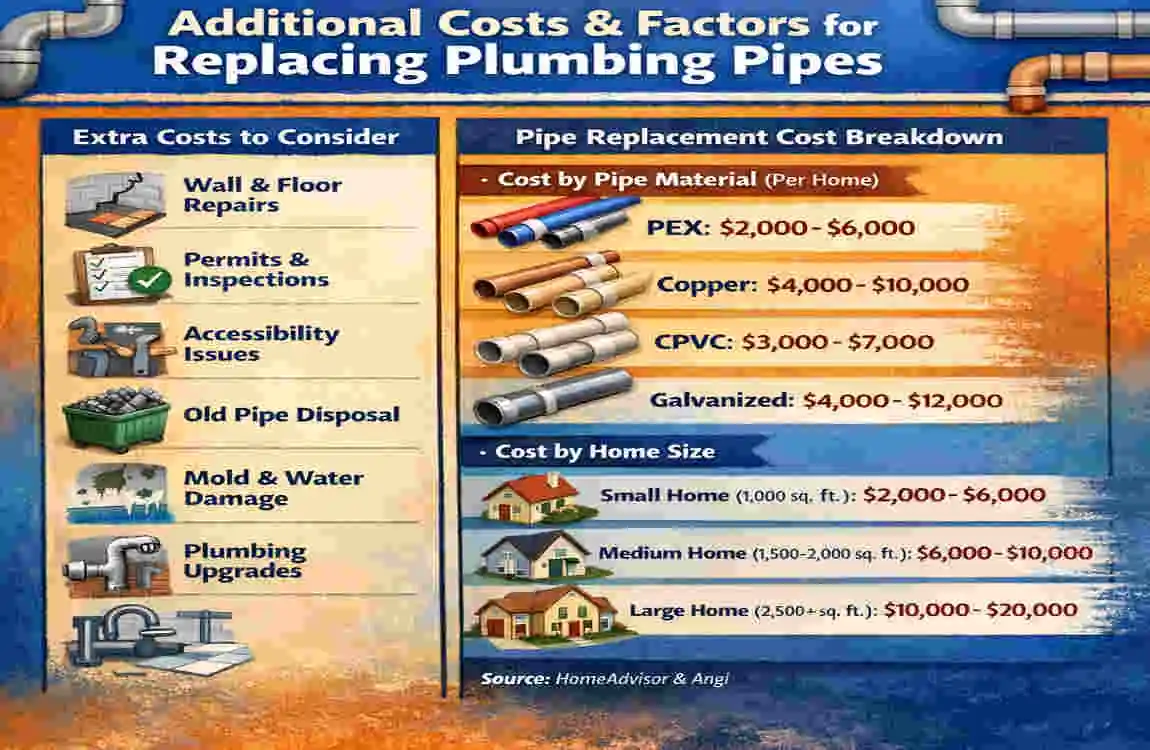
When researching how much to replace plumbing pipes, many homeowners look at the material and labor and stop there. Unfortunately, plumbing overhauls come with a variety of supplementary costs that can catch you off guard if you aren’t prepared.
Permits and Municipal Inspections
You cannot just rip out your home’s water system without telling your local government. Professional repiping requires municipal building permits to ensure the new system meets all modern health and safety codes. Depending on your city or county, pulling these permits and scheduling the mandatory inspections will cost anywhere from $200 to $1,000.
Demolition and Drywall Repair
To replace the pipes behind your walls, plumbers have to cut holes in your walls. It is an unavoidable reality of the job. While good plumbers are as minimally invasive as possible (especially when threading flexible PEX), you will still be left with patches of missing drywall. Hiring a drywall contractor or handyman to patch, sand, and repaint these holes usually costs between $1,000 and $5,000, depending on the extent of the demolition.
Replacing the Main Water Line
The pipes inside your home are only half the battle. If the main water line connecting your house to the city meter (or your private well) is old or damaged, it needs to be replaced as well. Trenching your yard to install a new main water line is a separate project that will add an extra $800 to $2,000 to your final bill.
Emergency Rush Fees
Plumbing rarely fails when it is convenient. If a pipe bursts at 2:00 AM on a Sunday, you cannot wait weeks for standard scheduling. Emergency, after-hours, or weekend plumbing services carry a heavy Premium. Expect your labor rates to spike by 25% to 50% if you need an emergency rush job. This is exactly why proactive repiping is so much cheaper than reactive emergency repairs!
DIY vs. Professional Repiping: Don’t Risk It
With the rise of internet tutorials, many handy homeowners wonder if they can bypass the labor costs and tackle a repiping project themselves. We are going to be very direct: Do not attempt to DIY a whole-house pipe replacement.
The Risks of DIY Plumbing
While you might be able to fix a leaky sink trap, replacing the entire pressurized water system of a home is a vastly different beast. First, you need specialized tools to crimp and secure PEX or solder copper safely. Second, if you make a single mistake on a hidden joint, you could cause a slow leak that rots your home’s structural framing and breeds toxic black mold for months before you notice.
Furthermore, unpermitted DIY plumbing can completely void your homeowner’s insurance policy. If a DIY pipe bursts and floods your living room, your insurance company will likely deny the claim, leaving you on the hook for tens of thousands of dollars in water damage.
The Value of Professional Plumbers
Hiring licensed professionals may seem expensive upfront, but it saves you 20% to 30% in long-term costs. Professional plumbers understand building codes, secure the necessary permits, and—most importantly—provide robust warranties on their artistry.
Additionally, a pro crew works fast. A seasoned team can completely repipe a standard home in just 1 to 5 days, minimizing the disruption to your daily life. A DIY approach could leave your family without running water for weeks of frustrating, back-breaking weekends.
Practical Savings Tips for Your Repipe Project
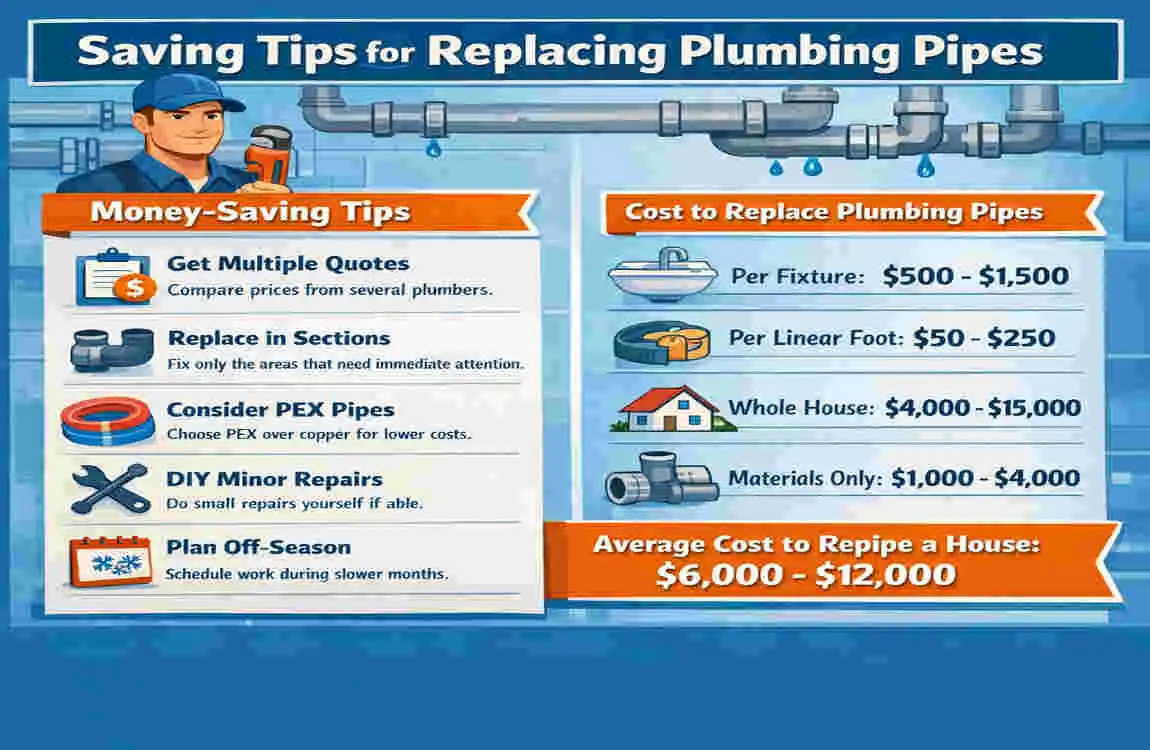
Learning how much to replace plumbing pipes can induce sticker shock, but there are savvy ways to keep your budget under control without sacrificing quality.
Shop and Compare Materials. As we have discussed, material choice is everything. Opting for PEX instead of copper is the fastest way to slash your bill. You can even speak to your contractor about sourcing the PEX materials yourself online if you find bulk discount pricing, though most pros prefer to use their trusted wholesale suppliers.
Schedule During Off-Peak Seasons Plumbers are swamped during the first hard freeze of winter and the rainy days of early spring. If your repiping project isn’t an immediate emergency, try to schedule the work during the slower late summer or early fall months. Contractors are often more willing to negotiate their labor rates when their schedules are wide open.
Bundle Your Upgrades. If you know your water heater is fifteen years old or your bathroom fixtures are outdated, replace them at the same time you repipe the house. Bundling these plumbing repairs into one major project saves you money on repetitive labor hours and overlapping permit fees.
Get Three Local Quotes. Never accept the very first estimate you receive. Call around and get at least three detailed, itemized quotes. If you are reading this from our service area, be sure to mention your Lahore location to local pros to ensure they factor in regional logistics accurately. Comparing multiple bids guarantees you are paying a fair, competitive market rate.
Frequently Asked Questions (FAQ)
How much to replace plumbing pipes in a 2000 sq ft home?
For a standard 2,000-square-foot home, you can expect to pay between $4,000 and $10,000 if you utilize cost-effective PEX tubing. If you choose high-end copper piping, that estimate will easily double, ranging from $10,000 to over $20,000.
Is PEX actually cheaper than copper?
Yes, dramatically so. PEX materials and the associated installation labor are generally 60% to 75% less expensive than a traditional copper system. PEX is flexible, requires fewer fittings, and snakes easily through existing walls, cutting labor time in half.
What is the average repiping cost per foot?
Depending strictly on the material itself, the cost per linear foot ranges from $0.40 for basic PEX to $8.00 for Premium copper. When you factor in the labor required to install it, the overall installed cost per foot typically ranges from $4.00 to $10.00.
How long does a full house repipe take?
For an average-sized home, a professional plumbing crew can complete a total repipe in 1 to 5 days. The timeline depends on whether you have a crawlspace or a concrete slab, and how much drywall needs to be cut and removed to access the old lines.
Do I have to move out of my house during a repipe?
Usually, no. Professional plumbers are accustomed to working in occupied homes. They will temporarily shut off your water during the day while they work, but they typically restore basic water service to at least one bathroom before they leave for the evening.
Will replacing my pipes increase my home’s value?
Absolutely. A brand-new plumbing system is a massive selling point for potential buyers. It guarantees them that they won’t have to deal with hidden water damage or failing infrastructure anytime soon. You can expect a solid return on investment when it comes time to sell.
Can I replace exposed pipes in the basement?
Yes, this is known as a partial repipe. If only your exposed basement lines are heavily corroded, replacing just those sections will save you significant money in drywall repair. However, if the hidden pipes in the walls are the same age, they will eventually fail too.
How do I know if I have dangerous lead pipes?
Lead pipes are typically dull gray and very soft. If you carefully scratch the pipe with a screwdriver, lead will shine brightly underneath the scratch. If your home was built before the 1980s and you suspect lead, have a professional test your water immediately. Replacing them is crucial for your health.