Ever wondered how many filters an HVAC system has to keep your air clean? You certainly are not alone! It is one of the most common questions homeowners ask when they finally decide to peek behind those metal grates in their hallways or basements. With rising energy costs and growing concerns about indoor air quality (IAQ), knowing exactly what is happening inside your heating and cooling system has never been more important.
Most of us wait until our home feels a little dusty or our allergies start acting up before we even think about changing our HVAC filter. But here is the truth: treating your filters like an afterthought is a fast track to higher utility bills and a strained system. By understanding the exact number of air filters in your home setup, you can save up to 15% on your monthly energy bills and drastically reduce airborne allergens like pet dander, pollen, and dust mites.
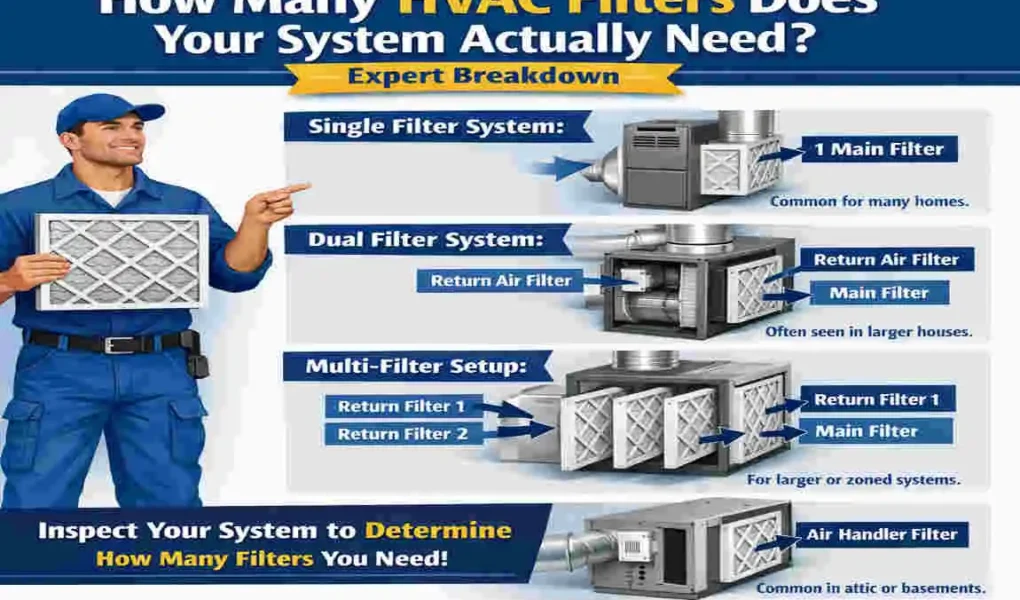
The exact number of filters you need depends entirely on your home’s size, your property’s layout, and the type of system you have installed. While some modern systems use a single, heavy-duty filter, older or more complex duct designs might require you to track down multiple filters scattered across different rooms.
Standard HVAC Filter Counts
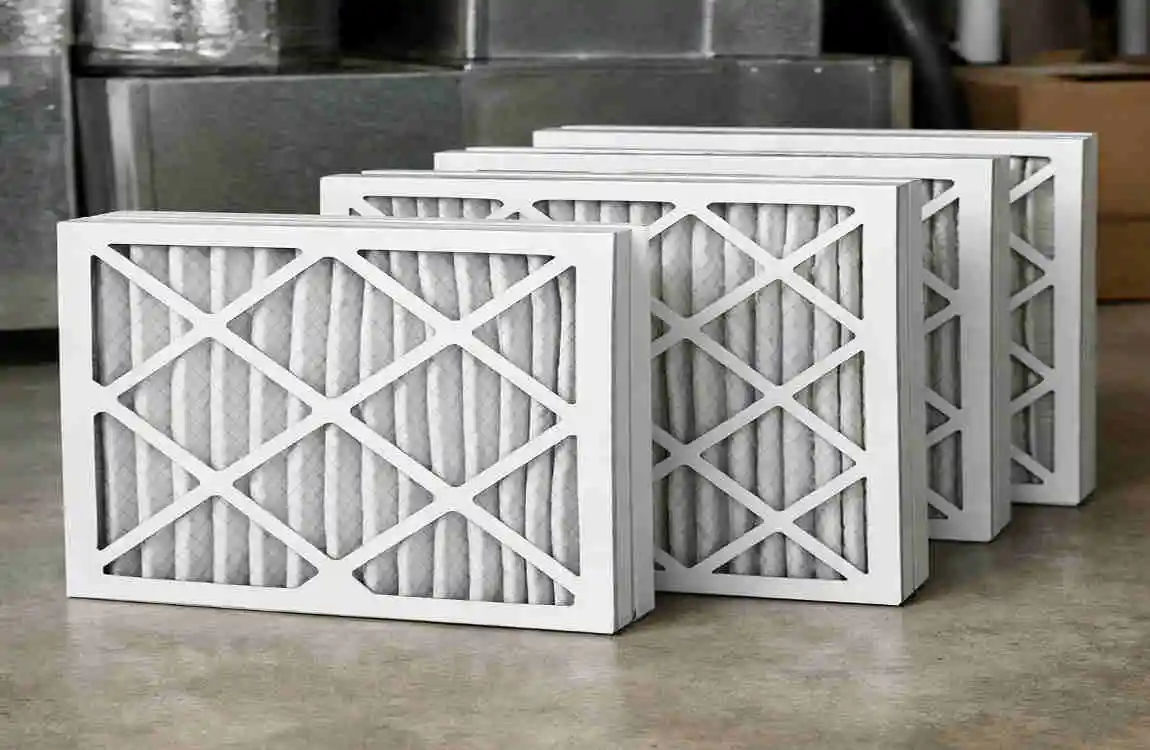
When answering the big question—how many filters does an HVAC system have—the simplest answer is usually one to three. Most standard residential homes require at least one primary filter per system. However, depending on how your home was built and how the ductwork was routed, you might need to replace anywhere from 2 to 5 filters.
The Primary Filter vs. Return Vent Filters
To break this down, let’s look at the anatomy of your home’s airflow. You have your central furnace or air handler, which is the heart of the operation. In most modern setups, there is a single primary filter located right next to the main unit. This is often a thicker filter designed to catch particles right before the air enters the main blower motor.
But what about the air traveling to the furnace? That is where your return vents come into play. Many homes feature secondary filters located right behind the metal grilles of these return vents. If your home has multiple return vents spread across different hallways or bedrooms, you might need a filter for each one.
How Home Size Impacts Filter Count
Larger homes generally need more air circulation, which means more air filters in household environments. If your home is over 2,000 square feet, there is a very good chance the builders doubled up on systems or installed multiple return vents to keep the air pressure balanced.
Take a look at this simple breakdown to see where your home might fall:
Home Size (sq ft)Systems Installed Return Vents Total Filters Needed
Under 2,000 1 1-5 1-5
2,000 – 3,000 1-2 3-7 3-7
Over 3,000 2+ 5+ 5+
As you can see, a massive five-bedroom house will need vastly different furnace filters than a cozy two-bedroom bungalow. Knowing your square footage is the very first step in solving your filter mystery.
Factors Affecting Filter Numbers
Now that we know the baseline, let’s look at why your neighbor’s house might have two filters while yours has five. The number of filters an HVAC system has is heavily influenced by a few specific factors unique to your property.
Home Layout and System Design
The architectural layout of your home heavily dictates your filter count. For example, if your air handler is stuffed up in an attic or tucked away in a tight crawl space, contractors often design the system to rely heavily on return vent filters. This is simply because crawling into a dark attic every 30 days to change a main filter is a nightmare for homeowners! Instead, they place the filters in easily accessible ceiling or wall grilles inside the living space.
Additionally, if you have a multi-story home, you likely have a zoned system. Multiple zones or dedicated upstairs/downstairs systems mean you are immediately doubling your HVAC filter count.
Lifestyle Additions: Pets and Allergies
Sometimes, the number of filters isn’t just about the ductwork; it is about your lifestyle. If you have a house full of shedding dogs, fluffy cats, or family members with severe seasonal allergies, standard filtration might not be enough. Many homeowners improve indoor air quality by adding additional filtration systems.
Here is a quick list of factors that might increase the filters you need to maintain:
- System location: Centralized systems usually have a single main filter, while distributed systems spread them across multiple nodes.
- Duct design: Single large returns use a single large filter, while multi-return designs use several smaller filters.
- Air Quality Add-ons: Dedicated HEPA air purifiers or whole-home media cabinets can add 1 to 2 extra filters to your monthly checklist.
If you have upgraded your home to fight off pet dander, you will need to keep a close eye on all these additional filter points to keep your system running smoothly.
Common HVAC System Types
To truly understand your AC unit filters, you need to know what kind of machine is actually cooling and heating your home. Not all systems are created equal, and their filtration needs vary wildly.
Single-Stage Central Systems
This is the classic American home setup. You have one big unit outside (the condenser) and one big unit inside (the air handler or furnace). In single-stage systems, you usually have only 1 to 2 filters. They are primarily located right at the air handler or at a large, centralized return grille in your main hallway.
Multi-Zone and Ductless Mini-Splits
Ductless mini-splits are becoming incredibly popular for their energy efficiency and room-by-room control. But they completely change the game when it comes to filter maintenance. Because these systems do not use a centralized duct network, they don’t have a centralized filter.
Instead, you need exactly one filter per indoor wall unit. If you have a mini-split head in your living room, kitchen, main bedroom, and guest room, you have four separate filters to clean! Thankfully, these are usually washable, reusable screens rather than disposable cardboard filters.
Window and Portable AC Units
Don’t forget the smaller guys! If you supplement your home’s cooling with window units or portable floor ACs, you need to count those, too. Every single window or portable AC has at least one washable filter protecting its inner coils.
Let’s compare these systems so you can easily identify what you are working with:
System Type, Typical Filter Count, Common Locations
Central Furnace 1-3 Air handler, returns
Ductless Split 1 per indoor unit Indoor evaporator unit
Window AC 1 Rear or side grille
Filter Locations Explained
You know what kind of system you have and roughly how many filters you should be looking for. But where on earth are they actually hiding? Finding your return air filter locations can sometimes feel like a bizarre scavenger hunt.
The Primary Air Handler Slot
In 90% of homes with a central system, the primary filter is typically located right next to the furnace or air handler. Look for a narrow metal slot—usually about an inch or two wide—located right where the large return duct meets the main metal cabinet of the furnace. This slot might have a little metal door or simply a removable cover. Slide it out, and boom, you have found the main filter.
Locating Secondary Return Grilles
If your central unit does not have a filter slot or if you have a multi-return setup, check your walls and ceilings. Walk through your home and look for large, slatted metal grilles. These are your return vents. They are usually much larger than the vents that actually blow hot or cold air into the room.
If you see little latches or levers on the corners of these grilles, that is a dead giveaway! Unlatch them, swing the grille open like a door, and you will find your secondary filters sitting right inside.
Your 5-Step Filter Location Guide
Still struggling to find them all? Follow this simple step-by-step guide to locate every single filter in your house:
- Start at the Source: Go to your basement, garage, or utility closet and inspect the main furnace/air handler for a filter slot.
- Walk the Hallways: Check the walls in your main hallways for large, latching metal grilles.
- Look Up: Check the ceilings in open-concept living rooms or upstairs landings, as air naturally rises and returns are often placed high up.
- Check the Bedrooms: Older homes or highly customized builds might have small return vents (and filters) in individual bedrooms.
- Inspect Add-ons: Do you have a UV light purifier, a whole-home humidifier, or an HRV/ERV system? Check those user manuals, as they often have their own pre-filters!
Choosing the Right Filter Count
Once you figure out how many filters an HVAC system has in your specific home, the next challenge is choosing the right type of filter. You might think that buying the absolute thickest, tightest filter on the market is the best choice, but that is a dangerous trap!
The MERV Rating Balancing Act
Air filters are graded on a scale called MERV (Minimum Efficiency Reporting Value). The higher the number, the smaller the particles it can catch.
For the healthiest home environment, a MERV 13 to 14 filter is generally considered ideal, as it catches everything from dust to bacteria and even some viruses. However, there is a catch. High-MERV filters are incredibly dense. If you have multiple return vents and stuff a high-MERV filter into each of them, you might accidentally choke your system.
Avoiding the Over-Filtering Trap
Your HVAC system relies on a very specific volume of airflow to work properly. Over-filtering strains the blower motor, causes the internal coils to freeze up, and drastically shortens the lifespan of your expensive equipment.
If you want high efficiency without straining the system, the best approach is often to use a single, thick media filter (4 to 5 inches thick) at the main air handler, rather than stuffing 1-inch-thick pleated filters into every return vent. Thick media filters have more surface area, allowing them to capture microscopic allergens without blocking airflow.
Customizing for Your Household
You need to balance your filter count and type based on your household’s actual needs.
- Mild Allergies: Add 1 to 2 standard MERV 8-11 filters.
- Heavy Pets: You might need to use high-MERV filters, but you will need to change them far more frequently to prevent clogging.
Filter Quality (MERV)Ideal Use Case Estimated Cost per Filter
MERV 1-4 (Fiberglass) Basic dust protection only $2 – $5
MERV 5-8 (Pleated) Standard home use $10 – $15
MERV 9-12 Homes with pets $15 – $25
MERV 13+ Severe allergies / Smog $25 – $40+
By matching the right MERV rating to the right furnace filters, you keep your air pristine and your system humming happily.
Maintenance for Multiple Filters
Now that we have fully mapped out how many filters an HVAC system has in your house, let’s talk about the chore nobody likes: maintenance. Keeping track of one filter is hard enough, but with a multi-filter system, you need a solid game plan.
The Rule of Thumb for Replacements
As a general rule, standard 1-inch filters need to be replaced every 1 to 3 months. However, if you have a multi-filter setup, this timeline can shift based on your lifestyle. If you have four dogs and live in a dusty, dry climate, you might be swapping those filters every 30 days like clockwork.
How do you know if you are neglecting them? Your home will give you warning signs. If you are constantly dusting your furniture, noticing weird odors when the heat kicks on, or seeing a sudden, unexplained spike in your monthly utility bills, your filters are likely clogged solid.
The Financial Cost of Neglect
Let’s talk about money. Did you know that a proper filter replacement schedule can cut your HVAC energy consumption by 10% to 15%? When a filter is clogged, the motor has to work twice as hard to pull the same amount of air through the system. That translates directly into wasted electricity and gas.
Your Multi-Filter Maintenance Checklist
To keep everything running efficiently, incorporate this simple checklist into your household routine:
- Inspect all returns monthly: Don’t just guess. Take a flashlight, walk up to your return air filter locations, and visually inspect them. If you can’t see the filter material beneath the dust, it is time to replace it.
- Log your replacements: Keep a piece of masking tape and a Sharpie near your main air handler. Every time you change the filters, write down the date. It takes two seconds and saves you from the “did I do that last month or three months ago?” guessing game.
- Schedule a pro inspection yearly: Even with perfect filter habits, dust bypasses the system. Have a professional technician clean your interior coils and check your blower motor at least once a year.
Myths About HVAC Filters
Because HVAC systems operate entirely behind the scenes, many myths and misunderstandings have arisen over the years. Let’s bust the most common fallacies so you don’t make a costly mistake.
Busting the Top 5 Filter Fallacies
Every single home needs exactly one filter. Reality: As we have explored extensively, this varies dramatically by design! A small condo might have one, while a sprawling ranch home could have six. Never assume your new home has the same setup as your old one.
More filters equal better air quality. Reality: Nope! This is the most dangerous myth of all. Adding secondary filters to a system that wasn’t designed for them creates massive airflow resistance. It is like trying to breathe through a thick wool blanket. You risk overheating your furnace and freezing your AC coils.
Cheap fiberglass filters are perfectly fine. Reality: Those $2 see-through blue fiberglass filters only protect the furnace motor from large debris like hair and gravel. They do absolutely nothing to improve your indoor air quality or catch fine dust and allergens.
You only need to change them once a year. Reality: Only heavy-duty, 4- to 5-inch-thick media cabinets can last 6 to 12 months. Standard 1-inch pleated filters must be changed every 30 to 90 days.
A clean-looking filter doesn’t need to be changed. Reality: Microscopic particles clog the tiny pores of a filter long before the surface looks like a gray, dusty sweater. Stick to the timeline, not just the visual test.
Frequently Asked Questions (FAQ)
How many filters does an HVAC system typically have? For the vast majority of standard residential homes, you will find 1 to 3 filters. This usually consists of one primary filter at the air handler and, potentially, a few secondary filters at the main return vents.
Does home size affect HVAC filter count? Yes, absolutely. Larger homes require more air circulation to maintain consistent temperatures. To accommodate this, builders install multiple return vents, meaning a large home can easily require 5 or more filters.
Where are extra HVAC filters located? If they aren’t right next to your furnace or air handler, extra filters are usually located behind the large, slatted metal grilles in your walls or ceilings. These are called return vents.
Can I add more filters to my HVAC? Technically, yes, but you must check system compatibility first. Slapping extra filters over vents can restrict airflow and damage your blower motor. Always consult an HVAC professional before adding custom filtration.
How often should I change filters in multi-filter systems? Standard 1-inch filters in a multi-filter system should be inspected monthly and replaced every 30 to 90 days. Homes with pets, smokers, or allergy sufferers should lean closer to the 30-day mark.