Have you ever walked into a bedroom and immediately felt a sense of calm? Or, conversely, have you stepped into a space where you felt instantly cramped and claustrophobic? The difference usually comes down to one crucial factor: space.
If you are planning a home renovation, building from scratch, or simply hunting for your dream house, you have probably asked yourself this common question. How big is a main bedroom supposed to be?
It is a fantastic question, and the answer is more than just a simple number. The size of your main sleeping quarters deeply impacts your daily comfort, your mental well-being, and even the overall resale value of your property. We all want that luxurious, sprawling oasis, but we also have to deal with the practical realities of lot sizes and architectural constraints.
Whether you are looking at the sprawling, generous averages found in modern United States buildings, or the more compact, cleverly designed spaces in bustling urban centers like Lahore, Pakistan, understanding bedroom dimensions is vital.
What Is a Main Bedroom? Defining the Space
Before we start throwing around square footage numbers and dimension charts, we need to define what exactly we are talking about. What sets this room apart from any other sleeping space in your house?
The Evolution of the Term: From Master to Primary
First, let us touch on a recent shift in the world of real estate and interior design. You might have noticed that many builders, realtors, and designers are moving away from the term “master bedroom.”
Instead, the industry is widely adopting the term “primary bedroom.” This change reflects a modern push for more inclusive language within our homes. While both terms mean the exact same thing—the largest and most well-equipped bedroom in the house—using “primary suite” has become the new standard in contemporary design circles. Throughout this guide, we will use the terms interchangeably to mean your main bedroom oasis.
Key Features That Define the Space
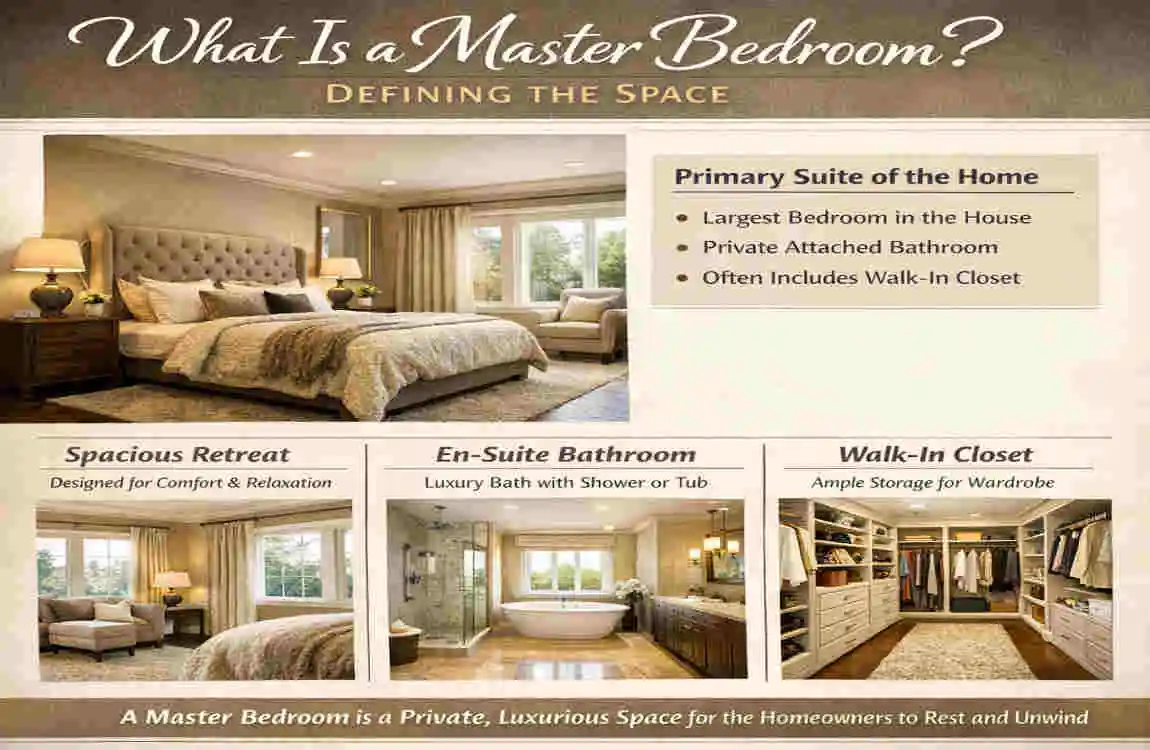
So, what makes a primary suite so special? It is not just about having extra floor space to pace back and forth. A true primary bedroom acts as a self-contained retreat within your home.
Typically, this room features direct access to an en-suite bathroom. This means you do not have to walk down the hall in your towel; your private bathroom is connected right to your sleeping quarters.
Additionally, these rooms almost always feature superior storage. We are talking about spacious walk-in closets that offer enough room to actually step inside and browse your wardrobe, rather than standard reach-in closets. Many luxury primary suites also carve out enough square footage for a dedicated sitting area, a cozy reading nook, or even a private home office setup.
Why Perception of Size Varies
Your idea of a “large” bedroom heavily depends on where you live and the cultural norms of your region.
If you grew up in a sprawling, multi-acre suburban home, your baseline for a standard room is going to be quite large. However, if you are accustomed to city living, your perception changes. For example, the luxurious, sprawling villas in suburban Lahore will feature massive, high-ceilinged bedrooms. In contrast, modern apartments in the heart of the same city prioritize efficient, multi-functional spaces where every inch counts.
Main Bedroom vs. Secondary Bedroom Comparisons
To give you a clearer picture of how the primary suite stands out, let us look at a quick comparison between your main retreat and the secondary bedrooms in a typical home.
Feature Primary / Master Bedroom Secondary / Guest Bedroom
Average Size 150 to 300+ sq ft 100 to 130 sq ft
Bathroom Access Private, attached en-suite, Shared hallway bathroom
Closet Space : Walk-in closet (often separate for two people) , Standard reach-in closet or wardrobe
Furniture Capacity King bed, nightstands, dressers, seating area Twin, Full, or Queen bed, single dresser
Location: Best view, often secluded from living areas. Grouped together along a single hallway
Average Main Bedroom Sizes Worldwide and in Pakistan
Now that we know what makes a primary suite special, let us talk numbers. How big is a main bedroom on average? The answer shifts dramatically depending on where you place your pin on the globe.
Global Averages and Western Standards
When we look at global housing statistics, the average size of a primary bedroom generally falls somewhere between 120 and 200 square feet. However, this is just an average of highly varied global data.
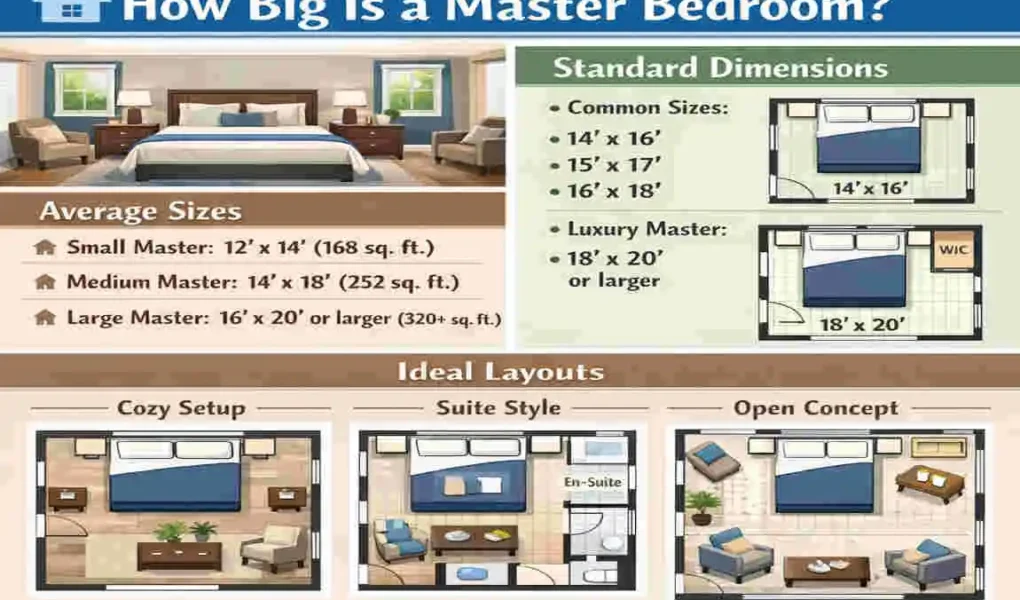
If we zoom in on the United States and Western Europe, the numbers skew larger. According to sources like the National Association of Home Builders, new single-family homes in the U.S. boast primary bedrooms that average around 14 by 16 feet.
This equates to about 224 square feet of space. This generous footprint easily accommodates a massive California King bed, two oversized nightstands, a large dresser, and often a comfortable armchair in the corner. Western standards prioritize open floor space to give a feeling of airiness and luxury.
Pakistan-Specific Insights: Lahore and Beyond
Let us shift our focus to South Asia, specifically the vibrant real estate market in Pakistan. In a bustling, historic, and rapidly expanding city like Lahore, bedroom sizes tell a story of two different lifestyles.
If you are looking at newly constructed, urban homes or family bungalows in areas like DHA or Bahria Town, the primary bedrooms are quite generous. You will typically find these spaces ranging from 150 to 250 square feet. Builders know that local families value spacious private quarters that can accommodate heavy, traditional wooden furniture and offer a quiet retreat from busy multi-generational households.
However, as you move into vertical living and modern apartment complexes within the city center, the footprint naturally shrinks. In these high-rises, a primary bedroom usually measures between 100 and 150 square feet. Here, the focus shifts from sprawling floor space to smart, vertical storage and highly efficient layouts.
Factors Influencing These Sizes
Why do these numbers fluctuate so wildly? It comes down to a few key factors.
First is the home type. A sprawling single-story bungalow naturally allows for larger room footprints than a multi-story urban flat.
Second is the overall lot size. When land is at a Premium in densely populated cities, architects must squeeze more utility out of less space, prioritizing communal living areas over massive sleeping quarters.
If we were to visualize this on a size comparison chart, it would look something like this:
- Tiny/Compact (Apartment Living): 100 to 120 sq ft. Fits a queen bed snugly.
- Standard/Average (Typical Urban Home): 150 to 180 sq ft. Fits a king bed comfortably.
- Luxury/Spacious (Suburban Villa): 250 to 300+ sq ft. Fits a king bed, sitting area, and large vanity.
Standard Master Bedroom Dimensions by Region and Home Type
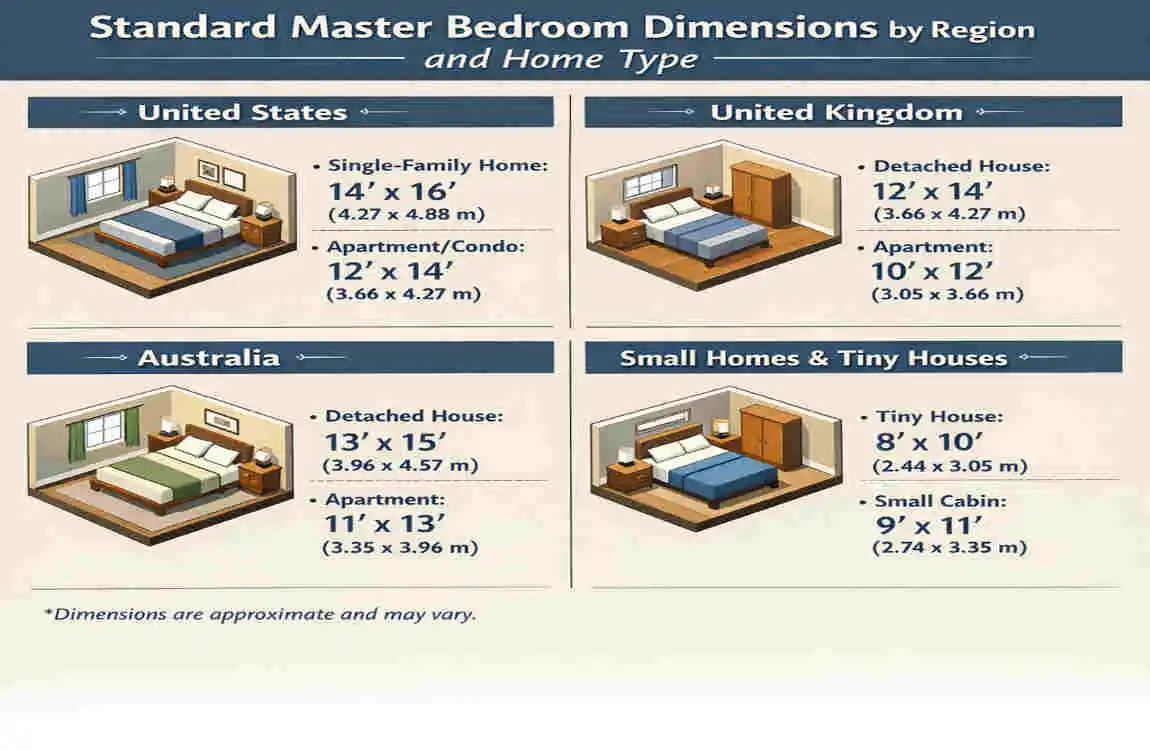
Average square footage is helpful, but when you are actually drawing up a floor plan or buying furniture, you need to know exact dimensions. Let us break down the standard width and length measurements.
The Minimum Viable Size
Can a small room technically be a main suite? Yes. The absolute minimum viable size for a room to comfortably serve as a primary bedroom for two adults is 10 by 12 feet.
This gives you exactly 120 square feet of space. In a room this size, you can fit a queen-sized bed and two small nightstands. You will have enough room to walk around the bed, but you will not have much leftover space for bulky dressers or seating areas. It is cozy, efficient, and requires strict organization to prevent it from feeling cluttered.
Exploring Standard Dimensions
Let us look at how standard dimensions break down across different types of homes. This table will help you visualize what you can actually fit into these spaces.
Region / Home Type Width x Length Square Footage Furniture Fit & Notes
U.S. New Builds 14 x 16 ft 224 sq ft Easily fits a King bed, large nightstands, and a media console.
Pakistan Urban Homes 12 x 14 ft 168 sq ft Perfect for a standard King bed and traditional local wooden wardrobes.
Luxury Villas & Estates 16 x 20 ft 320 sq ft Massive space. Includes room for a private sitting area, desk, and vanity.
Compact city Flats 10 x 12 ft 120 sq ft Snug fit. Best with a Queen bed, floating shelves, and sliding closet doors.
Building Codes and Basic Requirements
It is important to understand that you cannot just throw up some drywall and call it a primary bedroom. Building codes exist to keep you safe and comfortable.
For instance, the International Residential Code (which heavily influences local building standards globally) states that any room designated as a bedroom must have a minimum of 70 square feet of floor space. Furthermore, it must not be less than 7 feet in any horizontal direction.
A bedroom must also have a window that can serve as an emergency exit, proper ventilation, and a minimum ceiling height (usually 7 feet). When planning your space, ensuring you meet these baseline safety standards is just as important as choosing the right paint color.
Picture a standard 14 by 16 foot layout. You place your king bed against the 14-foot wall. This leaves you plenty of room on either side for bedside tables. The 16-foot length means that even with a bed extending 80 inches into the room, you still have nearly 9 feet of clearance at the foot of the bed for a plush rug, a television stand, or a cozy bench.
Ideal Main Bedroom Layouts for Different Lifestyles
Knowing your dimensions is only half the battle. How you arrange your furniture within those dimensions is what transforms a simple box into a functional, beautiful living space. Let us explore ideal layouts based on the size of your room and your specific lifestyle needs.
The Cozy Minimalist Layout (Under 150 sq ft)
If you are working with a more compact space, say 10×12 or 11×13 feet, you need to embrace minimalism. The goal here is to keep the floor clear to create an illusion of space.
How to set it up: Position your bed against the longest solid wall. Instead of bulky, traditional bedside tables, install floating nightstands directly into the wall. This keeps the floor underneath visible, which tricks the eye into thinking the room is larger.
Use wall-mounted sconces for reading lights instead of taking up tabletop space with lamps. Keep dressers out of this room if possible, relying entirely on an optimized, built-in closet.
The Family-Friendly Zone (150-200 sq ft)
When you hit the sweet spot of 150 to 200 square feet, your room can start doing double duty. This is especially important for young families where the primary bedroom often becomes a morning gathering space.
How to set it up: In this layout, you want to create distinct zones. You have your sleeping zone, centered around your bed. But you also have room to add a comfortable armchair and a small side table in a corner—a perfect, quiet spot for nursing a baby or reading a book.
You can also incorporate a long, low dresser against the wall opposite the bed, doubling as a media console for a television. Make sure to leave at least 36 inches of walkway space between the foot of the bed and the dresser to allow for easy traffic flow during busy mornings.
The Ultimate Luxury Retreat (200+ sq ft)
If you are blessed with a sprawling space of over 200 square feet, the world is your oyster. You do not just sleep here; you live here.
How to set it up: Pull your bed slightly away from the walls to give it a grand presence. In a space this large, you can incorporate a dedicated sitting area at the foot of the bed, complete with a small loveseat and a coffee table.
If you live in a climate like Lahore, where the monsoon rains are spectacular to watch, orient your layout so your bed or sitting area faces large French doors leading out to a private balcony. You might even have the space to install a cozy fireplace nook in the corner, creating an unmatched ambiance during the cooler winter months.
Pro Tips for Flow and Feng Shui
No matter which layout you choose, certain universal rules apply.
- Never block natural light. Your bed should not overlap with your windows.
- Consider the L-Shape: If your room is L-shaped, use the smaller nook for your walk-in closet or a dressing vanity, keeping the main square area dedicated solely to sleeping and relaxation.
- Embrace Feng Shui: In traditional Pakistani homes and modern designs alike, energy flow matters. Position your bed so you have a clear view of the door from where you sleep, but try to avoid placing the bed directly in line with the doorway. This “command position” promotes a feeling of safety and restful sleep.
Factors Affecting Main Bedroom Size Choices
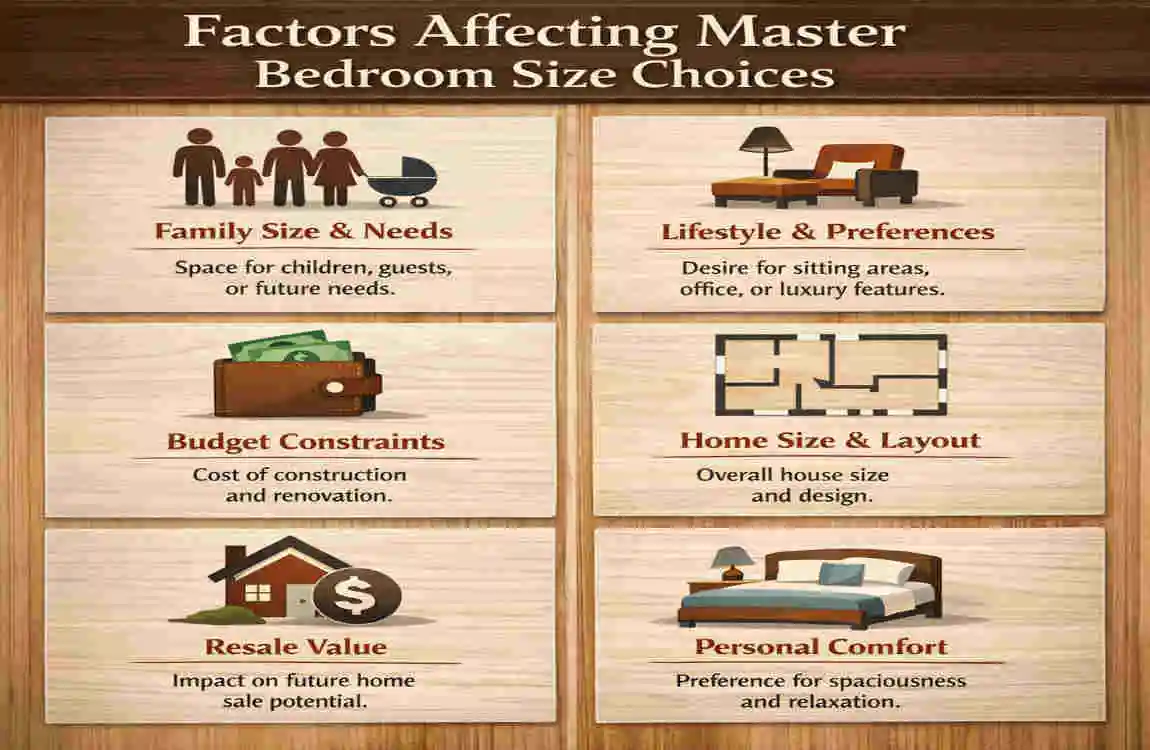
When determining exactly how big your main bedroom should be, you cannot just look at aesthetic preferences. Several highly practical factors will ultimately dictate the size of your space.
Budget Considerations and Resale Value
Let us talk about money. Square footage costs money to build, heat, cool, and furnish. If you are building a home, pushing a bedroom from 150 square feet to 250 square feet will significantly impact your construction budget.
However, this investment often pays off. The primary suite is one of the most heavily scrutinized rooms by potential homebuyers. A spacious, well-appointed primary bedroom can increase your overall home price by 5% to 10% when it is time to sell. Buyers are willing to pay a Premium for a retreat that feels luxurious and relaxing.
Family Needs and Accessibility
Your stage in life heavily dictates your space requirements. A young professional couple might be perfectly happy in a compact, modern city flat. However, as families grow, needs change.
You also need to think about the long term. If this is your “forever home,” you must consider aging in place. Designing a primary suite that is ADA-compliant (Americans with Disabilities Act) or simply accessible for elderly individuals requires more space. You need wider doorways, extra floor space to accommodate a wheelchair or walker, and a larger footprint in the attached bathroom for grab bars and a walk-in shower.
Architectural Trends and Local Climate Variations
Current architectural trends lean heavily toward open-concept living. Sometimes, to get that massive, open kitchen and living room downstairs, architects must sacrifice a little square footage in the bedrooms upstairs. You have to decide if you prefer a massive private sanctuary or sprawling communal areas.
Furthermore, local climate plays a massive role. Let us look at local Lahore insights. In regions with notoriously hot, humid summers, room volume matters. Higher ceilings and slightly larger floor plans allow for better air circulation and ventilation. A cramped room will heat up much faster. Additionally, in Pakistani homes, it is incredibly common to allocate a specific, quiet corner of the primary bedroom as a dedicated prayer area. You must factor in this extra necessary floor space when planning your room dimensions.
How to Measure and Maximize Your Master Bedroom Space
You cannot optimize what you do not understand. Before you buy a single piece of furniture, you need to measure your space accurately. Let us walk through exactly how to do this, and then look at ways to make the most of every single inch.
A Step-by-Step Measuring Guide
Put down the flimsy cloth measuring tape. If you want to get this right, you need the right tools.
- Get a Laser Measure: For less than the cost of a nice dinner, you can buy a digital laser measuring tool. It is vastly more accurate than a traditional tape measure and can be used by one person easily.
- Measure Wall to Wall: Place the laser on one baseboard and shoot it to the opposite wall. Write down the exact width and length.
- Account for Obstacles: Do not just measure the empty floor. Measure the width of your doorways, the height of your windows, and the exact location of your closet doors.
- Note the Outlets: Mark exactly where your electrical outlets and air vents are located. You do not want to place a massive, heavy headboard directly over your only air conditioning vent!
Brilliant Space-Saving Hacks
If you measure your room and realize you are working with a smaller footprint than you hoped for, do not panic. You can maximize your space with a few clever design choices.
- Embrace Built-ins: Instead of buying freestanding wardrobes and dressers that eat up floor space, invest in custom built-in cabinetry that goes all the way to the ceiling.
- The Magic of Murphy Beds: If your primary bedroom also serves as a daytime office, consider a high-end Murphy bed that folds seamlessly into the wall, instantly giving you back 40 square feet of floor space during the day.
- Under-Bed Storage: Utilize hydraulic beds that lift up, revealing a massive storage compartment underneath for seasonal clothing, extra bedding, and suitcases.
If you are considering a renovation, calculate the return on investment (ROI). Bumping out a wall to expand your primary bedroom from a cramped 120 square feet to a comfortable 200 square feet can dramatically change how you enjoy your home, and as mentioned earlier, it heavily boosts resale value.
Essential Furniture Fit Checklist
To ensure your room flows perfectly, use this spatial checklist when planning your layout. These are the golden rules of bedroom spacing:
- The King Bed Footprint: A standard king mattress is 76 inches wide and 80 inches long. Add another few inches for a bulky bed frame.
- Walkway Clearance: You absolutely must maintain a minimum of 24 inches (preferably 30 to 36 inches) of walking space on both sides of the bed and at the foot of the bed.
- Door Swings: Ensure you have at least 36 inches of clearance for the entry door and closet doors to open completely without hitting any furniture.
- Dresser Drawers: If you have a dresser, leave at least 36 inches of space in front of it so you can comfortably pull the drawers all the way open and still stand in front of them.
Common Mistakes in Master Bedroom Sizing and How to Avoid Them
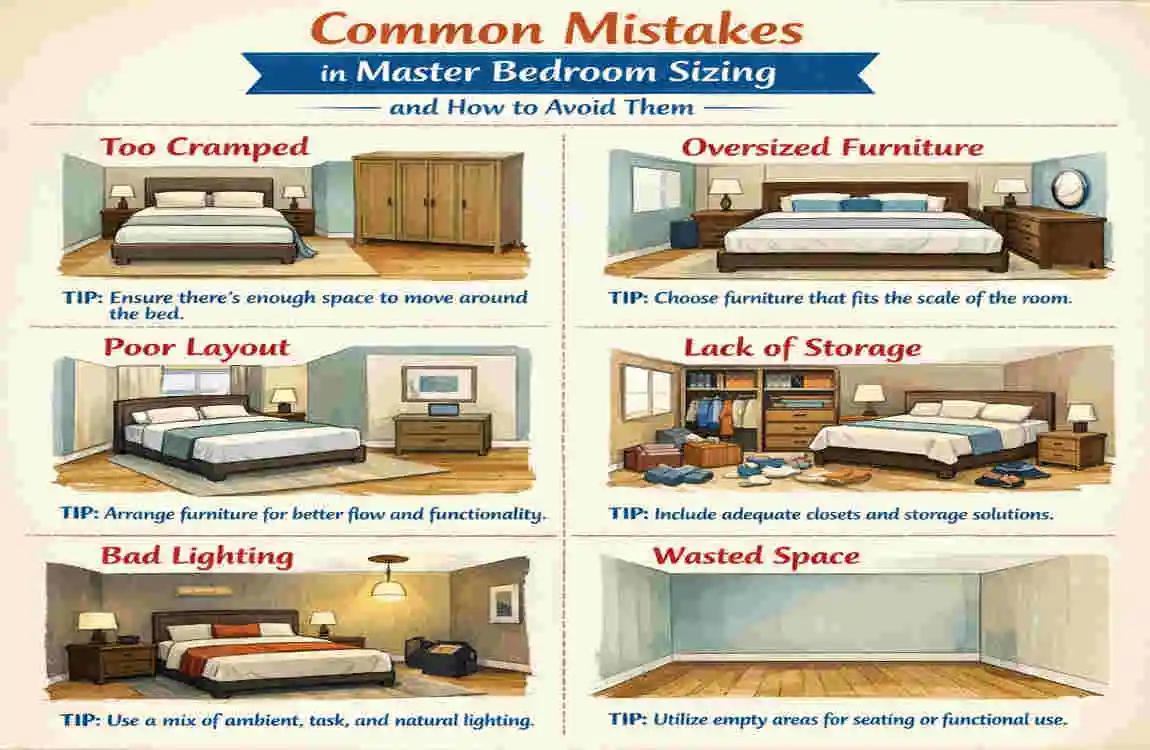
Even with the best intentions, people often make critical errors when designing or furnishing their primary suites. Let us highlight the most common pitfalls so you can avoid them entirely.
The Pitfall of Overcrowding
This is the number one mistake homeowners make. You have a beautiful 12×14-foot room, and you decide to stuff it with a massive California King sleigh bed, two giant wooden dressers, a vanity, and a loveseat.
The result: You are constantly bumping your shins, the room feels visually chaotic, and your relaxing retreat suddenly feels like a storage unit.
The fix: Scale your furniture to your room size. If you have a smaller room, opt for a platform bed with clean, minimal lines instead of a bulky four-poster bed. Before you buy, map out the furniture footprint on your floor using blue painter’s tape to visually see how much space it will eat up.
Ignoring Airflow and HVAC Needs
Often, people renovate to increase their bedroom size but forget to upgrade their heating and cooling systems to handle the extra volume.
The result: Your beautiful, massive new bedroom is freezing in the winter and stuffy in the summer.
The fix: Consult with an HVAC professional if you are expanding your room’s square footage. Ensure your vents are not blocked by heavy furniture, allowing air to circulate freely.
Getting the Proportions Wrong
A massive 300 square foot bedroom might sound incredible, but if you put a tiny Queen bed in the center and use small, delicate nightstands, the room will look empty, cold, and disproportionate.
The fix: Match the scale of your decor to the scale of your room. Large rooms demand large, grounding pieces of furniture. Use oversized rugs to anchor the space and create visual warmth.
Featured FAQ Section
How big is a main bedroom on average? Globally, the average primary bedroom measures between 120 and 200 square feet. However, in modern Western new builds, the average is significantly larger, often hovering around 224 square feet to accommodate larger furniture and open floor plans.
What are standard master bedroom dimensions? Standard dimensions vary by home type, but they typically range from 12×14 feet (168 sq ft) for standard urban homes, to 14×16 feet (224 sq ft) for suburban single-family houses, up to 16×20 feet (320 sq ft) for luxury villas and estates.
How big should a main bedroom be for a king bed? To comfortably fit a standard King-size bed (which measures 76 by 80 inches), your room should be at least 12 by 12 feet. However, to allow for nightstands, dressers, and comfortable walking space, a room dimension of at least 14×16 feet is highly recommended.
What is the ideal main bedroom size in Pakistan? For families in Pakistan looking for comfort, especially in urban centers like Lahore or Karachi, an ideal primary bedroom ranges from 150 to 250 square feet. This size comfortably accommodates traditional large furniture, provides excellent ventilation for warmer climates, and allows space for a private prayer area.
Can a 10×12 room be a main bedroom? Yes, absolutely! A 10×12 foot room yields 120 square feet, which meets all standard building code requirements for a bedroom. While it is on the smaller side, utilizing smart layout techniques—like using a queen bed, installing floating nightstands, and utilizing vertical wall storage—can make a 10×12 room feel like a highly functional, cozy primary suite.