
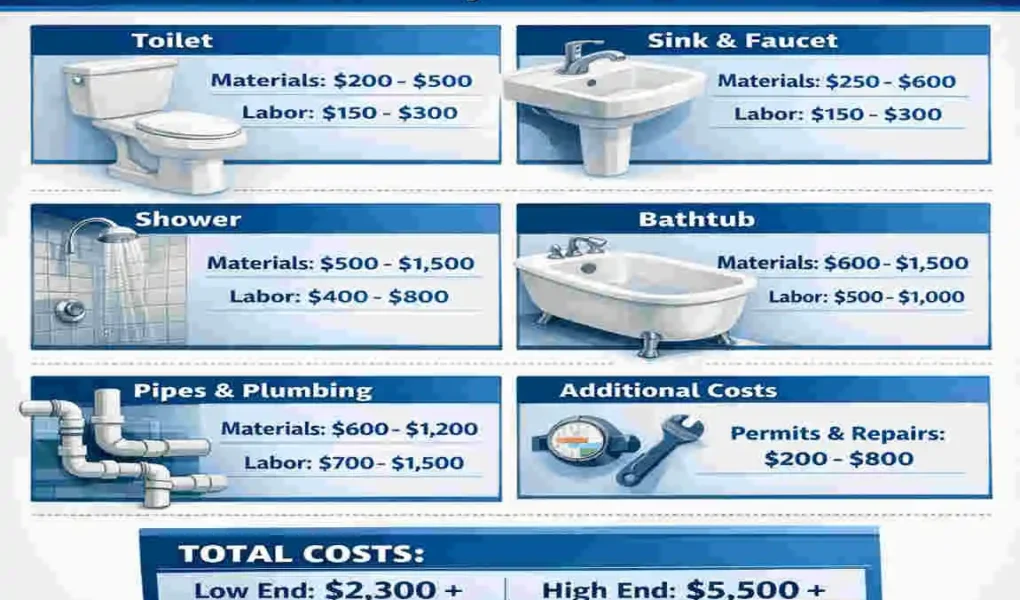
You walk into your bathroom on a quiet Tuesday morning, ready to start your day, only to feel a cold, squishy puddle soak right through your socks. What started as a tiny, innocent leaky faucet has suddenly transformed into a full-blown plumbing nightmare. As you frantically grab towels to soak up the mess, your mind immediately jumps to the dread of renovation expenses. You catch yourself wondering, how much would it cost to replumb a bathroom?
If you are currently facing this stressful scenario, take a deep breath. You are in the right place. We are going to answer your core question right up front so you know exactly what to expect. In 2026, the national average to replumb a standard bathroom ranges from $3,000 to $12,000.
Of course, that is a fairly wide price range. Your final bill will depend heavily on the overall scope of the project, your specific location, and the type of fixtures you choose. It is also incredibly important to understand what replumbing actually means. We are not just talking about swapping out a shiny new showerhead or attaching a new faucet. True replumbing involves digging into the walls and floors to replace old, failing supply lines and drain pipes.
What Does Replumbing a Bathroom Actually Involve?
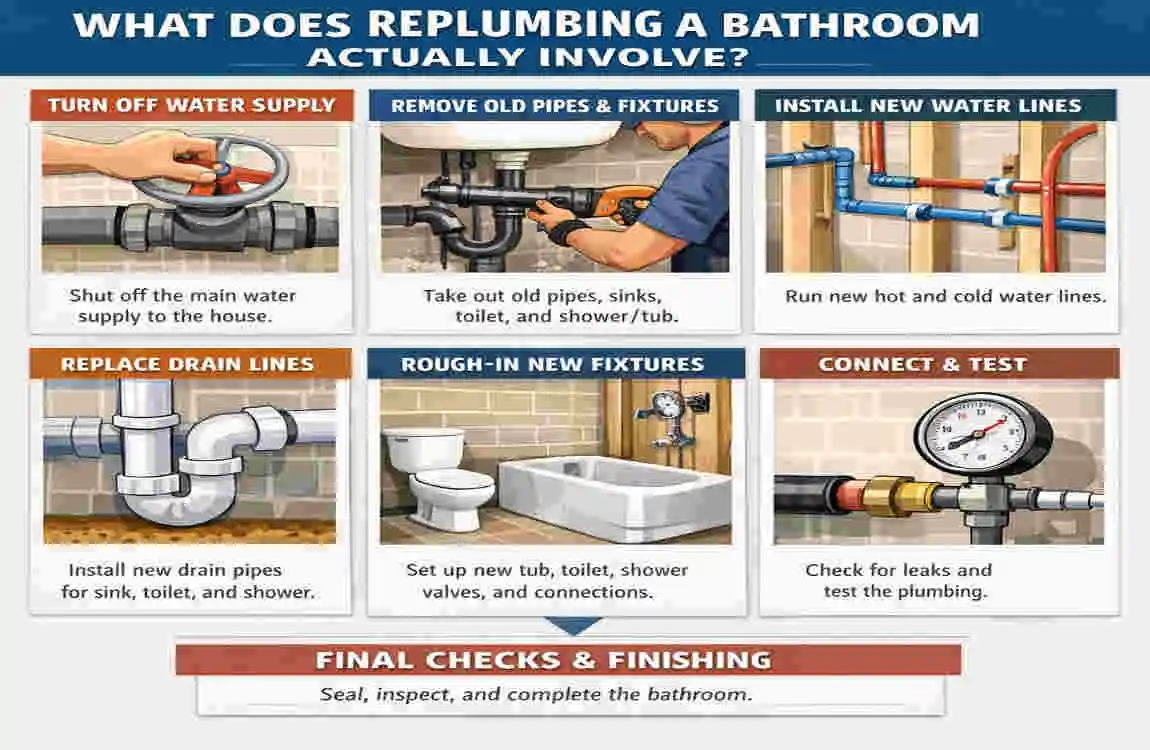
Before you can accurately calculate how much it would cost to replumb a bathroom, you need to understand the physical reality of the job. Many homeowners confuse a simple “bathroom remodel” with a “bathroom replumb.” They are two very different beasts.
Moving Beyond Cosmetic Fixes
Replumbing is not about aesthetics; it is about infrastructure. When a professional plumber replumbs your bathroom, they are replacing the hidden network of pipes that keep your water flowing safely. This includes your hot and cold water supply lines, the drain pipes that carry wastewater away, and the vent pipes that release sewer gases safely through your roof. They replace everything from the connection point at the fixture all the way down to the main water stack.
Why Do Homeowners Replumb?
You rarely wake up and decide to replumb for fun. Homeowners usually tackle this project because of a critical failure. Common triggers include:
- Galvanized Pipe Failure: Homes built before the 1980s often used galvanized steel pipes. Over decades, these pipes rust and corrode from the inside out.
- Low Water Pressure: As old pipes corrode, the rust blocks the flow of water, leading to a weak trickle in your shower.
- Discolored Water: If your tap water looks brown or orange, your pipes are rusting internally.
- Frequent Leaks: If you are constantly patching small leaks, the entire system is likely compromised.
Rough-In Versus Retrofit
It is also vital to differentiate between a “rough-in” and a “retrofit.” A rough-in happens during new construction or a total home gutting. The walls are already open, making the plumber’s job incredibly easy. This usually costs between $4,000 and $7,000.
A retrofit, however, happens in an existing, finished home. The plumber has to carefully cut through your drywall, plaster, or expensive tile to reach the pipes. Because retrofitting requires careful demolition and extra labor, it generally drives up the cost.
The Step-by-Step Replumbing Process
To give you a clear picture of where your money goes, here are the standard steps a plumber takes during a replumb:
- Shutting Off the Water: The plumber secures the main water valve to prevent flooding.
- Strategic Demolition: They carefully open walls and floors to expose the outdated plumbing.
- Removing Old Pipes: The crew cuts out and hauls away the heavy, corroded metal or failing plastic lines.
- Installing Modern Piping: The plumber routes brand-new PEX, PVC, or CPVC lines through your home’s framing.
- Pressure Testing: Before closing the walls, they run water through the new system at high pressure to check for microscopic leaks.
- Permits and Inspections: A city inspector must sign off on the work to ensure it meets modern building codes. This administrative step usually costs between $200 and $500.
The Upside of a Full Replumb
While the initial shock of how much it would cost to replumb a bathroom might make you hesitate, the benefits are massive. A full replumb completely prevents future catastrophic water damage. Furthermore, upgrading to modern, reliable plumbing can boost your overall home value by 5% to 10%. Buyers love knowing they will not have to deal with hidden pipe nightmares!
Average Total Cost to Replumb a Bathroom
Let us get down to the numbers. In 2026, the national average costs are heavily influenced by the extent of the work required. Not every homeowner needs to tear their bathroom down to the studs. Sometimes, you only need to address a specific section.
Here is a breakdown of the three main tiers of bathroom replumbing projects:
- Basic Fixture Swaps: If your pipes are in good shape but you need new supply lines immediately connecting to your fixtures, expect to pay between $500 and $1,500.
- Partial Replumb (Minor Lines): If you are moving a toilet a few feet or replacing the pipes on just one wall, a partial replumb ranges from $3,000 to $7,000.
- Full Replumb (All Lines): Tearing out every pipe, drain, and vent in the bathroom and replacing them with modern materials will cost you anywhere from $8,000 to $15,000+.
Bathroom Replumbing Cost Breakdown
Here is a quick reference table to help you visualize the overall scopes and costs:
Scope Cost Range Key Factors Impacting the Price
Basic (1-2 fixtures) $500 – $1,500 Simple labor, minimal parts, no wall demolition required.
Partial Replumb $3,000 – $7,000 Moderate wall demolition, localized pipe replacement, and some drywall repair.
Full Replumb $8,000 – $15,000+ Extensive demolition, full pipe replacements, building permits, high material costs.
Regional Variations and city Premiums
Where you live plays a massive role in how much it would cost to replumb a bathroom. If you live in a rural area, you will generally pay closer to the lower end of these ranges. However, urban areas command a Premium.
If you live in a bustling metropolitan area, you can expect to pay 20% to 50% more for labor and materials. For example, in fast-growing urban centers like Lahore, a full bathroom replumb can easily cost the local equivalent of these high-end estimates, generally ranging from 800,000 to 4 million PKR, depending on the luxury level of the fixtures and the complexity of the concrete work required.
Material Matters: PEX vs. Copper
The type of pipes you choose will significantly swing your budget.
- PEX (Cross-linked Polyethylene): This flexible, colorful plastic tubing is the modern standard. It is incredibly cheap, running about $1.50 per linear foot. Better yet, because it bends easily around corners, plumbers can install it incredibly fast, saving you hundreds on labor.
- Copper: Traditional rigid copper piping is highly durable and naturally bacteria-resistant. However, it is expensive. Copper costs upwards of $5.00+ per linear foot. Furthermore, copper requires a plumber to solder the joints with a blowtorch, which takes much more time and significantly drives up your hourly labor bill.
Fixture-by-Fixture Cost Breakdown
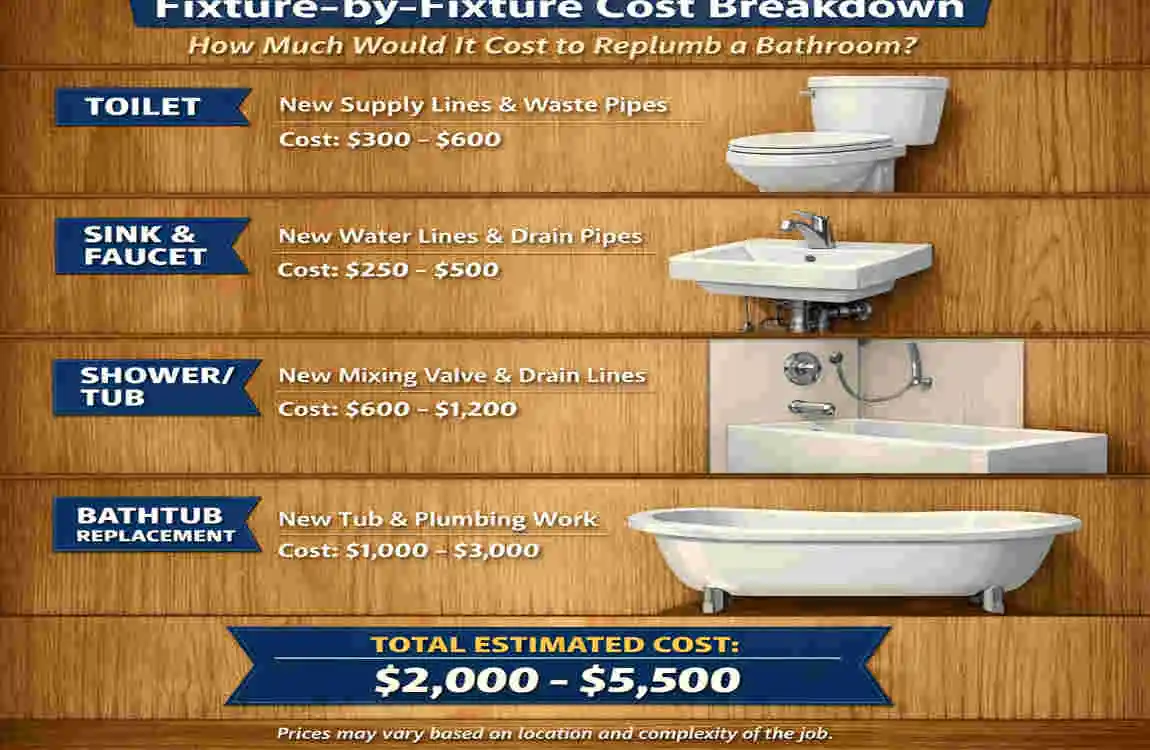
When calculating how much it would cost to replumb a bathroom, it helps to look at the room piece by piece. Every fixture requires a unique set of skills, materials, and labor time.
Keep in mind that the current 2026 average plumber rate is between $85 and $175 per hour. A single fixture can take anywhere from 4 to 12 hours to properly plumb and install. Let us break down the costs for your toilet, sink, shower, and bathtub.
Detailed Fixture Pricing Table
Fixture Parts Cost, Labor Cost, Total Cost, Important Notes
Toilet $150 – $400 $150 – $500 (2-4 hrs) $300 – $900 Includes replacing the wax ring and minor flange repairs.
Sink & Vanity $100 – $500 $300 – $750 (3-6 hrs) $400 – $1,250 Covers hot/cold supply lines and the P-trap drain.
Shower Valve & Enclosure $200 – $800 $300 – $3,500 (4-10 hrs) $500 – $4,300 Highly variable due to shower pans and complex tile tie-ins.
Bathtub $400 – $1,200 $500 – $2,000 (5-8 hrs) $900 – $3,200 Includes heavy lifting and complex overflow drain alignment.
The Toilet Replumb
Toilets might seem simple, but the plumbing underneath them is quite complex. Replacing the water supply line to the toilet is relatively cheap. The real cost comes from the closet flange—the metal or plastic ring that connects the toilet to the main floor drain.
If your old toilet was leaking, there is a good chance the flange and the subfloor around it are rotted. Repairing a damaged flange easily adds an extra $200 to the job. Pro Tip: While you have the plumber there, invest in a modern low-flow toilet model. They cost a little more upfront, but they will actively save you money on your monthly water bills!
The Sink and Vanity Details
Bathroom sinks involve three main plumbing connections: the hot water supply, the cold water supply, and the drain. When estimating how much it would cost to replumb a bathroom sink, you have to consider the style you want.
A standard drop-in sink is very easy for a plumber to connect. However, if you want a trendy vessel sink (the kind that sits on top of the counter like a bowl) or an undermount sink, the plumber has to adjust the height of the rough-in pipes inside the wall. Additionally, replacing the intricate pop-up drain assembly and the curved P-trap underneath the sink adds to the parts cost.
The Shower and Bath Combo
Showers and bathtubs are overwhelmingly the most expensive fixtures to replumb. Why? Because the majority of their plumbing is buried deep inside your walls or underneath your flooring.
To replace a shower valve (the mechanism behind the handle that mixes your hot and cold water), a plumber often has to cut through your expensive tile. If you are replumbing a bathtub, the plumber must carefully align the heavy tub with the floor drain and properly install the overflow drain pipe to prevent future flooding.
Furthermore, venting requirements for large tubs and showers are strict. If the existing vent pipes are damaged, the plumber must run new ones, which is a major project. Luxury Add-ons: Do you dream of a spa-like shower with multiple body sprayers and a rainfall showerhead? Be prepared to open your wallet. Multi-head shower systems require much larger supply lines to maintain water pressure, which will add at least $1,000 to your plumbing bill.
Expert Tip: If you want to save money, bundle your fixtures! Do not call a plumber out on Monday for the sink and Friday for the toilet. Have them do everything at once. Bundling fixtures allows the plumber to maximize their time, often saving you 15% to 20% on total labor costs.
Labor Costs and Plumber Rates Explained
You cannot fully grasp how much it would cost to replumb a bathroom without taking a hard look at labor. You are not just paying for a person’s time; you are paying for their expertise, their expensive tools, and their specialized vehicles.
Hourly Rates vs. Flat Fees
In 2026, the national average for a licensed plumber sits right around $125 per hour. Most professionals charge between $85 and $175 per hour, depending on their skill level and your location.
However, not all plumbers charge by the hour. For smaller jobs that take under four hours (like swapping out a single sink drain), many plumbers will charge a flat fee, which typically ranges from $200 to $350. This flat fee ensures the plumber makes enough money to cover the cost of driving to your house and setting up their equipment.
Factors That Drive Up Labor Costs
Several hidden factors can aggressively spike your labor bill:
- Travel Distance: If you live outside a plumber’s standard service area, they may tack on a travel fee of $100 or more to show up.
- Emergency Calls: Did your pipe burst at 2:00 AM? Expect to pay an emergency Premium. Plumbers often charge time-and-a-half or double their standard rate (an extra 50% to 100%) for immediate, drop-everything service.
- Weekend and Holiday Rates: If you schedule a job on a Saturday or Sunday, you will easily see a 25% markup on the hourly rate.
- Union vs. Independent Plumbers: Plumbers who are part of a trade union have standardized, protected wages. Hiring a highly certified union professional often costs about 30% more than hiring an independent, non-union contractor. However, union plumbers often come with rigorous training and excellent guarantees.
The Real Risks of DIY Plumbing
When you look at these labor rates, you might feel a sudden surge of motivation to do the job yourself. You might think, “I can just watch a video tutorial and save thousands!”
We strongly advise against this. Plumbing is incredibly unforgiving. If you make a tiny mistake while painting your living room, it looks ugly. If you make a tiny mistake while soldering a pipe, you can flood your entire house in minutes.
DIY replumbing risks include:
- Code Violations: If you do not vent a drain properly, dangerous sewer gases can leak into your home. When you try to sell the house, an inspector will flag the illegal plumbing, forcing you to tear it out.
- Catastrophic Leaks: An improperly crimped PEX pipe might hold water for a week before suddenly blowing off while you are at work, causing tens of thousands of dollars in water damage.
- Expensive Fixes: Plumbers often charge a Premium to fix a homeowner’s botched DIY job. A simple $500 repair can easily turn into a $1,000+ fix if the plumber has to untangle your mistakes first.
Do not risk your largest asset to save a few bucks. Hire vetted, licensed professionals. If you need a trusted expert, contact our team today for peace of mind.
Additional Costs and Hidden Fees
When budgeting for how much it would cost to replumb a bathroom, you must prepare for the peripheral expenses. A plumbing project rarely exists in a vacuum. Fixing the pipes usually means breaking other parts of the room.
Here are the hidden fees you need to plan for:
Building Permits and city Inspections
You cannot legally gut your plumbing without the city knowing about it. Pulling a plumbing permit ensures that a neutral third party (the city inspector) reviews the work for safety. Depending on your municipality, these permits cost between $200 and $800. Do not skip this step; skipping permits can void your homeowner’s insurance if a flood occurs!
Demolition and Wall Repair
Plumbers are experts at pipes, not drywall. To reach your plumbing, they will cut massive holes in your walls and ceiling. Once the plumber leaves, you have to hire a drywall contractor to patch the holes, sand the mud, and repaint the room. If the plumber had to break through your custom shower tile, the costs would skyrocket. Budget anywhere from $500 to $2,000 specifically for putting your walls and floors back together.
The Water Heater Tie-In
If your bathroom is located far away from your water heater, the plumber might discover that the main hot water trunk line supplying the bathroom is severely corroded. Tying new bathroom pipes into an aging water heater setup can add $300 to $1,000 to your final invoice.
Luxury Upgrades
While the walls are open, many homeowners choose to upgrade their systems.
- Adding a tankless water heater so you never run out of hot water again will add $1,500 to $3,500.
- Installing a whole-house water filtration or softening system to protect your new fixtures from hard water buildup will add another $1,000 to $2,000.
The Reality of Inflation
It is important to note the current economic landscape. Material costs for PVC, PEX, and copper are experiencing steady inflation, generally rising 5% to 10% yearly. The price you were quoted in 2024 is no longer accurate in 2026. Because prices fluctuate, you should always shop around and get at least three written quotes before signing a contract.
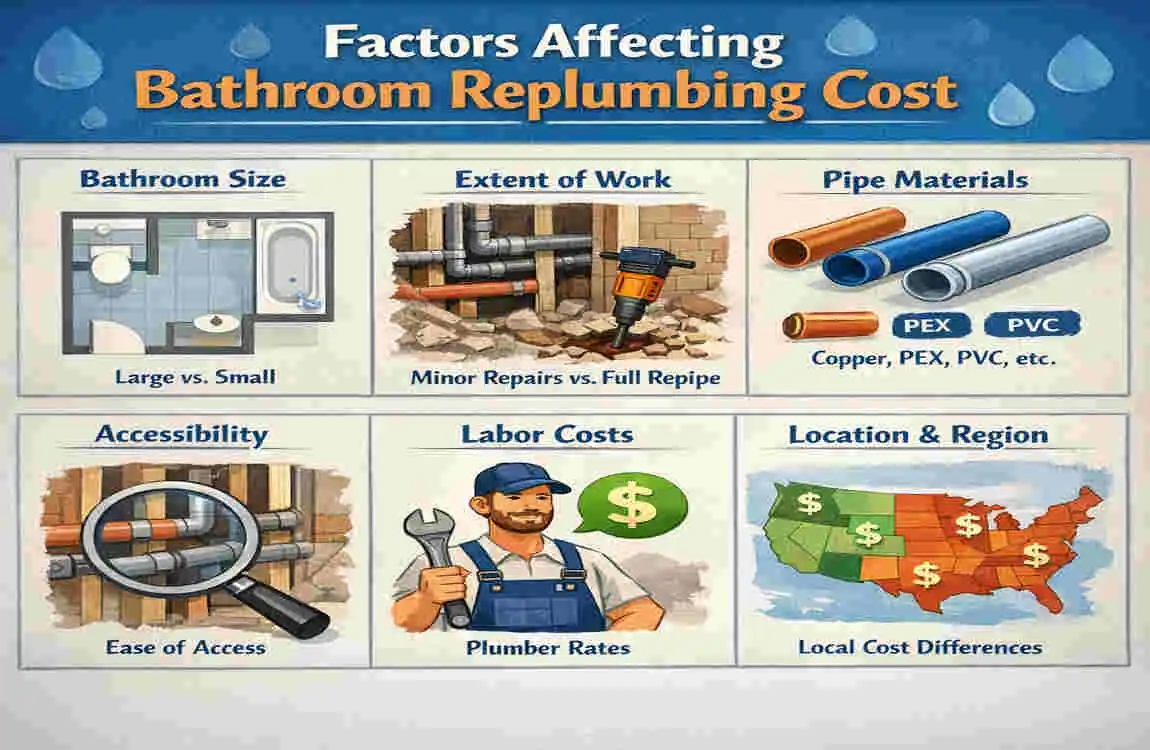
Factors Affecting Your Bathroom Replumbing Cost
Every house is a unique puzzle. The final answer to how much it would cost to replumb a bathroom depends entirely on the specific characteristics of your home. Let us explore the major variables that swing the price tag.
The Age and Layout of Your Home
Older homes are charming, but they hide expensive secrets. If you own a house built in the 1970s or earlier, you likely have cast-iron drain pipes and galvanized steel supply lines. These materials are incredibly heavy and difficult to cut out.
Furthermore, older homes often feature thick plaster walls over wooden lath, rather than modern drywall. Cutting through plaster is messy, labor-intensive, and ruins saw blades. Plumbers will charge significantly more to do demolition in a historic home.
Layout also matters. If your bathroom sits directly above an unfinished basement, the plumber has easy access to the pipes from below. If your bathroom sits on a solid concrete slab, they might have to use jackhammers to reach the underground drain lines, which skyrockets the cost.
Geographic Location
As mentioned earlier, where you live dictates what you pay. Plumbers in high-cost-of-living areas must charge more to cover their own rent, commercial insurance, and fuel costs. A replumb in a rural town in Ohio will cost a fraction of the same job performed in downtown San Francisco or a major international hub like Lahore.
Pipe Material Choices
We touched on this earlier, but it bears repeating: your material choice dictates your budget.
- Choosing PEX is the fastest, cheapest way to get the job done.
- Choosing Copper is a luxury investment that requires slow, methodical, expensive labor.
Fixture Quality
A toilet is a toilet, right? Wrong. You can buy a basic, contractor-grade toilet at a big box store for $150. Or, you can buy a smart toilet with a heated seat, automatic bidet features, and custom lighting for $2,000.
High-end, luxury fixtures require more delicate handling and complicated electrical or plumbing connections. Upgrading from basic builder-grade fixtures to luxury items will easily increase your total project cost by 50% or more.
Ways to Save on Replumbing Costs
Reading through these numbers can feel overwhelming, but do not panic. There are several clever, strategic ways you can reduce the sting of your final bill. If you are worried about how much it would cost to replumb a bathroom, implement these cost-saving strategies.
Opt for a Partial Replumb
Do you really need to replace every single pipe? If your home was built in the 1990s and only the shower is leaking, talk to your plumber about a partial replumb. By isolating the fix to one specific wall or fixture, you can easily save $5,000 or more compared to a total gut job.
Do Your Own Prep Work and Demo
While you should absolutely leave the pipe fitting to the professionals, you do not need to pay a master plumber $125 an hour to swing a sledgehammer or move your towels. Before the plumber arrives, clear the entire bathroom. Remove the vanity mirrors, pull out the storage cabinets, and if you are comfortable, carefully remove the drywall around the affected plumbing. Creating a clean, open workspace allows the plumber to get right to the technical work, easily saving you $200 to $400 in hourly labor.
Invest in Energy-Efficient Fixtures
This is a long-term savings strategy. Buy Water Sense-labeled toilets, low-flow showerheads, and aerated sink faucets. Not only do these lower your monthly water bill, but many local utility companies and environmental agencies offer excellent cash rebates. You can often secure up to $500 in rebates just for upgrading to eco-friendly fixtures!
Frequently Asked Questions (FAQs)
Still have lingering questions about your upcoming renovation? Here are the most common questions homeowners ask when researching how much it would cost to replumb a bathroom.
How much would it cost to replumb a bathroom with exactly 3 fixtures?
A standard 3-fixture bathroom includes a toilet, a sink, and a shower/tub combination. For a complete replumb of a room this size, you should budget for a national average of $5,000 to $10,000. The final price will depend on your choice between PEX and copper, and how much drywall needs to be removed.
Is replumbing really worth it for a 20-year-old home?
Absolutely. Most builder-grade plumbing materials have a comfortable lifespan of about 20 to 30 years. Once your home hits the two-decade mark, the risk of pinhole leaks and joint failures increases dramatically. Proactively replumbing now prevents a catastrophic, $20,000 flood damage repair bill later.
What are the real costs of a DIY replumb?
If you are incredibly skilled and decide to tackle this yourself, your only costs will be materials and permits. Parts for a DIY bathroom replumb usually range from $500 to $2,000. However, remember that any mistakes you make will cost thousands to fix. We highly recommend using vetted professionals for anything behind the walls.
How long does a bathroom replumb actually take?
If you hire a professional crew, a standard bathroom replumb generally takes between 2 and 5 days. The first day is heavily focused on demolition and removing old pipes. Days two and three involve running the new lines. The final days are reserved for city inspections and setting the final fixtures.
What are the 2026 pricing trends for plumbing?
The cost of home improvement is steadily climbing. Due to ongoing supply chain shifts and high demand for skilled tradespeople, plumbing costs are currently rising by about 5% annually. The longer you wait to complete your replumbing project, the more expensive it will become.
Will a plumber patch the drywall they cut open?
Usually, no. Plumbers are licensed pipe experts, not carpenters. Unless you hire a full-service design-build contracting firm, the plumber will leave the walls open when they finish. You must hire a separate drywall contractor to patch, texture, and paint the walls.
Can I live in the house while the bathroom is being replumbed?
Yes, but it requires patience. The plumber will need to shut off the main water to the entire house for several hours at a time while connecting the new lines. You will also be completely without the use of that specific bathroom for the duration of the 2-to-5-day project. If you only have one bathroom in your home, consider booking a hotel for a few nights!