
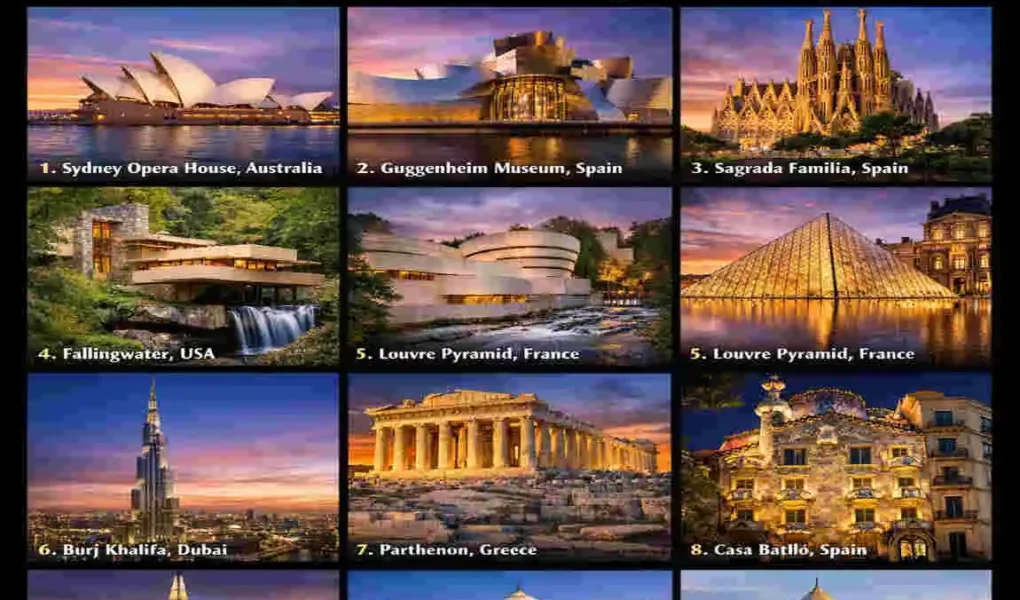
Have you ever stood beneath a soaring dome, like the one in Rome’s Pantheon, and felt chills run down your spine? The cool hush, the way sunlight pours through the oculus, and the grandeur of ancient columns—all of it can stir your soul in ways words alone cannot. This emotional pull is why so many believe architecture is art. It’s not just about bricks and beams; it’s about turning stone into storytelling, creating spaces that shape our experiences and memories.
Architecture is art because it fuses function and beauty. Like a painter with a canvas or a sculptor with clay, architects use materials, light, and space to evoke emotion and wonder. Imagine buildings as frozen music—harmonies of form and function that express culture, innovation, and identity. While some structures merely shelter us, true architectural masterpieces inspire awe, spark creativity, and tell stories across generations.
The Philosophy: Core Reasons Architecture is Art
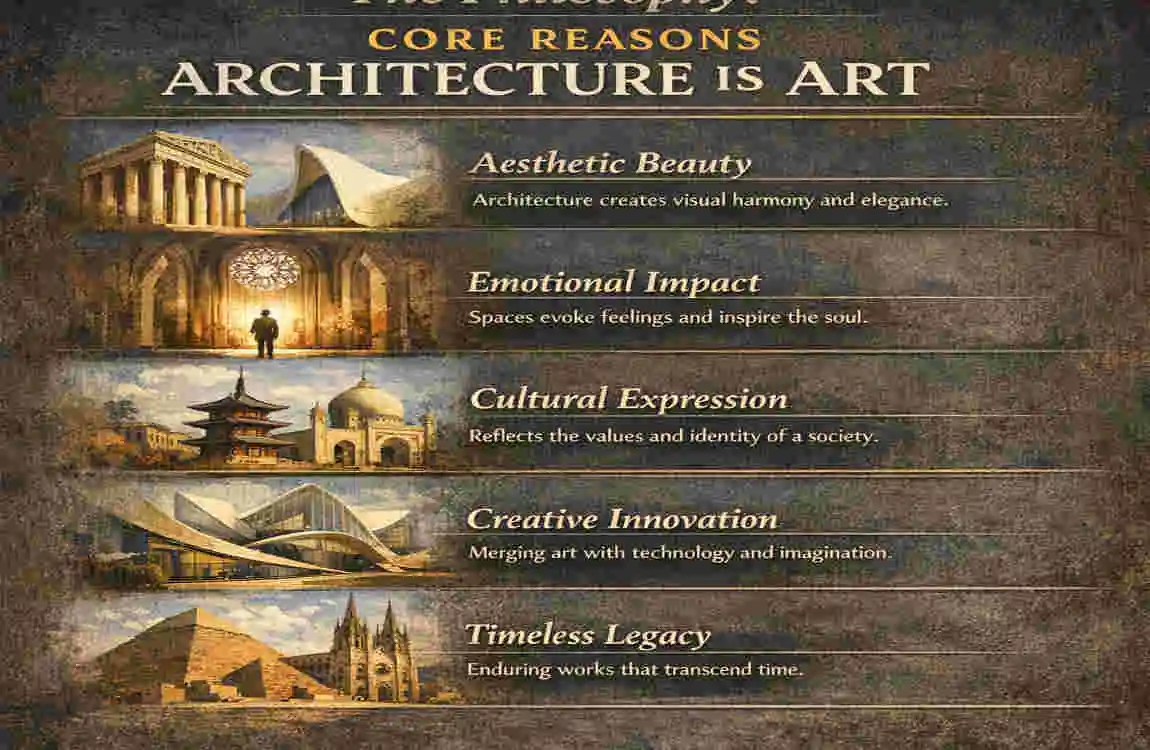
Emotional Impact of Design
Architecture is art because it has the power to move us. Entering a soaring cathedral or a sunlit atrium can evoke awe, solace, or joy—much like standing before a powerful painting. But unlike a canvas on a wall, architecture surrounds us. It’s immersive. Every arch, window, and curve is an artist’s brushstroke, shaping how we feel inside a space.
Innovation as Creative Expression
Architects, like artists, push boundaries. They experiment with new materials, daring shapes, and bold structures. Frank Gehry’s titanium-clad Guggenheim Museum or Zaha Hadid’s fluid forms show how iconic architecture often emerges from creative risk-taking.
Cultural Storytelling
Buildings are storytellers. They encode a city’s history, values, and dreams in wood, steel, and stone. The Taj Mahal whispers of eternal love, while the Empire State Building shouts the ambition of a nation. Through design, communities immortalize their identities—making buildings powerful cultural symbols of art.
Harmony of Form and Function
The Roman architect Vitruvius believed great buildings unite strength, functionality, and beauty. Today, we still admire masterpieces that blend utility and aesthetics—like Fallingwater’s seamless merge with nature or the Lotus Temple’s calming symmetry.
Quick examples that show why architecture is art:
- The playful curves of Gaudí’s Sagrada Família.
- The sky-high ambition of Marina Bay Sands.
- The poetic use of light in the Pantheon.
- The organic unity of Fallingwater.
- The futuristic silhouette of the Sydney Opera House.
10 Iconic Designs Proving Architecture is Art
Sagrada Família, Barcelona: Gaudí’s Organic Symphony
Year: Construction began in 1882 (ongoing)
Architect: Antoni Gaudí
Location: Barcelona, Spain
If ever a building could be called “living art,” it’s the Sagrada Família. This basilica, still under construction after 140 years, draws millions who marvel at its swirling towers and nature-inspired motifs. Gaudí’s genius lay in mimicking organic forms—columns branch out like trees, colorful facades teem with sculpted flora and fauna. Architecture is art here because the structure feels alive, each detail telling a part of Barcelona’s story.
Artistic Angles:
- Symbolism: Christian narratives woven into every surface.
- Technique: Use of hyperboloids, catenary arches, and intricate stained glass.
Historical Impact:
A UNESCO World Heritage site, the Sagrada Família made Barcelona a global beacon of creativity.
Visitor Tip:
Arrive early to catch the morning light filtering through rainbow glass, transforming the interior into a kaleidoscope.
Pros Cons
Unrivaled artistry and innovation. Still unfinished
Deep symbolic meaning, Crowded at peak times
Sydney Opera House, Australia: Utzon’s Sail-Like Sculpture
Year: 1973
Architect: Jørn Utzon
Location: Sydney, Australia
Floating on Sydney Harbor, the Opera House is instantly recognizable. Its roof shells evoke billowing sails or sea waves, blending perfectly into the waterfront. Utzon’s design pushed engineering to its limits, proving that iconic architecture can be both daring and practical.
Artistic Angles:
- Symbolism: Celebrates Australia’s maritime heritage.
- Technique: Advanced precast concrete “shells,” pioneering construction.
Historical Impact:
A global emblem of modernist creativity, it has UNESCO World Heritage status.
Visitor Tip:
Book a backstage tour to see the artistry up close.
Pros Cons
Photogenic from every angle. Expensive to maintain
World-class performances , Touristic crowds
Guggenheim Museum Bilbao, Spain: Gehry’s Titanium Curves
Year: 1997
Architect: Frank Gehry
Location: Bilbao, Spain
The Guggenheim Bilbao is more than a museum—it’s a sculpture writ large. Gehry’s flowing titanium panels shimmer like fish scales, reflecting the river and sky. This building transformed Bilbao’s fortunes, proving that architecture is art with the power to revive cities.
Artistic Angles:
- Symbolism: Industrial past meets creative future.
- Technique: Computer-aided design for complex, organic forms.
Historical Impact:
Sparked the “Bilbao Effect,” inspiring cities worldwide to invest in iconic architecture.
Visitor Tip:
Don’t miss the massive spider sculpture outside—another example of art merging with architecture.
Pros Cons
Visually stunning inside and out , navigating galleries can be disorienting
Revitalized an entire city , with a high cost of upkeep
Burj Khalifa, Dubai: Hadid-Inspired Vertical Poetry
Year: 2010
Architect: Adrian Smith (Skidmore, Owings & Merrill)
Location: Dubai, UAE
Soaring over 828 meters, the Burj Khalifa isn’t just the world’s tallest building—it’s a work of vertical poetry. Inspired by Islamic geometry and the desert flower, its tiered spire spirals skyward with elegance. Architecture is art here because the building balances jaw-dropping scale with grace and lightness.
Artistic Angles:
- Symbolism: Aspiration and unity, merging tradition with modernity.
- Technique: Advanced structural engineering and reflective glass.
Historical Impact:
Redefined what’s possible in super-tall construction.
Visitor Tip:
Visit at sunset for panoramic city views.
Pros Cons
Record-breaking height , expensive tickets to the observation deck
The icon of modern Dubai can feel commercialized
Fallingwater, Pennsylvania: Wright’s Nature-Integrated Masterpiece
Year: 1937
Architect: Frank Lloyd Wright
Location: Mill Run, Pennsylvania, USA
Perched over a rushing waterfall, Fallingwater seems to grow out of its rocky hillside. Wright’s design blurs lines between inside and out, using cantilevered terraces and local stone. Architecture is art when it harmonizes with nature, creating spaces that feel at once ancient and futuristic.
Artistic Angles:
- Symbolism: Unity of human and environment.
- Technique: Innovative cantilevered structures using reinforced concrete.
Historical Impact:
A landmark of organic architecture.
Visitor Tip:
Book in advance—tours fill quickly, especially in autumn.
Pros Cons
Immersive natural experience , Remote location
Innovative design , Fragile structure needs ongoing repair
Taj Mahal, India: Shah Jahan’s Eternal Love Monument
Year: 1653
Architect: Ustad Ahmad Lahauri (attributed)
Location: Agra, India
The Taj Mahal glows at dawn, its white marble changing color with the sky. Built as a mausoleum for Shah Jahan’s beloved wife, it’s poetry in stone—symmetrical, serene, and deeply moving. Architecture is art here because it transforms grief into beauty, love into legacy.
Artistic Angles:
- Symbolism: Eternal love and paradise.
- Technique: Pietra dura inlay, perfect symmetry, gardens reflecting Islamic ideals.
Historical Impact:
A UNESCO treasure, the world’s most famous mausoleum.
Visitor Tip:
Arrive at sunrise for the quietest, most magical experience.
Pros Cons
Universally admired beauty , often crowded
Rich in symbolism , air pollution threatens its marble
Pantheon, Rome: Hadrian’s Unrivaled Dome of Light
Year: 126 AD (reconstruction)
Architect: Apollodorus of Damascus (attributed)
Location: Rome, Italy
Step into the Pantheon, and you’ll be stunned by its vast dome—the largest unreinforced concrete dome in the world, still standing after 2,000 years. The central oculus streams sunlight, illuminating the coffered ceiling. Architecture is art here because it blends engineering marvel with pure, timeless beauty.
Artistic Angles:
- Symbolism: Unity of heaven and earth.
- Technique: Roman concrete, perfect proportions, oculus for natural light.
Historical Impact:
A model for domes worldwide, from Florence to Washington, DC.
Visitor Tip:
Gaze up at noon for a dazzling light show.
Pros Cons
Awe-inspiring atmosphere, can be noisy with tourists
Free entry. No original decoration remains
Empire State Building, NYC: Art Deco Skyward Ambition
Year: 1931
Architect: Shreve, Lamb & Harmon
Location: New York City, USA
Rising above Manhattan, the Empire State Building captures the bold optimism of the Jazz Age. Its Art Deco lines, gleaming spire, and setbacks create a sense of upward motion. Architecture is art in this skyscraper’s blend of beauty, ambition, and engineering.
Artistic Angles:
- Symbolism: American progress and resilience.
- Technique: Limestone facade, stainless steel spire, intricate lobby mosaics.
Historical Impact:
Once the world’s tallest, it remains a global icon.
Visitor Tip:
See the city sparkle from the 86th-floor observatory at night.
Pros Cons
Timeless skyline symbol , Long elevator lines
Rich interior details , crowded observation decks
Lotus Temple, Delhi: Baháʼí Petal Prayer in Marble
Year: 1986
Architect: Fariborz Sahba
Location: Delhi, India
Shaped like a blooming lotus, this temple invites people of all faiths. Its white marble petals create a peaceful haven amid Delhi’s bustle. Architecture is art here in its embrace of light, silence, and universal welcome.
Artistic Angles:
- Symbolism: Purity, unity, and spiritual awakening.
- Technique: 27 marble “petals” form a star-shaped plan.
Historical Impact:
A global symbol of peace and inclusivity.
Visitor Tip:
Enjoy quiet meditation in the main hall.
Pros Cons
Tranquil urban oasis , limited interior decoration
Open to everyone. It can get hot during midday
Marina Bay Sands, Singapore: Moshe Safdie’s Sky-High Fusion
Year: 2010
Architect: Moshe Safdie
Location: Singapore
Three towers topped by a ship-like sky park define Singapore’s skyline. Marina Bay Sands fuses a hotel, a casino, and an art museum into one bold gesture. Its infinity pool, 57 stories up, offers stunning city views. Architecture is art in its playful shapes, daring engineering, and seamless integration with the city.
Artistic Angles:
- Symbolism: Innovation and luxury.
- Technique: Cantilevered rooftop, complex foundation engineering.
Historical Impact:
Helped make Singapore a top global destination.
Visitor Tip:
Swim in the sky pool if you’re a hotel guest—or visit the observation deck.
Pros Cons
Unbeatable city panoramas , Pricey for non-guests
Iconic city landmark , often crowded
Modern Implications: Architecture is Art in Today’s World
Lessons for Urban Living
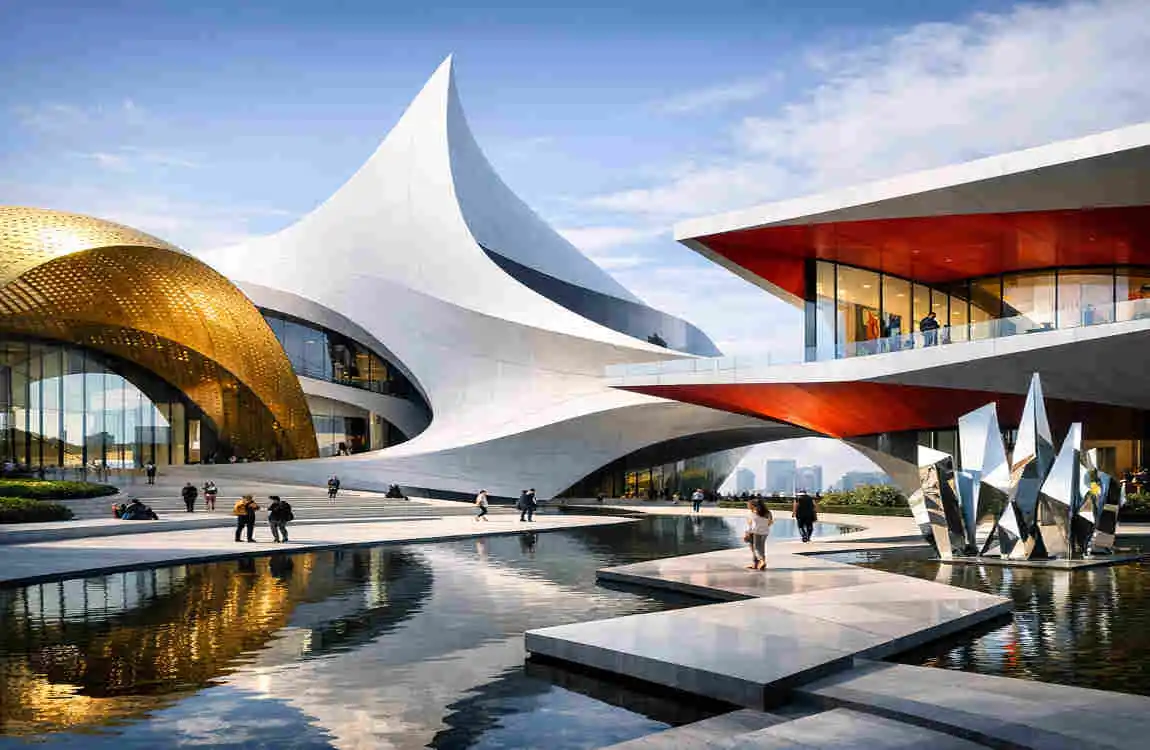
The masterpieces we’ve explored show that architecture is art with real-world impact. Great design inspires pride, encourages community, and shapes happier, healthier cities. Planners today look to these icons for ideas on blending beauty, sustainability, and livability.
Tech’s Role in Creative Architecture
Technology is transforming the field. Tools like Building Information Modeling (BIM) and artificial intelligence help architects dream bigger and build smarter. These advances ensure that iconic architecture continues to evolve, making the boundaries between art, science, and community even more fluid.
For Business Readers: The Value of Iconic Buildings
For investors and real estate professionals, buildings as art are more than beautiful—they’re valuable. Landmark structures boost tourism, raise property values, and become magnets for business and culture.
3 Ways to Appreciate Architecture as Art Locally
- Visit historical buildings in your city—look for details you’ve never noticed.
- Attend architectural tours or open houses to meet designers and learn stories.
- Explore spiritual sites, such as Lahore’s Badshahi Mosque, to feel the emotional power of architecture.