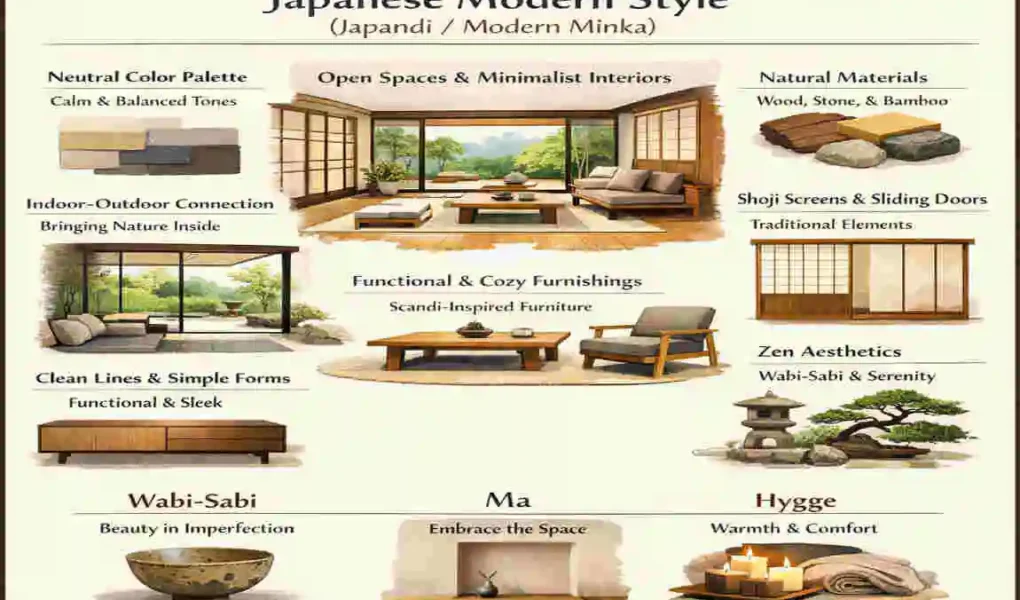
What Makes a Home Truly Japanese Modern? A Japanese modern home is more than a pretty design style. It is a way of building and living that feels calm, clean, and useful at the same time. It brings together traditional Japanese ideas and modern comfort, creating a home that looks simple but feels deeply thoughtful.
This style has become popular because many homeowners want spaces that feel less crowded and more peaceful. A Japanese modern home uses natural materials, open layouts, soft colours, and a close link to nature. The result is a home that supports everyday life without feeling heavy or busy.
Understanding the Concept of a Japanese Modern Home
What Is a Japanese Modern Home?
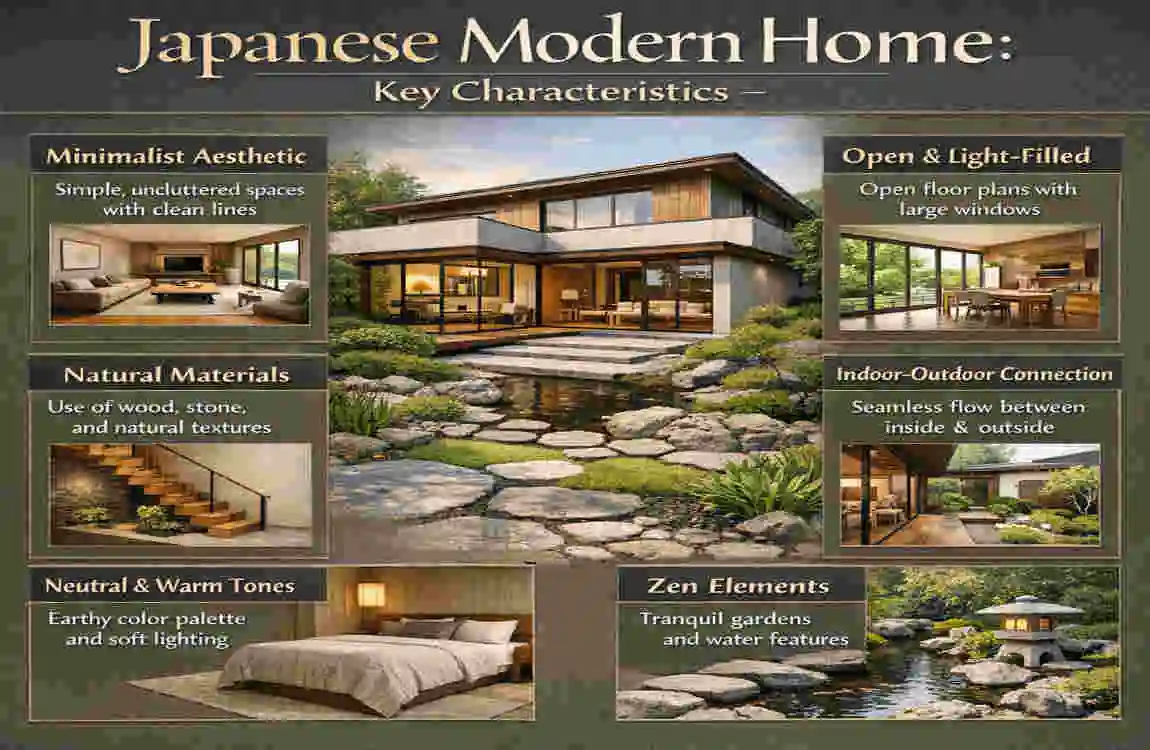
A Japanese modern home combines the clean beauty of Japanese architecture with the comfort and function of modern living. It focuses on balance, simplicity, and purpose.
Instead of filling a home with extra décor, this style keeps things calm and clear. Every part of the home has a reason to be there. That is what makes the style feel so strong and timeless.
Origins of Japanese Modern Design
Japanese modern design comes from traditional homes that valued simplicity, craftsmanship, and nature. Older Japanese houses often used wood, sliding doors, and open spaces to create a natural flow.
Over time, modern architecture added new materials, larger windows, and updated layouts. This mix gave rise to the modern Japanese house design we see today.
Why This Style Is Popular Worldwide
People love this style because it feels clean, practical, and peaceful. It fits well with modern life, especially for those who want less clutter and more comfort.
It also reflects current interest in minimalist home ideas, sustainable living, and natural home design. That is why the style continues to grow in popularity worldwide.
Key Characteristics of a Japanese Modern Home
Minimalist Architecture
A true Japanese modern home keeps the design simple. You will usually see clean lines, open surfaces, and very little visual clutter.
This does not mean the home feels empty. It means everything inside the home has a purpose. That is the heart of Japanese home aesthetics.
Strong Connection to Nature
Nature plays a very important role in this style. A Japanese modern home often features garden views, wood finishes, natural ventilation, and a seamless flow between indoor and outdoor spaces.
This connection to nature makes the home feel more alive and less artificial.
Open and Functional Floor Plans
The layout is usually practical and flexible. Rooms may be open or connected in a way that makes the home easy to use.
This approach works well for families, couples, and even smaller homes because it makes the space feel larger and more efficient.
Natural Light as a Design Element
Light is not just useful in a Japanese modern home — it is part of the design. Large windows, skylights, and open layouts help sunlight move through the space.
A light-filled room feels warmer, softer, and more welcoming.
Key FeatureWhy It MattersEffect on the Home
Clean lines Keeps the design simple Creates a calm look
Natural materials add warmth and honesty and make the space feel real
Open layout Improves movement Makes rooms feel larger
Natural light brightens the space and improves mood and comfort
Essential Architectural Features
Sliding Doors and Partitions
Sliding doors are a classic part of Japanese architecture. In a modern home, they help save space and make rooms more flexible.
They also give the home a light, elegant feel. This is one of the easiest ways to bring Japanese-inspired home design into a modern setting.
Low-Profile Structures
Many Japanese modern homes use low, horizontal shapes. This gives the house a balanced and grounded look.
The style feels calm because it does not try to look overly grand. It stays close to the earth and the natural surroundings.
Natural Building Materials
Wood, stone, bamboo, and clay are common in this style. These materials add warmth and texture while keeping the home connected to nature.
They also support the feeling of honesty and simplicity that defines a Japanese minimalist interior.
Simple Roof Designs
Roof shapes are usually clean and practical. Traditional Japanese roofs may inspire them, but they often have a modern finish.
The goal is not decoration for its own sake. The goal is a design that feels elegant and useful.
Interior Design Elements That Define a Japanese Modern Home
Neutral and Earth-Toned Colour Palettes
A Japanese modern home often uses beige, white, grey, soft brown, and natural wood tones. These colours help the room feel calm and balanced.
Bright, loud colours are usually used carefully, if at all. The focus stays on soft tones that support relaxation.
Minimal Furniture Arrangement
Furniture should be simple, low, and functional. A low sofa, a plain wooden table, or a clean-lined shelf can work very well.
The idea is to leave enough open space so the room can breathe.
Decluttered Living Spaces
A clean home is a big part of this style. Hidden storage, built-in shelves, and simple organisation help reduce visual mess.
When a room is uncluttered, it feels easier to live in and easier to enjoy.
Traditional Japanese Influences
Some homes include design touches inspired by traditional Japanese living, such as tatami-style spaces, floor seating, or tokonoma alcoves.
These details do not need to be copied exactly. Even a small nod to tradition can make the room feel more authentic.
Texture Over Decoration
Instead of using lots of ornaments, this style often uses texture to create interest. Think of wood grain, linen, bamboo, and stone.
This keeps the space visually rich without making it feel crowded.
The Role of Nature in Japanese Modern Living
Indoor Gardens and Greenery
Plants are a simple way to bring life into the home. A few well-placed indoor plants can soften the room and make it feel more natural.
This is a key part of Zen home design and modern Japanese living.
Courtyards and Zen Gardens
If space allows, a courtyard or small Zen garden can create a quiet retreat. These spaces encourage stillness and reflection.
Even a tiny garden corner can have a big effect on the mood of the home.
Seasonal Awareness in Design
Japanese design often respects the seasons. That means choosing materials, colours, and layouts that feel good year-round.
This thoughtful approach helps the home stay comfortable in both warm and cool weather.
Natural Ventilation and Sustainability
Good airflow is another important part of the style. It helps the home feel fresh and can reduce the need for heavy cooling systems.
That is one reason this design often supports energy-efficient living.
How Japanese Modern Homes Promote Wellness
Creating a Calm Environment
A Japanese modern home reduces visual noise. Fewer objects, softer colours, and simple layouts can help the mind feel clearer.
This can make daily life feel less stressful.
Mindful Living Through Design
This style encourages you to live with intention. Instead of collecting more things, you choose better things.
That shift often leads to a more peaceful lifestyle.
Improved Indoor Air Quality
Natural materials and good airflow can improve comfort inside the home. When the space feels fresh and open, it is easier to relax and breathe well.
Japanese Modern Home vs. Traditional Japanese Home
Similarities
Both styles value:
- Simplicity
- Nature
- Function
- Balanced spaces
These shared ideas are what make modern Japanese architecture feel familiar and timeless.
Key Differences
A traditional Japanese home usually uses older building methods and more classic details. A Japanese modern home adds modern materials, updated layouts, and smart home technology.
So while the spirit stays the same, the execution changes to match modern life.
Which Style Fits Modern Lifestyles Better?
For most people today, the modern version is easier to live with. It gives you the calm feeling of Japanese design while supporting today’s needs.
That is why the contemporary Japanese home works so well for families, professionals, and design lovers.
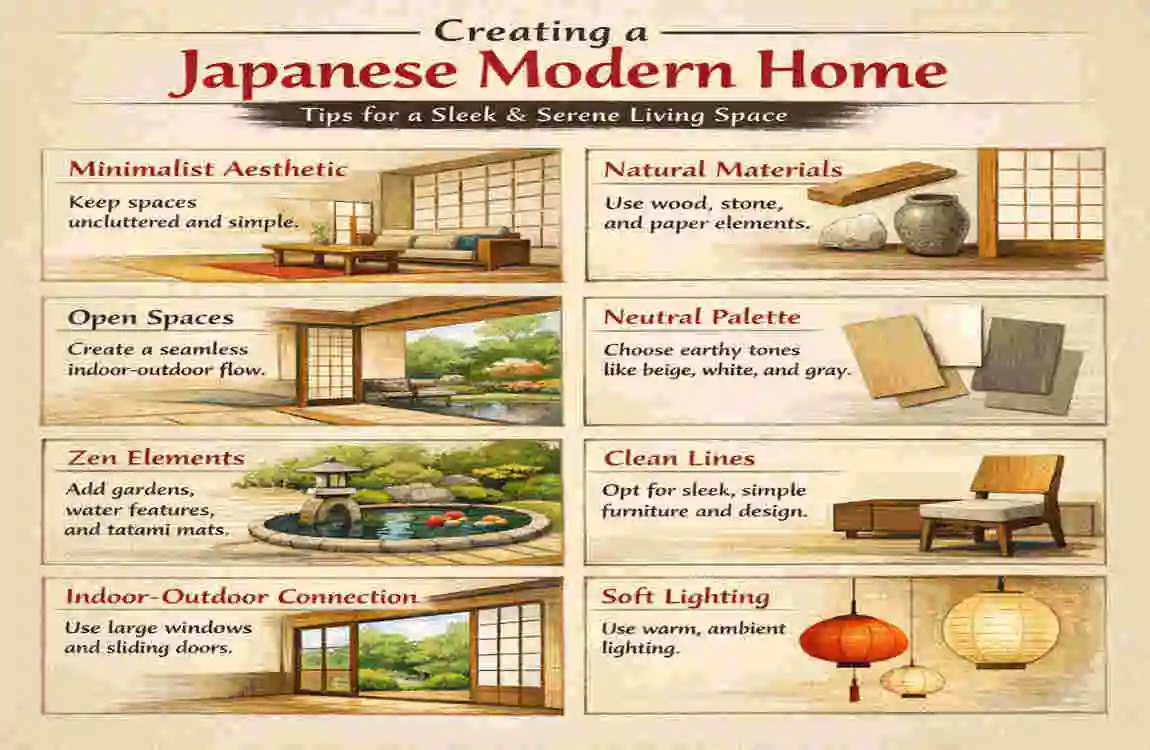
Tips for Creating a Japanese Modern Home
Start With Minimalism
Begin by removing what you do not need. Keep only what is useful, beautiful, or meaningful.
Choose Natural Materials
Use wood, stone, bamboo, and other honest materials whenever possible. They
Frequently Asked Questions
What is a Japanese modern home?
A Japanese modern home blends traditional Japanese design with contemporary living. It usually focuses on minimalism, natural materials, functionality, and a calm atmosphere.
What are the main features of a Japanese modern home?
The main features are clean lines, open floor plans, natural light, sliding shoji screens, and a strong connection to nature.
How is a Japanese modern home different from a minimalist home?
Both styles value simplicity, but a Japanese modern home also includes Japanese design details such as tatami rooms, shoji screens, and a harmony with nature.
Are Japanese modern homes expensive to build?
The provided sources do not give exact pricing. What they do show is that Japanese homes can be compact and space-efficient, which can help keep the design practical.
What colours are commonly used in modern Japanese interiors?
This style usually works best with soft, muted, neutral tones because the overall look is minimalist and streamlined.
Can a small house be designed as a Japanese modern home?
Yes. Japanese homes can come in many shapes and sizes, including compact multi-story homes designed to maximise space and light.
What materials are used in Japanese modern architecture?
Common materials include wood, tatami, shoji screens, concrete, and metal finishes. Many designs also maintain a natural, honest material feel.
| Key Element | What It Means for a Japanese Modern Home |
|---|---|
| Minimalism (“Less is More”) | Only essential, loved items are kept; every piece serves a distinct purpose |
| Natural Materials | Wood, bamboo, stone, and rice paper are honored visibly, showing their natural beauty and aging gracefully |
| Natural Light | Large windows, light curtains, and open layouts let daylight flow freely through rooms |
| Neutral Color Palette | Base tones of beige, cream, soft white, and light grey create calm, even spaces |
| Negative Space (“Ma”) | Deliberate empty space between objects creates balance, harmony, and flow |
| Clean Lines & Simple Forms | Furniture has straight edges or soft curves; construction reduced to simplest forms |
| Indoor-Outdoor Connection | Sliding doors, engawa (hallways), and views to gardens/nature blur inside-outside boundaries |
| Functional Flexibility | Rooms serve multiple purposes (e.g., futon stored by day, room becomes sitting/dining/sleeping space) |