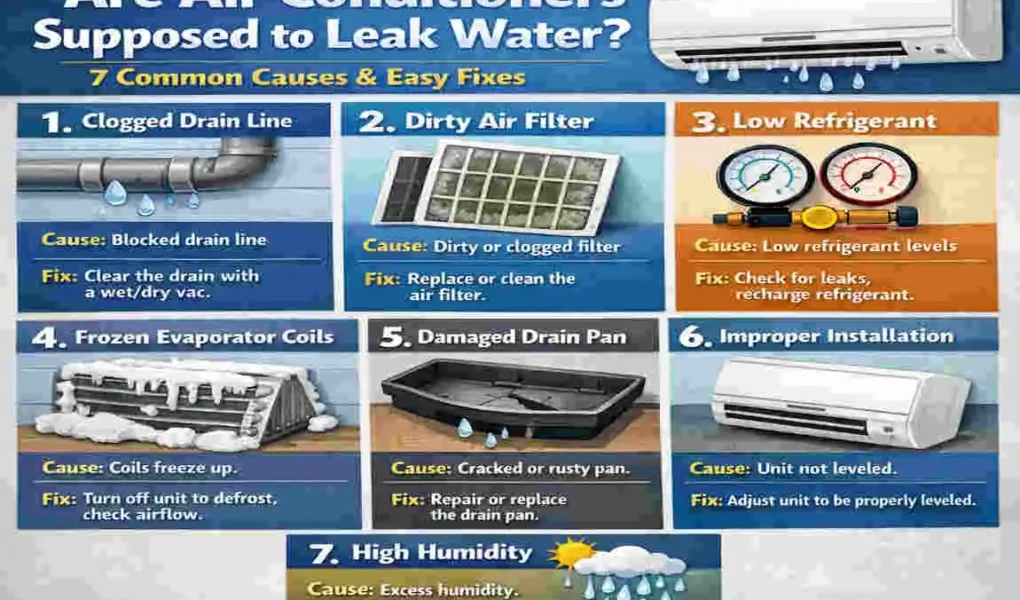
A small amount of moisture is part of how an air conditioner works. Your AC cools the air and, during that process, pulls humidity out of your home. That moisture turns into condensation. In a healthy system, the water collects and drains away safely through a drain pan and drain line. So yes, water is involved, but no, your AC should not be dripping water inside your house or overflowing onto your walls, floor, or ceiling.
This is why many homeowners get confused. They may notice a little dripping outside and think everything is fine. Then one day they see air conditioner leaking water from inside, and they are not sure if it is normal or a sign of trouble.
How Air Conditioners Work: Why Water Is Involved
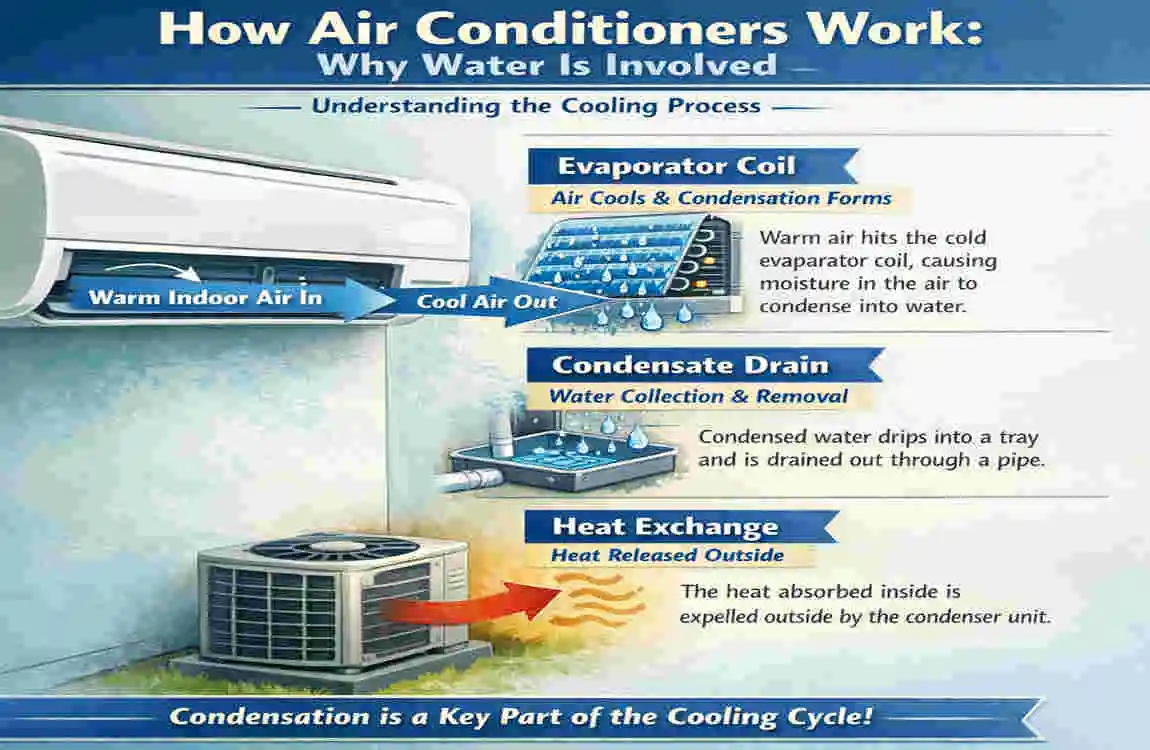
Before you fix a leak, it helps to understand why your AC makes water in the first place.
The Refrigeration Cycle in Simple Words
Your air conditioner does two jobs at once. It cools the air and removes excess moisture.
Warm indoor air passes over the very cold evaporator coil. When that warm air contacts the cold coil, the heat is transferred from the air. At the same time, moisture in the air turns into water droplets.
Think of it like a cold glass of water on a hot day. The glass “sweats” because moisture in the air condenses on the cold surface. Your AC does the same thing, just on a bigger scale.
Yes, AC Units Naturally Create Condensation
In humid weather, your AC can create a surprising amount of water every day. In very hot and sticky climates, including humid summers in places like Lahore, the system may remove several gallons of moisture daily.
That sounds like a lot, but it is completely normal.
The important thing is this: the water should go into the drain system, not onto your floor.
The Drainage System Matters
Most air conditioners have:
- A drain pan to catch condensation
- A condensate drain line to carry water away
- In some systems, a secondary drain line or overflow pan
- In certain setups, a condensate pump to move water out
If any part of this drainage path gets blocked, cracked, tilted, or broken, the water backs up. That is when leaks start.
So, when you ask, “Are air conditioners supposed to leak water?” the better answer is this: they are supposed to produce water, but they are also supposed to drain it properly.
When that process breaks down, you get drips, puddles, stains, and frustration.
Are Air Conditioners Supposed to Leak Water? Normal vs. Problematic Leaks
Let’s answer the main question clearly.
The Direct Answer
Are air conditioners supposed to leak water?
No, not excessively.
Some light dripping or moisture around the outdoor unit can be normal, especially in humid weather. But if your indoor AC unit is leaking water, that usually means something is wrong.
This is where many people get mixed up. Not all water around an AC is a bad sign. You need to know the difference between normal condensation and problem leaks.
What Counts as Normal?
A little moisture may be fine in these situations:
- The outdoor unit has some light condensation
- You see brief dripping during startup on a very humid day
- The drain line is working, and water is exiting where it should
- The unit is cooling well, with no indoor puddles or stains
What Counts as a Problem?
You likely have an issue if you notice:
- Water pooling inside your home
- Drips from the indoor air handler
- Wet walls or ceiling stains near the unit
- A musty smell
- Weak cooling
- Ice on the evaporator coil
- Higher energy bills
- Water leaking from one side of the unit
Normal vs. Abnormal AC Water Leaks
Situation Normal or Problem? What It Usually Means
Small amount of water dripping outside Normal Condensation draining as expected
Outdoor unit “sweating” in high humidity Normal Moisture in the air collecting naturally
Water puddle under indoor unit Problem Drainage issue, clog, frozen coil, or pan problem
Ceiling stain near attic AC Problem Overflowing drain pan or blocked line
AC leaking water from inside wall unit Problem Poor drainage, frozen coil, or installation issue
Musty smell with dripping water Problem Possible mold or standing water in the system
If you are wondering whether it is normal for an AC unit to leak water inside, the answer is simple: no, it is not normal.
Now let’s look at the most common reasons it happens.
7 Common Causes of Air Conditioner Water Leaks
There is no single reason every AC leaks. But in most homes, the problem usually comes down to one of a few common issues.
Clogged Condensate Drain Line
This is one of the most common reasons for air conditioner leaking water from inside.
Your AC pulls moisture from the air, and that water flows into the drain line. Over time, dust, dirt, algae, mold, and slime can build up inside the line. When that happens, water cannot move through it properly. Instead of draining outside, it backs up into the unit and spills over.
This problem often occurs in warm, humid areas. In long summers, the drain line stays damp for extended periods, providing algae and mold with the perfect environment to grow.
Signs of a clogged drain line
- Water pooling near the indoor unit
- Dripping around the air handler
- Musty smell
- AC shutting off if a float switch is triggered
A real-life example is easy to imagine. Your AC runs all day during a humid week. Moisture collects as usual, but the drain line is blocked with gunk. The drain pan fills up, then overflows. Suddenly, you see a wet patch on the floor.
If you have been searching for a fix for a clogged AC drain line, this is the first place to check.
Quick diagnostic tip
Find the condensate drain line near the indoor unit or, if outside, near the drain exit. If you see standing water in the pan or no water draining outside while the AC is running, the line may be clogged.
Dirty or Frozen Evaporator Coils
Dirty evaporator coils are another big reason people ask, why is my AC dripping water?
When dust and dirt coat the evaporator coil, air cannot move across it properly. Poor airflow makes the coil too cold, and that causes ice to form. Later, when the ice melts, the extra water can overwhelm the drain system and leak out.
The leak is often only the symptom. The real issue is the frozen coil.
Common symptoms
- Weak airflow
- Poor cooling
- Ice buildup on the coil or refrigerant line
- Water leaking after the unit shuts off or defrosts
This problem often starts small. The filter may not have been changed in a while. Airflow drops little by little. The coil gets colder and colder until it freezes. Then the ice melts, and water suddenly shows up.
Quick diagnostic tip
Check the filter first. If the unit is dirty and cools poorly, the evaporator coil may be frozen or dirty as well.
Improperly Installed or Rusted Drain Pan
The drain pan catches condensation before it enters the drain line. If the pan is cracked, rusted, or tilted the wrong way, the water may leak before it ever reaches the drain.
Older systems often have metal pans that rust over time. Newer systems may have plastic pans, but they can still crack. In some cases, the unit was not installed level, so the water collects on one side and spills over.
Signs this may be the problem
- Drips from one specific area
- Rust marks around the pan
- Water leaking from one side
- Visible cracks or holes
This issue is common in older units that have been running for many years. You may not notice the damage until the pan fills enough to leak.
Quick diagnostic tip
Use a flashlight and inspect the drain pan. If you see rust, standing water, or a crack, the pan may need repair or replacement.
Low Refrigerant Levels
Low refrigerant is a more serious issue.
When refrigerant levels drop, the system’s pressure changes. That can make the evaporator coil get too cold and freeze. Later, when the ice melts, the extra water can overflow the drain system.
Unlike a clogged line, refrigerant problems are not really DIY-friendly. They usually indicate a leak somewhere in the sealed system.
Symptoms of low refrigerant
- Warm or weak cooling
- Hissing or bubbling sound
- Ice on the evaporator coil
- Longer cooling cycles
- Higher electric bills
- Water leaking after the ice melts
People often focus on the water and miss the bigger issue. The floor leak may actually start with a refrigerant leak inside the system.
Quick diagnostic tip
If your AC is leaking water and also struggling to cool the room, do not ignore the possibility of low refrigerant. This is one of the situations where a professional should inspect the unit.
Blocked or Kinked Drain Pipe
Sometimes the drain line itself is not dirty inside, but the pipe is still blocked or bent.
This can happen if the outdoor section of the drain pipe gets covered by debris, crushed by stored items, pinched during installation, or bent over time. Water tries to flow out, but the path is restricted.
Typical signs
- Water backing up slowly
- Overflow near the drain pan
- Little or no water coming out of the outdoor drain outlet
- Leaks after moving furniture or doing work around the unit
This problem is easy to overlook because the blockage may sit outside or in a hidden part of the line.
Quick diagnostic tip
Inspect the visible part of the drain pipe. Look for bends, kinks, dirt, leaves, or anything pressing against the pipe.
High Humidity and Poor Insulation
Sometimes your AC is not “broken,” but the environment around it causes too much moisture.
In very humid weather, your system pulls more water from the air than usual. If the drain system is already a little dirty or undersized, the extra moisture can lead to leaks. Poor insulation around ductwork or refrigerant lines can also cause excess condensation.
This becomes more common during monsoon seasons or in homes with high indoor humidity.
Symptoms to notice
- Seasonal dripping during very humid days
- Moisture around ducts or vents
- Condensation on pipes
- More water than usual near the unit
If your home feels sticky or damp, your AC has to work harder to remove moisture. That extra load can reveal small drainage problems that stayed hidden before.
Quick diagnostic tip
Check whether the leak happens only during very humid weather. If yes, humidity and insulation may be part of the issue.
Broken Condensate Pump
Not every AC system uses gravity to drain water. Some units, especially those installed in basements, attics, or certain wall-mounted setups, use a condensate pump.
This small pump collects water and pushes it through a drain tube. If it fails, the water stays in the reservoir and eventually overflows.
Signs of a broken condensate pump
- Water pooling near the pump
- Pump humming but not draining
- Pump not turning on at all
- Intermittent leaking
- AC shutting off due to safety switch
A broken pump can confuse homeowners because the drain line itself may be clear. The problem is not the path. The problem is that the water is not being moved.
Quick diagnostic tip
Locate the condensate pump. If the reservoir is full and the pump is not emptying it, the pump may be clogged, stuck, or broken.
Easy DIY Fixes for AC Water Leaks
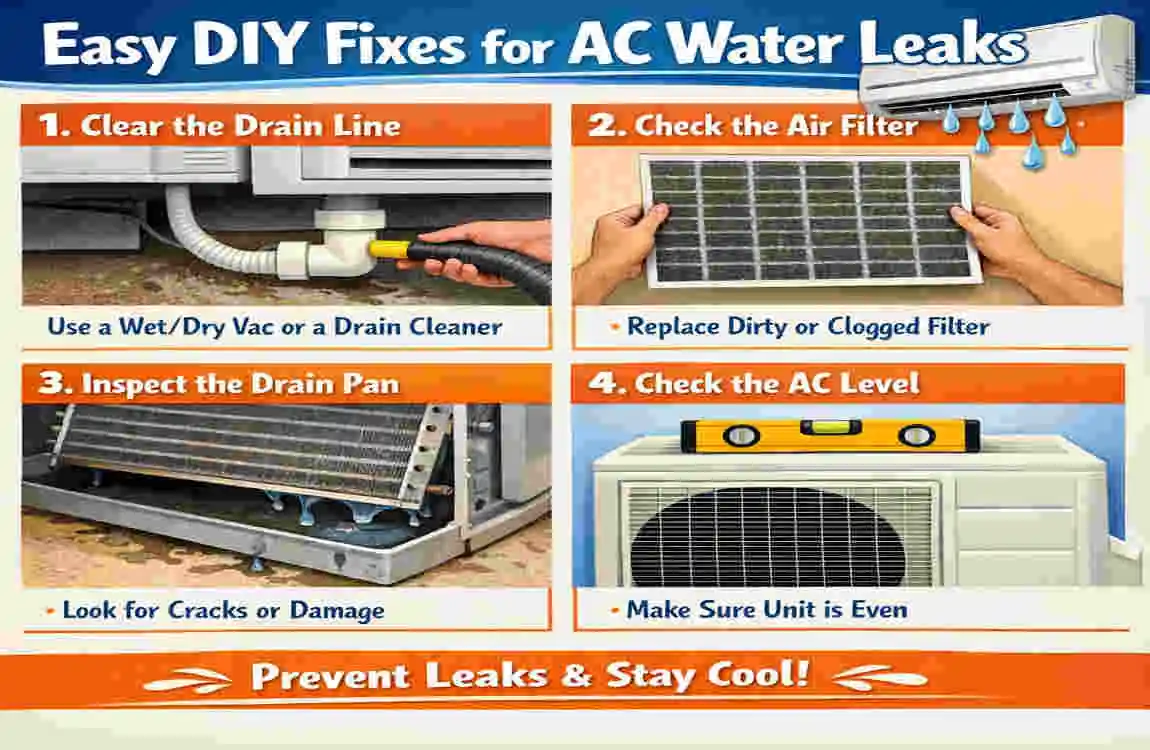
Now that you know the common causes, let’s talk about practical steps.
Before doing anything, turn off the AC power. This matters for your safety and protects the system from further damage.
Quick Fix for a Clogged Drain Line
If you suspect the drain line is clogged, this is often the easiest place to start.
Steps to try
- Turn off the AC at the thermostat and breaker.
- Locate the condensate drain line near the indoor unit. It is often a PVC pipe.
- Check the drain pan for standing water.
- Use a wet/dry vacuum on the outdoor end of the drain line for a few minutes. This often pulls out sludge, algae, or debris.
- Pour a small amount of vinegar into the access opening near the indoor unit to help break down buildup.
- Wait about 30 minutes.
- Flush with clean water to see if the line drains freely.
- Turn the unit back on and monitor it.
This simple AC drain-line clog fix solves many household leaks.
To help prevent future clogs, clean the line regularly during heavy-use months. Some homeowners also use AC-safe cleaning tablets, but a simple vinegar flush often helps.
Cleaning Dirty Evaporator Coils
If your evaporator coils are dirty, cleaning them can improve airflow and reduce the chance of freezing.
What you need
- Soft brush
- AC coil cleaner
- Clean cloth
- Gloves
Basic steps
- Turn off power.
- Open the access panel.
- Gently remove loose dust with a soft brush.
- Apply coil cleaner as directed.
- Let it sit and do not scrub too hard.
- Wipe away accessible residue.
- Replace the panel and restart the system.
If the coil is heavily frozen, turn the unit off and let it thaw completely before cleaning.
Other DIY Fixes You Can Try
Some leaks need a different approach depending on the cause.
Check and Realign the Drain Pan
Inspect the drain pan with a flashlight.
If you see a small crack, temporary sealant may help for a short time, but replacement is usually the better long-term fix. If the unit is not level, the pan may not drain properly. A slight adjustment can stop the leak, but be careful. If the system is large, awkward, or mounted in a tight area, do not force it.
Inspect for Refrigerant Problems
This is where DIY should stop.
You can look for clues like ice buildup, hissing sounds, and poor cooling. But you should not try to refill refrigerant yourself. Handling refrigerant requires proper tools and certification. If low refrigerant is causing the water leak, call an HVAC technician.
Clear Blockages in the Drain Pipe
If the pipe is bent or blocked outside, remove whatever is causing the restriction.
Look for leaves, mud, insects, or stored objects pressing on the pipe. If the line is kinked, straighten it carefully if possible. Make sure water has a clear path to flow out.
Check the Condensate Pump
If your system uses a pump:
- Turn off power.
- Inspect the reservoir for standing water.
- Clean visible dirt or slime from the pump area.
- Make sure the discharge tube is not blocked.
- Test the float if accessible.
- If the pump hums but does not move water, it may need to be replaced.
A dirty pump may be cleaned. A failed motor usually means the pump should be replaced.
Tools That Help With Common AC Leak Fixes
Fix Helpful Tools
Clear clogged drain line Wet/dry vacuum, vinegar, funnel, towel
Clean evaporator coils Coil cleaner, soft brush, gloves
Inspect drain pan Flashlight, cloth, sealant for temporary patch
Check drain pipe blockage Flashlight, gloves, small brush
Inspect condensate pump Towel, small cleaning brush, bucket
The key is to start simple. Many homeowners panic and assume the whole AC unit is failing. In reality, a basic cleaning or small drainage fix may solve the leak.
Still, if the leak keeps coming back, do not keep guessing. Ongoing water issues can damage flooring, walls, ceilings, and even cause mold growth.
When to Call a Professional HVAC Technician
Some AC leaks are easy to handle. Others need expert help.
You should call a professional if:
- The leak keeps returning
- You see ice on the coil
- The AC is not cooling properly
- You hear hissing or bubbling
- The drain pan is badly rusted or damaged
- The condensate pump has failed
- You suspect a refrigerant issue
- Water has already caused ceiling, wall, or electrical damage
In many cases, a technician can quickly clean a blocked drain line or inspect the system. Simple service may cost much less than repairing water damage later. Bigger repairs, like evaporator coil issues or refrigerant leaks, can cost more, but they need proper diagnosis.
If you live in a hot city where ACs run hard for months, like Lahore during peak summer, regular professional maintenance can help prevent repeat leaks and expensive emergency repairs.
Prevention Tips: Stop AC Leaks Before They Start
The best way to deal with AC leaks is to stop them before they happen.
A little routine care goes a long way.
Smart habits that help prevent leaks
- Change or clean air filters regularly to keep airflow strong
- Flush the drain line from time to time to reduce algae and sludge buildup
- Schedule HVAC maintenance twice a year
- Inspect the drain pan during cooling season
- Keep the outdoor drain exit clear
- Watch your home’s humidity level
- Improve insulation around ducts and refrigerant lines
- Pay attention to weak cooling or musty smells early
Indoor humidity ideally should stay in a comfortable middle range. If your home feels sticky all the time, your AC may be working harder than it should. That extra moisture can push a small drainage issue into a visible leak.
You do not need to wait for a puddle to take action.
If your system starts cooling poorly, smells damp, or makes unusual sounds, treat those as early warnings. A small service visit now can prevent a bigger repair later.
FAQs: Are Air Conditioners Supposed to Leak Water?
Is it bad if my AC is leaking water?
Yes, it can be.
A little water outside may be normal, but water leaking inside is usually a sign of a problem. If you ignore it, the leak can lead to mold, damaged walls, stained ceilings, and higher repair costs.
Why is my AC leaking water on one side?
This often points to a tilted unit, a damaged drain pan, or a drainage problem that causes water to collect unevenly. It can also happen when the unit was not installed level.
How much water should an AC drain?
That depends on humidity, system size, and how long the unit runs. In humid weather, an AC may remove a lot of moisture from the air. The important thing is not the exact amount. The important thing is that the water drains properly and does not stay inside the unit.
Are air conditioners supposed to leak water inside the house?
No. If you notice air conditioner leaking water from inside, something is likely wrong. A clogged drain line, a frozen coil, a broken pump, or a damaged pan are common causes.
Why is my AC still dripping water even though it’s still cooling?
Some leaks begin before cooling performance drops. A partially clogged drain line or cracked drain pan may still allow the unit to cool while water escapes. Do not wait for the cooling to fail before checking it.