
You’re standing in your yard after a hailstorm, staring at your battered roof. The insurance adjuster has just handed you a check and a stack of papers listing what they’ll pay for storm damage repairs. But now you’re stuck. Should you show roofing contractors your insurance estimate? Is sharing your insurance paperwork a recipe for getting ripped off, or is it the smart, transparent move that experts recommend?
Yes, you should show roofing contractors your insurance estimate—here’s why the pros insist on it. Opening up your insurance claim details isn’t just a matter of trust; it’s a proven way to avoid fraud, ensure the contractor’s plan matches your insurer’s expectations, and help you maximize your claim after roof damage. With so much at stake, from avoiding out-of-pocket costs to making sure you get all the repairs you’re entitled to, transparency is your best ally.
Why Insurance Estimates Matter in Roofing Projects

When your home suffers roof damage from a storm, navigating insurance claims can feel overwhelming. The roofing insurance estimate is at the heart of this process—but what exactly does it represent?
Understanding the Insurance Estimate
An insurance estimate is more than just a dollar amount. It’s a detailed blueprint of the repairs your insurer has approved, including labor, materials, and specific tasks. After you file a claim for roof damage, an adjuster inspects your property and produces this estimate. It outlines what the insurer will pay for, item by item, so both you and your chosen contractor know the scope of work.
Insurance vs. Contractor Pricing: What’s the Difference?
Here’s the catch: Insurance companies and roofing contractors often see things differently. Insurance adjusters may use standard pricing software, which can sometimes understate the cost of certain repairs in your local market. Contractors, on the other hand, price materials and labor based on real-world conditions, including local building codes, material upgrades, and profit margins.
This leads to a common scenario: The insurance estimate covers some basics, but contractors spot missing line items, code upgrades, or higher material costs. This gap can put homeowners in a tricky spot unless everyone’s on the same page.
Comparing Common Line Items
Let’s visualize the differences:
Insurance Estimate Line Item: Typical Coverage, Contractor Reality
Shingles $10,000 $12,500 (upgrades)
Labor $5,000 $8,000 (local codes)
Overhead/Profit Excluded $3,000 (essential)
This table highlights a crucial point: If you don’t share your insurance estimate, your contractor may miss important details—or you may end up paying out of pocket for the difference.
The Role of Transparency
By making your insurance estimate available, you invite your contractor to review the scope, check for missing items, and ensure all necessary repairs are covered. This not only protects your financial interests but also keeps your roofing project running smoothly and in compliance with your insurer’s guidelines.
Top Reasons to Share Your Estimate
When it comes to storm damage repair, transparency is your best friend. Let’s break down the top reasons you should absolutely share your insurance estimate with your roofing contractor.
Aligns the Scope of Work
Matching the scope is critical. When you share your insurance estimate, contractors can cross-check what the insurer has approved against what’s actually needed. This safeguards against under-scoping—a situation where the contractor’s plan is less comprehensive than your insurer’s, leaving you with unexpected out-of-pocket costs.
For example: Your insurance paperwork might list basic shingle replacement, but your contractor—armed with your estimate—can catch missing details, such as underlayment or flashing required by code. This alignment ensures you get what you’re owed, and nothing falls through the cracks.
Enables Claim Supplements
Insurance estimates are rarely perfect on the first pass. Contractors who review your paperwork can often spot overlooked items and help you file a “supplement”—an official request for the insurer to pay extra for necessary work not originally included.
Here’s a quick supplement checklist your contractor might use:
- Dump fees
- Building permits
- Code-required upgrades (like extra ventilation)
- Manufacturer warranties
- Additional labor for steep or complex roofs
Avoids Fraud Risks
Not sharing your estimate can actually leave you more vulnerable to fraud or claim denials. Reputable roofers demand to see your insurance paperwork so they can ensure compliance with both your insurer’s guidelines and local regulations.
Here’s what the experts say:
“If a contractor doesn’t ask for or refuses to review your insurance estimate, that’s a red flag. Legitimate contractors want to match the insurer’s scope—not inflate prices or do unauthorized work.”
— Bill Ragan Roofing
When everyone is on the same page, it’s much harder for bad actors to cut corners, skip required work, or bill for things your insurer won’t cover. Transparency protects you from both overcharging and under-delivering.
When You Shouldn’t Share (or Proceed with Caution)
While sharing your estimate is generally the right move, there are some situations where you should pause and evaluate the contractor first. Let’s talk about when to be cautious.
Recognizing Red Flags
Unfortunately, not every roofer is trustworthy. “Bad roofing contractors” may try to use your insurance paperwork to inflate supplements or push unnecessary upgrades. That’s why vetting your contractor before sharing sensitive documents is crucial.
Green Flags vs. Red Flags
Here’s a handy table to help you spot the difference:
Green Flags Red Flags
Requests to see the estimate upfront avoid paperwork
Explains supplements clearly, pushes unneeded upgrades
Offers references and licensing. Demands a signature immediately
We welcome your questions. Pressures for quick decisions
Provides written contracts. Only accepts cash payments.
How to Vet Your Roofer
Always vet roofers by checking:
- Licenses and insurance
- Google and local reviews
- References from past clients
- Written contracts with transparent terms
If a contractor avoids paperwork, pressures you to sign before explaining supplements, or seems evasive, walk away. Your insurance paperwork should only be shared with professionals who have demonstrated trustworthiness and expertise.
Expert Advice from Roofing Pros
Let’s bring in the professionals. Roofing contractors and claims experts agree: Sharing your insurance estimate is not just smart—it’s often required.
What the Experts Say
“Insurance companies require contractors to follow the scope in the estimate, and adjusters expect to see the final invoice match what’s approved. If you don’t share your paperwork, you’re likely to end up with denied supplements and uncovered work.”
— Bill Ragan Roofing
Real-Life Case Study
Consider this example:
A homeowner in Lahore suffered major storm damage. The insurance company’s first estimate missed essential code upgrades and new ventilation systems. The homeowner shared their paperwork with a local roofing contractor, who identified $6,000 in missing repairs. With the contractor’s help, the homeowner filed a supplement, and insurance approved the additional work, increasing the claim by 30% and ensuring full compliance with building codes.
The Contractor’s Perspective
Roofers aren’t looking to “match your payout” and pocket the difference. Their goal is to make sure the job covers everything required—no more, no less. When you share your insurance estimate:
- They can ensure materials, labor, and codes are fully covered.
- Your final invoice matches what insurance expects.
- You avoid delays, disputes, or out-of-pocket expenses.
Step-by-Step Guide: Sharing Your Estimate Safely
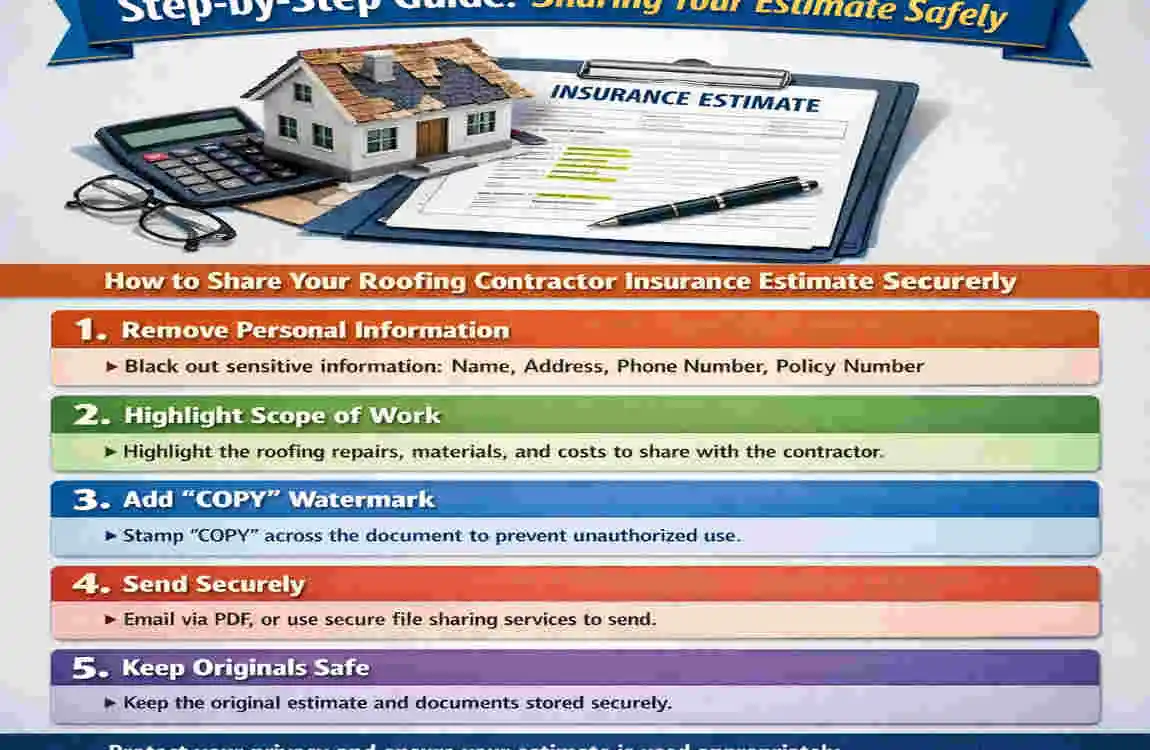
Ready to move forward? Here’s a simple, step-by-step plan to share your insurance estimate with confidence.
File Your Claim and Get the Adjuster’s Report
Once you notice storm or hail damage, call your insurance company to start a claim. The adjuster will inspect your roof and issue an estimate—this is your project blueprint.
Get Three Contractor Bids with Estimate Review
Contact at least three local, reputable roofing contractors. Share your insurance estimate with each one, asking them to review the scope and identify any missing items or code upgrades.
Discuss Supplements Together
Your contractor will walk through the estimate with you, pointing out anything the insurer may have missed. If needed, they’ll help you file a supplement to cover additional repairs, permits, or code compliance.
Sign a Contract That Matches the Scope
Once you agree on the full list of repairs and costs (including any supplements), sign a written contract. Make sure it matches your insurance paperwork and spells out all materials, labor, and warranties.
Enjoy a Smooth, Covered Repair Process
With everyone on the same page, work can start quickly. Your contractor will handle the repairs, submit the final invoice to the insurance company, and ensure you get everything you’re owed.
Visual Flowchart
File Insurance Claim → Get Adjuster’s Estimate → Share with 3 Contractors → Review & Supplement → Sign Matching Contract → Begin Repairs.
Following these steps ensures transparency, maximizes your payout, and keeps your project on track.
Common Myths Debunked
It’s natural to worry about sharing your insurance paperwork. Let’s clear up some of the most common misconceptions:
- “It gives contractors power to overcharge.”
- Fact: Sharing your estimate protects you. Contractors can only bill for approved work, and insurance won’t pay more than the estimate (plus valid supplements). Transparency keeps pricing honest.
- “DIY supplements work better.”
- Fact: Professional roofers know local codes and insurance requirements. They’re better equipped to spot missing items and file successful supplements, ensuring you don’t leave money on the table.
- “If the contractor’s bid is lower, you pocket the difference.”
- Fact: Most insurance policies are “replacement cost value”. If the final invoice is less than the estimate, the insurer reduces your payout. You won’t profit by hiding information.
- “All roofers will see my estimate and inflate their price.”
- Fact: Reputable contractors do not play this game. They want your business for the quality of their work, not by inflating numbers.
By understanding these truths, you can approach your roofing claim with confidence and avoid costly mistakes.
FAQs
Should you show roofing contractors your insurance estimate?
Yes. Sharing your insurance estimate is crucial for ensuring your repair scope matches what insurance will pay. It protects you from out-of-pocket costs and helps contractors spot missing items or code requirements.
What if the contractor’s bid is higher than the insurance estimate?
If the contractor’s bid is higher, ask them to explain why. Often, higher bids reflect missing items or local code upgrades. Your contractor can help you file a supplement with your insurer to cover the difference.
How do you supplement a roofing claim?
First, review your insurance estimate with your contractor. Identify missing repairs, code upgrades, or overlooked items. Your contractor will document these needs and submit them as a supplement to your insurance company for additional payout.
Is it ever risky to share my estimate?
Only if you haven’t vetted your contractor, always check licensing, reviews, and references before sharing sensitive documents.