
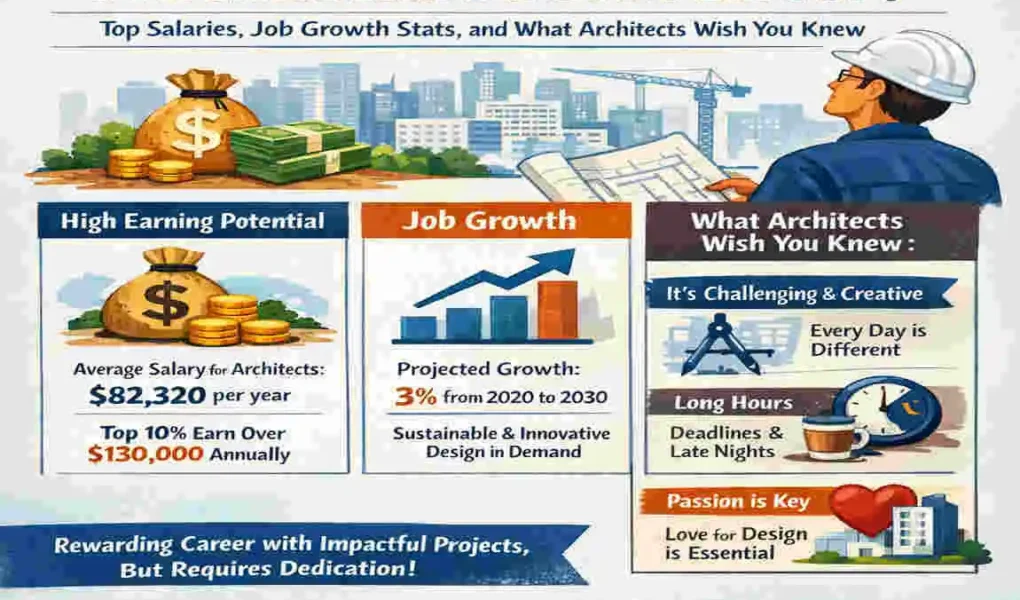
Are you constantly sketching buildings on napkins, dreaming of reshaping city skylines, or wondering how to make our living spaces more sustainable? If you have a passion for design and a logical mind, you have probably asked yourself: is architecture a good career for creative minds in today’s booming real estate world? You are definitely not alone in asking this question. Every year, thousands of creative individuals stand at the crossroads of their future, wondering if the long nights in the design studio will eventually pay off in the real world.
As we navigate through 2026, the landscape of building and design is shifting rapidly. Let us look at some quick numbers. The median architect salary is currently $93,090 per year, according to 2025 data from the Bureau of Labor Statistics (BLS). Even better, the field is projected to grow by a solid 8% through 2033. These numbers look fantastic on paper, but they only tell half the story.
When people ask if architecture is a good career, they are usually trying to soothe some very real pain points. They worry about the high costs of architecture school compared to the financial rewards. They have heard the scary myths about terrible work-life balance and non-stop deadlines. They want to know if the reality of the job matches the glamorous image portrayed in movies and magazines.
| Aspect | Pros | Cons |
|---|---|---|
| Work Nature | Creative variety across projects; real-world impact on communities. | Long hours, high pressure, multiple deadlines. |
| Career Path | Versatile skills for tech/project management; global opportunities. | Lengthy education (5–7 years); slow initial licensure. |
| Stability | Steady demand in growing cities/sustainability. | Limited growth (4%); tech efficiency reduces hires. |
What Does an Architect Do? A Day-in-the-Life Breakdown
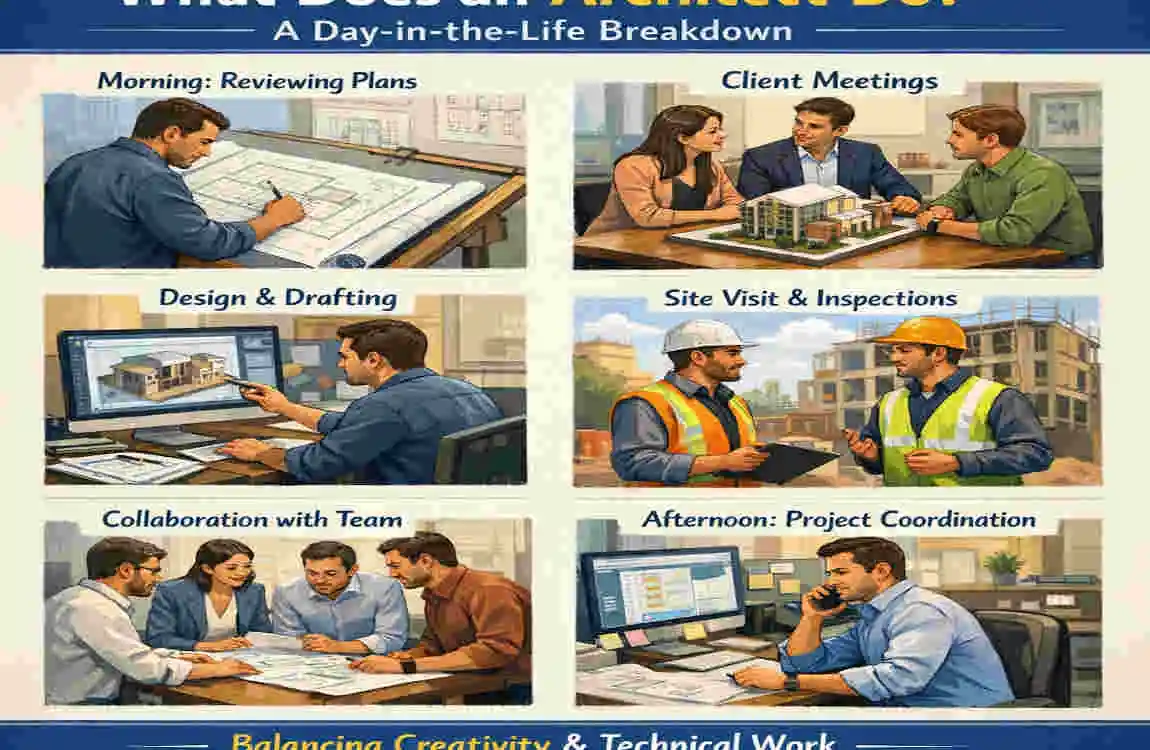
To figure out if this path is right for you, you first need to understand what the job actually entails. Many people assume architects draw pretty pictures of houses all day. The reality is much more complex and fascinating. An architect is part artist, part engineer, part project manager, and part psychologist.
The Many Hats of an Architect
An architect takes a project from a hazy concept to a standing structure. This means their role shifts dramatically as a project progresses. In the early stages, they are visionaries, creating blueprints and conceptual designs. As the project moves forward, they become technical experts, ensuring their designs meet strict building codes and zoning laws. Finally, during the construction phase, they act as site supervisors, visiting dusty job sites to ensure the builders are following the plans exactly as intended.
Daily Tasks and Software Tools
So, what does an average Tuesday look like? You might be surprised to learn that pure, creative sketching accounts for only about 40% of their time. The rest of the day is filled with practical tasks. An architect might spend the morning in intense client meetings, trying to figure out what a family really wants in their new home or what a corporation needs for their new headquarters.
By the afternoon, they are deep into complex computer software. Gone are the days of giant drafting tables covered in pencils. Today, architects rely heavily on BIM software (Building Information Modeling) and programs like Revit. These tools allow them to build incredibly detailed, smart 3D models of a building before a single shovel hits the dirt.
Specializations in the Field
Not all architects do the same thing. Once you enter the field, you can choose a specialization that fits your interests. You might become a residential architect, focusing on beautiful, custom homes for families. You could choose to be a commercial architect, designing massive shopping malls, office towers, or hospitals. Or you might lean into the fastest-growing sector: sustainable and green architecture, where the goal is to create buildings that generate their own energy and use eco-friendly materials.
A Typical Week in the Life
To give you a clearer picture, imagine a residential architect’s week. Monday is all about ideation and brainstorming new concepts for a client. Tuesday and Wednesday involve heavy computer drafting and coordinating with structural engineers. Thursday is filled with permit applications and navigating local zoning laws. Finally, Friday is spent out in the field doing site inspections, wearing a hard hat, and talking to construction supervisors. If you are an artist who also loves practical problem-solving, you might find yourself constantly wondering, “is architecture a good career for artists?” The answer is a resounding yes, as it perfectly blends creativity with tangible, real-world results.
Education and Entry Requirements for Aspiring Architects
If you are sold on the day-to-day life, the next step is understanding how to get there. The journey to becoming a licensed architect is a marathon, not a sprint. It requires dedication, late nights, and a significant educational commitment. Understanding the requirements of architecture is crucial before deciding whether architecture is a good career choice for you.
The Degree Pathway
You cannot just wake up one day and declare yourself an architect. You need specific, accredited schooling. Most professionals start with a Bachelor of Architecture (B.Arch), which is typically a rigorous five-year program. During these five years, you will live and breathe “studio culture,” working on design projects, learning about architectural history, and mastering structural physics.
If you already have a bachelor’s degree in another subject, you are not out of luck. You can pursue a Master of Architecture (M.Arch), which usually takes two to three years to complete. Both paths give you the foundational knowledge you need to design safe, beautiful buildings.
Licensure and Internship Hours
Graduating with your degree is only the first big hurdle. To legally call yourself an architect and sign off on building plans, you must get licensed. This involves a massive undertaking managed by the National Council of Architectural Registration Boards (NCARB). As of our current 2025/2026 data, you are required to complete a staggering 3,740 hours of internship experience working under a licensed architect. This ensures you know how the real world operates outside of the classroom.
After completing your hours, you must pass the Architect Registration Examination (ARE). This is not just one test; it is a grueling series of multiple exams covering everything from practice management to project planning and structural systems.
The Financial Investment
Let us talk honestly about the money. Becoming an architect is expensive. The total cost of a five-year degree, living expenses, and exam fees can easily exceed $150,000. For many, this leads to significant student debt. However, the industry is trying to become more accessible. There are numerous grants and scholarships available specifically designed for minorities and women to help diversify the field.
Alternative Routes and Online Growth
If the traditional path sounds too daunting or expensive, there are alternatives. Consider becoming an architectural technologist or a drafter. These roles require less schooling (often a two-year associate degree) and allow you to work closely with architects, focusing on the technical drawing aspects without the burden of full liability.
Additionally, a major pro tip for 2026: online architecture programs have seen a massive rise in quality and acceptance. Post-2025, many accredited universities now offer hybrid or fully online M.Arch degrees, allowing you to work and gain internship hours while you study from the comfort of your own home.
Architect Salaries: Top Earnings and Regional Breakdowns
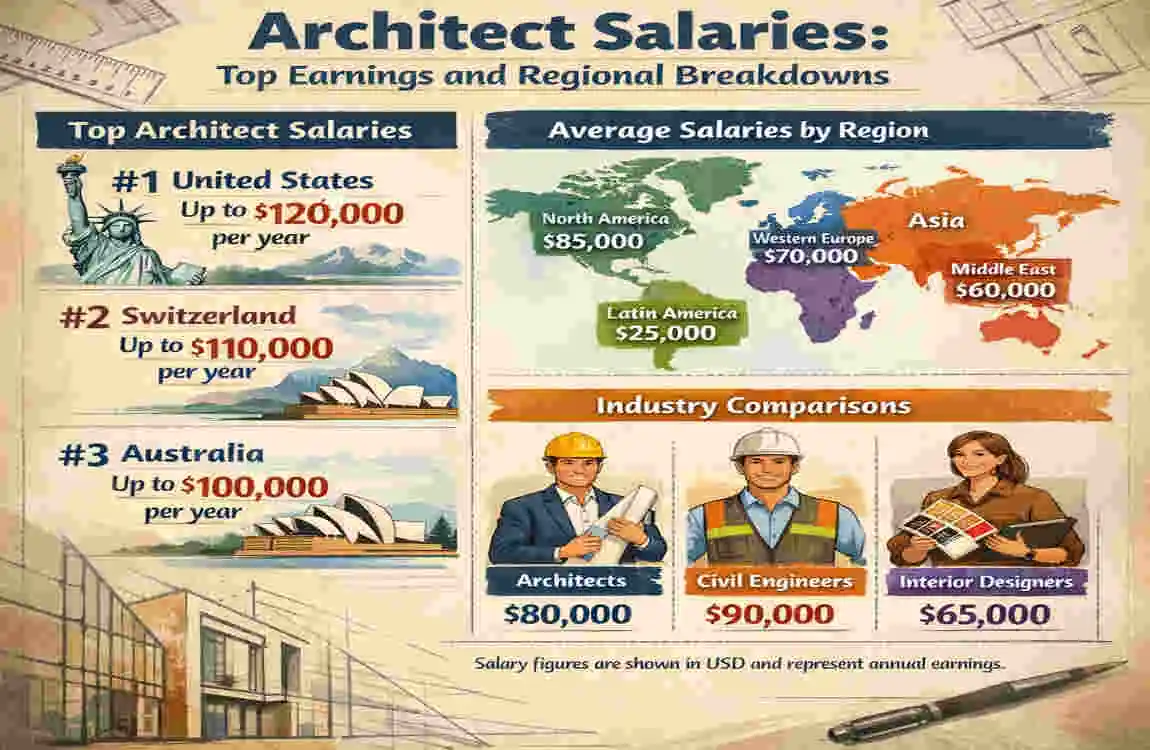
Now, let us get to the topic everyone cares about: the money. When evaluating an architect’s salary and whether architecture is a good career, the financial outlook is generally very positive, though it requires some patience in the early years.
National Averages and Experience Levels
According to BLS data from May 2025, the national median wage for architects is a comfortable $93,090 per year. However, your earning potential changes drastically based on your experience level.
When you first graduate and begin working as a junior designer or intern, you can expect an entry-level salary hovering around $60,000. This can feel low considering the grueling education you just completed. But do not panic! Architecture is a profession where experience is highly valued. As you gain your license, build a portfolio, and cross the 10-year mark in your career, your salary will naturally jump into the $120,000+ range. The top 10% of architects in leadership or partner roles easily pull in $150,000 to $ 200,000 or more annually.
Location Matters
Where you set up your drafting table has a massive impact on your bank account. High-cost, booming urban areas naturally pay more. For example, architects in California average around $120,000 per year, while those in bustling New York City earn similar amounts. On the flip side, if you work in smaller towns in the Midwest, your salary might average closer to $80,000. Of course, the cost of living in the Midwest is significantly lower, so that $80K might actually go much further than $120K in San Francisco!
The Sustainability Premium
One of the biggest factors influencing modern architect salaries is your specific skill set. Firm size matters—massive global firms usually pay more than small boutique studios. But the real game-changer in 2026 is sustainability expertise. Architects who understand green building practices, zero-carbon materials, and energy-efficient designs can command a 20% premium on their salaries. The world is desperate for eco-friendly buildings, and if you can provide them, firms will pay top dollar for your brain.
2026 Architect Salary Overview
To make this easy to digest, here is a breakdown of what you can expect to earn at different stages of your career, along with the best regions for those roles.
Level Avg Salary (2026 est.)Top States/Regions
Entry $60,000 – $75,000 Texas, Florida
Mid-Level $90,000 – $110,000 California, New York
Senior/Partner $130,000+ Major Urban Hubs
As you review these numbers, remember that salary growth in this field is steady and reliable. Once you secure your license and prove your worth, the financial rewards make the long educational journey well worth it.
Job Growth and Market Outlook: Architecture Career Prospects
Earning a good salary is fantastic, but only if there are actually jobs available. So, what do the architecture job growth stats look like for the rest of the decade? The outlook is surprisingly bright and full of new opportunities.
The Numbers Behind the Growth
The BLS projects a solid 8% growth for the architecture profession from now through 2033. This rate is faster than the average for all other occupations. In practical terms, the economy will add roughly 12,800 brand new architecture jobs over the next few years. If you are a student right now, you are entering a market actively seeking fresh talent.
What is Driving the Demand?
You might be wondering why architects are in such high demand. The primary driver is urbanization. As populations grow, our cities are expanding rapidly. We need new schools, advanced healthcare facilities, and massive housing developments.
Furthermore, the green building boom is reshaping the industry. In 2025 alone, the demand for LEED-certified (Leadership in Energy and Environmental Design) professionals skyrocketed by 15%. Corporations and governments are no longer just asking for buildings; they are demanding smart, sustainable structures that fight climate change. If you have a passion for the environment, your architecture career prospects have never been better.
AI and the Future of Drafting
It would be dishonest to ignore the challenges on the horizon. The rapid advancement of Artificial Intelligence (AI) and automated drafting software is causing a stir in the industry. Current estimates suggest that up to 10% of entry-level drafting jobs could be at risk due to automation. AI can now generate basic floor plans and perform structural calculations in seconds.
However, AI cannot sit in a room with a client, read their emotions, and design a home that perfectly captures their family’s unique personality. AI cannot navigate complex city council meetings or creatively solve a sudden site emergency. The architects who will thrive in the future are those who lean into their human skills: creativity, empathy, and complex problem-solving.
2026 Trends and Global Opportunities
The modern architecture job market looks very different than it did ten years ago. Remote hybrid roles are now incredibly common. You can live in a quiet mountain town while designing high-rises for a firm based in Chicago. There is also a massive push toward rebuilding aging infrastructure. Upgrading mid-century buildings to meet modern energy codes is a massive source of revenue for architecture firms.
Finally, we must look globally. While the US market is strong, regions in Asia and the Middle East are experiencing explosive growth. Take Pakistan, for example. The demand for modern infrastructure has led to a surge of high-rises in Lahore and massive residential developments. The global need for visionary architects means your skills can easily serve as a passport to travel and work around the world.
Pros and Cons: Is Architecture a Good Career for You?
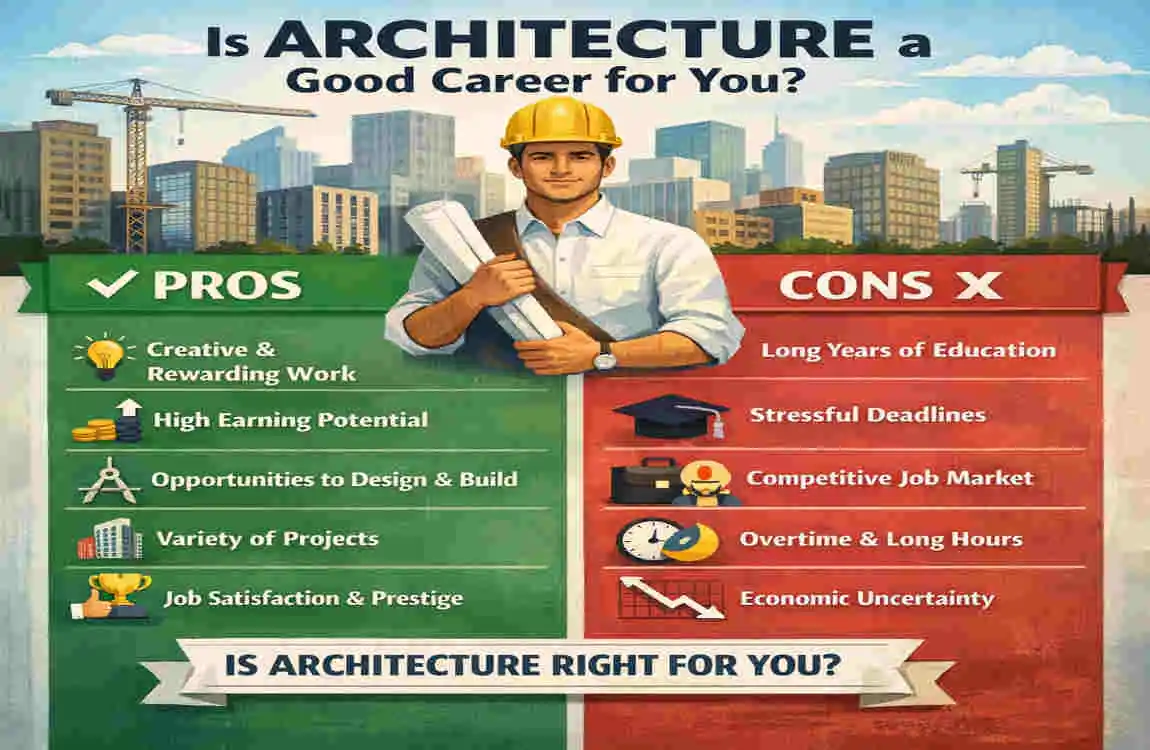
We have looked at the data, the daily life, and the money. But evaluating a direct “is architecture a good career” pros/cons list is the best way to figure out if this path matches your personality. Every job has its brilliant highlights and its dark shadows. Let us lay them all out on the table.
The Pros: Why People Love Being Architects
There is a reason why so many people dream of this job. The benefits go far beyond just a paycheck.
- Creative Freedom and Lasting Impact: This is the ultimate draw. As an architect, you are a skyline changer. You get to dream up a concept in your mind, sketch it on paper, and eventually walk through it in real life. Your work will literally stand for decades, sheltering families or housing businesses. It is an incredible legacy to leave behind.
- High Job Stability: People will always need places to live, work, and heal. Because of this constant need, the unemployment rate for experienced architects is incredibly low, usually hovering around 4% or less. Once you are established, your job is generally very secure.
- Amazing Industry Perks: Architecture is a respected, prestigious profession. When you tell people you are an architect, there is an immediate level of respect. Furthermore, the job often involves exciting travel to view project sites, source unique materials, or meet with international clients.
The Cons: The Hidden Realities of the Job
It is not all glamorous ribbon-cutting ceremonies and beautiful sketches. The career demands a heavy toll from those who pursue it.
- Long Hours and Looming Deadlines: Architecture is notorious for its demanding schedule. While you might want a standard 40-hour workweek, the reality is that tight deadlines often require 50+ hours a week. When a massive project is due for a client presentation, you will be working late into the night.
- High Liability Stress: If a graphic designer makes a mistake, a flyer looks ugly. If an architect makes a mistake, a roof could collapse. You carry significant legal and ethical liability. Ensuring every code is met and every beam is calculated correctly can be highly stressful.
- Economic Sensitivity: While the job is generally stable, the architecture industry is tied directly to the real estate market. When the economy dips and interest rates rise, developers stop building. During recessions, architecture firms are often the first to feel the pinch.
The Balanced Verdict
Is it right for you? Architecture is brilliant for resilient problem-solvers who can balance big-picture creativity with meticulous attention to detail. Ask yourself: Do you thrive under pressure? Do you enjoy navigating complex puzzles? Can you handle constructive criticism from clients who do not understand design? If you answered yes, the pros will absolutely outweigh the cons.
What Architects Wish You Knew: Insider Secrets
Data and statistics are helpful, but the best way to understand a career is to talk to the people who are actually living it. If you browse industry forums, read LinkedIn threads from 2025, or talk to seasoned professionals, you will start to hear recurring themes. Here is what architects say about “is architecture a good career” behind closed doors.
“Burnout is Real—Network Early”
One of the most common sentiments from senior architects is a warning about mental exhaustion. A veteran project manager recently shared this advice: “Burnout is real in your twenties. You will want to prove yourself by working every weekend. Don’t. You need to pace yourself and network early.”
The secret to surviving the early years is not just working harder; it is working smarter by building relationships. Knowing structural engineers, contractors, and material vendors can make your job ten times easier when you are in a bind. Your network is your safety net.
“Sustainability Skills Pay Off Big”
Another major insider secret is where the money is hiding. Many young architects focus entirely on making buildings look incredibly avant-garde. However, the veterans know that the real financial growth lies in green design. Clients do not just want pretty buildings anymore; they want buildings that save them money on energy bills. If you master sustainable materials and passive solar design, you make yourself completely indispensable to a firm.
Busting the Myths: It is Not All Suits and Clean Desks
Media often portrays architects as wealthy individuals in sharp black suits, staring thoughtfully out of penthouse windows. The reality is vastly different. While you will dress up for client meetings, a massive chunk of your job is fieldwork heavy. You will be wearing steel-toed boots, walking through mud, dodging heavy machinery, and arguing with stubborn contractors in the freezing rain. It is a gritty, hands-on profession.
Soft Skills: Communication Trumps Software
Young graduates often obsess over learning every single feature of the latest 3D modeling software. While technical skills are important, seasoned architects will tell you a massive secret: Communication is vastly more important than software skills.
You have to be a salesperson for your own ideas. You need to convince a skeptical client why your design is worth their millions of dollars. You have to clearly and kindly explain to a builder why they cannot cut corners. Empathy, active listening, and public speaking are your true superpowers in this industry.
Career Pivots and Global Context
Finally, veterans want you to know that an architecture degree does not trap you in one specific job forever. The analytical and design skills you learn are highly transferable. Many architects successfully pivot into lucrative careers in interior design, urban planning, or even video game environment design.
Furthermore, the skills are global. Looking at the booming markets in South Asia, particularly in Pakistan, reveals incredible opportunities. With rapid, massive developments in areas like the DHA projects in Lahore, architects who understand modern, scalable infrastructure can build highly profitable practices overseas. Your degree gives you options.
How to Break Into Architecture: Actionable Steps
If you have made it this far and your heart is still set on becoming an architect, it is time to take action. Breaking into this industry requires a strategic approach. Here is a clear, step-by-step guide to landing your first job and launching your career.
Earn Your Degree (B.Arch or M.Arch)
Your very first step is getting the right education. Research universities that hold proper accreditation. Do not just look at the school’s prestige; look at the culture of its design studios. You want a program that pushes you creatively while teaching you the harsh realities of building physics and project management.
Intern Early and Often
Do not wait until you graduate to get experience. Seek out internships during your summer breaks. Look into programs offered by the American Institute of Architects (AIA) that help pair students with local firms. Getting your foot in the door as an intern allows you to start logging your required NCARB hours immediately, putting you years ahead of your peers.
Tackle the AREs and Build a Killer Portfolio
Once you graduate, focus heavily on passing your Architect Registration Examinations (ARE). Study groups will become your best friends. Simultaneously, you must build a stunning digital portfolio. Your portfolio is your true resume. It should not just show pretty pictures; it should show your thought process. Show how you solved a difficult site problem or how you designed a unique structural joint.
Network and Freelance
Finally, get your name out there. Optimize your LinkedIn profile specifically for architecture searches. Do not be afraid to take on small, freelance drafting projects on platforms like Upwork to build real-world client experience. Attend local zoning board meetings or historical society gatherings—these are places where future clients and established architects hang out. The resources are out there; use websites like Archinect to find niche job postings that match your specific design philosophy.
FAQ: Quick Answers on “Is Architecture a Good Career”
Is architecture a good career in 2026? Absolutely. With an 8% job growth projection through 2033 and a strong push toward sustainable building practices, the industry is thriving. It offers a great mix of creative satisfaction and long-term financial stability.
What is the architect salary in Pakistan? For those looking at global markets, the architecture scene in Pakistan is booming. In major hubs like Lahore, mid-level to senior architects can expect to earn anywhere from PKR 2 million to PKR 5 Million per year, depending on firm size and involvement in major commercial or DHA projects.
Is it worth the massive education debt? For most dedicated professionals, yes. While the initial schooling is expensive, the steady salary progression means most architects see a solid Return on Investment (ROI) within 5 to 7 years of obtaining their license.
Is the career future-proof against AI? Yes, provided you adapt. While AI will automate basic drafting tasks, the core of architecture—client empathy, complex site problem-solving, and visionary creativity—cannot be replicated by machines. Embracing sustainable tech will make you highly indispensable.