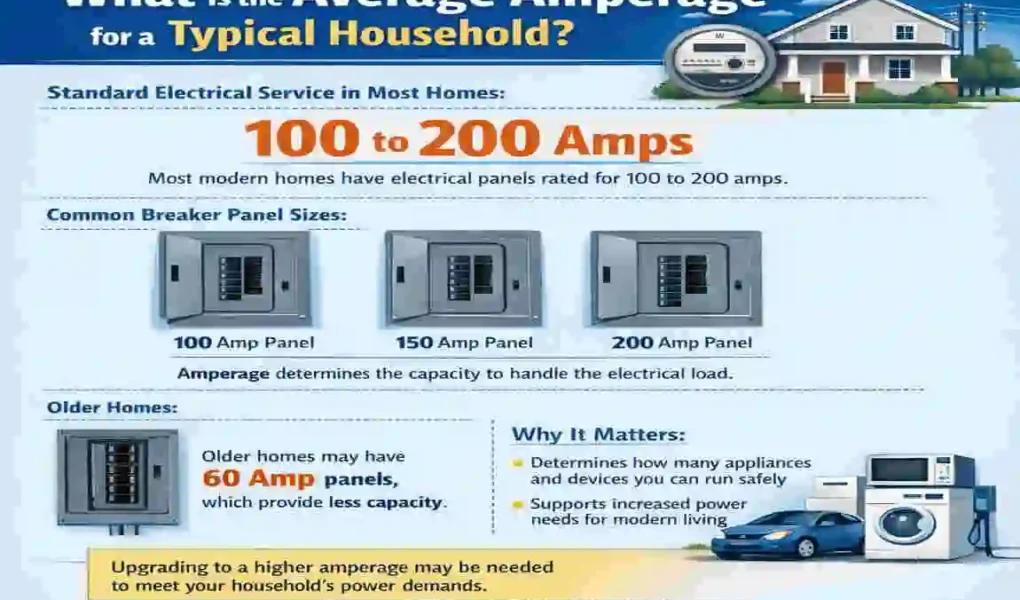
If you are asking what the average amperage of a house is, the simple answer is this: most modern homes use 200-amp electrical service. Older homes may still have 100 amps, while larger homes may need 300 to 400 amps.
Amperage matters because it tells you how much electrical current your home can safely handle. If the service is too small, you may deal with tripped breakers, flickering lights, or trouble running newer appliances. So, understanding your home’s amperage helps you stay safe and plan.
Understanding Electrical Amperage
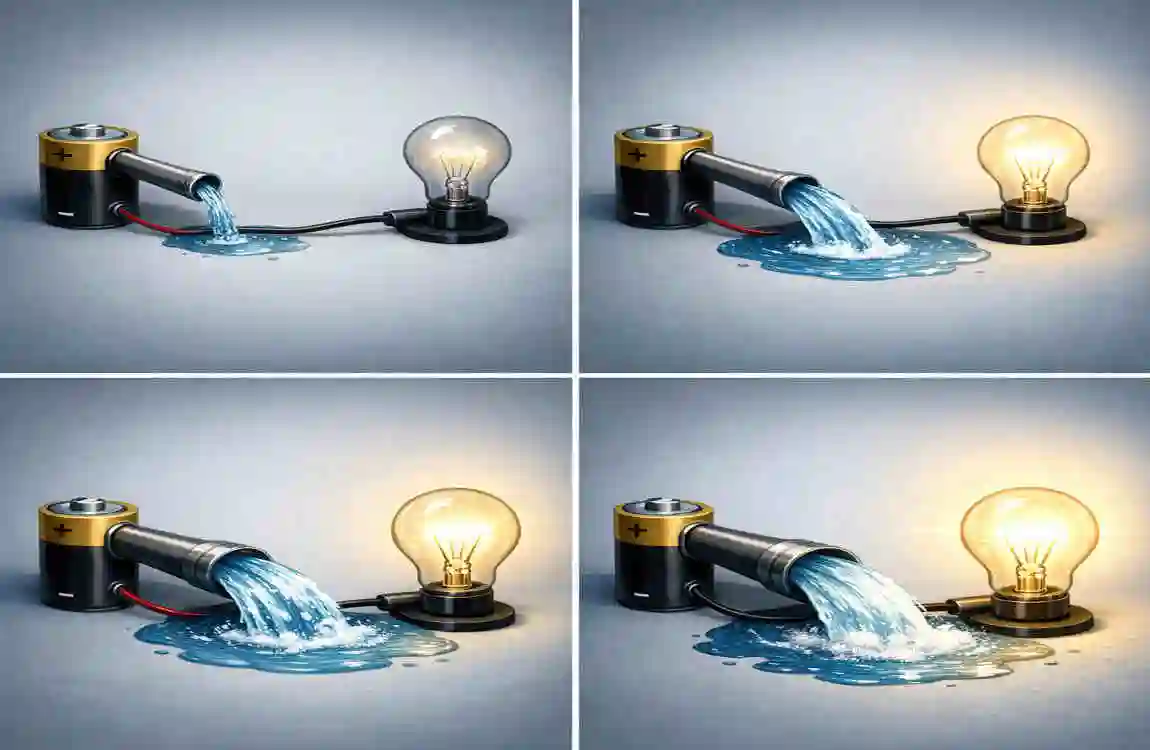
What Is Amperage?
Amperage, or amps, is the amount of electrical current flowing through your home. Think of it like the size of a pipe carrying water. The bigger the pipe, the more current it can carry.
A higher amp rating means your home can support more electrical demand at one time.
Why Amperage Matters in a Home
Amperage matters because your home uses electricity for many things at once. Lights, refrigerators, air conditioners, washers, dryers, and kitchen appliances all draw power.
If your system cannot handle the load, it may become overloaded. That can lead to safety issues and inconvenience. A proper amperage level helps your home run smoothly and safely.
Difference Between Amps, Volts, and Watts
These terms are often mixed up, but they mean different things.
Electrical Term Meaning Example
Amps Current flow 100A panel
Volts Electrical pressure 120V outlet
Watts Power usage 1,500W heater
In simple words, amps are about how much electricity is moving, volts are about pressure, and watts are about how much power a device uses.
What Is the Average Amperage of a House?
Standard Residential Amperage Sizes
Here are the most common home service sizes:
- 60 amps: Older homes with very low electrical demand
- 100 amps: Still common in smaller or older houses
- 150 amps: A middle-ground option for many homes
- 200 amps: The most common standard in modern homes
Average Amperage in Modern Homes
For most homes today, 200 amps is the norm. This level usually gives enough power for modern living, including kitchen appliances, HVAC systems, and everyday devices.
Smaller homes may still function well with 100 amps, especially if they do not use many high-power appliances. Very large homes, or homes with heavy electrical use, may need 300 to 400 amps.
Typical Amperage by Home Size
Home Size Typical Service
Small Home 100 Amps
Medium Home 150–200 Amps
Large Home 200–400 Amps
Factors That Determine a Home’s Amperage Needs
Home Size
A larger house often needs more power because it usually has more rooms, more lighting, and more devices. Square footage plays a big role in electrical demand.
Number of Occupants
More people usually means more use of appliances, chargers, lights, and electronics. A busy household often needs more amperage than a home with one or two people.
Major Appliances
Some appliances use a lot of power, especially:
- Electric ovens
- HVAC systems
- Water heaters
- Dryers
If your home has several of these, a higher service size may be necessary.
Smart Home Technology
Modern homes often include extra electrical loads like:
- EV chargers
- Security systems
- Smart speakers and devices
- Home office equipment
These may seem small at first, but together they can add up.
Common Electrical Panel Ratings
100-Amp Electrical Panels
A 100-amp panel can still work well in smaller homes or homes with modest power needs. It is often found in older houses.
Benefits:
It is usually enough for basic daily use.
Limitations:
It may struggle if you add large appliances, an EV charger, or central air conditioning.
150-Amp Electrical Panels
A 150-amp panel is a solid middle option. It may suit a medium-sized home with moderate power use.
This level can be a good fit if your home has updated wiring but does not have extremely high electrical demands.
200-Amp Electrical Panels
A 200-amp panel is the current standard for many homes. It offers stronger support for everyday use and future upgrades.
This is often the best choice if you want room for additional appliances, greater safety margins, and modern conveniences.
400-Amp Electrical Panels
A 400-amp service is usually found in large homes, luxury properties, or homes with unusually high power needs.
It is more than enough for heavy electrical use, but most households do not need this much.
How to Find the Amperage of Your House
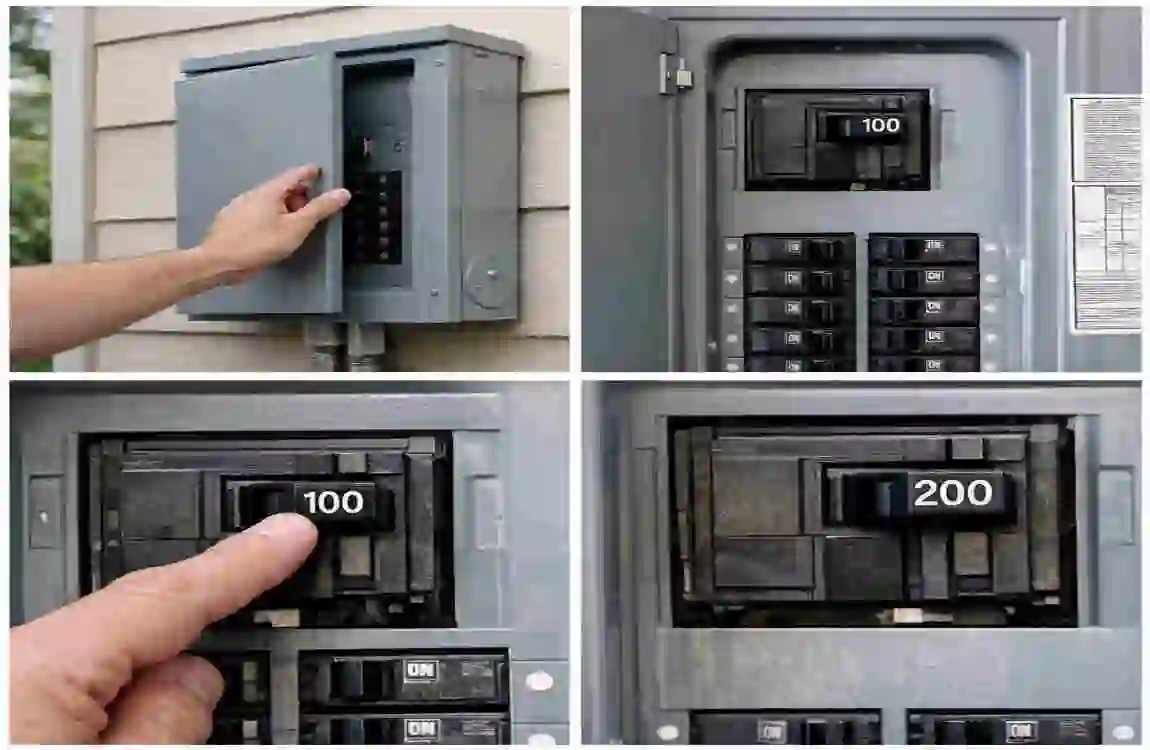
Check the Main Breaker
One of the easiest ways to find your home’s amperage is to look at the main breaker in your electrical panel. The number on it usually shows the service size, such as 100 or 200 amps.
Review Electrical Documentation
You can also check old inspection reports, permits, or home records. These documents may list the electrical service size.
Contact a Licensed Electrician
If you are unsure, a licensed electrician can inspect your panel and confirm the amperage. This is the safest option if you plan to upgrade or add new equipment.
Signs Your Home Needs More Amperage
Frequently Tripped Breakers
If breakers trip often, your system may be under too much strain. This is a common warning sign.
Flickering Lights
Lights that dim or flicker when appliances turn on may mean your electrical service is too small.
Overloaded Circuits
If you cannot run multiple devices simultaneously, your circuits may be overloaded.
Adding New Appliances
New appliances can quickly increase your electrical needs. If you are adding a big fridge, oven, or washer-dryer setup, you may need more capacity.
Installing an EV Charger
An electric vehicle charger uses a lot of power. Many homes need an upgrade before one can be installed safely.
Is a 100-Amp Service Enough Today?
Situations Where 100 Amps May Work
A 100-amp service may still be enough for:
- Small households
- Homes with limited appliances
- Properties with low overall electricity use
When 100 Amps Becomes Insufficient
It may not be enough if you have:
- Central air conditioning
- Multiple major appliances
- A home addition
- An EV charger
- A growing number of smart devices
In many modern homes, 100 amps can feel limited.
Benefits of Upgrading to a 200-Amp Service
Improved Electrical Capacity
A 200-amp upgrade gives your home more room to handle everyday use without overloading.
Better Safety
A stronger electrical system can reduce stress on wiring and circuits, thereby improving safety.
Increased Home Value
Buyers often like homes with updated electrical service. It can make your property more appealing.
Future-Proofing Your Home
If you plan to add appliances or technology later, a 200-amp system gives you more flexibility.
How Much Does an Electrical Service Upgrade Cost?
Average Upgrade Costs
Upgrade Type Estimated Cost
100A to 150A $1,000–$3,000
100A to 200A $1,500–$5,000
200A to 400A $4,000–$12,000
Factors Affecting Cost
Several things can affect the final price:
- Labor
- Permits
- Utility company requirements
- Panel location
The cost can vary based on your home and local rules.
Safety Tips for Home Electrical Systems
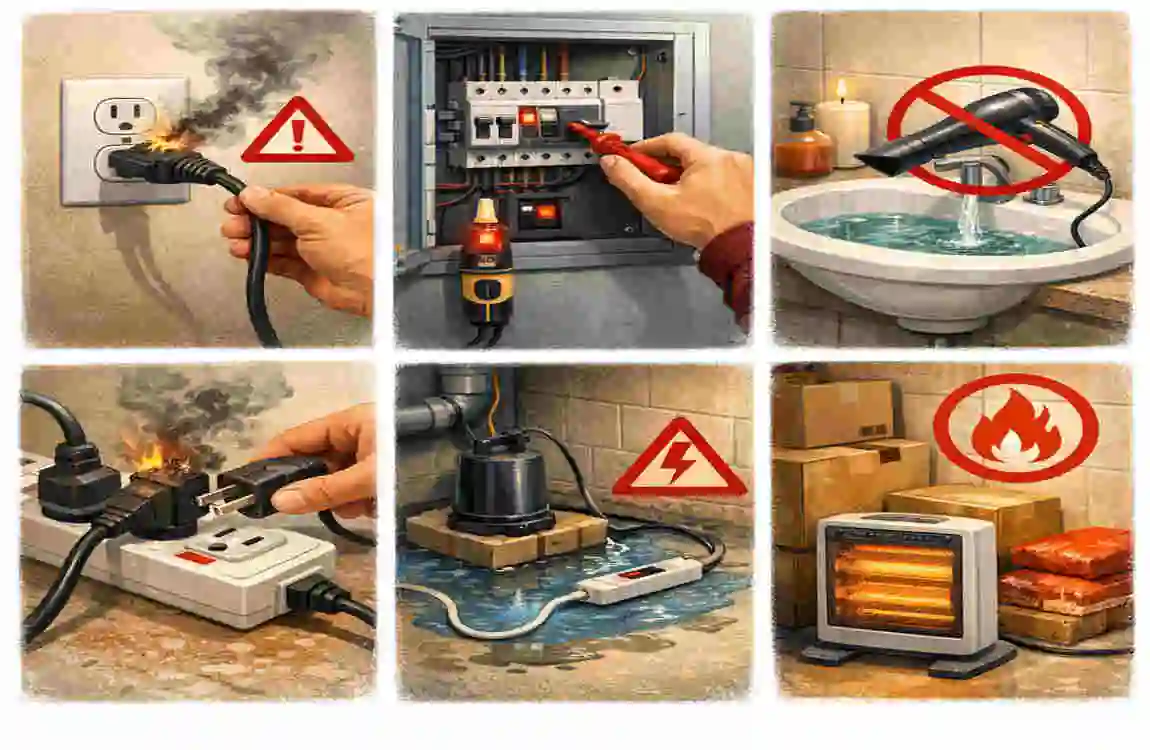
Avoid Circuit Overloading
Do not plug too many high-power devices into one circuit. This helps prevent overheating and breaker trips.
Schedule Regular Inspections
An inspection can catch problems early, especially in older homes.
Replace Damaged Wiring
Worn or damaged wiring should never be ignored. It can create serious hazards.
Use Qualified Electricians
Always hire a licensed electrician for repairs, upgrades, or panel changes.
Frequently Asked Questions
What is the average amperage of a house?
Most modern homes have 200-amp electrical service, while older homes may have 100 amps.
Is 100 amps enough for a house?
It can be enough for smaller homes, but many modern households benefit from 200 amps.
How do I know if my house has 100 or 200 amps?
Check the main breaker inside your electrical panel.
Can I upgrade my house from 100 amps to 200 amps?
Yes, a licensed electrician can perform the upgrade after checking your system.
Do larger homes require more amperage?
Yes, larger homes usually need more amperage because they use more electricity.
Is a 200-amp service considered standard today?
Yes, 200 amps is the most common size for new homes.
How much does it cost to upgrade electrical service?
| Aspect | Typical Value |
|---|---|
| Service Panel Rating (Maximum Capacity) | 100–200 amps |
| Baseline/Running Usage (Minimal Load) | 5–20 amps |
| Peak Usage (Multiple Appliances On) | 40–80 amps |
| Most Common Standard for Modern Homes | 200 amps |